
On Friday, our weeks of fine weather broke and it was grey and starting to rain as I headed into our local town of Waitara for essential supplies like gin and dogfood.
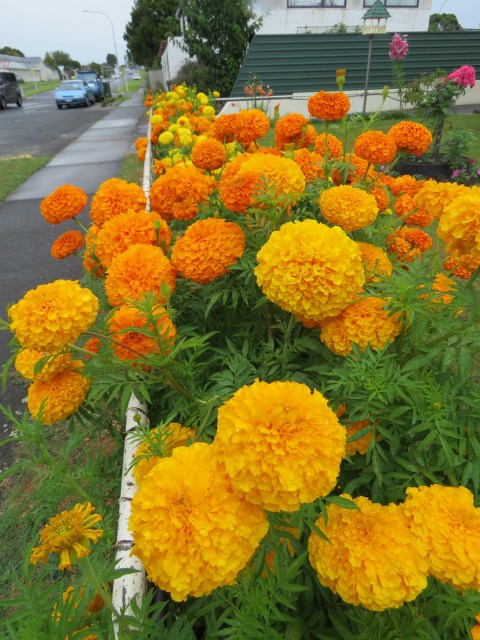
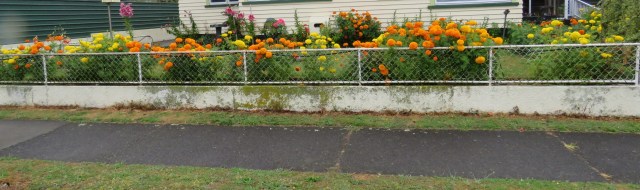
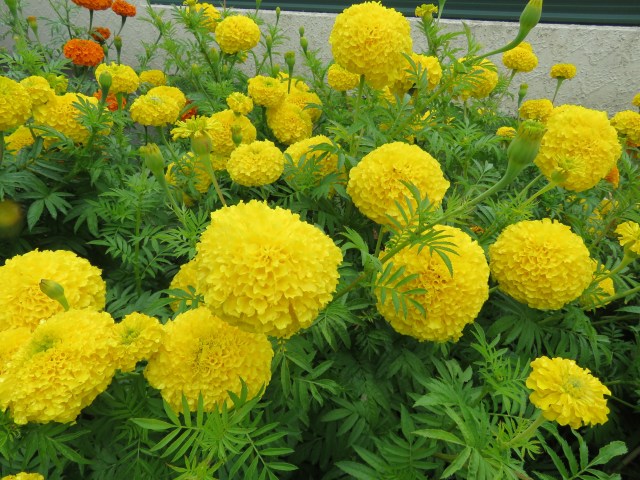
Marigolds have never featured on my list of plants to grow but this display in a front garden was so joyously eye-catching that I turned the car around and went back for a second look. I knocked on the front door to ask permission because, even if it is legal to photograph from the footpath, it feels a bit rude to be in front of a stranger’s home taking photos. Permission was granted readily and with evident pride.
For those of you who don’t know the place, Waitara is a small coastal and river-mouth town of about 7000 people. I will brook no argument when I declare that it has the best climate of anywhere in Taranaki, but it has long been seen as a lower socio-economic area and never as desirable as other satellite areas of New Plymouth. So far, it has largely escaped gentrification and it certainly has a character of its own with a rich pre-colonial history and a complicated and often tense history in times since colonial settlement started. It also has a community orchard.
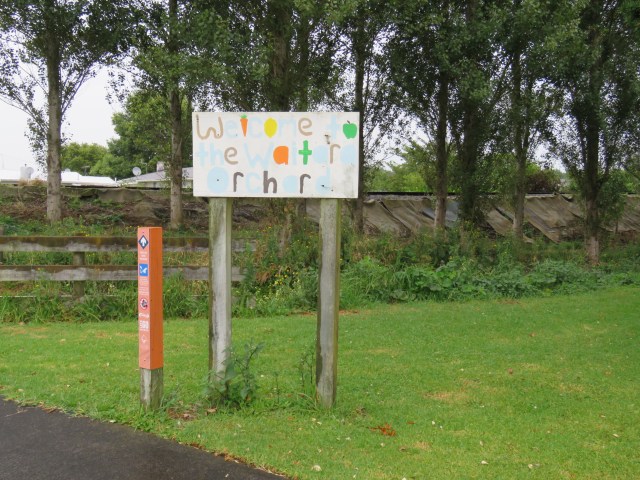
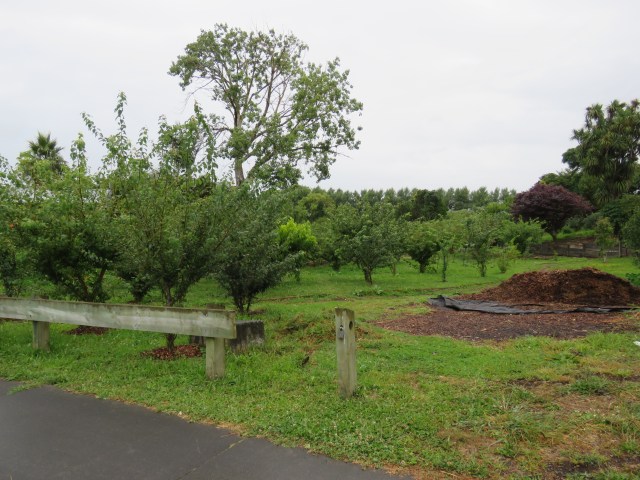
The orchard is low-key, as illustrated by the only sign I saw. It is not flash and clearly the maintenance regime is fairly light but it is remarkably extensive and undergoing expansion yet again. We are not talking just a few fruit trees. I am pretty sure that it is supported by the local council and community board who presumably provide the land, a bit of financial support and some level of essential maintenance while the rest is carried out by volunteers.
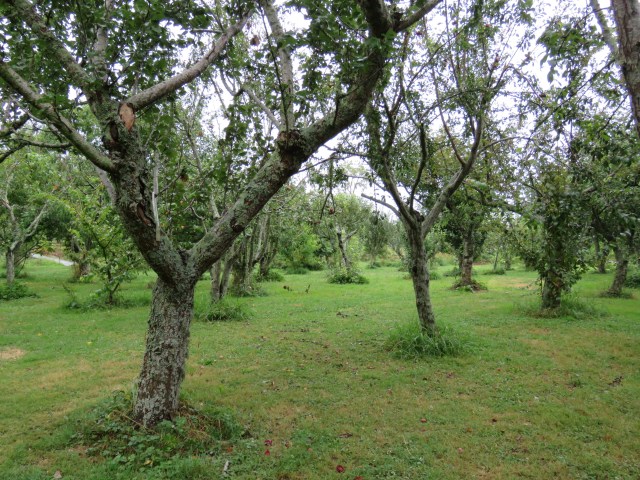
We don’t need the fruit ourselves and it would drive me nuts because I bet people pick a lot of the fruit before it is fully ripe. If I lived nearby, I would be eyeing up a tree thinking the fruit needs another week before it is ready to pick and somebody else would swoop in and pick it while I waited for optimal timing, but that is the way of an open community garden. Judging by the very few remaining windfalls beneath the plum trees that had finished fruiting, most of it is being collected by people whose needs are greater than ours.
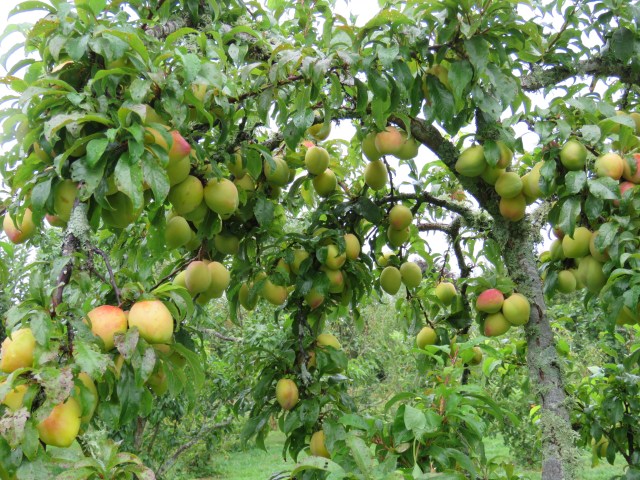
Nothing is labelled. There were a couple of trees heavily laden with what look to be a plum hybrid which were still too firm to test for flavour. I would like to know what variety they are because they are performing very well.
There is a good project there for somebody to map the orchard and track the performance of all the many different cultivars, providing a resource of information that would be both helpful and relevant to local residents who may be thinking of planting their own fruit trees. If I lived close by, I would start doing it.
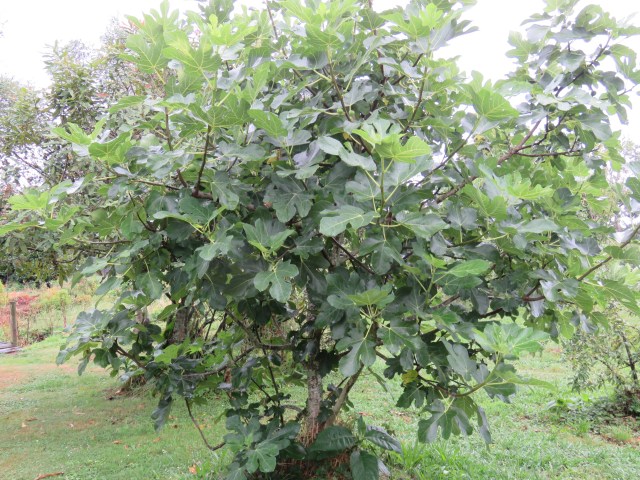
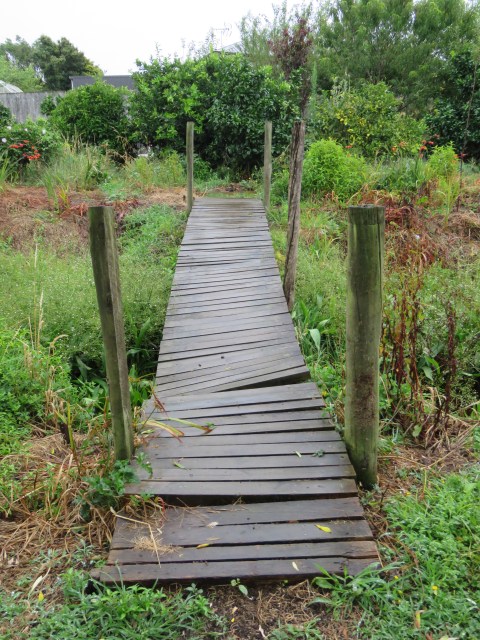
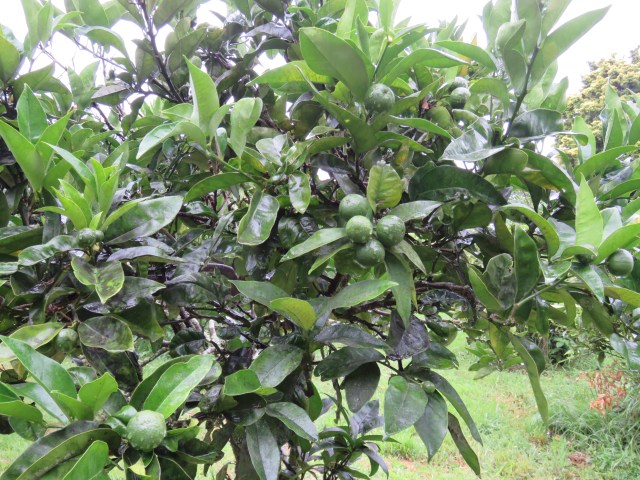
The figs were growing well. There were a lot of citrus trees (wrong season for those but plenty of small green fruit set for later in the year). The apples were patchy in fruit set. Some had lots of fruit, others needed a spray and some pruning. I am sure that various stone fruit have been planted – peaches, apricots and nectarines – but I would have to live closer to monitor those to determine which varieties were fruiting and growing well in our climate which is distinctly marginal for any stone fruit other than plums. I would guess there were pear trees there too, but the rain was getting heavier and a collapsing bridge discouraged me from exploring further.
Maybe it is because it is so low-key and community-based that this orchard can not only survive but also expand. What a wonderful resource it is, even more so in a small town with a median income well below the national average.
The marigolds and community orchard made my morning.
 Tikorangi The Jury Garden