Part one is here. You may wish to check the definitions of pictorial and immersive gardens.
The designers whose work we seek out – often travelling great distances across England to do so – are Piet Oudolf, Tom Stuart-Smith, Dan Pearson, James Hitchmough and Nigel Dunnett with the work coming out from Sheffield University and, to a lesser extent, Christopher Bradley-Hole.
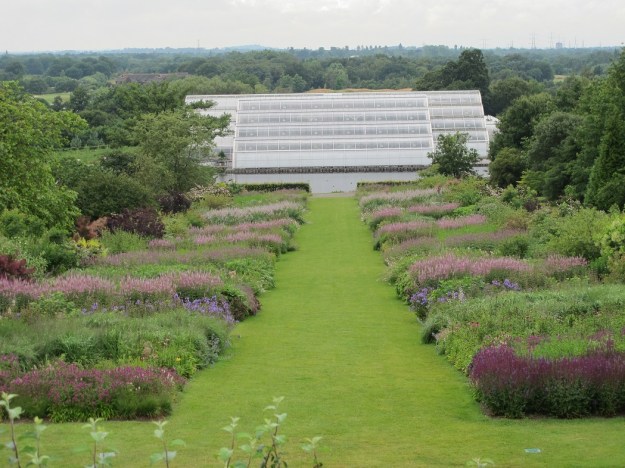
More pictorial than immersive – the Oudolf borders at Wisley RHS
We started with that giant of the New Perennials movement, Piet Oudolf. Who doesn’t? We have seen Oudolf’s work in several places – including Wisley, Trentham Gardens, Scampston, Pensthorpe and Bury Court. I like the controversial glasshouse borders at Wisley (though not so much on the last visit when they had all been freshly mulched in gravel which I found a bit too utility) though I acknowledge that they are more pictorial than immersive. Mark finds them a bit stripey. Our least favourite was Scampston which led me to think that he is probably a better plantsman than designer. Mark is given to describing some of his work as being ‘contemporary Gertrude Jekyll on steroids’ – particularly the large-scale work at places like Trentham and Pensthorpe.
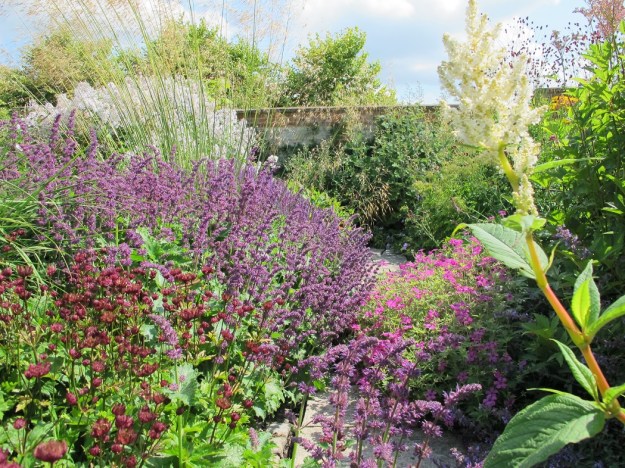
Immersive Oudolf at Bury Court – also the difference between a domestic garden and public work
My absolute favourite is his very early commission on the walled garden at Bury Court. It really is magical and part of that is the scale which is much smaller, more detailed and domestic in nature. What designers create in private commissions is very different to what they do on large scale, public projects and it is interesting seeing both, even though our main focus is domestic gardens. The third aspect is what they do in their own private garden but we have missed the opportunity to see that with Oudolf. He closed his private garden, Hummelo, in the Netherlands last year.
On our July trip, we had scheduled in a visit to the much acclaimed new Oudolf gardens at the Hauser and Wirth gallery in Somerset as well as his early work at Potters Field in London that we have not yet seen.
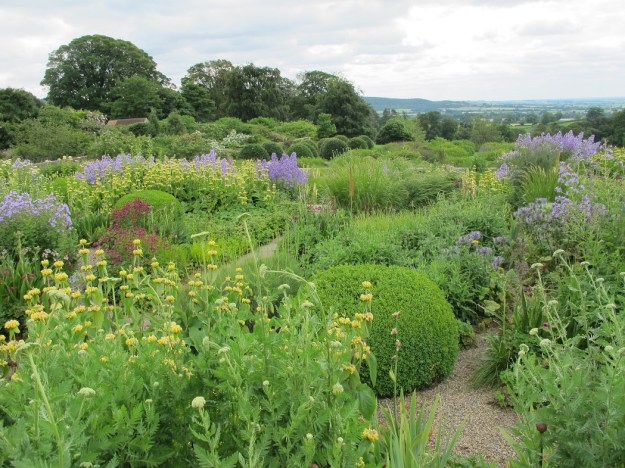
Stuart-Smith at Mount St John in Yorkshire
We first saw Tom Stuart-Smith’s work at Wisley, too – the border plantings that edge the glasshouse lake. It was a bit early in the season and more recently planted, I think, and we weren’t blown away by it on that first visit. Subsequent visits have made us appreciate it more. The privilege of visiting his private commission at Mount St John in Yorkshire was different altogether. The sunny parterre immediately in front of the rather grand residence was sublime. Sure it was large scale and big budget. From memory, it is the home of a supermarket magnate. But it was a garden that invited you in to experience walking through it while it stretched out to the wider landscape beyond. My photos don’t do it justice.
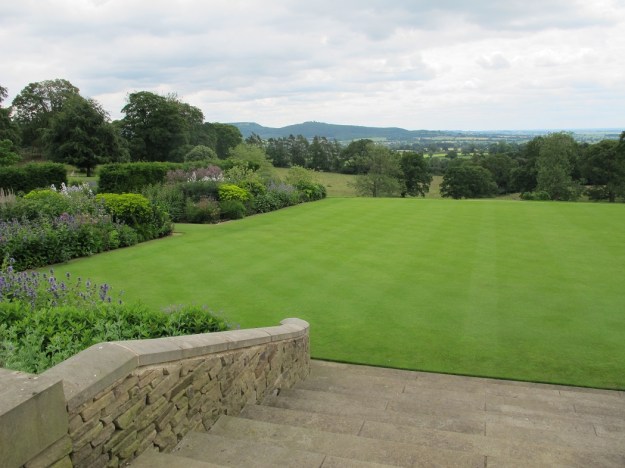
More traditional pictorial design at Mt St John – still the work of Stuart-Smith
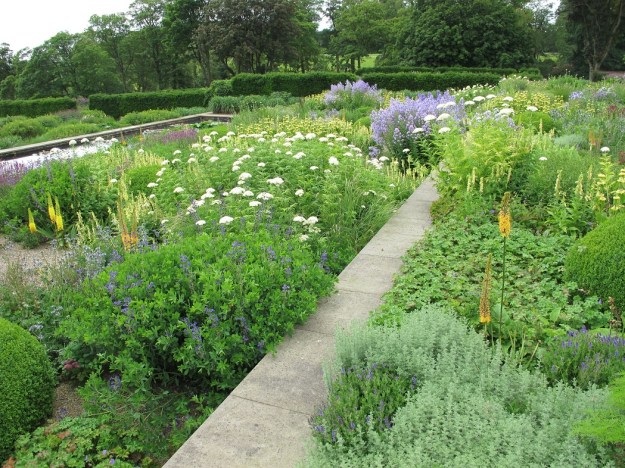
Immersive design. The hedge at the far side is all that separates this garden from the more traditional one above
Just by way of illustrating the difference between immersive and pictorial gardens, look at these two side by side. It was the fully planted parterre that drew us in and made us catch our breaths in delight. Immediately adjacent to that, also in front of the house and looking out to the view was a more conventional lawn flanked by twin borders. Same designer, same location – two very different experiences. While admiring the horticultural excellence of the latter, it didn’t draw me in and make me want to linger as the more detailed and planted parterre did.
We have also seen his work at Trentham Gardens where most photos I have seen don’t do it justice. The photos I saw on line and in books all made those enormous parterres look very bitsy. In real life, the plantings are large and exuberant and they wrap around, obliterating that bitsy look that is a legacy of historic design features. Visiting a garden in person is a very different experience to looking at photos or videos.
On our July visit, we were planning to rush down from Shropshire to catch the Wednesday opening at Broughton Grange – another private commission of his. We really wanted to visit in person because we have only seen it in photos and it features that Stuart-Smith trademark of clipped caterpillar hedges undulating through a parterre. It was the inspiration for our own caterpillar garden at home which has nothing to do with caterpillars but is defined by the undulating internal hedging.
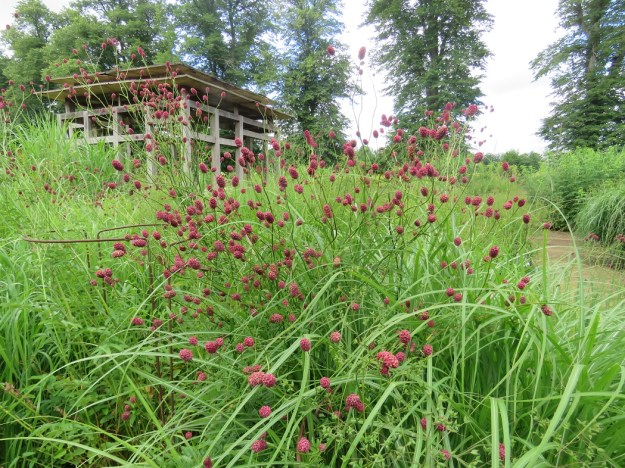
Bradley-Hole at Bury Court
So too was Christopher Bradley-Hole’s grass garden at Bury Court a direct inspiration. There is another private garden of his design and execution that is sometimes open by appointment. I found it last trip – in Surrey, I think – but we just ran out of time. I was planning to find it again and see if we could include it this time.
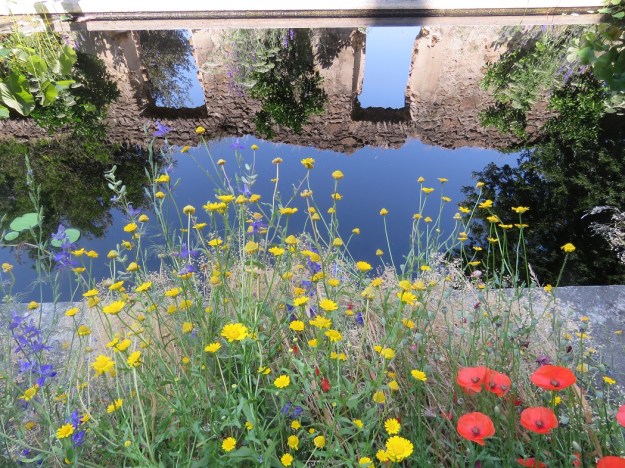
Early Pearson at Torrecchia Vecchia
We came to the work of Dan Pearson a little later. We have seen an example of his early work at Torrecchia Vecchia in Italy, his public sector work around the Kings Cross redevelopment in London and the perfection of a smaller, private commission in the Cotswolds. It is such gentle, but inspirational gardening. On this visit, we planned to go to Chatsworth Castle, specifically to search out his part of the garden. As I recall, it was a re-creation of this that won him gold at Chelsea a few years ago. Then we were heading north to see his ongoing work at Lowther Castle. My impression is that it is a softer, more English take on a romantic garden in the style of Ninfa in Italy but I have only seen photos.
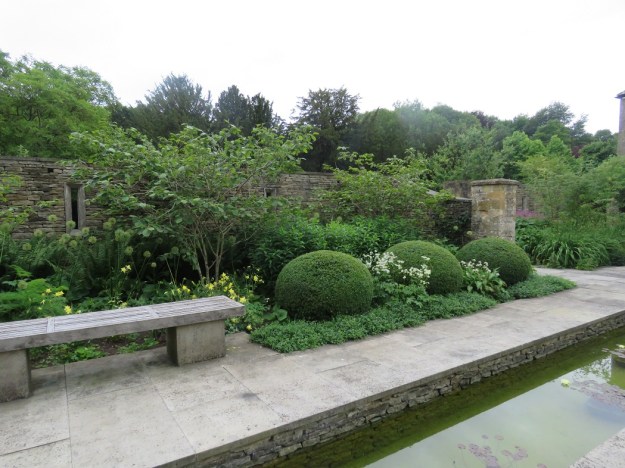
Pearson perfection in a private Cotswolds garden. This was my first choice of image but then I went away and thought I have done exactly what I have referred to – picked the one section of the garden that is full of sharp detail and more pictorial in style.
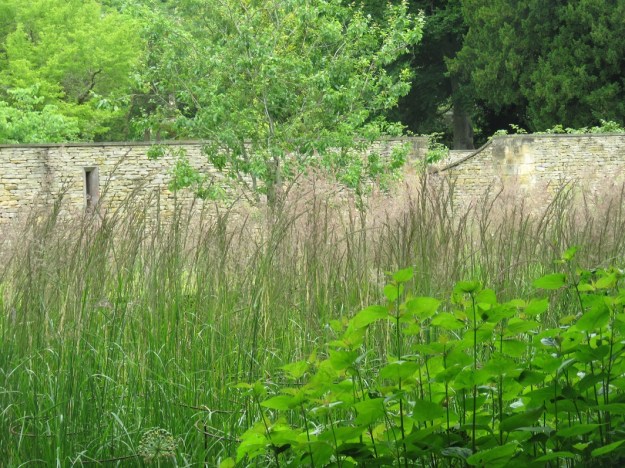
Parts of the garden were like this…
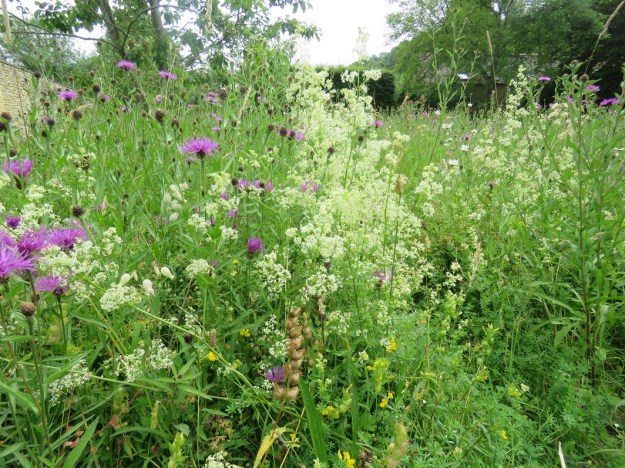
and this. Maybe what made this garden so successful is the sensitive marriage of both pictorial and immersive styles in the one domestic space.
While in the north, we were going to take in the historic topiary at Levens Hall because we are not only going to look at the modern gardens and experiencing some of the historical work gives context to what followed. I would happily have gone back to see Arabella Lennox-Boyd’s private garden, Gresgarth, which is in the same area (roughly speaking) if time allowed.
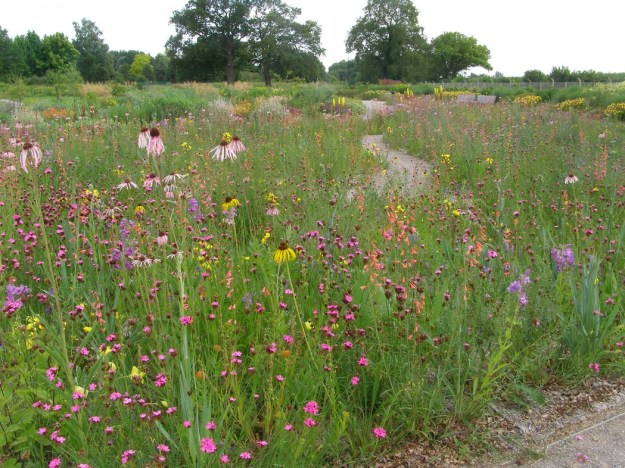
The enchanting Hitchmough meadow at Wisley in its early days
I have written often about the magic of James Hitchmough’s Missouri Meadow garden at Wisley when we first saw it in 2009. Magic is not too strong a word, even 11 years later. It was enchanting. We also watched it disintegrate and lose all its charm on subsequent visits and that is what made us interested in seeing how some of these looser, more naturalistic plantings mature over time. It made us realise that no gardens are maintenance free though some are lighter on maintenance requirements. And different skills are needed to manage such plantings. Given that Wisley is staffed with some of the very best and keenest horticulturists in the country, I am sure that major lessons have been learned. We wanted to see what those lessons were and how management of these plantings has evolved both by the designers and those tasked with their ongoing maintenance.
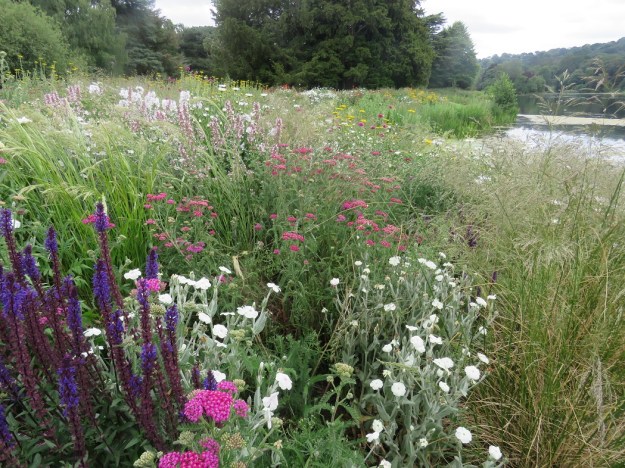
More recently, Dunnett at Trentham Gardens
Hitchmough and his colleague, Nigel Dunnett, were both leading lights in the much-acclaimed Olympic Park landscaping which we visited several years later. Also Dunnett at the Barbican rooftop garden in London, though it was the unexpected discovery of his work at Trentham Gardens that was the greatest highlight. That has been extended greatly (Trentham extends most things greatly, really) and we wanted to see both the newly planted areas and how those original plantings had matured.
We were also planning to spend two nights in Sheffield to look at their public sector work on greening the grey of the inner city. But the real highlight was when I found that their private, home gardens were both opening one Sunday afternoon for the National Gardens Scheme. I structured the whole itinerary of our UK leg around that Sunday afternoon. This would complete the set of having seen public sector work, private commissions and how they choose to garden in their own space. Maybe even meeting them and being able to talk briefly. We were also planning to see James Hitchmough’s borders at the Oxford University botanic gardens which are reputedly excellent and lasting the distance better than his earlier meadow at Wisley.
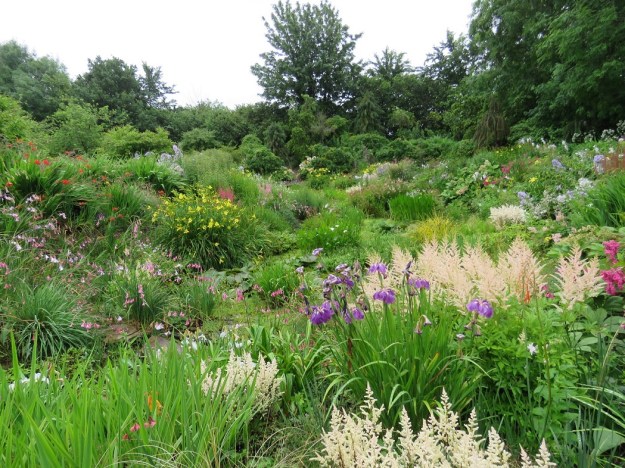
Wildside – created by a master gardener and plantsman
Finally, we had arranged to return to Wildside, one of the most innovative and exciting gardens we have seen, created not by a designer but by a plantsman. We are really sorry to miss the opportunity to meet with Keith Wiley again, especially as he has now started work on the last area he had to develop.
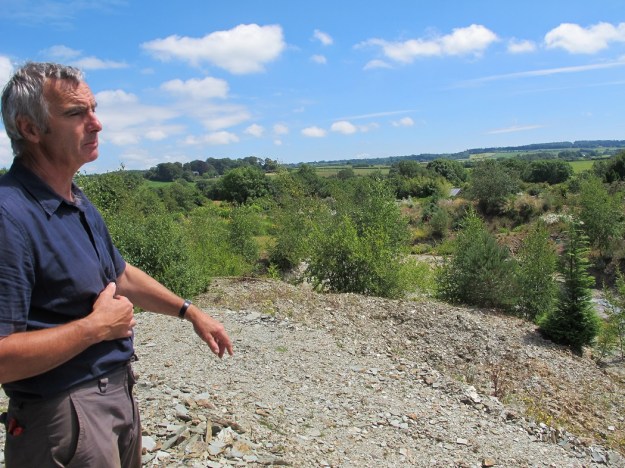
Wiley at Wildside in 2014. Keith was explaining his plans for his last area to be developed – now under way.
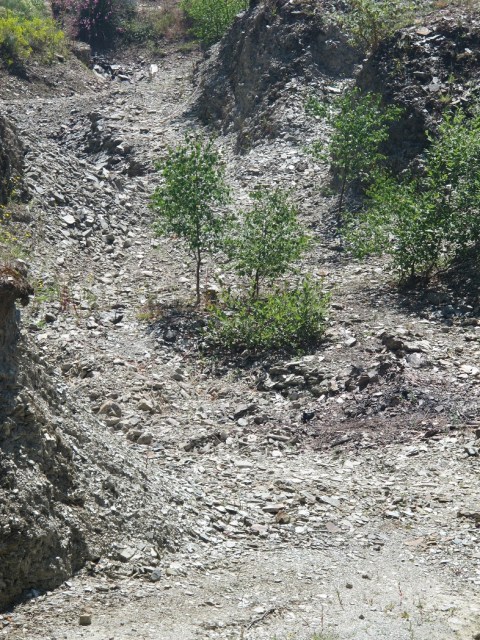
When an unsolicited invitation arrived to visit the private garden of a leading designer – you don’t ask for such a privilege, you understand – we were a-quiver with excitement. In the end, we couldn’t make our dates fit so it was not to be. This is perhaps just as well because it would have escalated our disappointment to a whole new level when everything had to be cancelled.
And that was the trip that was not to be in this strange era we are living through.
NB: If you want to know more about any of the gardens or designers mentioned here, a Google search will bring up a wealth of information. Putting the name in the search box on the top right of this page will bring up more information and photos on most of them from our personal perspective.
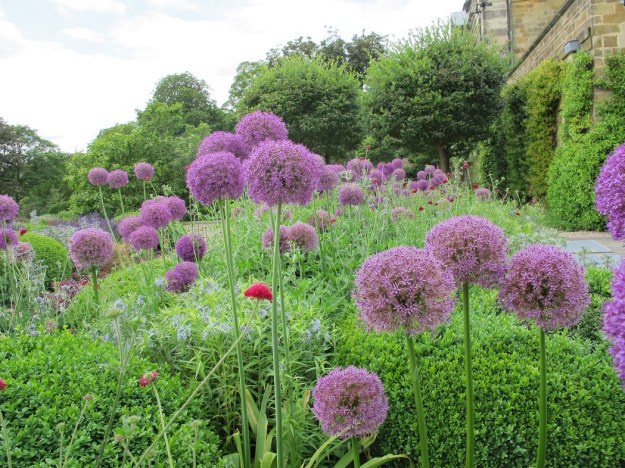
Alliums at Mount St John. It was interesting going through my photos. In pictorial gardens, I tend to have framed landscape views and vistas or photographs of man-made focal points. In immersive gardens, I mostly take photos on a close-up scale – and many more of them at that. My photos are much more about colour, plant combinations and plant forms.




 Tikorangi The Jury Garden