
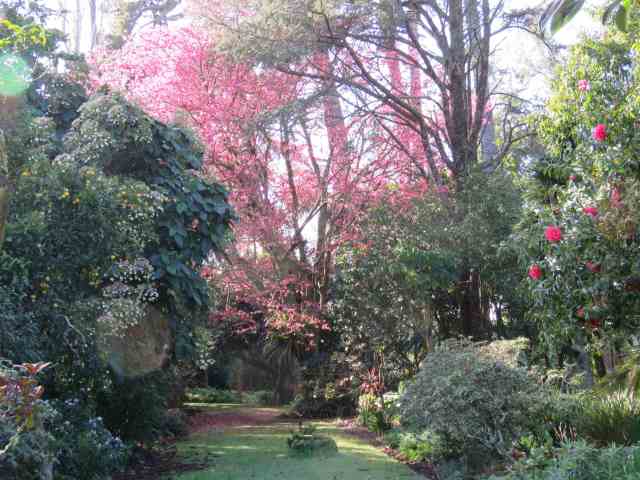
We are very sensitive about criticism of the climate in our neck of the woods. It is true that other places warm up more quickly in spring, some of us would like another degree or two of heat in summer and spring can be wet and windy. For many years we would cringe as garden and nursery visitors from further north or east would come in, hopping out of their heated cars and shivering, saying how cold and miserable it was here and asking if it was always like this. Or worse, asking “How can you grow such tender material in your cold climate?” One person clearly pushed Mark too far because I heard him reply with a dead pan face that we get out at night with little woolly jumpers and blankets to cover them up.
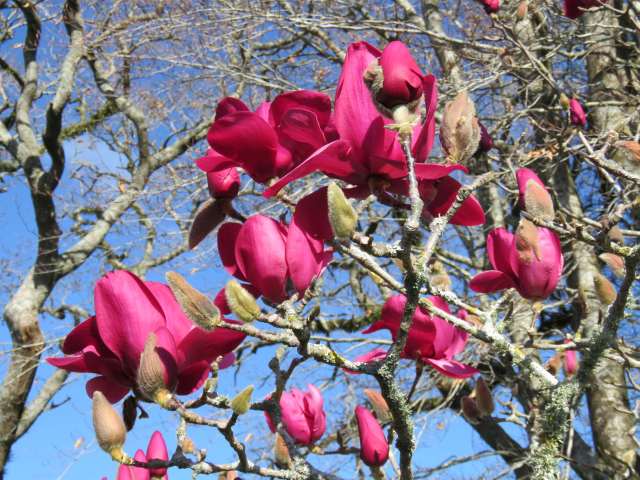
We may not have higher temperatures in summer but we have high sunshine hours and high light levels and that makes a big difference in winter. Of course, it can get cold and we have winter storms as cold fronts move over bringing wind, rain and gloomy skies. But in between, we can get bright blue skies and sunshine for days on end. Right now, in what we deem midwinter and our bleakest month, we still get 10 hours of daylight.
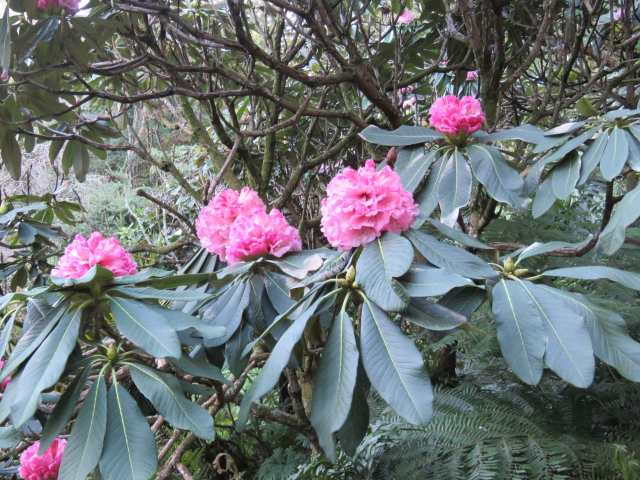
This train of thought was started by reading a blog post by Christchurch gardening colleague and friend, Robyn Kilty. Headed ‘It’s winter drear, my dear’, it vividly conveys her experience of mid winter, where low light levels and grey skies suck the colour out of both garden and landscape.
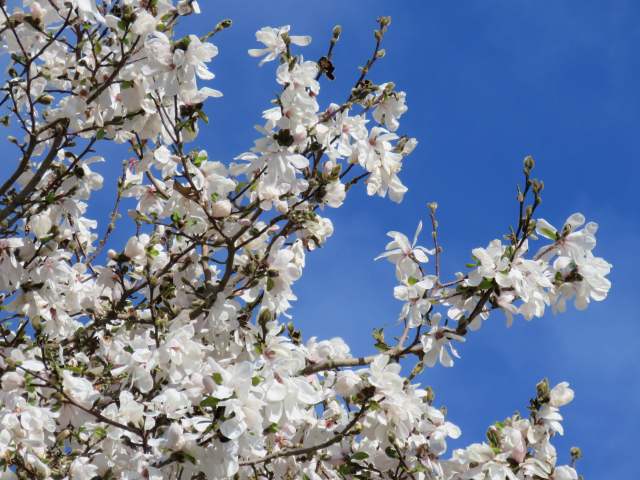
I have not been to Christchurch in midwinter so I have no opinion on their winter conditions. For overseas readers, we are in the middle of the west coast of the North Island. Christchurch is in the middle of the east coast of the South Island. Clearly our winter experiences are totally different and that is what happens when you live in a country of long thin islands that run north to south, surrounded by vast oceans with no major land masses nearby. There are big variations in climate.
Nobody is going to suffer from seasonal affective disorder here in Taranaki. We are at latitude 39° south. If you match that to the 39th parallel north, we correspond to places like Ibiza, Sardinia and a line through California. Not that this means in any way that our climates are similar but it does mean our winter daylight hours are greater, as is the height the sun rises in the winter sky.
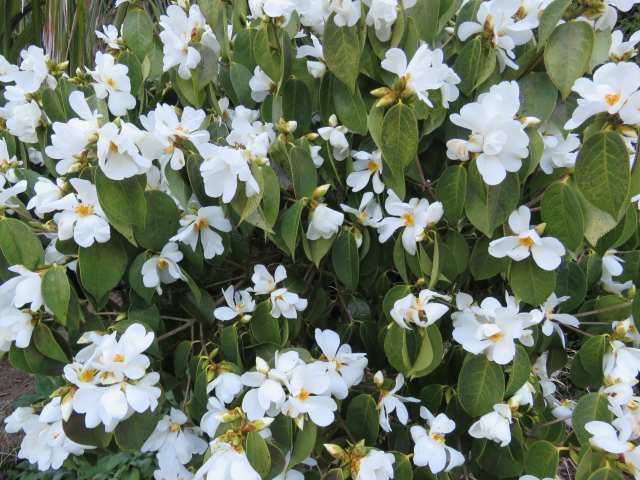
We garden all year round. If it is wet and windy or bleak, I will stay inside. I wait until the mornings have warmed up a bit before heading out, retiring indoors when it starts to cool off at 4.30pm. But most days, we are out and about for most of the day. I have a penchant for photographing flowers against blue skies but I don’t colour enhance my photos so what I show is colour as my camera captures it.
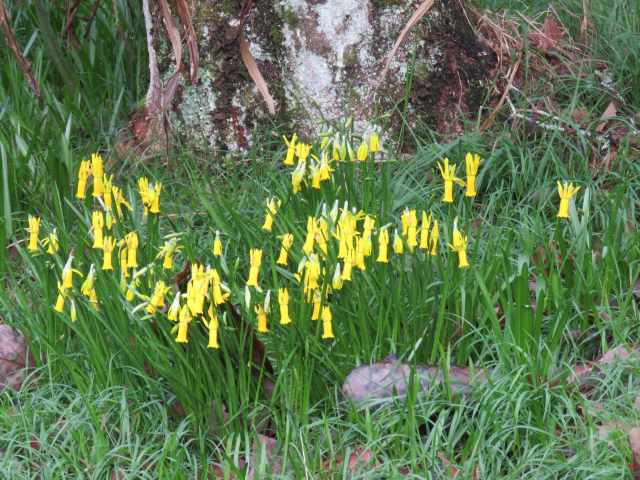
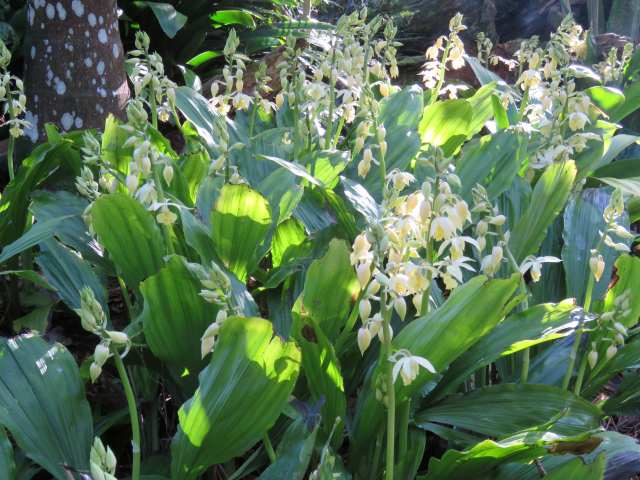
Our winters are still filled with colour and flowers. As the snowdrops pass over – their season is but brief in our mild conditions – so much else is coming into flower that I feel that slight sense of panic that I may miss something altogether if I don’t get right around the garden every few days. At least we no longer suffer from anxious pressure at the need to get many tasks done before the garden visiting season starts – on account of us no longer opening the garden, you understand.
There are many worse places to spend winter than here in North Taranaki.
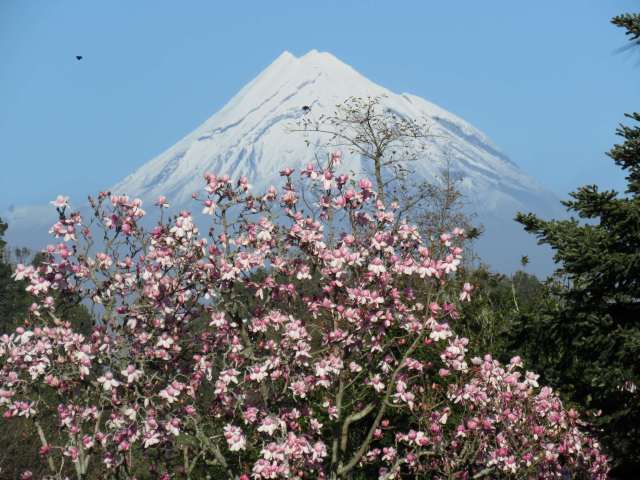
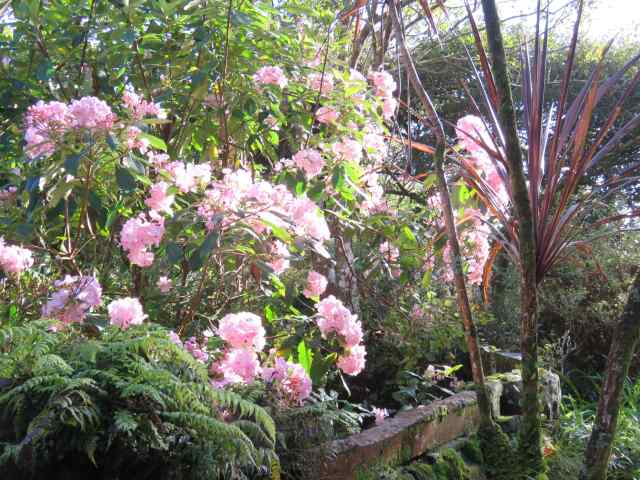
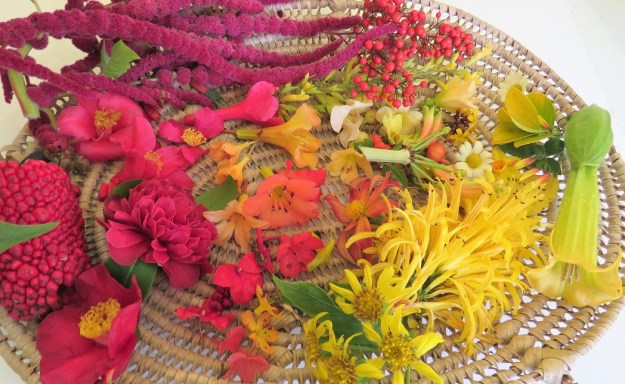 Winter can be very pink, here. Or so I have often declared. I hereby move my position. Late winter and early spring can be very pink – all those camellias and magnolias. In late autumn to mid-winter, the dominant colours are more inclined to the oranges and yellows with a smattering of reds.
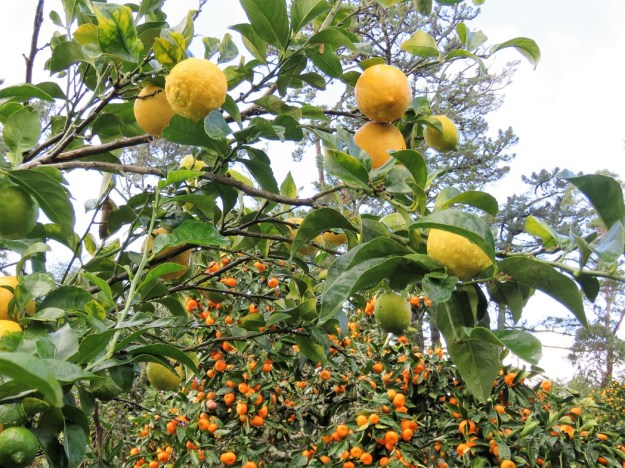 I could of course have added in fruit. The citrus trees add a glorious blaze of colour in the depths of winter – just a common old lemon and a very productive mandarin tree in this photo, but the orange trees we have scattered through the ornamental gardens are also indubitably orange and a very cheerful sight for that.
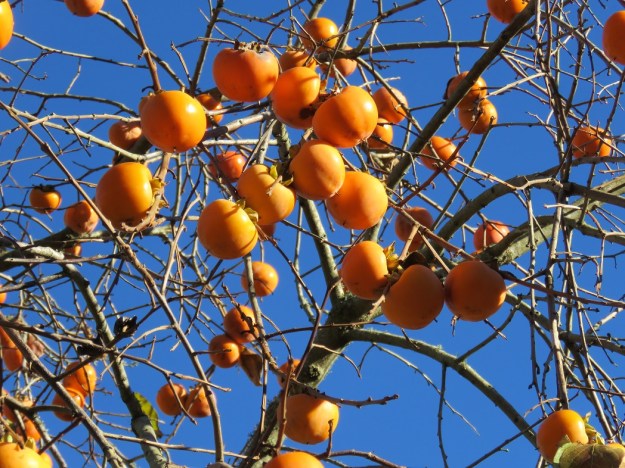 And it is hard to ignore the glory of the persimmon tree, be the sky grey or blue. It is a feature of our climate that we have high sunshine hours and bright, clear light even in mid-winter, albeit interspersed with the rain. We don’t get many days when it is irredeemably grey and gloomy, without spells of clear skies.
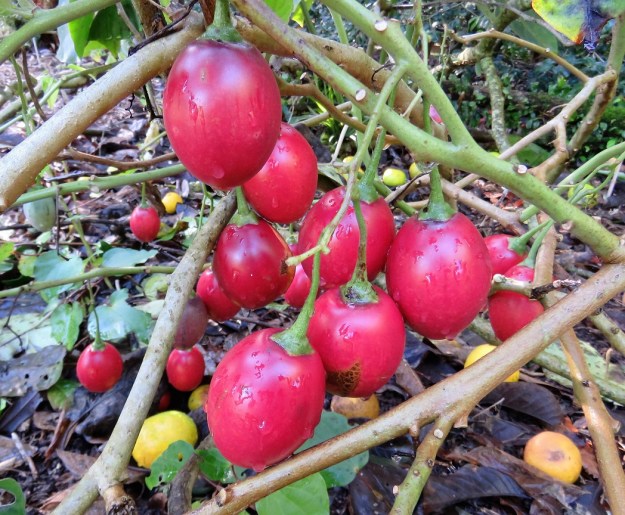 The tamarillos are also hanging decoratively. These used to be known as ‘tree tomatoes’, botanically Solanum betaceum. Apparently the ravages of the potato psyllid have hit commercial production hard, but our plants just continue on in a regime of benign neglect. The fruit is usually stewed with sugar but stewed fruit is not part of our diet. I enjoy them more as a fruit cordial. Mark’s father used to like eating them sliced on wholemeal bread with a little raw, chopped onion. The yellow fruit beneath are windfall grapefruit.
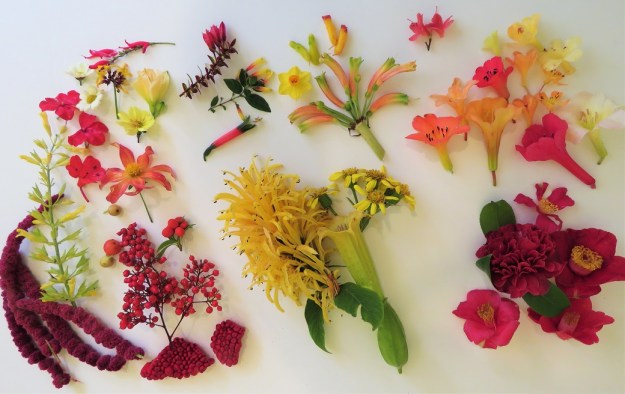 But to the flowers. On the left, we have the vestiges of autumn – salvias, impatiens, tree dahlia hybrids, daisies and Oxalis peduncularis. At the front are a few berries and seeds – baby figs from
  Finally I offer you… the ‘fruit’ of the Japanese raisin tree, Hovenia dulcis. I am guessing that as our plant is maybe 20 years old and planted in a somewhat out of the way position, we just haven’t noticed these before. They are actually the swollen tips of the stems and are edible. They even taste fruity, in a raisin-ish sort of way. Apparently drying them makes them even more raisin-y. It is more a curiosity than an edible essential, but we like these odd additions to our diet here.
 Tikorangi The Jury Garden