
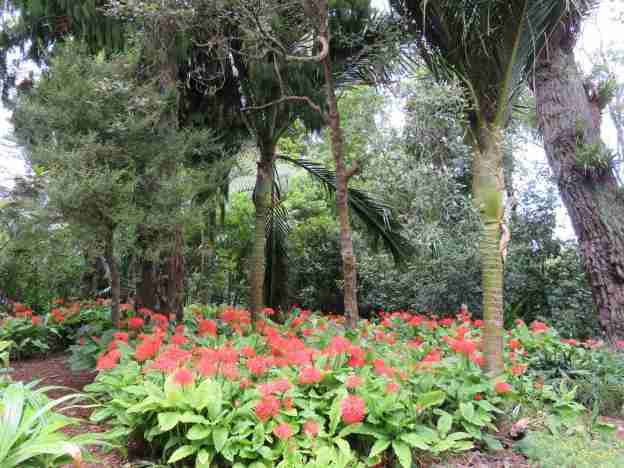
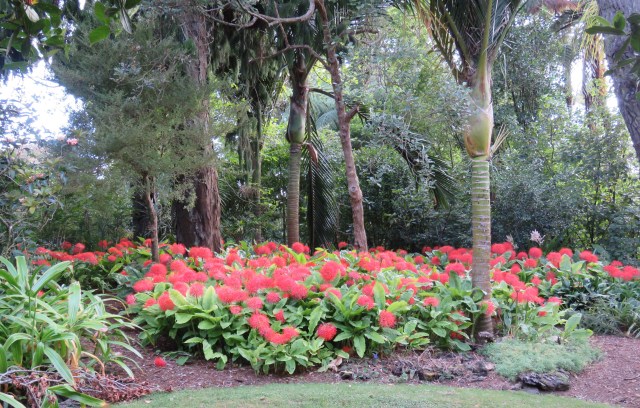
Every year I photograph our swathe of Scadoxus katherinae, more accurately Scadoxus multiflorus ssp katherinae. It is a remarkable display, especially to those who know plants and those who have one treasured plant that they nurse along in a pot.
Mark told me the story behind it this week. His father, Felix, had a few plants of it, but not many. He will have started with one single specimen. Back in the days, Jack Goodwin was director of Parks and Reserves in New Plymouth and Jack had a different selection of katherinae that he had picked out which he was very pleased with. It had a bigger flower and a shorter, sturdier stem. He gave one to Felix but Felix was less impressed by it.
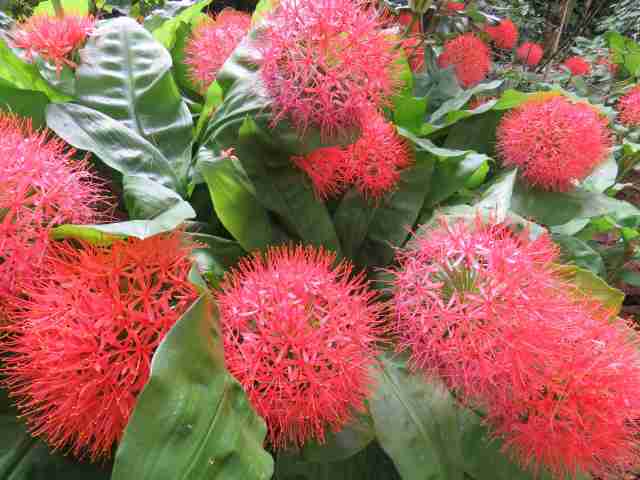
Mark was in his earlier days of dabbling with plant breeding – a man with a paintbrush. He crossed Jack’s form with Felix’s form. Because he was crossing one clone of the species with another clone of the same species, the progeny remain the species, not hybrids. Clonal crossing doesn’t create hybrids – hybrids are a mix of different species – but it can result in increased vigour.
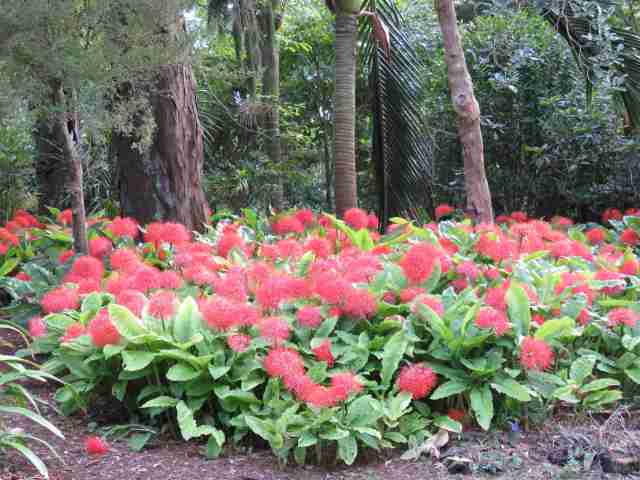
The rest, as they say, is history. Mark planted the seedlings at the end of the Avenue Garden where they have thrived down the decades. It is a rare example of a plant that naturalises without becoming a weed. They have just gently increased their range around the perimeter. The seeds are fairly heavy and fleshy so they are not spread by wind and presumably the birds don’t like them so they get to fall on the ground by the parent plant. I used to relocate the germinating seedlings from the paths back into the garden but now we just pull them out. We have enough.
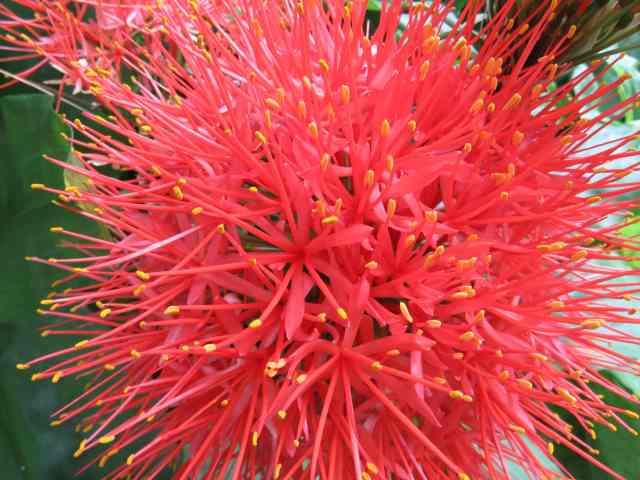
We refer to katherinae as a bulb from South Africa but botanically, it is a bulbous perennial or a rhizomatous perennial. The bulb part is just a swollen lower stem. They are evergreen but they replace all their foliage every year so there is a period in late winter to early spring when the old foliage drops down and looks sad just as the new shoots are emerging. They are a plant for shaded woodland and will thrive in fairly tough, dry conditions with no attention at all – as seen here. However, they are not a plant for cold climates. The internet says zone 10, although we usually refer to ourselves as more zone 9 than 10. If your temperature drops below zero celsius in winter, you are in trouble.
We don’t often boast but this is a sight we doubt you will see anywhere else, except maybe in the wild.
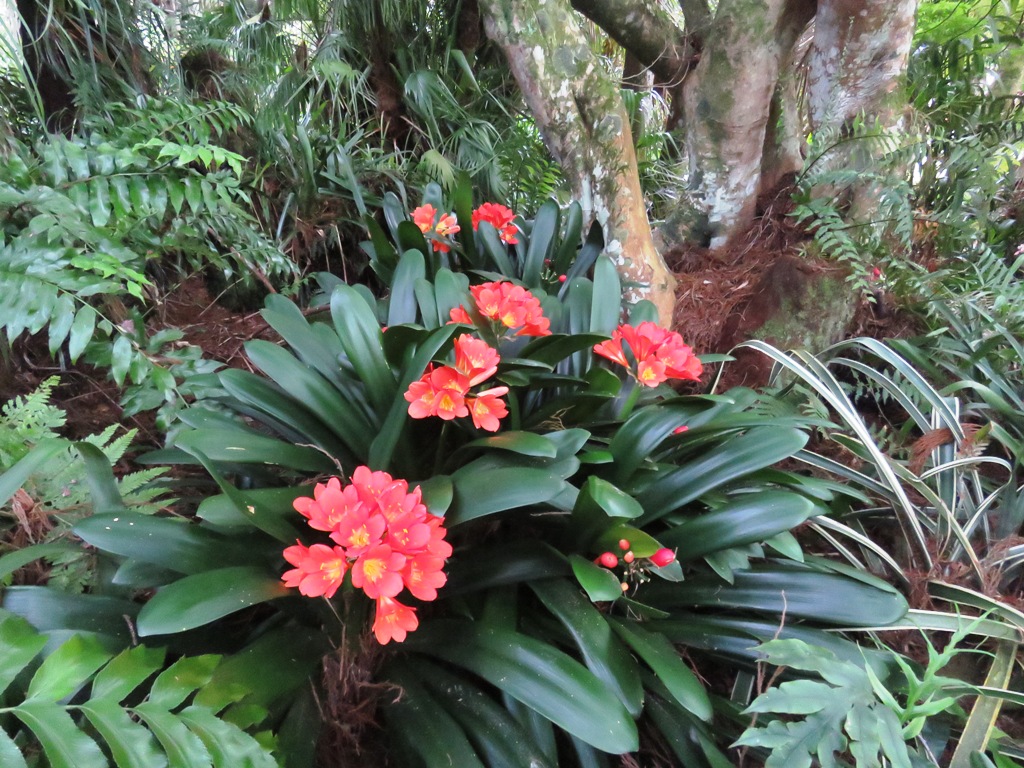 Clivias sure do light up a dark spot at this time of the year, for those of us who live in climates where they grow. This is not a family that will take much at all in the way of frost, though their preference for shaded, woodland conditions gives some protection against cold.
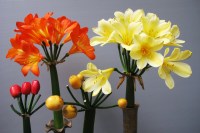
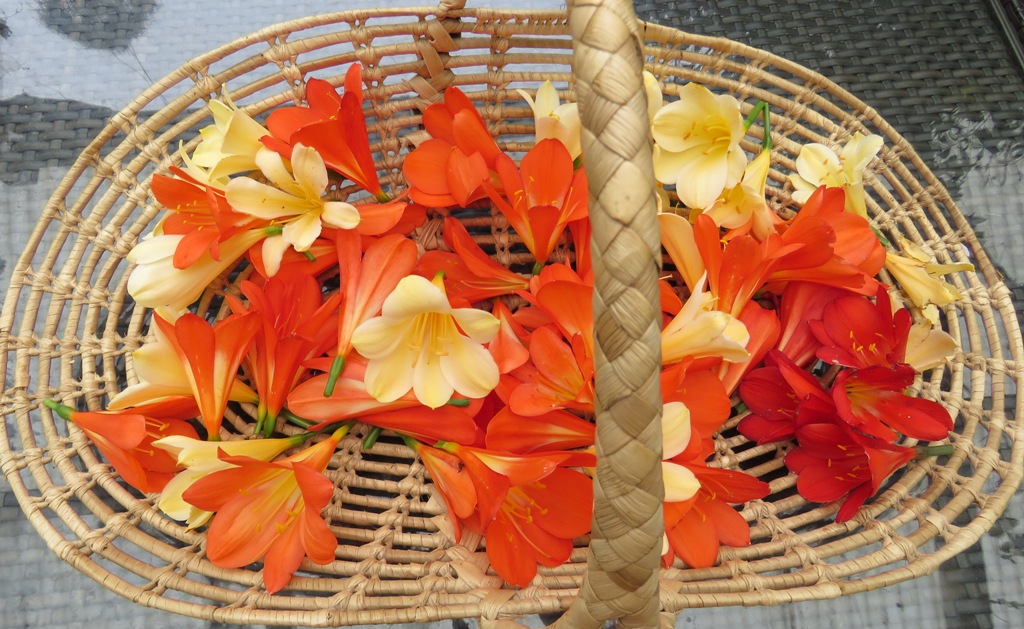 I headed out with my flower basket to gather a single flower from a range of plants around the garden, feeling a little as if I was doing a geriatric Milly-Molly-Mandy impersonation. Given that ours are almost all seedlings, I was a little surprised at how consistent the flowers are when I started sorting them by colour. The variations are… subtle, shall we say?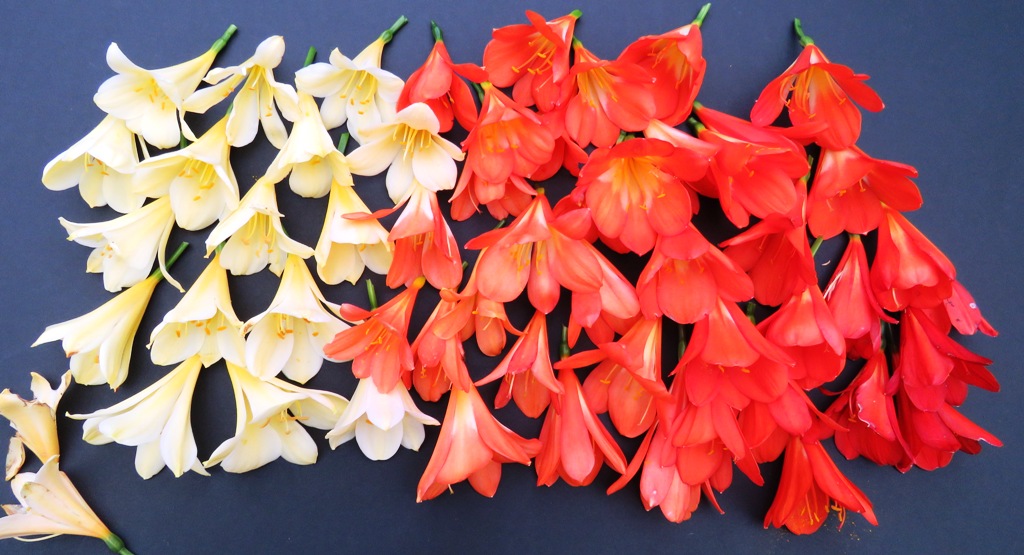
 To the right, we have the ones that age to red. Do not be like the novice gardener I heard of who ordered a swag of expensive red clivia for a mass planting in her ‘designed’ garden. They opened orange, so she dug them all back up again, complained and wanted them replaced. We have not seen clivia that actually open to pure red – some age to red.
 On the left, very battered by bad weather, are a couple of examples of blooms heading to what are called the peach tones. Like many other clivia enthusiasts, Mark has been playing around crossing different plants to try and extend the colour range and the peachy ones are certainly different to the yellows which are the comparator. We have yet to acquire any of the green throated clivia which would add a worthwhile variant.
 Earlier articles include a step by step guide to
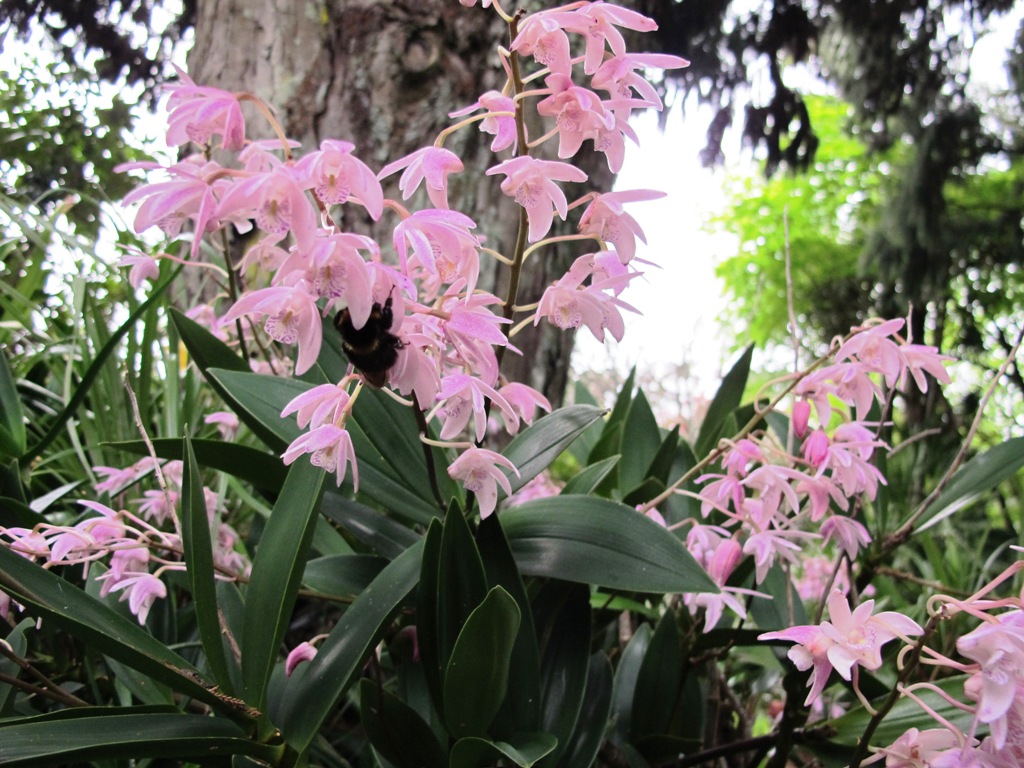
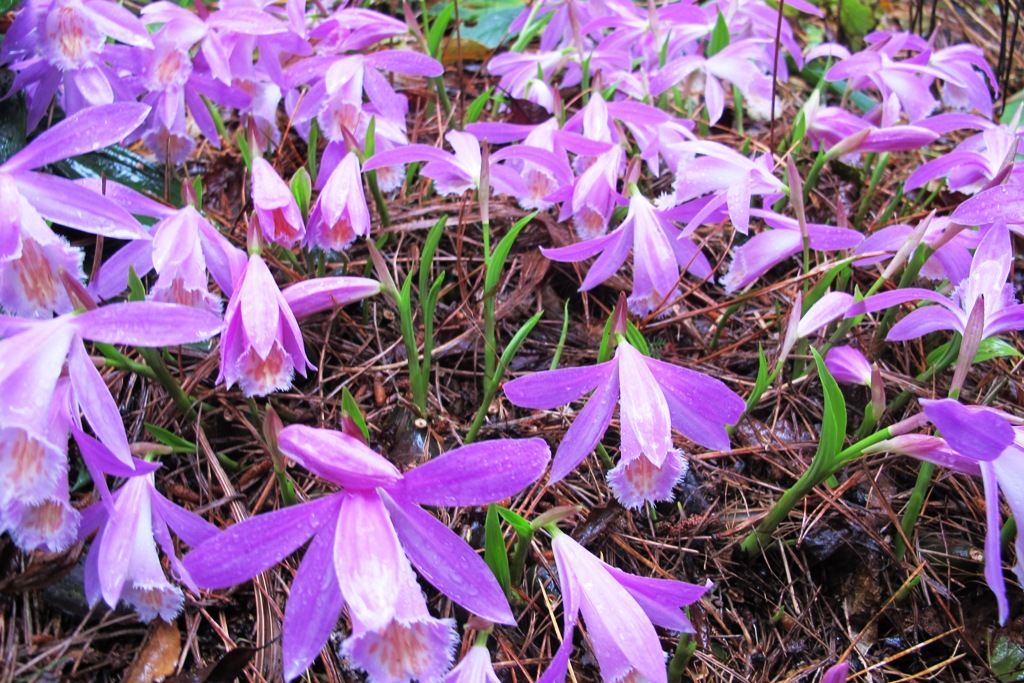
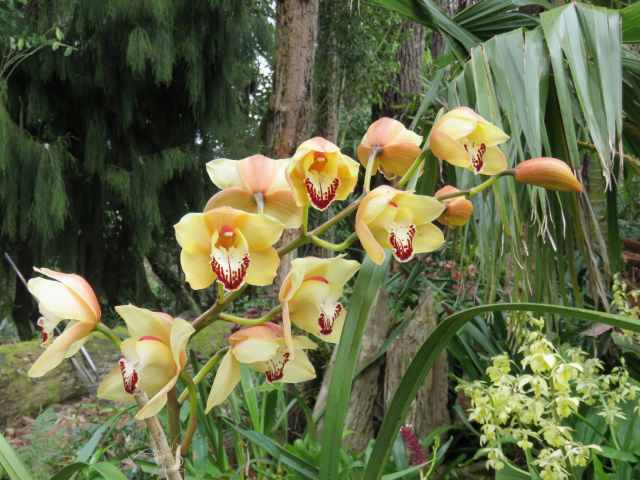
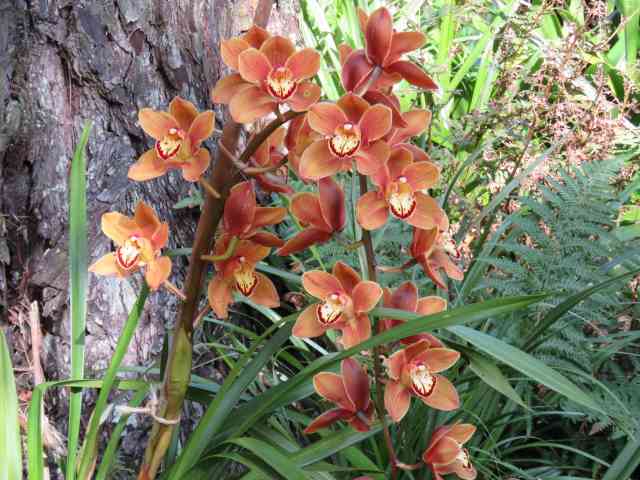
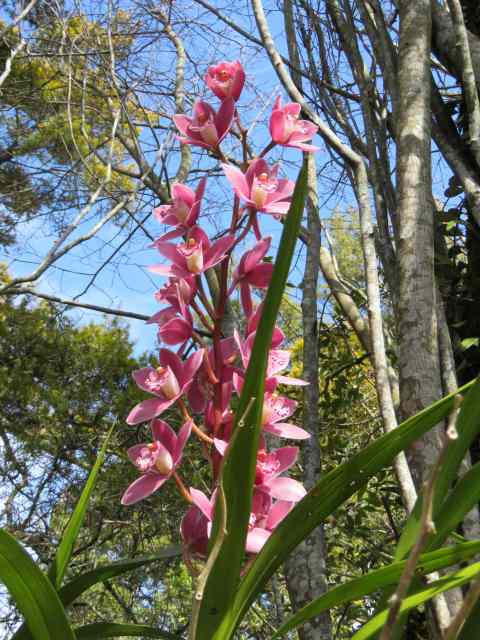
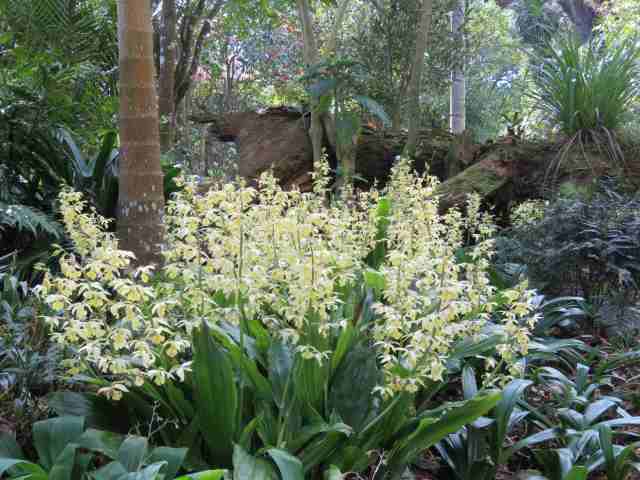
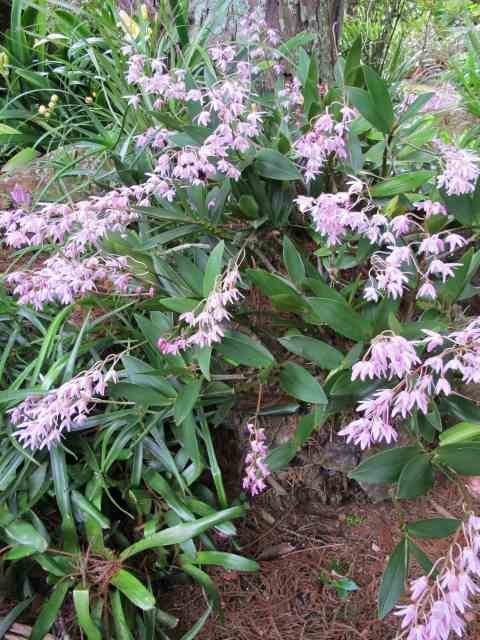
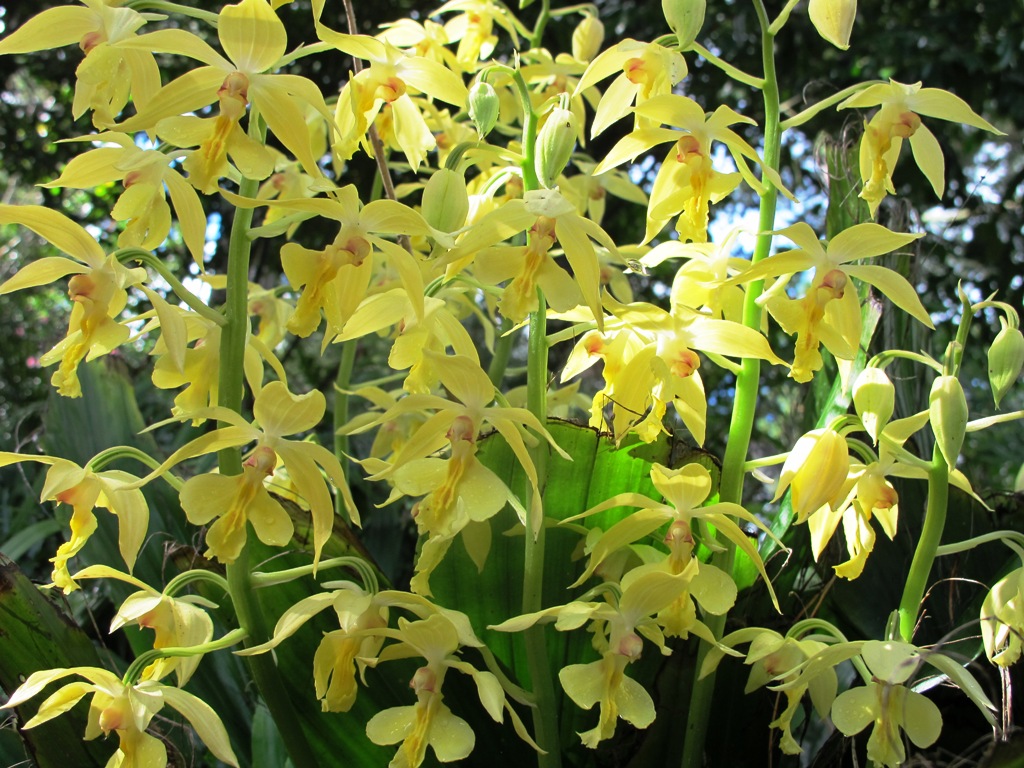 The calanthes are ground orchids and we have big clumps now because these obliging plants can just be left to quietly increase in size. These are fully evergreen and somewhat frost tender but they are a delightful sight through spring and they combine very well with clivias, ferns and even hostas.

 Tikorangi The Jury Garden