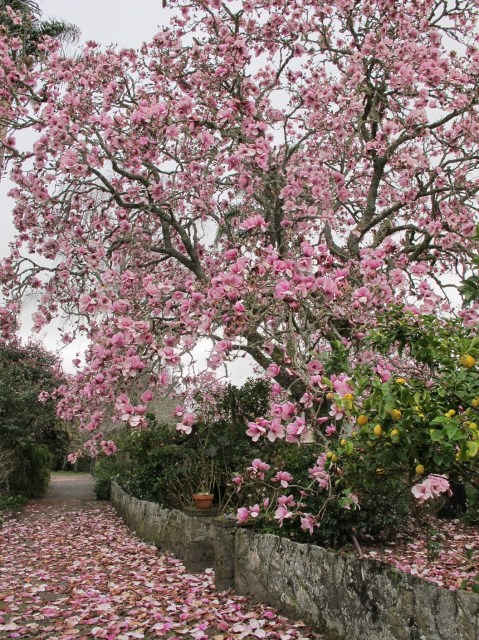
 Back in 1973, when Mark and I were impoverished university students, his father, Felix, gave us the cheque he had received from Os Blumhardt for the right to release Magnolia ‘Serene’. It was for NZ$150 and that was the only money Felix ever received for any plant he bred. At the same time, Duncan and Davies released his Magnolia ‘Iolanthe’ but, despite being the powerhouse nursery of the southern hemisphere, paying breeders for their plants was never part of their operation. Sometimes we ponder how different the family finances might have been had Felix received even a very small royalty payment for his Phormium ‘Yellow Wave’, but that is another story. The remaining Felix Jury magnolia cultivars were not released until the late 1980s when Mark set up the plant nursery here. With the exception of ‘Vulcan’, where the immediate public response took us by surprise, the releases were all very low key.
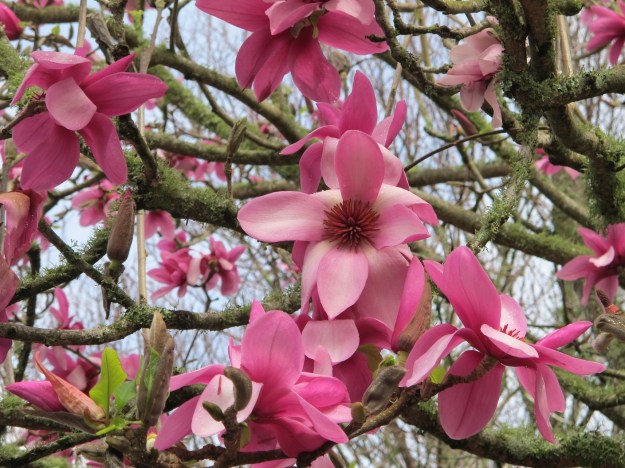
Magnolia Apollo

Magnolia Athene

Magnolia Lotus

Magnolia Milky Way
It takes time for magnolias to prove themselves and it is only in the last couple of decades that the Jury magnolias have become known internationally. There aren’t many of them. Felix only named eight of his own breeding – Magnolias ‘Apollo’, ‘Athene’, ‘Atlas’, ‘Iolanthe’, ‘Lotus’, ‘Milky Way’, ‘Serene’ and ‘Vulcan™’ . We don’t include the variety M. ‘Mark Jury’ in that list because it arrived here as a seedling and all Felix did was to grow it and, in due course, name it. Mark vetoed his father’s suggestion of naming a few more because they were too close to ones already selected, although we have a few fine sister seedlings from those breeding lines in the garden here.
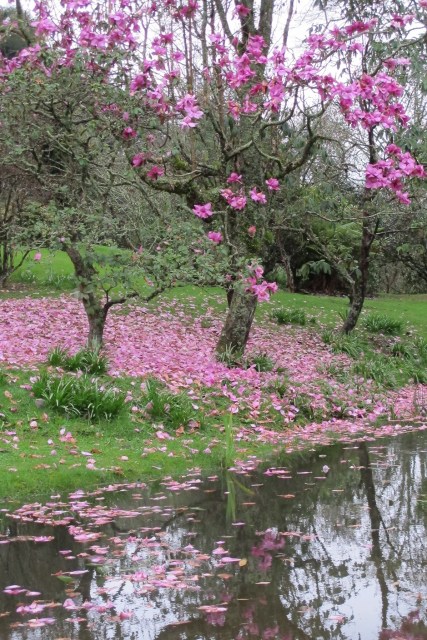
In his turn, Mark has named four deciduous magnolias so far – ‘Black Tulip’, ‘Burgundy Star™’, ‘Felix Jury’ and ‘Honey Tulip™’ – though he has raised many more controlled crosses than his father ever did. Records here do not include total numbers of plants raised but certainly Felix never raised a large number – maybe 50 or so. Mark has been much more focussed and a rough guess puts the number of deciduous magnolias raised to flowering size in excess of 1000. If a particular cross shows promise, Mark will locate the plants in places where they have the space to grow to maturity and, as the years pass, the display just gets better. There are a lot of what we call “also-rans” – not destined to be named but too good to chainsaw out. Late winter and early springtime here is simply glorious.

Magnolia Atlas
When it comes to naming a plant, consideration is given to whether it represents a breakthrough in some aspect and is significantly different to anything already named. It must also produce flowers on young plants, bloom on bare wood in our climate, not grow so rapidly as to indicate it will become a forest giant, propagate relatively easily and flower reliably every year while setting buds down the stems to prolong the season. That list may be why Mark has only named four so far.
At the time when Felix started crossing magnolias, there were few varieties available in New Zealand and most were species. He wanted to see if he could get large cup and saucer blooms with good colour, flowering on a young plant. His lucky breeding break came with the cultivar he imported from Hilliers. It was meant to be M. campbellii ssp mollicomata ‘Lanarth’ but when it bloomed for the first time, it was clearly a hybrid, probably ‘Lanarth’ x sargentiana robusta. He named it for his youngest son, Mark Jury. It proved to be an excellent breeder plant and five of Felix’s eight named cultivars used ‘Mark Jury’ as pollen donor.

Magnolia Iolanthe
We rate ‘Iolanthe’ as one of the very best he named. The original plant is still located beside our driveway and has now achieved magnificent stature at about 10 metres high and a canopy the same distance across after 50 years. Every year it takes our breath away with its beauty. The blooms have stayed very large (some cultivars produce smaller blooms once past juvenility) and because it sets flower buds down the stem, even the worst spring storms do not ruin the display for the year. At about two months in flower, it has one of the longest seasons.

Magnolia Serene
Serene is the last of the season to bloom for us and we have always been surprised that this top performing strawberry pink variety has not gained the reputation and market traction it deserves. Hindsight is a wonderful thing and with the passage of time, we think ‘Atlas’ would not meet the selection criteria today. Despite a huge flower, possible unequalled at the time, with good form and a pretty colour, its performance falls short because it only sets buds on the tips of branches. A storm can take out the flowering for the year. That said, it is one that appears to perform well in Britain. ‘Athene’ and ‘Milky Way’ are both wonderful performers but probably too similar to have named both. ‘Lotus’ is lovely but the pure white magnolia field is very crowded now. ‘Apollo’, while abundantly floriferous and more compact in its growth, does not have the same beauty of flower form that the others have.

Magnolia Vulcan
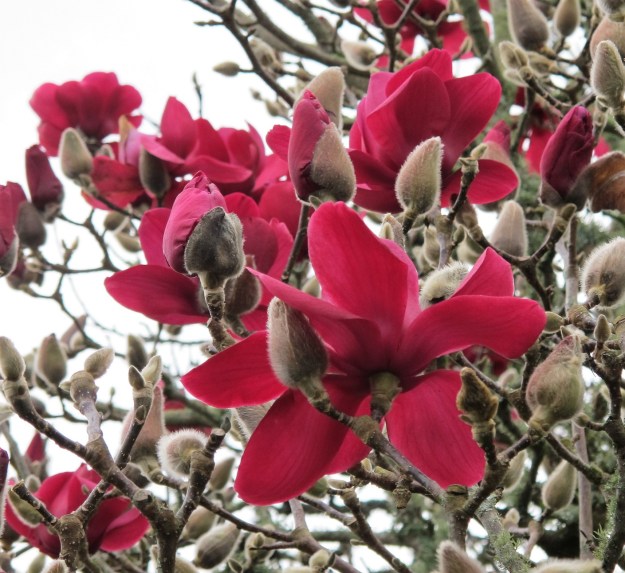
It was ‘Vulcan’ that cemented Felix’s reputation, even if this cultivar has never proven itself in the cooler climes of Britain and northern Europe. You will just have to take our word for it that in milder climates, it can be the most remarkable red colour and, for its time, it represented a colour breakthrough and set the standard for the next generations of red cultivars. We have a remarkable intensity and quality of light in New Zealand even in the depths of winter, and the first red buds to break in July never fail to impress. For many years after we first released this cultivar, we could track its flowering from north to south by the phone calls we received. That is a rare plant.
Over time and with many competing unnamed seedlings of the next generations flowering here, we certainly concede that ‘Vulcan’ blooms do not age gracefully and later flowers are much smaller and in murky purple shades. It appears that those later flowers are the best most British gardeners can ever expect to see in their conditions. Mark is still on the quest for the perfect Vulcan upgrade – a large bloom on a smaller tree, flowering later in the season to extend the climatic range and with colour that ages more gracefully, which means losing the purple undertones that the parentage of ‘Lanarth’ brought in. He is tantalisingly close to pure red but not yet ready to take the plunge and name another in his red series. Having named three so far, a fourth must be something different, special or a significant improvement.

Magnolia Black Tulip
‘Black Tulip’ was the first release of Mark’s cultivars and we were gratified by the immediate public response. Mark’s personal preference is for solid colour in blooms and in the windy climes of New Zealand, we have to select for heavy textured petals and firm blooms that can withstand the equinoctial winds that often strike at peak flowering. ‘Black Tulip’ certainly fitted these criteria and is suitable for smaller gardens though it will never be as bold and showy as grander specimens.

Magnolia Burgundy Star
‘Burgundy Star’ has yet to prove itself overseas. Being three quarter M. liliiflora nigra, the hope is that it may prove to be hardier in colder climates. The original plant in our carpark is exceptional – fastigiate in its growth which is to its credit as a driveway or courtyard specimen, with a mass of good-sized, red, starry blooms over a long period of time. Only time will tell if this translates to other climates and locations.
Magnolia Felix Jury
Magnolia Felix Jury
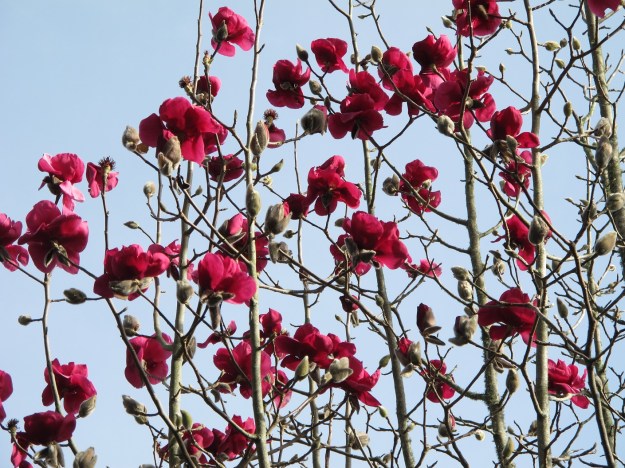
So far, ‘Felix Jury’ is the stand-out performer of Mark’s selections. He named it for his father because it was what Felix had been trying to get to – a rich-coloured, large-flowered cup and saucer bloom with a long season. It is a source of pleasure to us that Felix was still alive to see the first blooms. On the first young plants, we described it as rich pink, but with age and maturity, the blooms have deepened to red in our climate and this is a specimen magnolia that just gets better with age and size. We have been delighted to see specimen plants well established in the UK, particularly at Wisley and also The Garden House in Devon. While we haven’t seen those plants in bloom, we are assured they are impressive, though probably more pink than red.
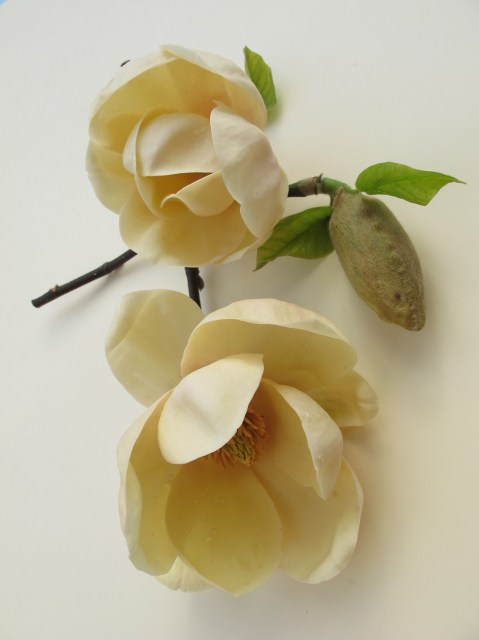
Magnolia Honey Tulip
Mark’s latest release is ‘Honey Tulip’, his best yellow cultivar so far. Again the flower shows excellent heavy texture in the petals, unlike the softer texture we see in the American yellow varieties we grow here. The form is different with a solid cup and the colour does not fade out as the season progresses. We are also pleased with the generous bud set we see on the plants here and it does not look as if it will ever get as large as some of the yellows. It is still early days – ask us in another twenty years how we rate it.
The ultimate goal would be to get to a pure yellow cup and saucer bloom of ‘Iolanthe’ or ‘Felix Jury’ size and splendour, along with the performance characteristics of those two cultivars but that is still a long way off and may not be attained in Mark’s lifetime. The pure red magnolia is closer. The deciduous magnolia programme is ongoing here.

The property is planted out in seedlings
The evergreen magnolias are a separate thread. We are with the Chinese – it is much easier to continue to refer to these as michelias and differentiate them from the better known grandifloras. Mark became interested in these 20 years ago and they are very much a work in progress. When he started, there were only a small number of species to work with and even fewer hybrids but he wondered whether he could extend the colour range and the habit of growth to get more garden-friendly options. In the time since, there has been an explosion of new species collected, particularly in China and Vietnam but New Zealand’s borders are now closed to new plants and he has had to rely on the original species he has access to – particularly M. figo, M. doltsopa, M. maudiae and M. laevifolia (formerly known as Michelia yunnanensis). He is not overly worried about this situation because most of the recent discoveries have been tropical and he is keen to increase hardiness overall, not to decrease it by introducing tropical genes. He had already decided that M. champaca and M. x ‘Alba’ – both of which we have here – were blind alleys when it came to his breeding programme.

Fairy Magnolia White
Most of the hardier species are white or cream flowered but the advantage in terms of colour has come through the most common form of M. figo in New Zealand being more colourful than those we have seen in other countries. Our form includes yellow and purple and that has extended the colour range in the hybrids.
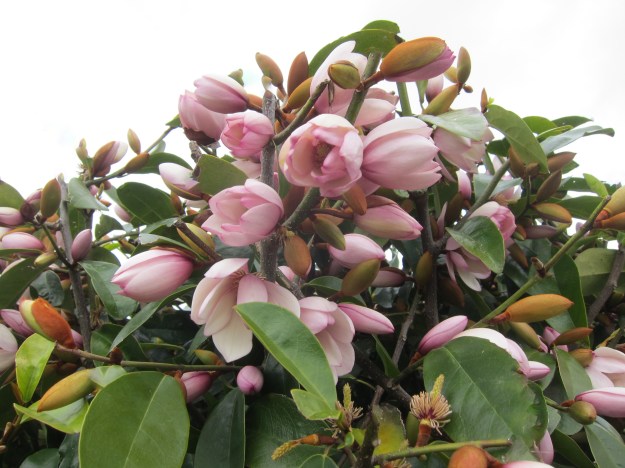
Fairy Magnolia Blush
Michelias have a much quicker turnaround than deciduous magnolias and the number of hybrids here already greatly exceeds the number of the latter. A number of the hybrids show exciting promise in colour and flower size and are certainly extending the range. But the selection criteria includes several critical new factors. The hybrids must not set too much seed, they must make foliage growth down the stems and not just on the tips and they must not show the tendency of some michelias to defoliate either at flowering time or in wet spring seasons. Even more problematic are the issues of fragrance and ease of propagation from cutting. There is frequent disappointment. Mark oft bemoans the fact that he can cross two of the most fragrant of michelias and the offspring lack discernible scent. And the best coloured michelias have so far failed the propagation test. He is also after clean colours. With purple and yellow being the available colour genes, there is a disappointing number of murky coloured offspring which are rejected out of hand. There is a long way to go yet and the downstream crosses are getting ever more complex although he continues to work with the same narrow, original species base.

Moving large Fairy Magnolia Whites into the new garden where the plan is two pleached rows
The upshot of this is that only three cultivars have been released to date and none of these show the exciting colour breaks. It is heartening, however, that these three are showing more hardiness than expected, considering the use of two somewhat tender species in M. figo and M. doltsopa. These cultivars are being marketed internationally by our agents, Anthony Tesselaar Plants, under the Fairy Magnolia® branding. ‘Fairy Magnolia Pink’ is a foggii x laevifolia hybrid and brought indubitably pink tones into the range. It is floriferous over a long period of time and particularly good as a clipped specimen. Our row of five clipped lollipops are a real feature and easy to maintain at a set size with an annual hard spring prune and a light autumn trim. On the downside, the foliage is a little more olive green than we would like.
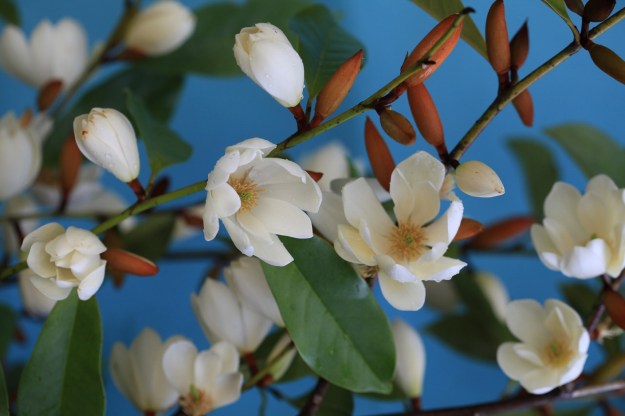
Fairy Magnolia Cream
The selection released as ‘Fairy Magnolia Cream’ is from similar breeding lines and has beautiful flower form, excellent fragrance and foliage in a cleaner hue of green. ‘Fairy Magnolia White’ is different breeding, bringing in more M. doltsopa and is therefore larger growing but with correspondingly larger blooms, also fragrant. We doubt that it is as hardy as the other two and see it more as an improved, garden-friendly version of the M. doltsopa parent. In recent times, we have planted a double avenue of ‘Fairy Magnolia White’ with a view to pleaching them and we have been pleased with how well this cultivar is responding to clipping and training.
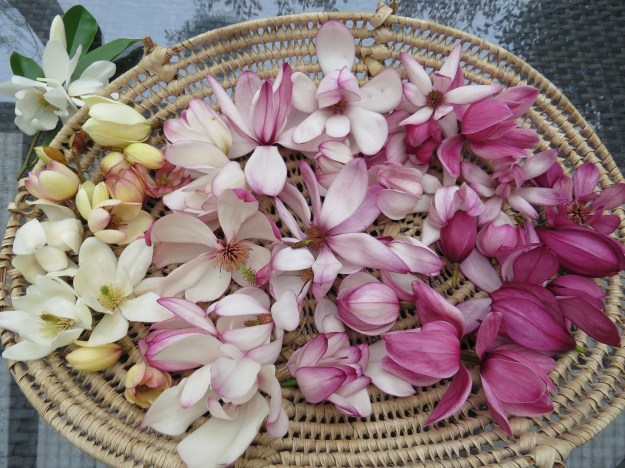
A collection of blooms, showing the range in size and colour
The breeding programme will continue. There is a long way to go yet, although really what Mark would like is for one of our children to come home and take it into the next generation. With all three of our human offspring living overseas, this is one aspect of the breeding programme that is not looking hopeful.
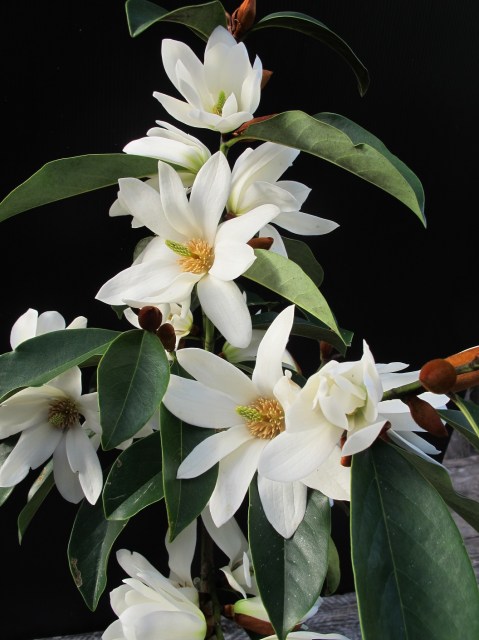
Fairy Magnolia White
Apollo (probably liliiflora nigra hybrid x ‘Lanarth’, bred by Felix Jury) Released 1990
Athene (lennei alba x ‘Mark Jury’, bred by Felix Jury) 1988
Atlas (lennei x ‘Mark Jury’, bred by Felix Jury) 1989
Black Tulip (‘Vulcan’ x, bred by Mark Jury) 1998
Burgundy Star™ (liliiflora nigra x ‘Vulcan’, bred by Mark Jury) 2006
Fairy Magnolia Blush (M. laevifolia x foggii hybrid, bred by Mark Jury) 2008
Fairy Magnolia Cream (M. laevifolia x foggii hybrid, bred by Mark Jury) 2013
Fairy Magnolia white (M. laevifolia x doltsopa, bred by Mark Jury) 2013
Felix Jury (‘Atlas’ x ‘Vulcan’, bred by Mark Jury) 2000
Honey Tulip™ (‘Yellow Bird’ x ‘Iolanthe’, bred by Mark Jury) 2013
Iolanthe (lennei x ‘Mark Jury’, bred by Felix Jury) 1970s
Lotus (lennei alba x ‘Mark Jury’, bred by Felix Jury) 1988
Milky Way (lennei alba x ‘Mark Jury’, bred by Felix Jury) 1988
Serene (liliflora x ‘Mark Jury’, bred by Felix Jury) 1970s
Vulcan™ (liliiflora hybrid x ‘Lanarth’, bred by Felix Jury) 1989

Fairy Magnolia Blush – the original stock plants, now lollipops


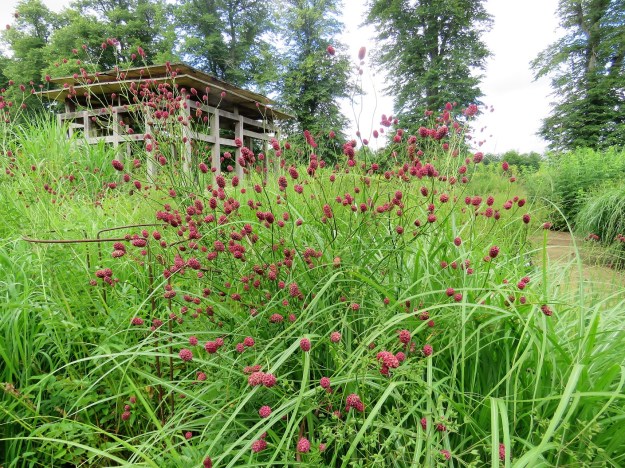
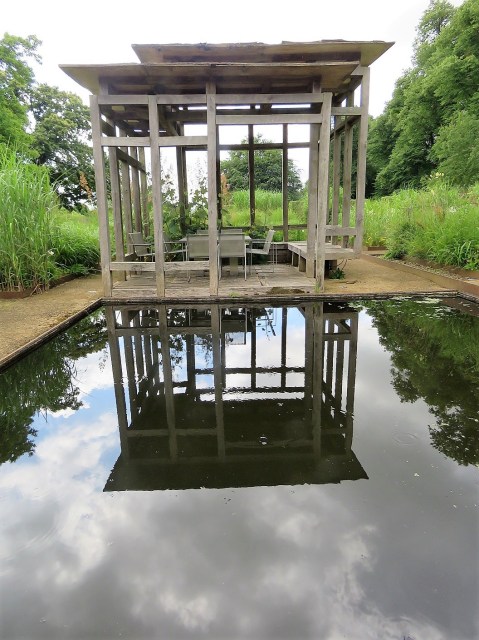
 The front garden was the first to be done and is a walled area. We have seen a number of large scale Oudolf plantings now. Bury Court is early Oudolf but, more interestingly, it is domestic and private in scale and design which makes it very different. The perennial plantings are still big, bold and bouffy but on a scale suited to this environment. I look at the photos and I see how much thought has gone into the combinations and juxtaposition of plants but when you are surrounded by them in person, it is more an experience of being enveloped by the vibrancy.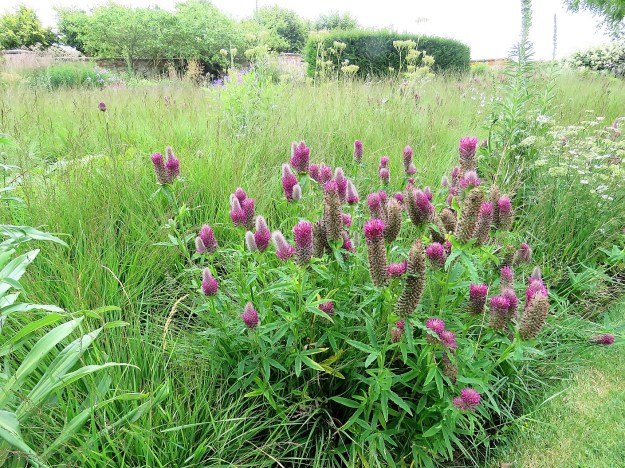
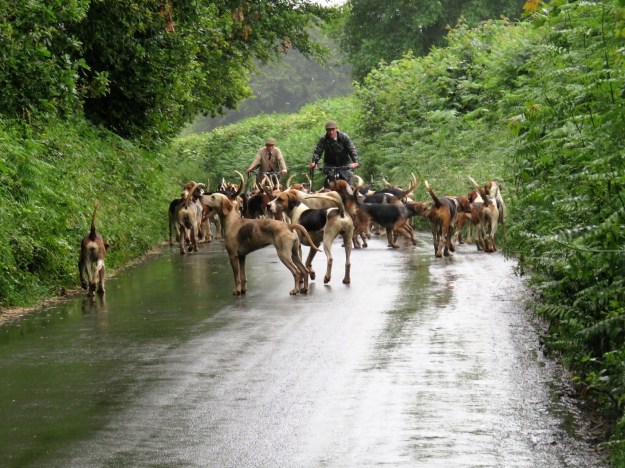 The hunt dogs! Or hounds, I have just been informed (see reader comments below). Indubitably hounds. Out for a morning run on a Devon lane with their keepers on bicycles. Beautiful hounds, so very well trained and an interesting scene but still incomprehensible to me. English garden media personality and writer of steamy romantic novels, Alan Titchmarsh, may defend foxhunting on the grounds that it is, apparently, a traditional part of country life – country life, that is, as experienced by the toffs who cry ‘tally-ho’, not so much a traditional pursuit for the peasantry. But tradition alone is not a justification for anything, really.
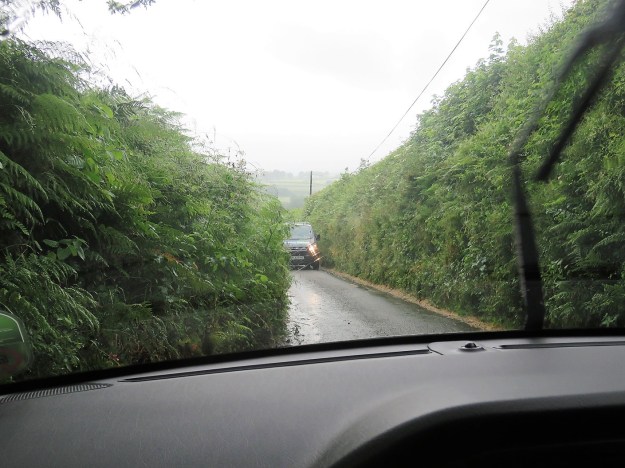 The Devon roads can be notoriously narrow, though they are by no means alone in that. These roads can carry more traffic than the upgraded, single carriageway that passes by our place at home but there does not appear to be an uproar with loud demands that they be widened, straightened and allegedly made ‘safer’ for cars and trucks. It means drivers must be fully alert, dropping speed to meet the conditions, courteous and capable of backing up to the passing bays that are dotted along these roads. It is a very different ethos to the aggressive driving on New Zealand roads. If we were more defensive, tolerant and patient drivers, maybe our corner of the world would be a better place?
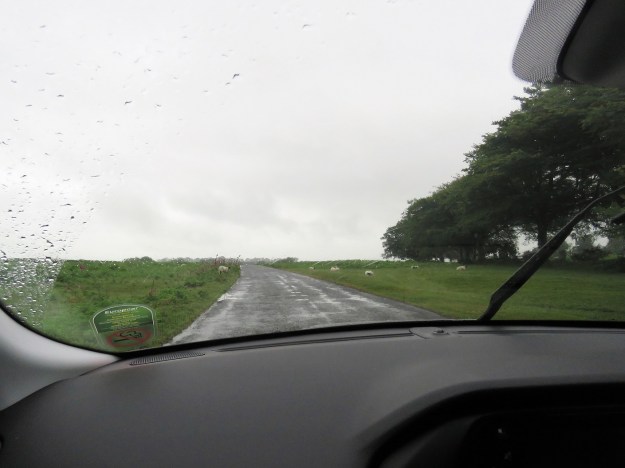 We went to south Devon to have another look at one of our all time favourite gardens – Wildside. More on this garden in a future post, but it is on the edges of Dartmoor. It rained on our day there, though fortunately it was not cold. There is a certain evocative gloom to the open moorland on a grey day with low light levels. Because I have always done my reading from across the world in New Zealand, the geographic location of different moors is hazy at best (though I think I have the heaths and heathers of Scottish moorland separated in my mind). I kept thinking of the likes of Daphne du Maurier but I see she set ‘Jamaica Inn’ on Bodmin Moor which is the next one down and Dartmoor belongs to ‘Hound of the Baskervilles’. But one can imagine this landscape with the bleak winds of winter blowing across it and it certainly has its own identity, including the roaming stock and lack of fencing.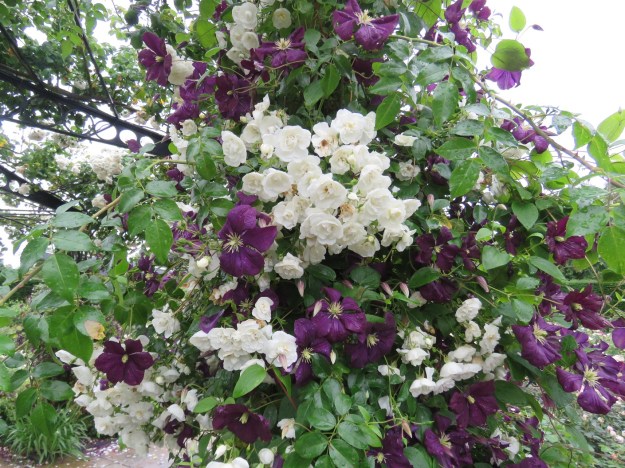
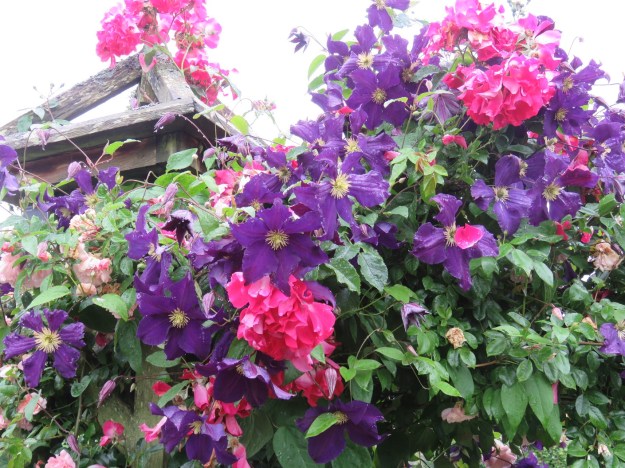 While in the area, we headed over to see the RHS garden, Rosemoor. The original garden and accompanying land was gifted to the RHS by Lady Anne Berry, now a long-time resident of Gisborne. Lady Anne had been particularly kind to us in our earlier years so we were pleased to finally get to see Rosemoor. While the traditional rose garden left me unmoved, the rose and clematis combinations in the adjacent garden enclosure were a delight.
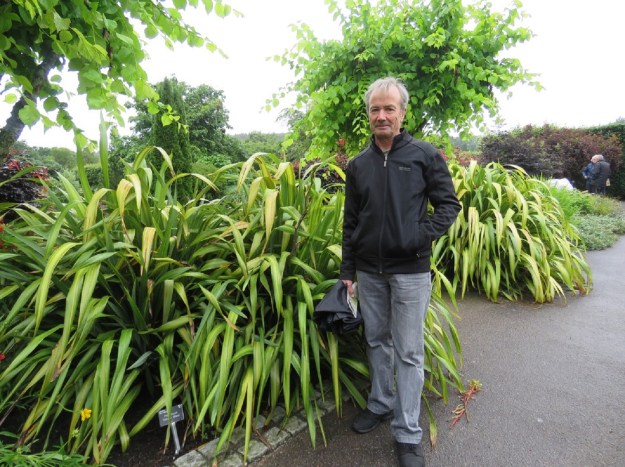 I make Mark pose for vanity photos beside what we call ‘Jury Plants’ as we come across them around the world. Part gentle boasting, part family record. In this case it is Phormium ‘Yellow Wave’, bred by his father Felix and one of the first generation of variegated flaxes for home gardens. He never received a cent for it (or a penny, as it would have been back then) and is rarely credited with it. It is not easy to keep good foliage on phormiums in New Zealand so Felix moved on to astelias and then clumping cordylines in his attempts to get an extended colour range into plants with this habit of growth and foliage. Eventually, this led to our Cordyline ‘Red Fountain’ but Phormium ‘Yellow Wave’ continues to hold some ground internationally.
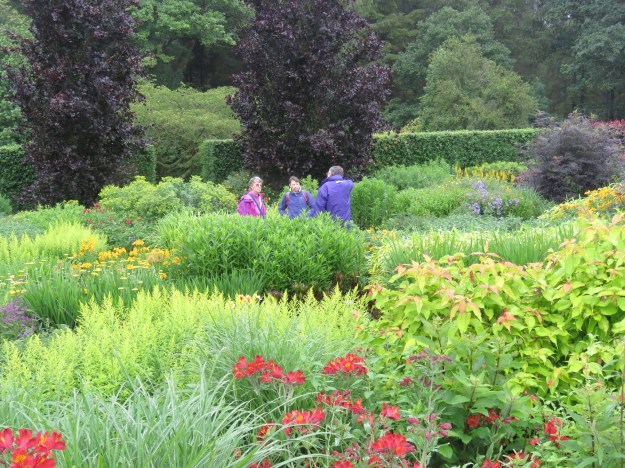 Still at Rosemoor, the herbaceous plantings are terrific. If you are looking for a middle road between the traditional herbaceous border and the grassy new wave look of Oudolf, Stuart-Smith and New Perennials proponents, you probably end up with something closer to these Rosemoor beds and borders. Lots of vibrant colour and care with combinations, often quite tight colour toning but also lighter on plant options that need continual maintenance to keep them flowering and looking good. However, these are herbaceous plantings for large, public spaces, not so much for downscaling to the home garden. You can see more in the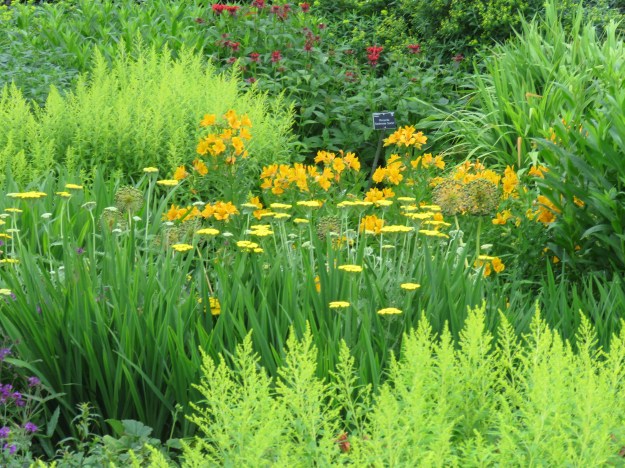
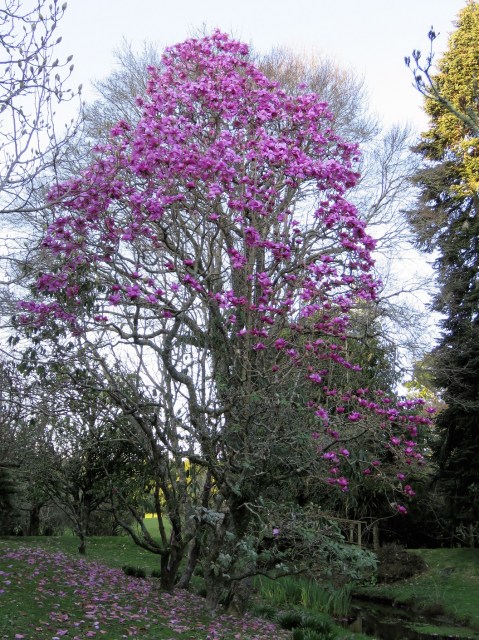
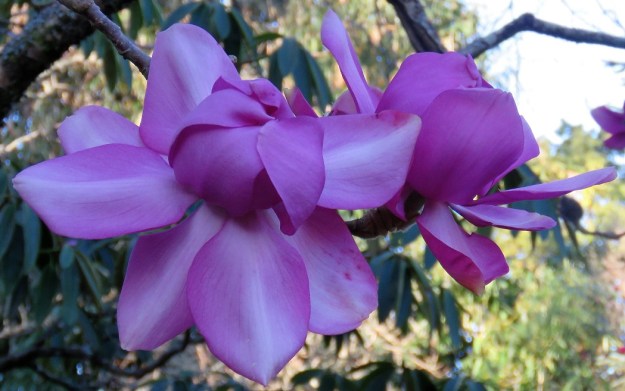
 The true ‘Lanarth’ finally flowered here in the 1960s and it became the key to Felix’s best known success – the colour breakthrough from purple into red tones, first seen in Magnolia ‘Vulcan’. The rest, as they say, is history and New Zealand is now recognised internationally as the home of the best red hybrids. These days with the downstream breeding, the purple tones of ‘Lanarth’ are being eliminated in favour of purer red shades. Now it is the case that there are several good red magnolias on the market, but no large, purple-flowered, garden-friendly improvement on the original ‘Lanarth’ that we have seen. It has been attempted. We just haven’t seen one yet that we think is as good as, let alone better than the original.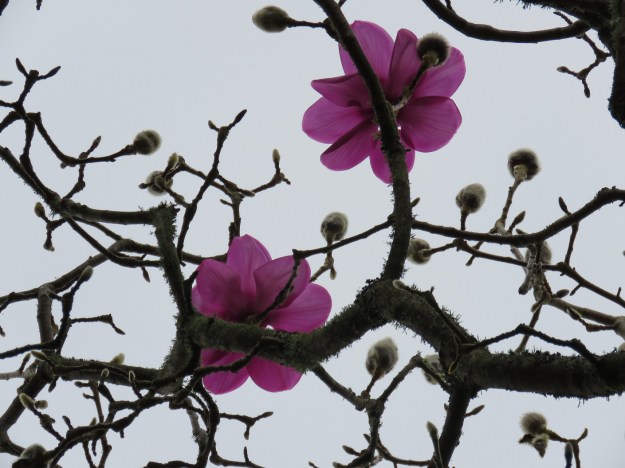




 Tikorangi The Jury Garden