

The writing muse has forsaken me in recent weeks, hence the absence of new posts. Truth is, I have been gardening instead. But a trip to town today, camera in hand, made me focus my attention beyond the immediate confines of the garden. The purpose of the trip was dull enough – food – so I will ignore that.

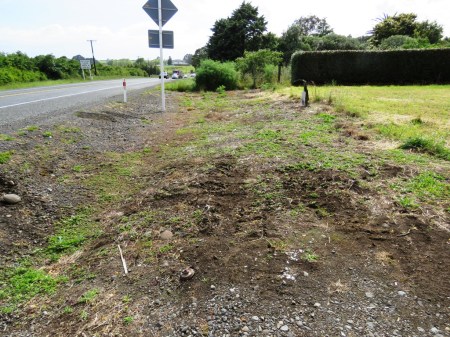
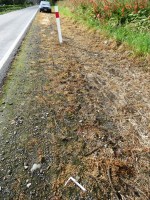 I have been meaning to stop and photograph this watsonia growing wild down the road. Mark tells me it is a species but I have yet to put a name on it. The dusky apricot colouring appeals to me. Some may call these weeds but oh, when I compare these roadside plants to the ugliness and environmental unfriendliness of scorched, sprayed earth, all I can say is give me these weeds which make a contribution to the eco-system. It is such folly to think that spraying roadsides is desirable. All it does is to create a vacuum where less desirable weeds will re-colonise the area and, in the interim, all the water flows away, washing residual spray and road residues into our waterways. My column in the January issue of NZ Gardener is on the topic of roadside plantings. We often talk about this as we drive and we despair at the ugliness and the willy nilly use of weed spray in this country of ours. Clean and green New Zealand? Not in reality.
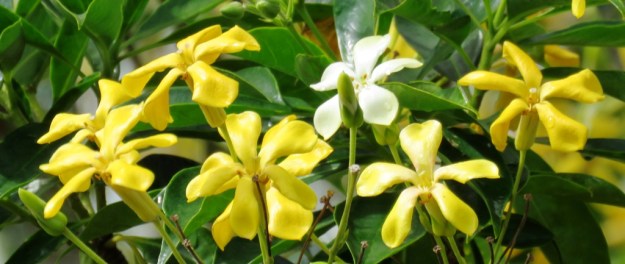
 More cheerfully, the so-called Australian frangipani (Hymenosporum flavum) growing by the road halfway to town has been delighting me for several weeks. Many flowering trees are glorious on their day – but you can count their flowering season in days, rather than weeks. Not so this hymenosporum. It is not even a close relative of the frangipani, though it is scented. It needs frost free conditions to get established and good drainage but is worth growing for its late spring, early summer blooming.
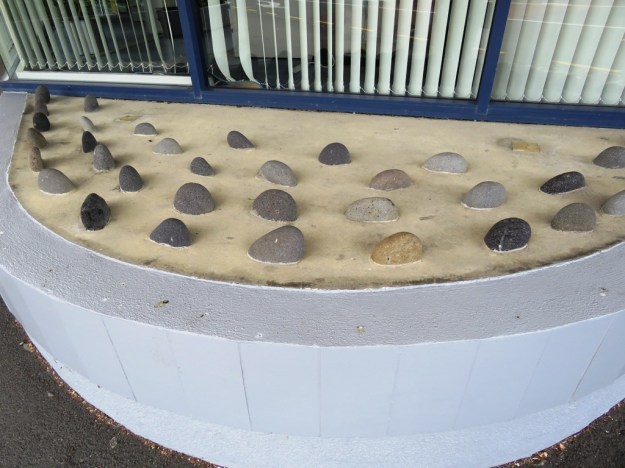 I don’t swear on this blog (though I admit I am not so restrained in real life) so you will just have to fill in the missing letters when I describe this as an example of f*** off utility urban design. Clearly nobody wants to even try and grow plants here (and conditions would certainly be difficult to get anything established, let alone looking good), but could nobody come up with a filler idea that was less hostile than this?
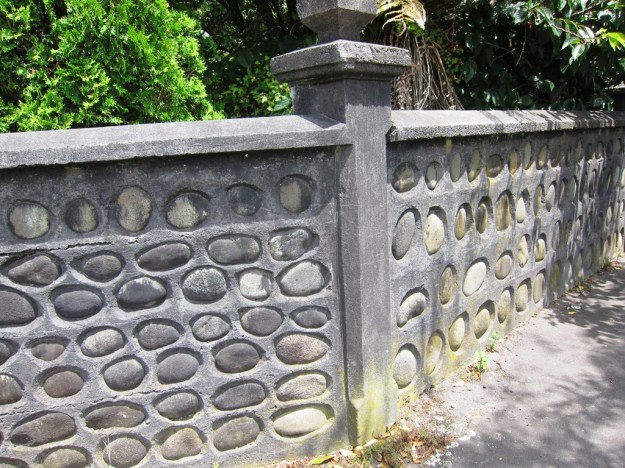 I much prefer the old concrete and stone wall, constructed a long time ago in my local town of Waitara. Someone took a lot of care over this.
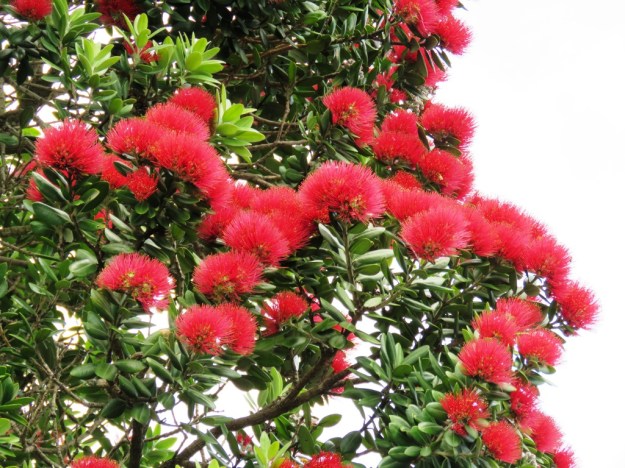 Pohutukawa! Often called the New Zealand Christmas tree. What a wonderful sight they are at this time of the year. As I looked at all the trees coming into bloom along New Plymouth’s water front, a mere two short blocks down from the main street, I felt a pang at the loss of 28 (or was it 29 in the end?) mature trees beside our Waitara River. I even contemplated making Christmas cards for all our Taranaki Regional Council elected officials and senior staff who were responsible for the casual removal of the trees. I thought it could feature the flowers on the front with a message inside saying “Seasons Greetings from the 29 Waitara pohutukawa chainsawed down this year”. But it is a lot of effort to go to for something they would just throw in the bin. Better instead to admire the beauty of trees still standing.
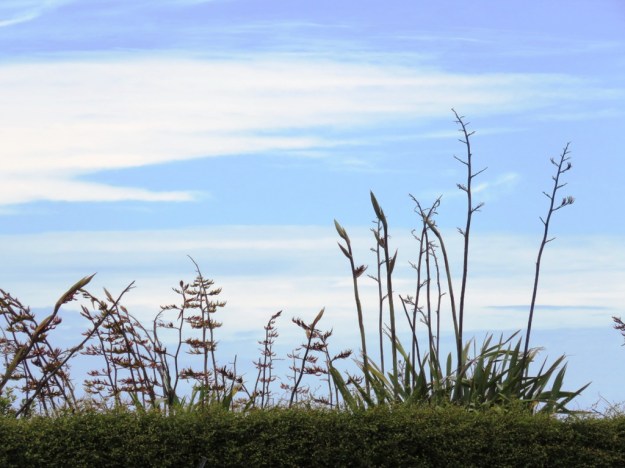 The public amenity planting in New Plymouth can be delightful and appropriate. On the exposed west coast, there are limited plant options that will grow right beside the sea. That is why the sturdy pohutukawa is so important. But also our native flaxes. They are in flower and how lovely do the flower spikes look silhouetted against the big sky and the big sea we get here?
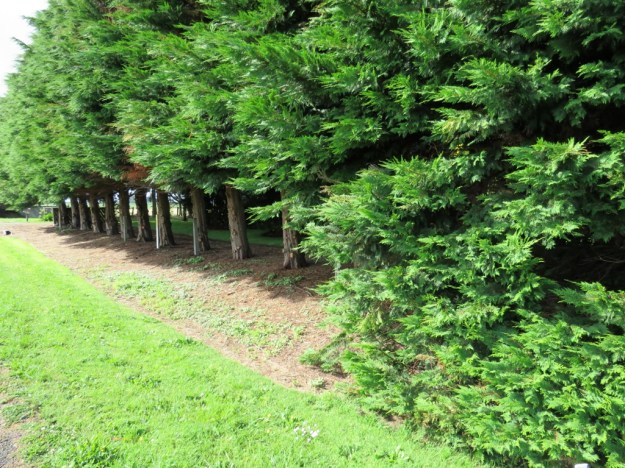 Finally, coming home, I stopped to record the effective trimming of this Cupressus leylandii down the road. It was just an ordinary shelter belt until the lower canopy was recently lifted, exposing the trunks. The fact the branches have been trimmed reasonably flush helps but it adds a whole new dimension, being able to look through. It has turned an unmemorable shelter belt into something much more graceful and distinctive.
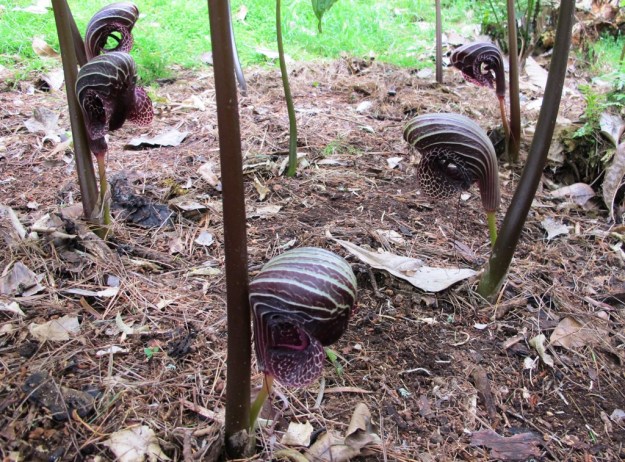
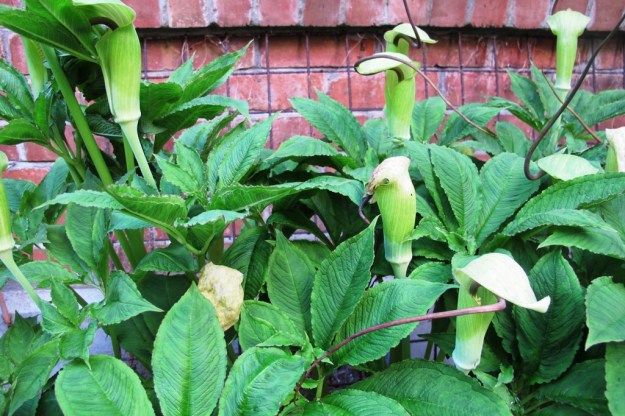
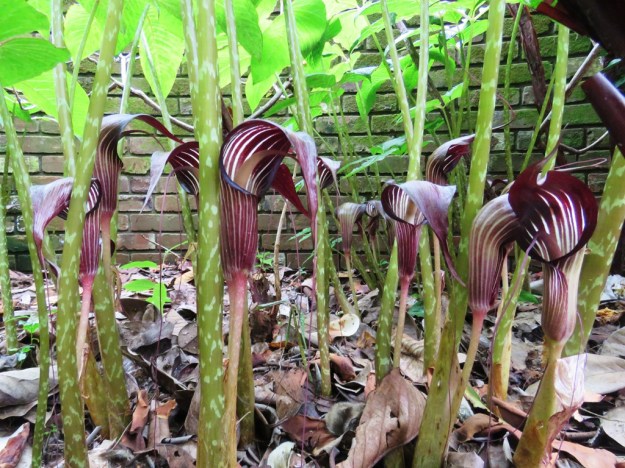
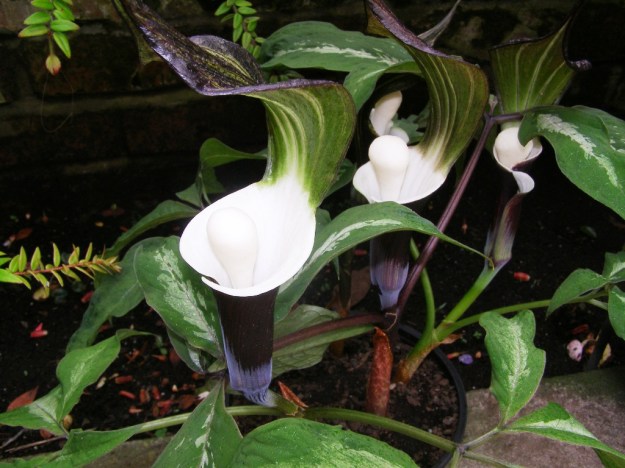
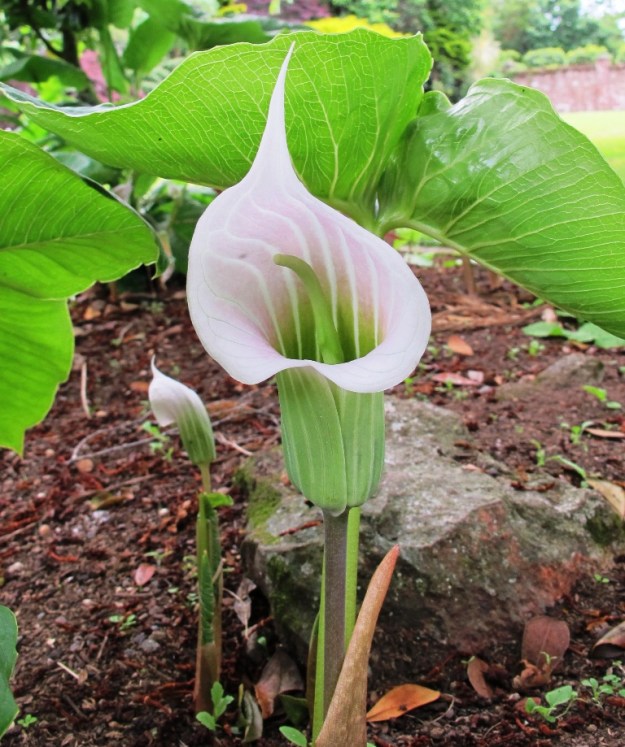
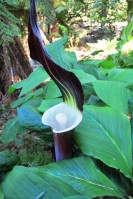 And then there are the tricksy ones, few more so than the Japanese A. sikokianum with its phallic spadix and hooded spathe rising prominently above the foliage. It is a show stopper in spring, though definitely curious rather than beautiful. After many years of growing it, I can tell you that it is difficult. We have never seen it increase from the corm. Growing well, it will set seed but these need to be raised in controlled conditions because it will not seed down naturally here. Even then, the patches tend to get smaller with time, rather than larger. It was for this reason that Mark experimented with hybridising it, to try and get increased vigour. This is known as hybrid vigour, in a similar way that the controlled breeding of designer dogs can make the offspring a stronger genetic strain than the highly refined parentage of pure breds. It has worked for us. The offspring carry all the best characteristics of A. sikokianum but they grow more strongly and are reliable as garden plants. Few would pick the difference to the lead species, but we know they are actually hybrids.

 First published in the December issue of NZ Gardener and reprinted here with their permission.
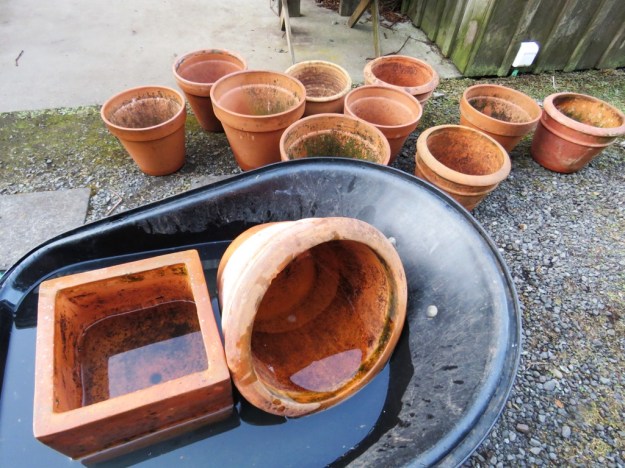
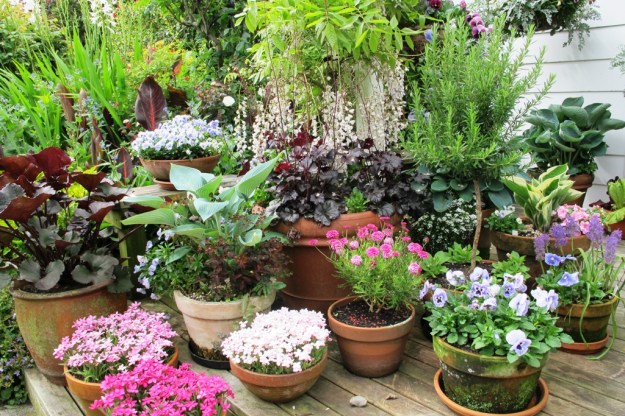
 I have witnessed many aberrations in good taste in containers and ancillary decoration over the years. Garish blue pots continue to infest the country – particularly Taranaki gardens, due to the high volume sold by a local importer some years ago. Having long rid myself of these lapses in good taste (planted up with burgundy plants, as I recall), close friends live in fear of my sniffy derision at their 1990s blue relics. I maintain a discreet silence unless they are good friends. Similarly, cheap pots adorned with glazed pictures of bamboo or sunflowers left these premises many years ago. I had it down to aged terracotta, neutral shades, hypertufa or stone.
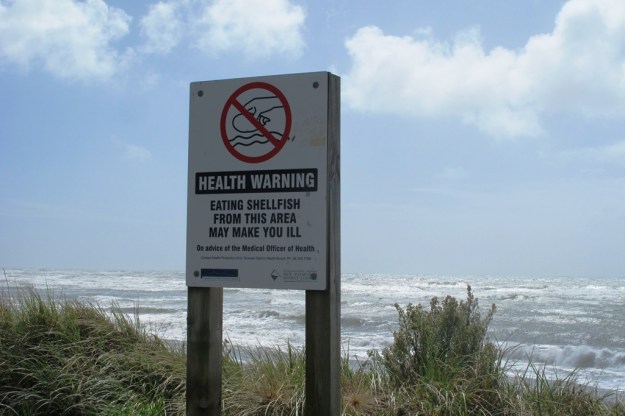
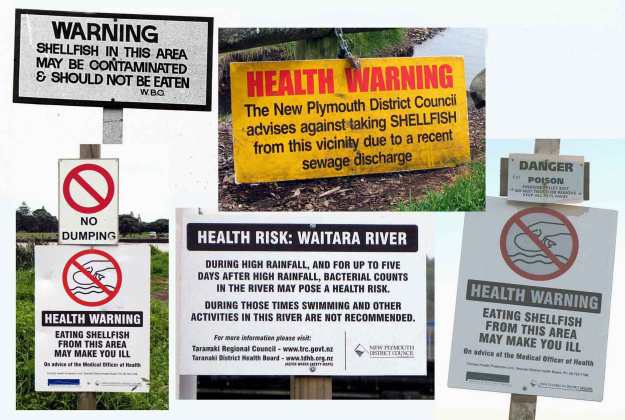 Back in the early 1980s, Mark’s late mother Mimosa was an active supporter of the groups lobbying for clean water in this area of ours. At the time, there were extended hearings into the establishment of the gas to gasoline plant at Motonui – with plans to pipe waste out to sea – and a claim under the Waitangi Treaty regarding discharging of waste to water. In good country-woman style, she would bake food to share at these hearings and on many days she would pack her lunch to head down and sit in support of those speaking out to protect our water.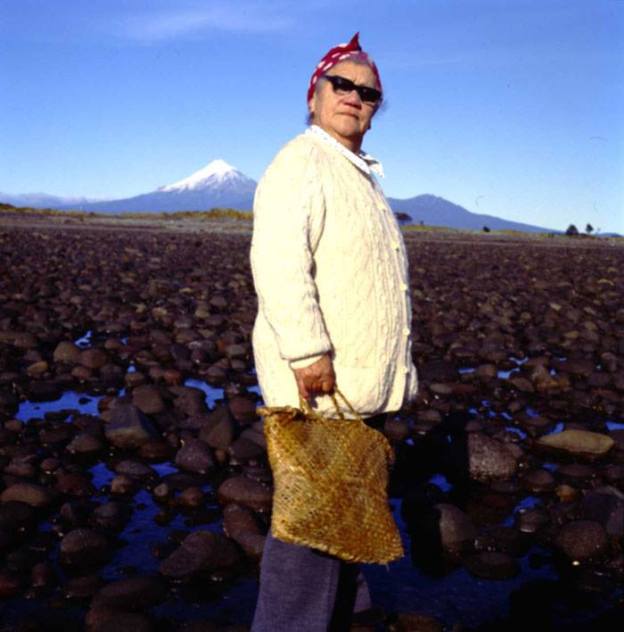

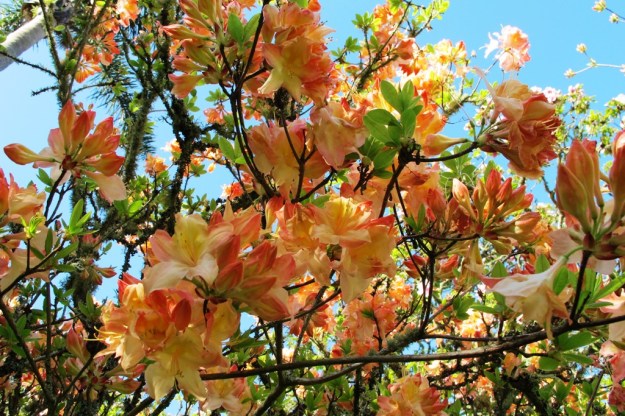 The deciduous azaleas certainly add vibrancy to the late spring garden as we enter November. They are not all so breathtakingly unsubtle. But I guess, were a plant to think like a human, if you are going to spend 11 months of the year being pretty insignificant, you might as well make a loud statement when it is your time to star.
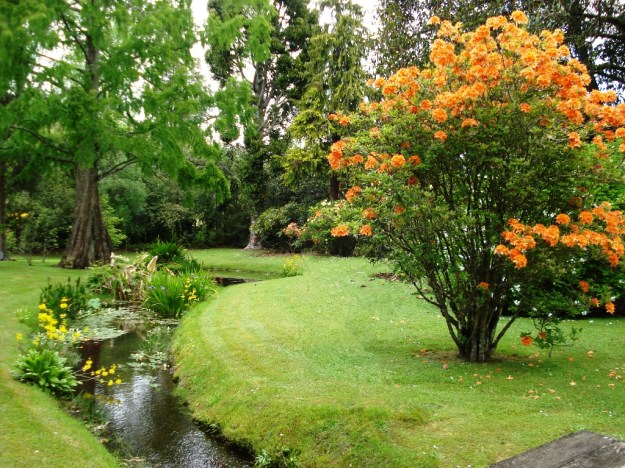 The area of our garden that we refer to as ‘the park’ was first planted in the early 1950s, in the style then promoted by the New Zealand Rhododendron Association. Plants stand in solitary splendour which gives them their own space, plenty of air movement and the ability to be viewed from all aspects. While it has changed and matured over the intervening six decades, the deciduous azaleas still thrive in this environment with minimal attention.
 Azaleas are all part of the wider rhododendron family. Evergreen ones originate from Japan while the deciduous azaleas are much more widespread in the temperate world, being found in China, Japan, Korea, southern Russia and North America. Most of what are grown now are hybrids with very mixed genetics.They are often inaccurately referred to as Ilam azaleas or azalea mollis in this country. “Mollis” refers to a particular cross deriving from A. molle and A. japonicum, originating from early plant breeders in Holland and Belgium. The Ilam azaleas came from the breeding done in Christchurch but have strong links to the Exbury azaleas, also referred to as the Knap Hill hybrids. Then there are the Ghent azaleas, which originated from that area in Belgium. Confused? It is really difficult to disentangle when in fact the most accurate description is simply to refer to them as “deciduous azaleas”.
 First published in the November issue of New Zealand Gardener and reprinted here with their permission.
 Tikorangi The Jury Garden