Author Archives: Abbie Jury

Unknown's avatar

About Abbie Jury

jury.co.nz Tikorangi The Jury Garden Taranaki NZ

Garden Lore

“I must confess, much as I love the decorative garden, the vegetable plot is, for me, both a place to relax and, occasionally, somewhere to hide. Yes, I admit, my vegetables are organically grown. I cannot see the point of going to all the trouble of growing them yourself, and then dousing them with poisonous chemicals. Save yourself the bother and buy them from the supermarket, sprayed and scrubbed.”

Beth Chatto Dear Friend and Gardener (1998).

It's compost all the way here, or most of the way at least

It’s compost all the way here, or most of the way at least

Fertiliser

Most plants are in full growth now so it is the optimum time for adding fertiliser. The uptake by the plant will be at its greatest while it is growing strongly. However, you don’t need to fertilise everything just because you can. Apply it where it is needed, not as a matter of course. If you use a mulcher mower, your lawn should never need added fertiliser. When you use compost in the vegetable garden, you may not need to use additional fertilisers.

If you are a consumer, you may be talked into buying a whole range of different types for the garden – one for lawn, another for citrus, yet a different one for acid loving plants like rhododendrons and you will be told that different plants need different ratios of NPK (that is nitrogen, potassium and phosphorus). Being of the KISS persuasion, we just go for something cheap and cheerful for the odd occasions we feel impelled to use additional fertiliser in the garden. With the current research on nitrate run-off, the less is more philosophy is looking ever more appealing.

First published in the Waikato Times and reprinted here with their permission.

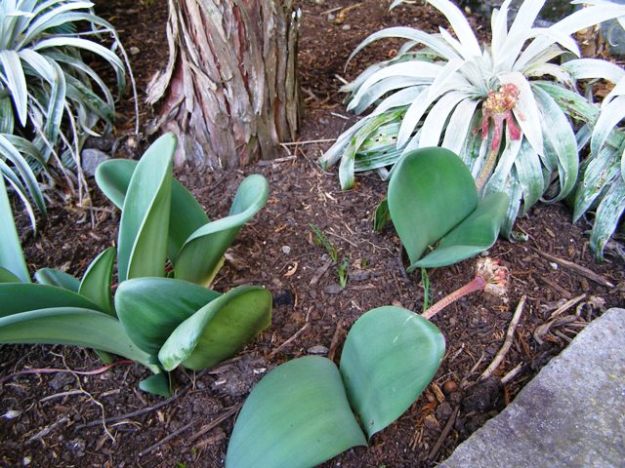
Plant Collector: Telopea (probably speciosissima) or Australian waratah

009
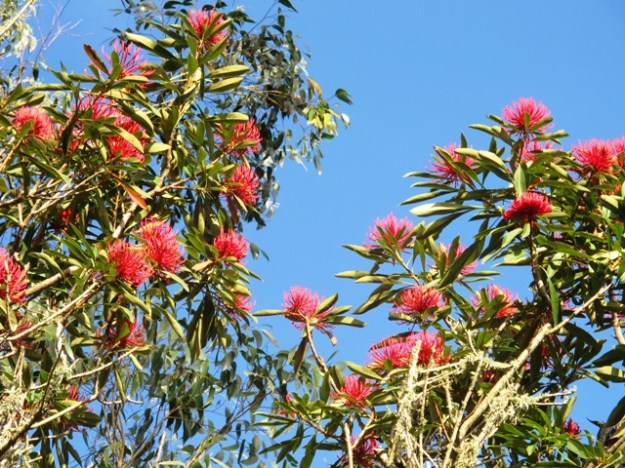
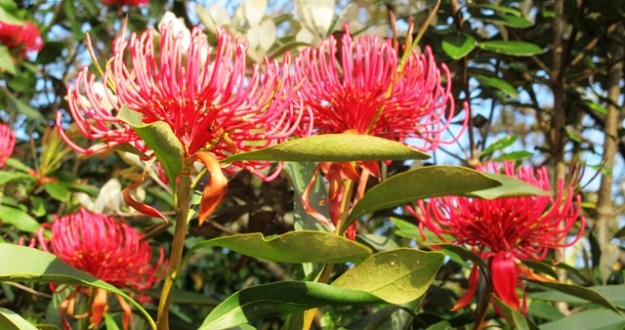
In days when we used to retail plants from here, we would have to keep a straight face when ingénues came in asking what the “lovely red rhododendron at the gate” was. Ahem – commonly known as a waratah, though not to be confused with the fencing waratah. It is the emblem of New South Wales and, like many Australian natives, is not too happy in the fertile, high rainfall conditions of much of this country. It evolved to grow in poorer, harder, drier environments though I see the gardening advice across the ditch is to give these plants semi shade and to water in summer. It has also evolved to survive regular bush fires.

Telopeas are members of the proteaceae family and we struggle growing most of those because of our regular rain all year. They do better in drier, coastal areas. Some years are much better than others for the telopea floral display and this year it may be the dry summer helped. The Australian advice is to cut the plant back very hard after flowering each year. We have never done this and ours tends to undergo a natural die-back process every few years. However, it has still reached the maximum height of 5 metres, owing to the fact that we don’t get bush fires to keep it down. The habit of growth is more shrubby than tree-like and foliage has that Aussie gum tree look. It is apparently a long-lived cut flower.
012
First published in the Waikato Times and reprinted here with their permission.

The merits of mulch

Homemade compost - our preferred garden mulch

Homemade compost – our preferred garden mulch

Mulch, dear readers, mulch now. Mulch well and you will be grateful later.

There are good reasons to mulch. In areas prone to drying out over summer, a good layer of mulch put on now will contribute to retaining soil moisture levels later. You don’t want to be mulching when the soils have already dried out because, equally, it acts as a barrier to stop water being absorbed.

Mulching also keeps down weeds and hugely reduces the amount of summer weeding that is required. There are two provisos. You need to clear the area of weeds first. Mulch won’t kill existing weeds. It just discourages germination of all those seeds lurking in the soil waiting to spring forth when the time is right. It also makes it much easier to pull out those that do penetrate through the layer. The second proviso is that you need to be using a weed-free mulch and many home compost mixes won’t have achieved that state.

Avoiding soil splash is another benefit. In areas of heavy rainfall (and some of us can get downpours akin to the tropics, albeit without the warm temperatures), bare soil splashes back up and this can spread disease amongst vulnerable plants. Soil splash also makes vegetables dirty. Mulch acts as a cushioning filter.

Depending on your choice of mulch, it can act as a soil conditioner and add valuable carbon content. Some will gradually break down as worm and microbial action incorporated it into the soil. Obviously this is only true for organic matter. We are big fans of organic mulches here, less so of inorganic options like limestone chip or gravel. But no matter what you use, a mulched garden looks better than expanses of bare soil. It is the experienced gardener’s not-so-secret weapon. You won’t find many good gardeners who do not mulch regularly.

So what to mulch with? Our number one preferred option is compost, homemade compost in fact. It does three jobs in one hit. It mulches, it feeds the soil so that we rarely have to use other fertilisers and it looks unobtrusive. But then we do not want a mulch that looks obvious. It is a tool, not a display in itself.
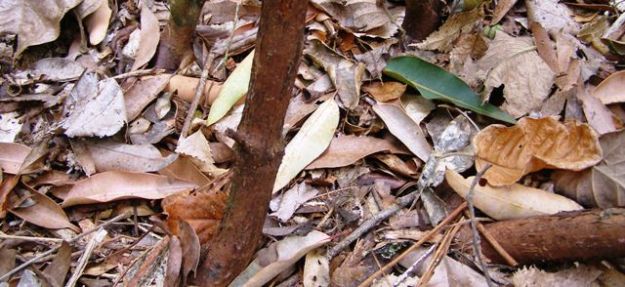
Leaf litter can be untidy but makes a good mulch

Leaf litter can be untidy but makes a good mulch

The second choice mulch here is leaf litter. We don’t waste any organic material. If it doesn’t get composted, then it gets raked into a back area to gently decompose and darken, before being raked back out around plants. Leaf litter can be untidy but it is good in less formal areas.

Then there is fresh wood chip. We own a good sized mulcher so we generate a fair amount of wood chip from the garden debris that is too large to go into compost. Calf shed shavings and sawdust also come into this category. When fresh, all these materials have to be used as mulch but not dug into the soil or they will rob the nitrogen as they break down. Laid on top and exposed to the elements, the decomposition happens slowly and naturally and should not cause problems. If you are going to use sawdust, just make sure that it is never, ever tanalised (you will poison your soils) and be prepared for a few months of a somewhat alarming orange appearance.

Old wool carpet and newspaper (weight the latter down) can be used as mulch if you don’t mind the look. We do mind, so we don’t go down that track. Just make sure the carpet is 100% wool and not synthetic and keep to newspaper – leave the glossies out with the recycling.
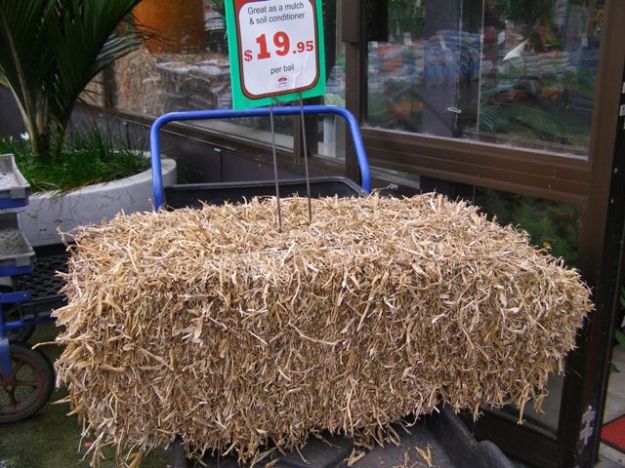
Pea straw may be a better option for the vegetable garden than the ornamental garden

Pea straw may be a better option for the vegetable garden than the ornamental garden

If you need to head off to the garden centre to buy your mulch, you will often find pea straw on offer. While this is a traditional mulch, if you are not in a pea producing area, consider its carbon footprint. It blows away unless you keep it damp. It is a myth that it helps fix nitrogen in the soil – that capacity is in the pea roots and all you are buying are the tops. Aesthetically, I think it looks fine in the vegetable garden (especially if it is all around high-producing strawberry plants) but I am less keen on the look in ornamental gardens. A bale should cover around 6 square metres of area.

Granulated pine bark is often favoured. Try and get it pre-composted. Compounds in the bark stop it rotting down too quickly so it lasts a surprisingly long time on top. It is a discreet looking mulch but it adds no fertility. If you have a big area to cover, buying it in bulk will save money. A cubic metre should cover around 15 square metres.

You need a layer of 6 to 7 centimetres to be effective. You will often see 10 cm recommended but that is pretty deep. Finally, try not to pile the mulch hard in on the trunks of woody plants. It doesn’t matter around perennials but trees and shrubs run the risk of collar rot.

The mulching effort now will reward you further down the track.

First published in the Waikato Times and reprinted here with their permission.

Garden lore

“Hoeing: A manual method of severing roots from stems of newly planted flowers and vegetables.”

Henry Beard, American humorist.

003 (2)

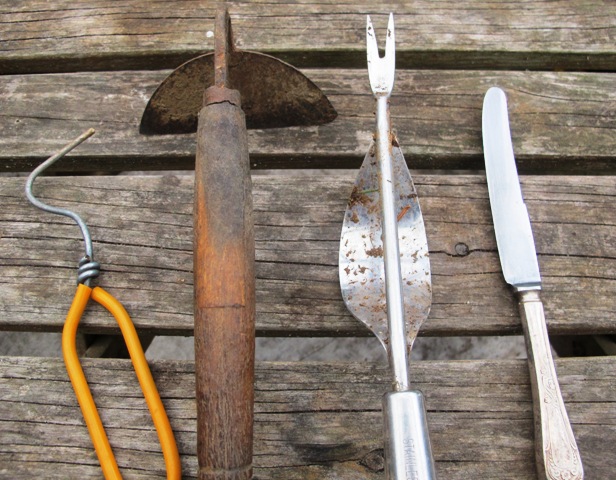
I am a big Wonder Weeder fan. These are the best implements I know for hand weeding, especially in tight spaces. Because the action is to hook out the weeds, it is possible to do it with minimum of disturbance to surrounding plants. It still amazes me that something so simple, indestructible and effective has remained cheap. I own several because they regularly end up going through the compost heap. I have no commercial interest in these but I see you can buy them on line – three for $15 (including delivery) at wonderweeder.co.nz and some garden centres sell them.

Others swear by the Niwashi which is probably somewhat more expensive and less happy about going through the compost. This is a small hand-held hoe. It severs the plants from its roots which will be enough to kill most, but not all, weeds. It is also better than a trowel for cultivating the soil in smaller areas. You need at least a 12cm space between your plants or you will sever them in the process.

For flat weeds in the lawn, or very deep rooted plants like dock, there is nothing to equal the lawn weeder which can hoick plants out, roots and all, in one simple move. If you don’t want a small armoury of specialist weeding implements, an old table knife does the trick once you have mastered the different hand actions required.

First published in the Waikato Times and reprinted here with their permission.

Cumulative Effects (of Petrochemical Development)

Side by side newsletters

Side by side newsletters

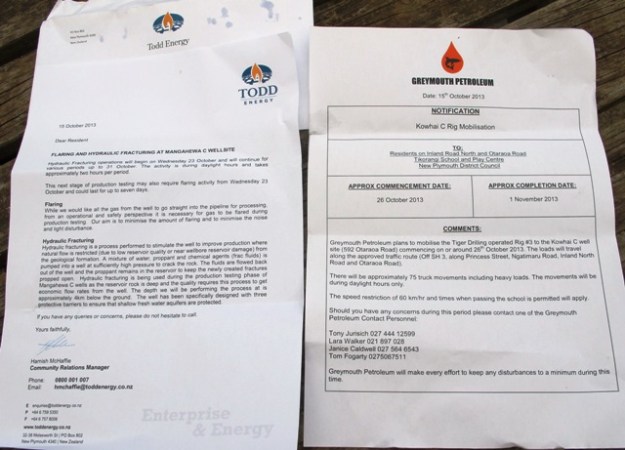
Two newsletters arrived last week followed up by two circulars to Tikorangi residents – well, one letter and one memo. The difference in style between *our* two petrochem companies operating here is pretty stark.

And side by side letters both appeared in the letter box yesterday

And side by side letters both appeared in the letter box yesterday

But it is the list of current activities that is scary.

Greymouth Petroleum:

1) Construction of Kowhai C site. That is the site that this community spoke up and said we did not want so our District Council helped Greymouth Petroleum by consenting it in secrecy and not addressing community concerns, including Otaraua Hapu whose rohe that site is in. Greymouth did not even acknowledge this community’s concern.

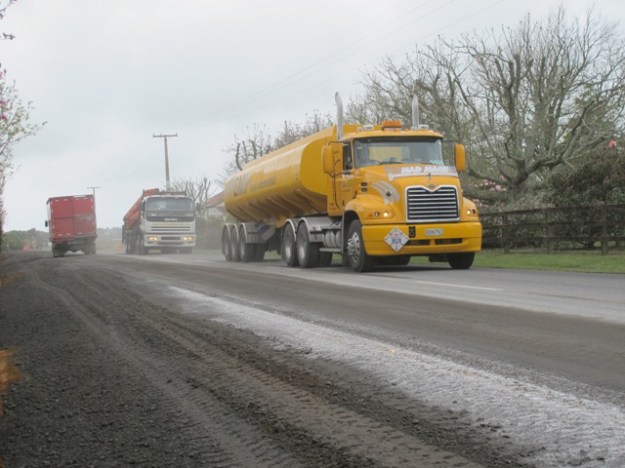
Greymouth's yellow tanker on their new stretch of Otaraoa Road

Greymouth’s yellow tanker on their new stretch of Otaraoa Road

2) Roadworks related to Kowhai C site.
3) Pipeline construction.
4) Drilling rig is coming in to Kowhai C site starting October 26 (‘approximately’ 75 truck movements).
5) A workover is coming to Kowhai A site. This presumably involves a workover rig.
6) Roadworks to the Turangi A, B and C sites.
7) Work is apparently going to start on Ohanga B site shortly. Epiha A is already constructed and presumably ready to drill. Urenui A is apparently planned. Turangi C is not yet constructed. There is talk of extensions to Kowhai A site.

Another day, more traffic here

Another day, more traffic here

Then if we add in Todd Energy’s activities:

8) Fracking and flaring on Mangahewa C site
9) Site works on Mangahewa E site
10) Still more construction of infrastructure facilities on Mangahewa C starting in November.
11) Mangahewa Expansion Train 2 (MET2) construction continuing at McKee.
12) Pipeline construction (includes using a helicopter).
13) Roadworks on Otaraoa Road to improve access to McKee.

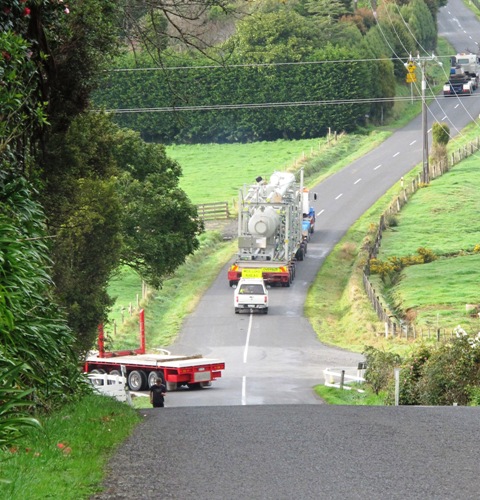
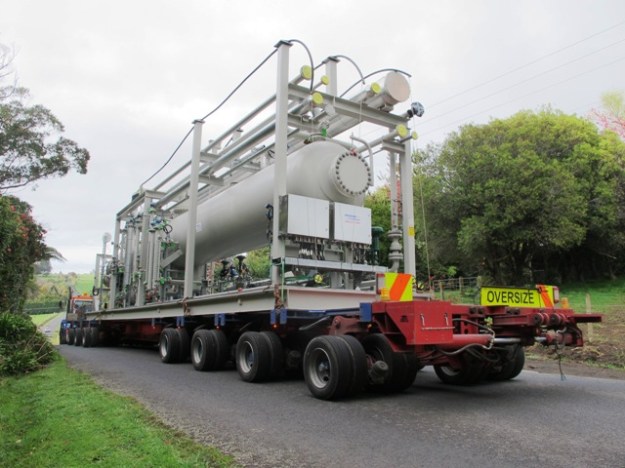
This is what a rig move looks like, but multiply by between 75 and 95 loads

This is what a rig move looks like, but multiply by between 75 and 95 loads – though not all are on trucks this large

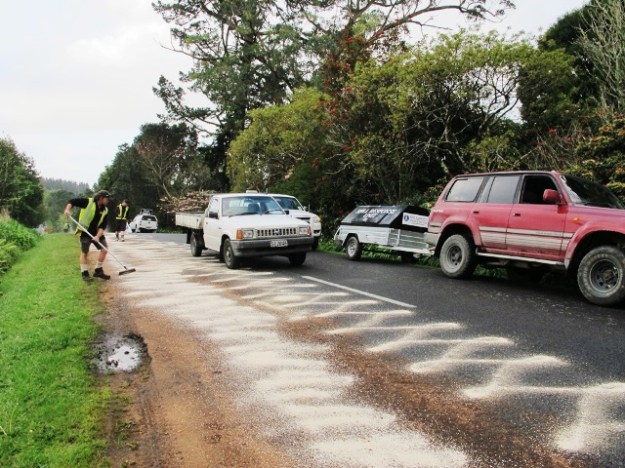
14) The rig was moved out of Mangahewa C site over the past few weeks. This involved many heavy loads and a small matter of an oil spill last week (right along our two road boundaries here, in fact).

Bit of an oops with a spill on the road outside our place

Bit of an oops with a spill on the road outside our place

048

Permanent tanker movements continue from most sites and from McKee. All of these activities generate noise and heavy traffic.

All year we have been trying to convince New Plymouth District Council that they must address cumulative effects when a range of petrochemical activities are taking place at the same time. But nothing has happened and in the meantime the activity ramps up further.

Tikorangi is apparently the most heavily explored and developed petrochemical area in the country. It used to be a highly desirable and charming little rural community. Now it is reeling. And still more is planned.

Is Tikorangi to be the blueprint for other areas, given this government’s belief that salvation lies in oil and gas development?

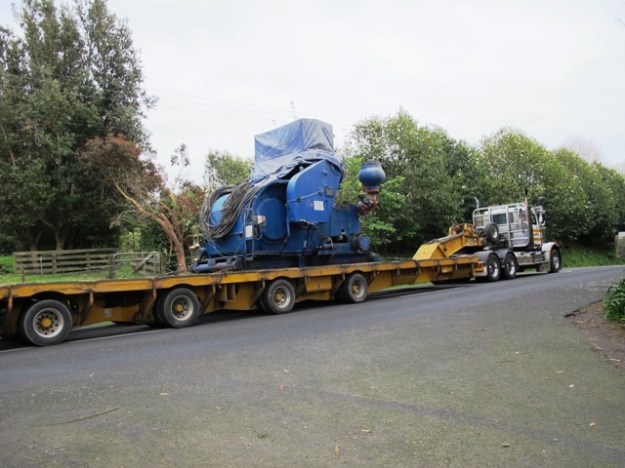
Just another load for the MET 3 construction at McKee passing our place

Just another load for the MET 3 construction at McKee passing our place