Author Archives: Abbie Jury

Unknown's avatar

About Abbie Jury

jury.co.nz Tikorangi The Jury Garden Taranaki NZ

Grow it Yourself – melons

The melons offer an annual challenge here because timing is of the essence. All melons like a hot summer so the further north you are, the more successful you will be. They also have a relatively long growing season of at least 3 months and you need heat at the end of the season to get sweet fruit. The trick is getting them out at the optimum time – early enough to get well established but not so early that they get checked in growth by inclement spring weather.

Melons grow on a vine, similar to a pumpkin or a courgette, each plant taking up at least a square metre. If you want to grow them vertically up a trellis, you will probably have to construct little hammocks for each fruit to support the weight. Because of the long growing season requirements, it is usual to put them out as small plants rather than starting from seed. You can try and hasten the initial settling in process by using a cloche or by planting into black plastic (which helps the ground to heat up more quickly). Mark has tried a new approach this year of building fresh compost beds in mounds for the melons, using grass clippings to generate initial heat. Ever the vigilant gardener, he has measured the temperatures and the mounds are sitting at around 35 degrees during the day, dropping to 18 degrees at night. He is hoping this is enough to really kick start the crop this year. It also has the advantage of supplying plenty of nutritious, organic material which the plants require.

Plants need to be well established and running profusely by Christmas if you are to have any hope of a decent harvest and even then, you are relying on a warm, dry autumn. So do not delay planting if you want to try growing them.

Water melons are a little more successful in marginal climates, though many of us may think they are a poor second to a good rockmelon.

First published in the Waikato Times and reproduced here with their permission.

Tikorangi Notes: Friday 18 November, 2011

The fragrant nuttallii rhododendrons are late season bloomers here

The fragrant nuttallii rhododendrons are late season bloomers here

Latest Posts: Friday 18 November, 2011
1) Plant Collector – the showy Geranium madarense

2) Yet another NZ book best left on the booksellers’s shelves. I call it candyfloss gardening.

3) What’s in a name? Quite a bit, sometimes. Abbie’s column.

4) Grow Your Own – carrots this week

5) In the garden this fortnight

6) Future success predicted for Fairy Magnolia Blush – in Australia.

7) On the case with Grandma’s violets – a step by step guide on digging and dividing congested groundcover.

The area we refer to as "the park"

The area we refer to as "the park"

The two most admired areas of our garden are the rimu cathedral walk (“under the rimus” as we call it) and the informal park area in spring time. The park is somewhere over 4 acres in size with the upper waters of the Waiau Stream meandering through. We have deliberately kept the area quite open and informal, featuring specimen trees and an abundance of seasonal colour from magnolias, then prunus, rhododendrons, azaleas and other flowering shrubs. It is that very informality that seems to appeal to garden visitors. Only the very observant pick the detail which underpins such a casual appearance. Bulb meadows don’t just happen of their own accord, at least not in our climate. Nor do clear flowing streams stay that way without some intervention – our torrential rains see flood waters full of suspended silt on a regular basis. But it all seems worthwhile every spring when the park is in bloom and with our unseasonably cool season this year, that flowering has extended by weeks. The nuttallii rhododendrons are in full bloom now, as are the later season maddeniis.

Our garden remains open. If we are not around, we leave an honesty box out. However, plant sales have well and truly finished and we have taken to the end of retail like ducks to water. We would much rather be gardening.

I was, however, disconcerted by the garden visitors earlier this week – an older couple who came out of the garden, making the usual positive comments of how lovely it all was, when he came out with an extraordinary statement: “It must all be such a heavy burden for you.”

I think it said more about him than us!

Plant Collector: Geranium maderense

Geranium maderense

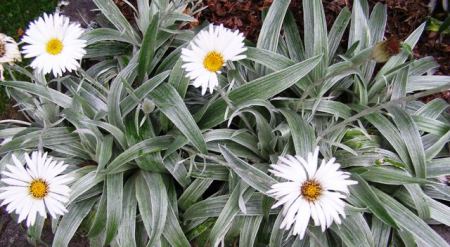
There is nothing rare about Geranium maderense but it is certainly eye-catching if you have not seen it before. The only tricky part seems to be getting the first plant to grow. It then sets seed prolifically and it will continue coming up for years to come. I weed out most of them, leaving two or three to grow on to flowering size each season.

This is the largest of the geranium family and it is biennial. It doesn’t flower until its second year and then it puts on a huge show, sets seed and dies. By this point it is at least a metre high and a metre across so it does require space. Curiously, its lower leaves (which are large and attractive in their own right) become elbows resting on the ground to enable the plant to stand upright without support when flowering time arrives. It comes from the island of Madeira and to save you looking it up, this island group belong to Portugal and is located southwards to the west (or left) of North Africa. So this geranium comes from a hot, dry, maritime climate and is not particularly hardy to cold areas but it seems to be resilient in a range of soil conditions.

Elbows!

Apparently the Romans used to call Madeira the Purple Isles which seems appropriate given the most common form of G. maderense is in cerise to purple tones. There is a white form available. Terry Hatch from Joy Plants on the northern border of the Waikato gave us three plants of the white form but, alas, they failed to survive with us. This may be because we didn’t get around to planting them out quickly enough though others have told me they have tried and lost the common purple form too. If you are going to try growing G. maderense, go for a position which offers warmth, sun, good drainage and space.

First published in the Waikato Times and reproduced here with their permission.

Postscript: I have just been alerted to the existence of an endangered geranium in Hawaii which would almost certainly beat G. maderense on size. Geranium arboreum can reach up to 4 metres high, though it does not appear to be as showy in bloom as the second place-getter in the big geranium stakes.

What is in a name? Quite a bit, sometimes.

I will take Rhododendron nuttallii any time

I will take Rhododendron nuttallii any time

I was looking at a newly released NZ gardening book and happened upon praise for a fruit described as a Chilean guava. For decades, the term Chilean guava, sometimes strawberry guava, has been widely known in this country to refer to a South American fruit called Psidium littorale. It is a biggish, evergreen shrub which produces fruit about the size of a large marble or a gobstopper in red or yellow with rather large pips. It is at least the same genus as the tropical guava – the pink fruit that most of us know in tins from South Africa.

Enter Myrtus ugni (or Ugni molinae to be more correct), usually called the New Zealand cranberry (to which it is entirely unrelated). In Australia, it is known as the Tazzieberry but internationally it is often referred to as the Chilean guava. In recent times there has been a growing tendency in the nursery and retail trade (and now in publishing) to adopt the international common name and to refer to the New Zealand cranberry (aka Myrtus ugni) as the Chilean guava. No matter that there is a pre-exisiting fruiting bush widely known as that. In the aforementioned book, the only reason I knew the author was writing about Myrtus ugni and not Psidium littorale was by the picture. That is because the header was: “Chilean guava” with no botanical name given at all. Sometimes writers and publishers can dumb stuff down so far that they almost guarantee failure.

Two entirely different plants, both commonly called the Chilean guava

Two entirely different plants, both commonly called the Chilean guava

Common names can be helpful in gardening where proper names are often in Latin and hard to remember, but they are only helpful when there is shared understanding about the plant being so labelled. There is no excuse for not putting the proper name in smaller type beneath the common name in books, or indeed for failing to give alternative common names that are in wide usage.

What novice gardeners need is not the complete dumbing down of information to a jazzy but relatively useless level. They need skilled interpretation so that the wealth of information is sorted for them and they are gently encouraged to lift both their knowledge and skills level. Part of that is learning about plant names and plant families.
Why does it matter whether you understand these things? Think of cooking. You can make a perfectly acceptable cheese sauce using any old cheddar but to lift your cooking to a higher level, it is usually necessary to understand the different types of cheeses and just when Parmesan is going to give a better result than Mozzarella or even Pecorino.

You can enjoy your garden and fill it with seeds and cuttings without knowing the names of any of them, let alone where they come from or to which plant family they belong. You may even be perfectly happy growing one Chilean guava while thinking it is the other Chilean guava you have. But it becomes a great deal more interesting when you know more. And the more you know, the more likely your outcomes will be successful and the better your garden will be.

It was an eighteenth century Swedish botanist, Carl Linnaeus, who reorganized the structure of living things, including plants, into the order or sequence (called taxonomy) that we still adhere to today. You can get by quite satisfactorily just understanding the end points of species and genus.

The species is specific to one plant, though there can be some variation within a species – think of brothers and sisters. So if you take the gorgeous Rhododendron nuttallii (and it is so gorgeous, I will take it any time), the nuttallii is the species. There are differences between various forms of nuttalliis but botanically they all very close. The rhododendron part of the name is the genera and there are many different species within that genera – in fact all the different rhododendron, vireya and azalea species. They are like the cousins, second cousins and third cousins plus assorted relatives.

Plant names are in two parts: first the genus and then the species. Hence Rhododendron nuttallii. Even the humble common garden bean has a two part name – Phaesolus vulgaris for most green beans and Phaesolus coccineus for runner beans. Runner beans are a different species to green beans but take it a step up and they are the same genus. The naming of plants in this form is one of Linnaeus’ most enduring legacies. Prior to that, the naming of plants was entirely random and told you nothing at all about the botany of the plant (which is a bit of a problem when it involves medicinal herbs). It was also a source of considerable confusion and duplication.

Linnaeus’s system of classifying plant species through names (called binomial – two names) has stood the test of time over nearly 300 years. But apparently in this country, it is too difficult for us to grasp. If the trends of the past decade are anything to go by, we must return to the pre-Linnaeus era because we are only capable of managing common names, no matter that it can cause confusion. It is apparently asking too much that the botanical name be run alongside the common name.

First published in the Waikato Times and reproduced here with their permission.

Salads Year-Round. A Planting Guide by Dennis Greville

The best thing about this book is the photography. It is sumptuous. The same cannot be said for the text, despite the author being vastly experienced and presumably knowledgeable. It does not show. You too can grow salad ingredients all year round. The recommended crops range freely and randomly from traditional lettuce and radish, across Europe (blood orange and bocconcini), through the Middle East (pomegranates and figs) and Asia (bamboo shoots, Vietnamese mint and galangal). Throw in some edible flowers like heartsease pansies and calendula and you have global salads, rounded out with the mandatory recipes. But it claims to be a planting guide. The growing information is perfunctory at best, but often woefully inadequate and sometimes entirely absent. There is no indication whatever of the range of climatic conditions we have in this country. You could not tell from this book whether you can expect to grow blood oranges in Invercargill or grapes and aubergines in Turangi. Nor will you learn anything about caring for the crop as it grows, let alone pests and diseases.

This is candyfloss gardening for the Christmas market. Leave it on the booksellers’ shelves. It should be remaindered on Boxing Day and disappear without a trace by New Year.

Salads Year-Round. A Planting Guide by Dennis Greville (New Holland; ISBN: 978 1 86966 3285) reviewed by Abbie Jury.