Author Archives: Abbie Jury

Unknown's avatar

About Abbie Jury

jury.co.nz Tikorangi The Jury Garden Taranaki NZ

Tikorangi Notes: Saturday 5 November, 2011

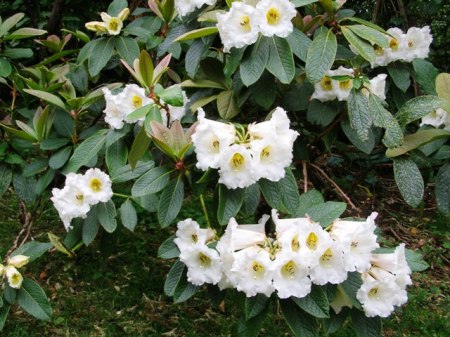
Mark's "Platinum Ice" is just opening

Mark's "Platinum Ice" is just opening

And "Coconut Ice" is looking a picture

And "Coconut Ice" is looking a picture

Latest Posts
1) From designer trend to cliché in the blink of an eye – Abbie’s column

2) The wonderfully brazen Azalea mollis in Plant Collector this week.

3) Grow it Yourself: lettuces with particular reference to Misticanza di Lattughe (available from Franchi Seeds, or Italian Seeds Pronto in New Zealand).

Tikorangi Notes: Saturday 5 November, 2011

There has not much (indeed, any) gardening going on here this week. As we host the large majority of our annual visitors in one ten day period, we get to spend 8 or even 9 hours a day standing on concrete doing the meet and greet. It is very tiring but also enormously affirming to have so many people come and enjoy the garden. Little do they realise that this means our Lloyd was out mowing the park at 6.30am this morning. I admit it was as late as 7.00am before I was out and about doing the clean up of our public welcoming areas.

The later season rhododendron display is just coming into its own – the wonderful nuttalliis and the later flowering maddeniis. We are still running at least a week behind on the blooming season.

Our annual garden festival finishes on Sunday. Monday will see us back in gardening clothes, probably mooching about in solitary silence achieving very little but focussing our attentions back on the garden. It is a source of amazement to garden visitors that we manage a garden this size with just ourselves as gardeners and our one staffer, Lloyd, on the mower, mulcher, tractor, weedeater and generally assisting. While we would enjoy having additional assistance, visitor numbers in New Zealand are not high enough to pay the wages. However, in the final analysis, we garden for our own pleasure and the visitors are a welcome bonus.

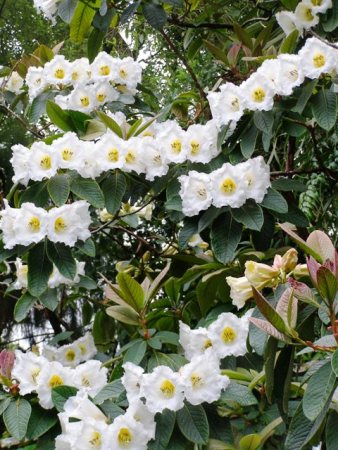
The wonderful fragrant nuttalliis are coming into flower - this one is Floral Legacy (nuttallii x sino nuttallii)

The wonderful fragrant nuttalliis are coming into flower - this one is Floral Legacy (nuttallii x sino nuttallii)

Plant Collector – Azalea mollis

Look at me! Look at me! Azalea mollis

Look at me! Look at me! Azalea mollis

The mollis azaleas can be such a wonderfully flamboyant addition to a garden with strident colours which shout “look at me”! They are members of the rhododendron family but deciduous, cold tolerant and more forgiving of less than ideal soil conditions, particularly wetter and heavier ground. Many have fragrance which is gilding the lily further. Not all of them are such loud colours. You can get pastels, whites and subdued shades which show more refined taste, perhaps. But the vibrant oranges, yellows, reds and colour mixes have an intensity which is unrivalled in other members of the rhododendron family, magnified by the fact that they flower on bare wood, before the new season foliage appears.

Azalea mollis used to be very popular but are nowhere near as readily available these days. Their habits don’t suit modern nursery growing practices and they are only saleable when in flower so garden centres often shy away from them. In winter they are just bare sticks and in summer they are relatively anonymous and prone to mildew in warmer, humid climates. Their comparatively short selling season does not suit modern plant retailing so you may have to search them out and grab them when you find them without worrying too much about particular named cultivars. They are easy to raise from seed and often what is sold are just seedlings. Plant them in sunny positions where they can star in flower and not be too obvious when they aren’t.

Azalea mollis are not a species (which is how they occur in the wild). They are hybrids from controlled crosses, initially between the Chinese and Japanese azaleas but now pretty mixed in their genetics.

First published in the Waikato Times and reproduced here with their permission.

Garden fashion – from designer trend to cliche

I fear my scatter cushions are more of the shabby chic genre than designer...

I fear my scatter cushions are more of the shabby chic genre than designer...

I attended a really interesting garden lecture on Saturday. Some readers may know Neil Ross from his regular contributions to the NZ Gardener magazine. He spent some years as head gardener at Ayrlies in Auckland but these days is back gardening, designing and writing in the UK. His talk was loosely on gardening trends in Britain and I thought readers might enjoy a summary of what is going out of fashion and what is on the rise, based in part on his analysis of the cutting edge garden installations by leading designers at Britain’s superb garden shows – Chelsea, Tatton Park, Hampton Court and the like.

Passing over (so they will look dated very soon in your garden, should you be contemplating them) are painted walls – usually solid plastered walls installed as a garden feature and painted in a dramatic shade with colour toned plantings. Sorry, passé now, along with gabions, thank goodness. The latter are wire cages, usually filled with rocks but sometimes with au naturelle branches and trunks cut to length or even pine cones. We always thought that gabions looked better when used for their original purpose of slowing erosion. They are a bit too industrial altogether in a garden.

Dribbly water features that look like urinals (Neil’s description, not mine) are looking dated, irrespective of whether that trickle of water is flowing out of a terracotta head, a gargoyle of any description or just a modest pipe. Keep to ponds (lakes are better), natural streams or at least a decent gush of water if you feel the need for a water feature.

Box balls, Neil reports, have been so over-used as a formal feature that they have been done to death. Though he thought, in New Zealand it is not just buxus balls. It is the whole mini-Sissinghurst look of clipped buxus hedges and edges containing formal standard plants (be they roses, bay trees or choisya ternata) – a man after my own heart on this issue. Also done to death are designer scatter cushions accessorizing the display garden. I have to admit that I have been known to employ the scatter cushion on our rather unforgiving stone seats though mine are of the shabby chic genre (all my late mother’s tapestry, now heavily faded) rather than designer colours and textures. I only put them out when our garden is open and I went off that idea the time I forgot to bring them in and it rained….

The Missouri Meadow Garden at Wisley - perhaps the pinnacle of the prairie garden style

The Missouri Meadow Garden at Wisley - perhaps the pinnacle of the prairie garden style

The prairie garden is in danger of becoming yesterday’s design in England though we have never embraced this style in New Zealand. The Missouri Meadow at the RHS flagship garden, Wisley, south of London, is the finest example we have seen. But it relies on low rainfall and low fertility which hardly describes the dairy farming areas of New Zealand so we may never see prairie plantings popularised here.

If you want to be cutting edge, Neil’s advice is that the new trend is to keep chickens and indeed anything that is edible or food producing in the garden. I don’t think guinea pigs count. Beehives are all the rage, especially in cutsie-pie bee frames. Insect hotels are all the rage in English gardens though the research is that insects are happier in a natural environment (leave an old log to rot down) than in your designer Hilton.

Green walls are still a hot item but we agreed that they are expensive to install and a lot of work to maintain. It is easier to grow plants in the ground rather than in vertical frames, if you can.

Glass is in fashion, preferably exquisite, hand-blown glass features. At a pinch wine bottles might fit the bill in a creative wall construction which may suit the winos amongst us. But the suggestion I have seen to use old wine bottles as a garden edging is a really bad idea from a practical point of view, let alone the dodgy aesthetics. As you plunge your spade in to turn over the soil, you are just as likely to hit a bottle and break it.

Predicting the Return of the Conifer

Predicting the Return of the Conifer

And conifers are due to make a return. Not in a reincarnation of the awful 1970s style some readers may recall – a mass of prostrate junipers and the like plonked in through black plastic and then covered with that nasty red scoria. There were good reasons why that particular style of gardening fell from grace but the poor old conifers themselves did not deserve to be cast out to the wilderness along with the garden style. The conifer family is huge and there are many fine specimens from tiny treasures to handsome, long-lived landscape specimens. Used judiciously as accent plants throughout the garden, they can give a splendid year round shape and definition as well as variations in colour. Thank goodness we still have ours – after sixty years, some are getting venerable and we would not be without them.

In place of prairies and meadows, more block planting of perennials is returning – check out the work of Tom Stuart Smith or Piet Oudolf.

The final caution comes not from Neil but from the Garden of Jury – beware of rills and obelisks. They are on the cusp of passing from innovative to hackneyed. It is a very short step.

First published in the Waikato Times and reproduced here with their permission.

GIY – Lettuces

I am married to the former Mr Buttercrunch Lettuce Man. For years he has favoured Buttercrunch as the most reliable lettuce for the home garden because it grows so well and can be harvested leaf by leaf over an extended period. This year he has tried a different product from Franchi Seeds who are Italian so it has the name of Misticanza di Lattughe (or just plain lettuce to most of us). It is a great mix of different lettuces of cut and come again varieties which mature at different rates – and it includes Buttercrunch. He is most impressed by the range and performance and his lettuce patch has been yielding an abundance of mixed leaves from the early thinnings (micro greens) through to mature plants. He is now a convert to this particular product which is distributed in NZ through www.italianseedspronto.co.nz and he is sowing in succession at about three weekly intervals.

Lettuces like friable soil with plenty of nitrogen to help them make all that leafy growth. This means they are an excellent crop to follow on from a heavily fertilised crop like corn. They also need plenty of water – a bitter taste is often due to drought. Most take around 60 days to mature. When first planted, we keep a close eye out for slugs and also for cutworm which can work its way along the row, eating the roots off. Diazinon prills are used against cutworm if necessary. We don’t worry about slugs later on which means that the leaves need thorough washing before use. In high summer, lettuces tend to bolt to seed rather than making leafy growth but you can keep sowing and cut them as young plants.

First published in the Waikato Times and reproduced here with their permission.

Tikorangi Notes: Friday October 28, 2011

Latest posts:
1) Scadoxus puniceus – another bulb delight from southern Africa in Plant Collector this week.
2) Where to start with garden design – Abbie’s column from the Waikato Times.
3) Grow it Yourself – green beans

The season is late this year - Prunus Pearly Shadows is still opening

The season is late this year - Prunus Pearly Shadows is still opening

Tikorangi Notes: Friday 28 October, 2011

The kind neighbours, erecting a temporary gazebo (with the doubly kind neighbour to the left who happens to own said item)

The kind neighbours, erecting a temporary gazebo (with the doubly kind neighbour to the left who happens to own said item)

Our garden festival starts today with a hiss and a roar – a full coachload of Probus members (from Levin, if my memory serves me right), a guided tour of the garden for any, all and sundry and a small Australian tour (that is few in number, not small of stature) all happening at about the same time in the morning. It has been a busy week sprucing up but we are feeling reasonably well prepared with an hour or two in the morning to finish the final touches. The season is later than usual which means that the bluebells are still in flower. We never worry too much about variations in seasons because there is always something blooming. Prunus Pearly Shadows in our entrance area is looking very fetching whereas it is normally passing over by now.

In a moment of great clarity, we have decided to give up on retailing plants after mid November so if you have been planning to purchase anything, you will have to get in quickly. From next year, we plan to retail for two weeks of the year only – from Labour Weekend until the end of our garden festival. And we will not be continuing with much in the way of woody trees and shrubs. However, we will be looking to offer more of the rare and interesting curiosities so there should be material that is interesting on offer for those two weeks this time next year. In the meantime, we are keen to clear out plants so there are bargains to be had – check the Plant Sales section. Most magnolias are currently half the listed price. When they are gone, they are gone. We don’t have crops coming through. We will hold prepaid orders until you can the plants collected, if required.