

The Devon Street alders are to get the chop
Trees in the urban landscape have a hard life. More often maligned than admired, battling on in remarkably inhospitable situations, it is rare that they reach maturity. In New Zealand at least. It is even more rare in New Plymouth with its coastal and mountain views. A leafy tree is likely to survive better in a flat, inland city like Palmerston North where it will never get in the way of some ratepayer’s view.
The trees down the main street of New Plymouth are to get the chop. They drop too many leaves and make the footpaths slippery and many people hate them. We happened to be dining at the weekend with a group that included dendrologists – in other words, people with a much better than average knowledge of woody trees and shrubs. Conversation turned to the Devon Street trees.
These are just alders. A boring, utility tree at best, but capable of thriving where less resilient trees will suffer. Opinion across the dinner plates was divided. A few thought it was a tragedy to cut down perfectly healthy trees fulfilling a role of greening the city. Others thought they could be replaced by something a great deal more interesting. It is hard to argue with the friend who emailed me the next day saying, “The alders always remind me of dank and dark South Wales where they are planted on the bulldozed slag heaps, as alders cope with the poisonous soil.” He was hoping for palms which are more evocative of the tropics.

But replace them with what? Metasequoia, maybe?
I think it would be fair to say that the majority opinion was that the alders can go but they need replacing with a better option. Therein lies the problem, for I fear the ignorant majority would probably be quite happy to see nothing come in as a replacement because all trees are ‘messy’ and a concrete jungle doesn’t worry them at all. Hope lies with the staff at the district council who may be more enlightened about greening the urban landscape. But it won’t be easy.
First up, removing the alders will likely require lifting the pavers that surround them and replacing a fair amount of the soil. It is not just a matter of chainsawing off the tops (though that will be no small task) and getting the stump grinder in to take out the bulk of the root ball just below the surface. Leave all those feeder roots in place – and they will spread far and wide – and the risk of soil borne fungus (particularly armillaria) attacking the new plants is high.

Amelanchier, maybe?
But the huge issue is what to replace them with. There is very limited space. Whatever comes in must have small leaves and small flowers that decompose quickly. Much and all as we would love to see magnolias used, evergreen magnolia leaves take years to rot down and deciduous magnolias have enormous leaves and flower petals, all of which will fall every season. Anything that forms a canopy is going to need extensive pruning and training and for the council, that costs money.
Deciduous or evergreen? Contrary to ill-informed opinion, evergreen trees drop leaves too. It is just they do it all year round instead of one hit in autumn. What can survive and thrive in a heavily polluted environment with an extremely restricted root system? Dinner time suggestions ranged from metasequoia (the restricted root system would stunt the top growth to a more manageable size), amelanchier (autumn colour, spring flowers, small leaves and petals but still plenty of them and it does not have a great natural form), Melia azedarach (though it may prefer a drier climate), pseudopanax (tough leaves, not a highly prized native, generally) and palms. The last option was somewhat favoured but Mark and I are cautious. Palms would look exotic. It would be possible to choose some options that would take the conditions. They are tall and narrow so take up next to no space. But – and it is a big but – as they mature, those fronds are often very heavy and a frond falling from a height in our frequent winds would do significant panel damage to vehicles parked below as well as potentially ripping off the spouting from verandas as it falls. Imagine the outcry….
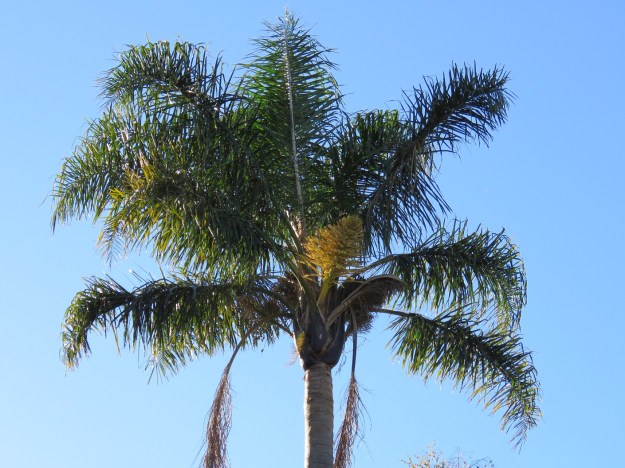
Handsome, but…

… these falling fronds can cause significant damage
Mark takes the somewhat depressed view that maybe some shrubs in a planter box are the best we can hope for on the main street of New Plymouth. Unimaginative, utility and suburban.

Gleditsias. NOT our native kowhai
On the funny side, the little town of Waitara is local to us and it has gleditsias planted along its wide main street in a yellow and blue colour scheme. Even these trees are controversial. I have been at local meetings where landowners and business folk want them cut down because they drop leaves and are ‘messy’. But Mark likes to tell the story of when they were planted. A local councillor said to a noted local environmentalist: “You must be very pleased to see kowhais being planted on the main street.” I mean gleditsia, kowhai – not a lot of difference, eh? But maybe a good lesson on not leaving the blitheringly ignorant to make decisions on trees in public places.
For those loyal New Zealanders who think we should only be planting native trees, the trouble is that most of our native plants have evolved to grow in forest conditions. The roll call of suitable options for the stand-alone, exposed, windy, confined conditions of a narrow streetscape is very small indeed.

Melia azedarach – a pretty small tree but hardly one of stature and longevity

We can never overuse this meme
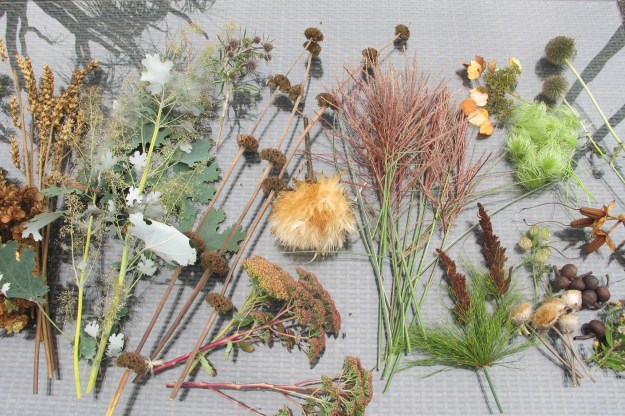 As the nights cool and day length shortens, there is no denying that autumn is here. Coastal Taranaki is not renowned for autumn colour. It is generally drier climates with sharp seasonal changes of temperature that get the showiest displays. The trees we have that do change won’t be showing much until the end of May and into June. In our climate, the shoulder seasons of spring and autumn are extended in time but at least it means the depths of winter are but brief.
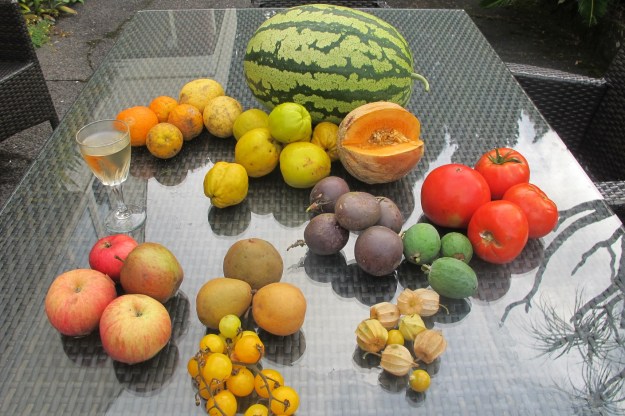 Despite all that, it is a time of year that brings out the Squirrel Nutkin in me. Or is that the Laura Ingalls Wilder of The Little House on the Prairie fame? There is something visceral in preparing for cooler months and achieving a state where I know there is enough firewood to keep us warm and food supplies stockpiled against winter famine. Not that I grow the food crops – that is Mark’s domain. And indeed, the supermarket is only 10 minutes’ drive away but that is never going to be as satisfying as seeing the home produce rolling in. April is all about chestnuts, gathering walnuts, drying beans, sorting the apples and pears, gorging on rock and water melons, freezing tomatoes and corn, harvesting grapes and the like.


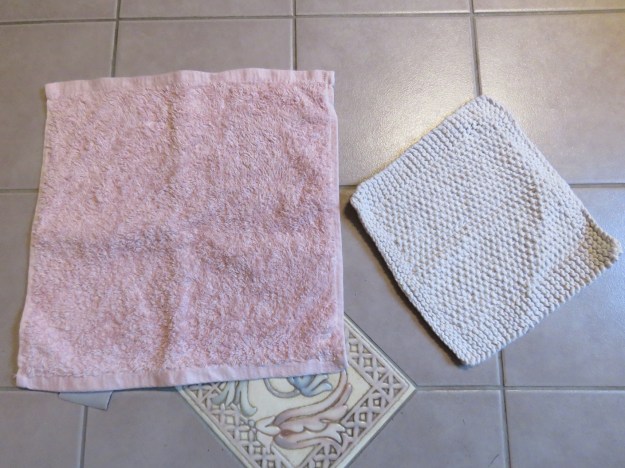 Second daughter had reason to visit South Africa recently so my delightful birthday package contained several items from that trip. Included was the hand knitted cream square above. “I remembered your knitted dishcloths,” she said.
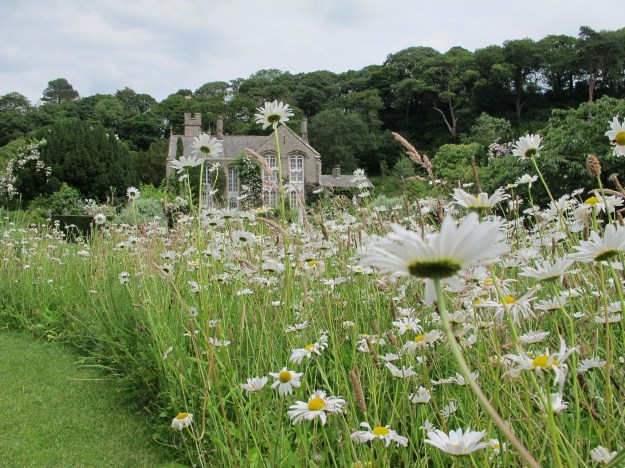



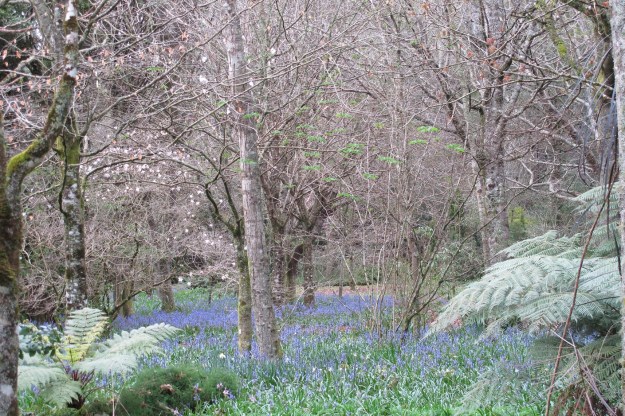

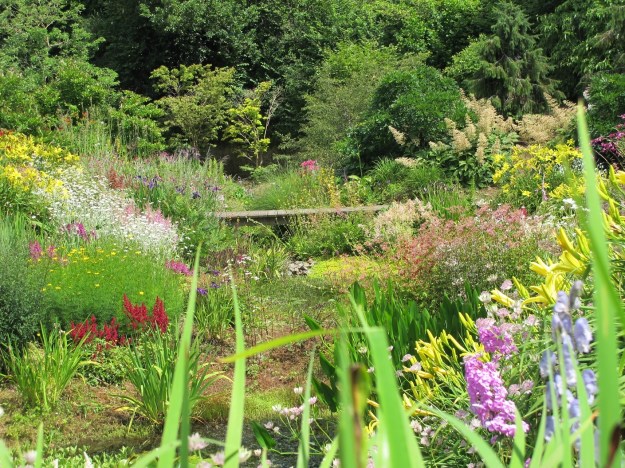
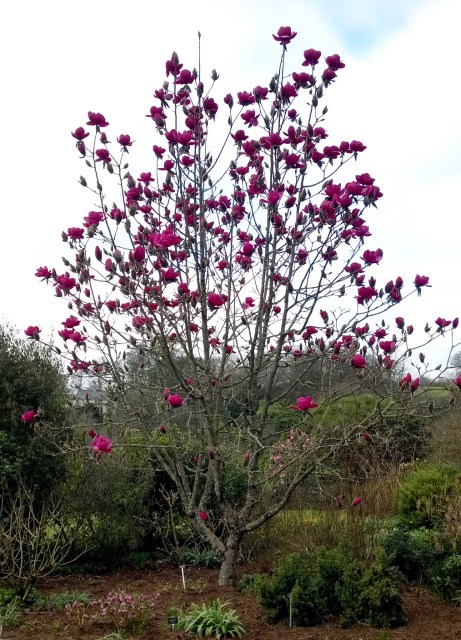 We are generally accustomed to seeing Jury plants growing in different parts of the world, though sometimes it generates a special thrill. A UK friend sent this photo of Magnolia Felix Jury in bloom at The Garden House in Devon last week. We had seen this particular tree growing strongly several years ago but it was summer, so in leaf, not bloom.
 Even I found it touching to see Mark’s delight at the specimen of Magnolia Felix Jury growing a few doors up from where our daughter lives in Canberra. He felt it was like having a touch of Tikorangi in her street. Canberra is not exactly Magnolia Central so if ‘Felix Jury’ blooms as well there as at The Garden House, it will be a showstopper. The house owners were a tad surprised when I knocked on their door to ask if I could take photos and explained why. They also had Mark’s Fairy Magnolia Blush growing to the immediate left of the umbrella. Nothing illustrates the stark difference in climate to here more than an astroturf lawn.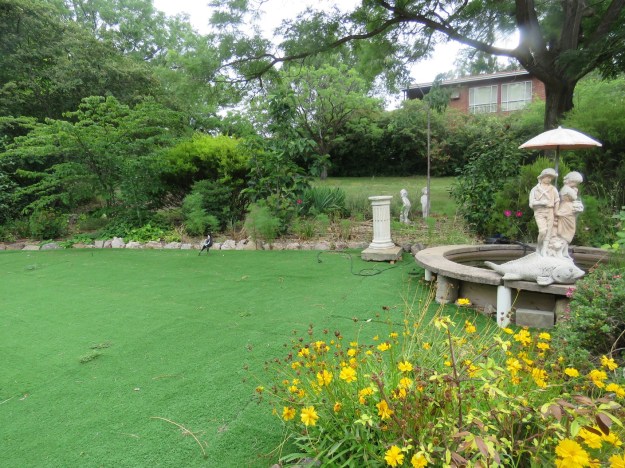
 Tikorangi The Jury Garden