Category Archives: Abbie’s column

Abbie’s newspaper columns

Lower maintenance gardening

Do away with island beds in the midst of the lawn if you want to reduce maintenance

Do away with island beds in the midst of the lawn if you want to reduce maintenance

I thought I would spare readers from the New Year’s gardening resolution column. Most will resolve to weed more often and keep their garden looking tidier, only to fall by the wayside very quickly. So it is onto lower maintenance gardening this week.

Note the qualifier – lower maintenance. I don’t think there is any such thing as low maintenance gardening. These are mutually exclusive concepts. The only way to eliminate gardening altogether is by living on the upper floor of an apartment block.

You can do away with plants and pave, seal or turf your entire section but that should not be confused with gardening. Nor does it eliminate all maintenance. Paved areas need attention. Weeds will forever pop up in any cracks or gaps. Dust and grit accumulate and need to be swept or blown away. Shaded areas will grow moss and lichen and may become slippery. There is nowhere for the family pet to do its business.

You can grass out your section but it will need mowing. It will need a whole lot more than just mowing if you want a proper lawn. Maintaining even a half way decent lawn takes a surprisingly large amount of time and effort. But at least you can get a lawn mowing contractor in and trust him or her to get the grass down. But that is not a garden, either.

Gardens have plants and plants are tricky, messy and unreliable living organisms. They grow. They drop bits. Some grow too well, others not well enough. They also have the capacity to delight and to surprise, to soften a view and to blur the hard edges, particularly in an urban environment. It is about much more than just feeding the body by growing edible plants. You can wrap it up in a spiritual framework if you wish or you can be more prosaic in your terminology but the bottom line is that it is a rare person who remains oblivious to the beauty that is in nature and plants are integral to that. Most of us are driven to recreate some of that nature in our immediate environs. And if you want to stay on good terms with neighbours, an ugly wasteland is not going to do it.

So, to dispute some common myths about low maintenance gardening.

  • Evergreen plants are not low maintenance. They still drop a full set of leaves every year. They just do it gently all year round rather than in one big hit like deciduous plants.
  • Vegetable gardening is probably the highest maintenance form of gardening there is. Forget any advice that you can have a low maintenance yet productive vegetable garden.
  • Similarly, you can’t just plant an orchard and leave it, expecting to harvest fruit in season. Most fruit trees require regular attention; some require a great deal of care.
  • Simple gardens or formal gardens defined by sculptured plants (hedges and the like) are not easy care. They depend on pristine maintenance for their effect. It is like doing the housework but outdoors and no sooner have you done it than the wind will blow or the plants will grow. You can’t keep the outdoors static.
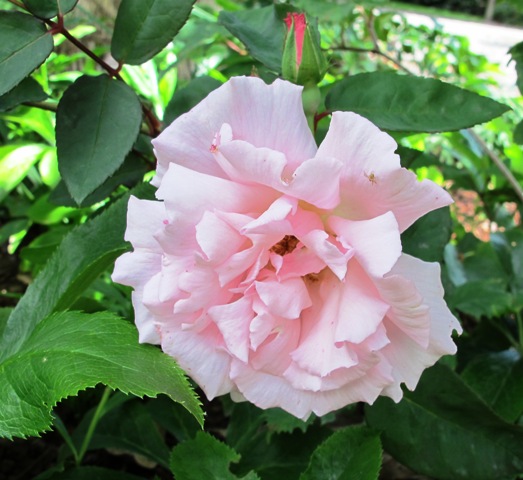
Roses need more care than many other plants if they are to look good

Roses need more care than many other plants if they are to look good

If you want to reduce your workload however, there are certain things you can do.

Shun plants which need staking each season if you want an easier care garden

Shun plants which need staking each season if you want an easier care garden

  • Don’t have island beds and specimen trees or shrubs sitting in the middle of the lawn. It is easier to do a clean sweep with the lawnmower than to be weaving around curvy obstacles. It also cuts out the potentially messy edges you get around island beds.
  • Reduce the number of itsy bitsy little beds and plantings that you have. Keep the lines simple.
  • Reduce the number of plants you have growing in pots and containers. These take quite a bit of effort to keep them looking good, as evidenced by the number of sad, neglected, even dying plants you can see all round different gardens.
  • Weed thoroughly and then lay a weed free mulch to suppress further germination. Try and get weeds before they are large enough to set seed and remember the old adage: “one year’s seeding, seven years’ weeding”.
  • Leave enough space around plants to be able to use the push hoe and if you haven’t got a push hoe then get one, learn how to use it and keep it sharp. You can then do the summer weeding without bending – but only if you do it before the weeds set seed. There is no point in hoeing out weeds and then leaving them lying on top if they are going to spit out their seeds on the spot.
  • Do away with plants which require frequent attention to keep them looking good. The prettiest but worst offenders are probably roses and wisterias. Most plants will need a little attention once a year, but some plants need much more than that. Similarly, do away with plants that need to be staked to stop them flopping all over the place.
  • Do not garden in such a manner that you have to water frequently in summer.

When I used to pay someone to do my housework, I felt privileged but not ashamed. The same goes for gardening. If you don’t get pleasure from doing it yourself and you can afford it, pay someone else to come and do it for you. A lovely garden is a joy to all, but getting there is not always fun.

First published in the Waikato Times and reprinted here with their permission.
Meadows, prairies and wildflower gardens

041
We gave our eldest a particularly good book on American wildflower and prairie gardens for Christmas and her eyes lit up. It seemed a moment of triumph in parenting which I have not seen recorded before – the age when children of gardening parents are delighted to be given such a gift. There was a touch of envy from us. It was a lovely book but also a gardening genre which is largely beyond our reach.

Prairie gardens and meadow gardens are not compatible with good dairy country so this garden style is likely to be unattainable for a fair swag of readers too, but it doesn’t mean we can’t admire it elsewhere. Dairy country by definition has high fertility and good rainfall along with temperatures that are mild enough to grow grass strongly all year round. That is not prairie territory.

Our eldest lives in Canberra which offers perfect conditions. It has low rainfall, low fertility and is very cold and dry in winter (which stops pretty much all plant growth) and very hot and dry in summer. Pasture grasses and weeds will not overtake the chosen plants. Annuals and perennials will not romp away with lush growth that gets flattened here by frequent heavy downpours. Instead, plants will hang in and grow slowly, tenaciously putting down roots in search of elusive moisture and sustenance and flower stems will be much shorter and sturdier. Prairie conditions, in fact. So it is perfectly realistic to think that one can create a garden sward of tough perennials and ornamental grasses which will sway in the wind and put up a succession of blooms over a period of several months.

074

Essentially a meadow garden is made up of wild flowers as close to their natural form as possible, often natives. This means shunning modern, sometimes over-bred hybrids which tend to go for much larger flowers and compact, bushy growth. A meadow garden is simulating the wild but modifying it to a garden setting. There is a long tradition in English gardening and the routines are well known. It relies on low fertility to keep down competing grasses and the parasitic plant referred to as Yellow Rattle is often introduced because it weakens the roots of grasses.

At the end of the season in autumn, the meadow is mown and left to lie for a week or maybe two. This allows the seed to fall out of the spent plants. After 10 days, the mown area is raked free of the cut vegetation to keep fertility low. The area is then left to come again the following spring.

Can you imagine doing that in dairy country? It will not work.

076The advice I saw in a NZ magazine, which I will not name here, to sow your wildflower garden into an area which you have cultivated and fed to the max with proprietary fertilisers and then to sow again in mid season if it starts to pass over is not a wildflower garden at all. It is simply mixed annuals.

Introduce grasses to the mix along with at least some North American native flowers and your meadow garden becomes a prairie garden, more or less. Cone flowers (echinacea), ox-eye daisies (Heliopsis helianthoides), monardas, Californian poppies (properly called eschsholtzias but I have to check the spelling every time) – North America is rich in wildflowers. The prairie garden has been embraced by contemporary European and UK gardens and designers and I can see why. Clumps of grasses are deathly dull when planted in groups or when mass planted to achieve the motorway embankment look, but take on huge charm in the company of a wide range of flowering plants, both perennials and annuals.

What characterises both meadow and prairie gardens is an absence of woody plants, an absence of layers (plants tend to be of a similar, low height), a higher tolerance of weeds and seasonality – in winter there is no garden at all to speak of. It is a much more relaxed style, hugely different to how many of us choose to garden. It can also be environmentally sound, especially in harsh climates, because it provides food for birds and insects while anchoring the soil in windy conditions with no fertiliser inputs or spraying.

In season, such gardens are infinitely charming in all their manifestations. It has a lot to do with the simplicity and the relaxed style. We are still wondering whether we can manage something similar here in a new garden we have planned but we are fighting nature and will have to choose plants carefully as well as overcoming our ingrained antipathy to weeds and a belief that gardens should look good for all twelve months of the year.

045

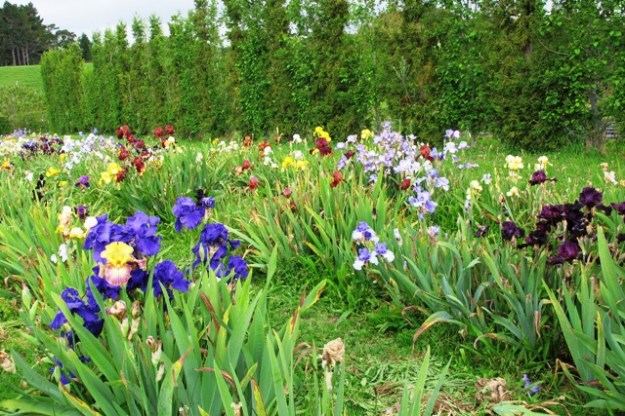
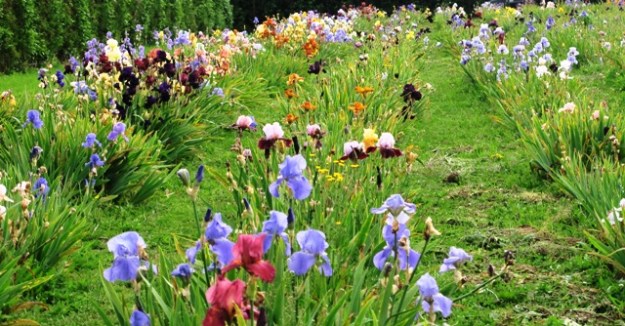
Earlier last month, I visited a field of bearded iris in flower. I don’t want to overstate the case. It was a nursery (http://www.theirisboutique.co.nz/) growing the iris rhizomes in rows in a field and there were a fair number weeds, to the embarrassment of the owner. It was also an absolute delight which made me smile.

It is the simplicity of an expanse of flowers in a field situation which appeals. Gardens do not have to be heavily designed and intensively maintained with high quality permanent plantings of trees and shrubs to make one’s heart sing.

First published in the Waikato Times and reprinted here with their permission.

A pedestrian matter

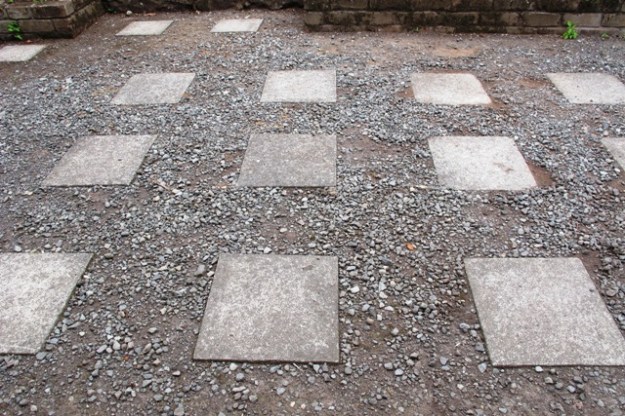
The chequer board approach (in need of a gravel top up)

The chequer board approach (in need of a gravel top up)

This morning’s column is for readers on low budgets or in mature gardens. Path surfaces. If you are on a new property which has been landscaped, or what passes for landscaping, odds on your paths are in place and are concrete. We just love the utility and endurance of concrete in this country.

New concrete dries to a somewhat startling white which is usually appropriate to a new build, but can look garish and out of place on an older property. It also leaches lime for the first few years so you are likely to have trouble growing plants such as rhododendrons and camellias alongside it. The foliage will go yellow on acid loving plants.

Aged concrete softened at the edge with prostrate thyme

Aged concrete softened at the edge with prostrate thyme

Because we have a fair amount of old concrete here, where we have chosen to go with extending concreted areas or new paths, we take the trouble to mask the new look. Adding colouring (black oxide) counteracts the whiteness. Once it is all smooth and starting to start dry, we spray a sugar and water solution over the top. That strips the smooth top layer and exposes the aggregate. Voila. The concrete looks aged from the start.

Were we English, we would have a tradition of flag stones and stone pavers. We are not, so they are a very expensive option. You can get a similar effect in concrete pavers which come already roughed up and coloured to give the overall impression of stone. It’s a good product. We have used it to pave a small courtyard and the same style of pavers were used in a modern outdoor dining area I featured on this page a fortnight ago. The larger sized pavers look better if you want the flagstone look. Ours are 600mm square.

I don’t recommend brick unless you live in a dry climate. Old bricks are porous which means they soak up moisture and retain it, enabling moss to grow very nicely thank you. Brick paths tend to be extremely slippery for much of the year and therefore hazardous. It is also difficult to get a relatively even surface and if you don’t construct a solid edging, the side bricks roll out.

Gravel paths are usually best retained with a solid edging to reduce spilling. We have used concrete sidings on ours. We like gravel paths. There is something satisfying about the scrunch as you walk along them and they are softer on the eye than unforgiving concrete. They are not as simple to install as they first look, however. You can’t just pile gravel onto the ground because the mud will rise from below. You need to excavate down to lay a compacted base course first before you top with your choice of gravel. For foot traffic, a 5cm base should be fine. Don’t lay the top gravel so thickly that it makes walking difficult. You also need to choose your gravel with care. Rounded stones can be like walking on marbles but you want a grade which is reasonably consistent (in other words it has passed through a screen) to look attractive.

Gravel can be quite difficult to keep looking smart without a leaf blower. We did it for years with a leaf rake to remove the build up of litter but it is labour intensive and doesn’t do a particularly thorough job. The leaf blower removes humus in a trice and we wondered why it took us so long to discover its merits. However it is a noisy and intrusive machine and your neighbours will come to dread it as much as your lawnmower. A certain amount of gravel will get blown into the surrounds too.

If you have a larger area to cover, placing pavers at regular intervals throughout a gravel area can add interest and style cheaply. To look good, measure the placement of the pavers to keep them regular and put them down before you lay the top layer of gravel.

We have not gone with wooden walkways at all. In our garden, they would make us look too much like an institutional or public garden (“the DOC look” as we call it). Having seen them elsewhere, I would comment that even corrugated decking timber can get slippery if it is wet for protracted periods or in shade areas and it can be particularly hazardous on slopes. There are non slip products you can buy to secure to your wooden paths or steps but they will add to the cost. If you are not a public garden, then I think wooden walkways tend to be a better aesthetic fit to a modern house with acres of timber decking.

Mulching the leaf litter for the most pleasant walking surface of all

Mulching the leaf litter for the most pleasant walking surface of all

In woodland areas, we keep a thick layer of natural mulch on paths and we shun hard edgings because we want a natural look. In the last few years, when we groom up for our annual spring garden festival, we have gone a step further and raked up the all the litter and fed it through the mulcher. What comes out is a consistent grade of anonymous brown mulch which we then rake back over the paths. It gives the softest and springiest surface to walk on. While it doesn’t compact down, it is remarkably durable as long as it doesn’t get washed away and it can be maintained with a leaf rake. It looks really good until autumn when we get both wind and fresh leaf drop so it is not a long term solution but it gives an attractive option for wooded areas without expenditure.

Some level of consistency is desirable. No matter what size your garden is, you probably don’t want to be using a whole range of different path surfaces. They don’t all have to be the same and paths can differentiate between high use, formal and informal areas. But the overall effect will usually be more cohesive if you can keep some level of uniformity.

First published in the Waikato Times and reprinted here with their permission.

The Terminator of the World of Weeds?

A free sample for review! The terminator of the weed world.

A free sample for review! The terminator of the weed world.

It is not in the job description for garden writers that freebies are included. In all my years of garden writing, excluding books for review, I could count such things on the fingers of one hand. I only mention this because I once found out that the wine writer for a provincial newspaper received boxes of samples to his door. I was so jealous.

Imagine my excitement when something arrived. Even more excitable was the accompanying publicity sheet which proclaimed “hasta la vista” to weeds when using (wait for the drum roll) Weed Weapon. Yes folks, I had a convenient spray bottle of weed killer in my hands.

First up, let us be clear. Despite the name of the company that produces this product being Kiwicare, which sounds so wholesome, there is nothing organic about it. It is a new twist on an old standby which is glyphosate (formerly sold only as RoundUp). Forty years of experience tell us that of all the herbicides around, glyphosate is as close to safe as you can get. It could be argued that it has revolutionised the way we think about gardening and lowered our tolerance for weeds. Glyphosate has often been described as the equivalent of a labour unit because you can whip around with a knapsack on your back and cover a large area very quickly.

We use glyphosate here and Mark has always dreaded the day that it may be found dangerous because we could not maintain the standard we want in our garden without it. He has kept an eye on the research and there is no hard evidence that it is damaging or dangerous. This is because it does not accumulate and it breaks down very rapidly on contact with soil or water. It does not cause cancers, it does not appear to harm insect life and basically you would have to swallow a fair amount of it undiluted to cause yourself any harm.

It was a very different story with earlier weed killers. Paraquat was and still is used in some quarters as an alternative to glyphosate. It knocks down plants within hours of application and its environmental bill of health is not too bad. It is also the main tool with which to commit suicide in third world countries because it is cheap, readily available, has no antidote and you need very little in order to cause a deeply unpleasant death. Its dermal toxicity (in other words the ability to be absorbed through the skin) is very high which makes it dangerous for gung-ho home gardeners.

Back to Weed Weapon, which gives the quick hit of Paraquat, apparently without the dangers. One of the problems with glyphosate is that it takes a long time to be sucked into the plant’s system and to kill it. This is temperature related so it can be about seven days in summer and anything up to three weeks in the depths of winter. In that time, some weeds have the capacity to set viable seed. Weed Weapon’s active ingredient remains glyphosate, at 7.2 grams per litre. As far as I can see from Monsanto’s website, this is at the weaker end of dilution rates best suited to quick growing annual weeds and grasses. What makes the difference is the combination with saflufenacil which is a recent addition to the weedkiller range. It is this that gives the knockdown, browning effect on weed leaves within hours. I did a bit of a search on this saflufenacil but the papers Google pulled up were all highly technical and well beyond my very limited high school science. The publicity from Kiwicare blinded me further with science (Protoporphyrinogen Oxidase inhibitor) but it will have been approved for sale by the appropriate New Zealand authorities. It is claimed that it is biodegradable in soil. I mention this because we know glyphosate is but sometimes, when different chemicals are combined, the result can be less predictable than just the sum of the parts.

At least the pesky equisetum is dying

At least the pesky equisetum is dying

What I can tell you is that Weed Weapon in its ready to use form is perhaps worryingly easy to use. It comes in a squirty bottle like window cleaner. It requires an accurate aim because if you catch other plants, you may kill them too. It certainly knocks down most plants quickly – the dying process is visible within hours. You will be paying for convenience. It retails for around $20 for a one litre squirt bottle. For me, its most useful application is killing out a nasty, invasive equisetum which wriggles out between rock walls but resists being pulled out with its roots. Paraquat users would be well advised to swap to this safer option.

If you are going to use it, you should always wear gloves and not just gardening gloves as shown on the little pic on the back of the pack. Most gardening gloves are absorbent to some degree. You should be using rubber, plastic or latex gloves which you can buy at the supermarket. While it may well be relatively safe to use with low dermal toxicity, good practice says to take precautions. Wearing impermeable gloves is one and never spraying on a windy day is another.

First published in the Waikato Times and reprinted here with their permission.

The outdoor dining and entertaining conundrum

A well designed outdoor dining area at Foreman's garden in Lepperton - and well under 20 paces from the kitchen

A well designed outdoor dining area at Foreman’s garden in Lepperton – and well under 20 paces from the kitchen

We live in a house which was built in 1950, long before “indoor outdoor flow” was ever conceived of and there is no doubt that we lack it. At one time, I had ideas to rectify this and went as far as getting concept plans drawn by an architect. The estimate of $100 000 for the work was a bit of a disincentive so we did not proceed, for which I am now relieved.

The latest House and Garden magazine has an article on the renovation of a Wellington property where the owner is quoted as saying: “We didn’t want to open the front of the house to the weather because, if we did, we’d all get blown away. We designed our house as an interior home, not an exterior one. Wellington is not a sit-outside sort of environment.” Actually, much of this country is not best suited to outside entertaining, at least when it comes to evening dining. Witness the plethora of fire pits, gas heaters and outdoor fireplaces. But you would not think that to look at modern design in houses and gardens.

One of the properties featured in the new book “Contemporary Gardens of New Zealand”, shows an outdoor dining area on an exposed platform with no shelter or shade and down a flight of 37 steps. Or it may be 39. I bet they never use it. Who wants to dash up so many steps to get the dipping sauce you forgot, or the serving spoon? Make that glass of wine last because the first to finish gets to climb the steps to the house to get another bottle or two. If the owners leave the dirty dishes on the table until the next morning, the neighbours will be able to see and judge. That particular property has a second outdoor eating area immediately by the house so you can be pretty sure that is the one they use.

Oft times, home owners place seating and entertaining areas too far from the service areas. I paced it out and think that few people would want their outdoor eating area more than 20 paces from the kitchen. It becomes inconvenient and if it is inconvenient, you won’t use it much. I’ve seen too many summer houses placed where they will create a focal point in the garden but they are just in the wrong place for use. Unless you have servants at your beck and call (and children are an unreliable substitute), save your money and make a focal point in some other way.

Most of us will wander a little further with just a cup of coffee in hand, but again if your seating areas are beyond about 30 paces from the electric jug or fridge, you are not likely to use them for morning teas or evening drinks. Even more than gazebos, garden seats are often stationed as focal points rather than for use. Never is this more obvious than when it is but one gaily painted chair. I think that seats need to be placed where you will use them, not used as de facto garden ornaments.

Just our glorified porch but an indication to me of how well used a garden room could be

Just our glorified porch but an indication to me of how well used a garden room could be

Garden rooms are my preferred solution after noticing these in a number of English gardens. These differ from gazebos and summer houses in that they have the capacity for more protective walls. There are times when just a roof is not enough to keep the situation pleasant enough to linger longer. Most of us find eating outdoors very pleasant in the right conditions and it can also make for more relaxed entertaining. After all, gardens are best enjoyed when you are out amongst them, not viewed from house windows so a charming and versatile garden room situated not more than 20 paces from my kitchen would be lovely addition. With some forethought and investigation, it could be so much more than just a free standing conservatory or a trellised gazebo. In the meantime, we make do with a comfortable outdoor dining suite beneath a large sun umbrella which is good for daytime use when there are more than just the two of us, but not so good for long evenings, even in summer. The closest we get to a garden room and the reason I know one would be well used, is our favoured sitting spot which we use all year round and at all times of the day. It is enclosed on three sides but completely open to the garden. It is just a glorified front porch and it only fits two comfortably but I think it is a pointer in the right direction for my choice of a garden entertaining area.

My all time favourite garden room from the Alhambra in Granada but it may look a tad pretentious here

My all time favourite garden room from the Alhambra in Granada but it may look a tad pretentious here

I leave you with the very best example of a garden room or gallery that I have seen. It might look just a little pretentious in my garden, it being of Moorish origin dating back to the tenth century and located in a palace at the Alhambra and Generalife in Granada, Spain. But can you imagine entertaining in that space and glorying in your garden surrounds?

First published in the Waikato Times and reprinted here with their permission.