Category Archives: Abbie’s column

Abbie’s newspaper columns

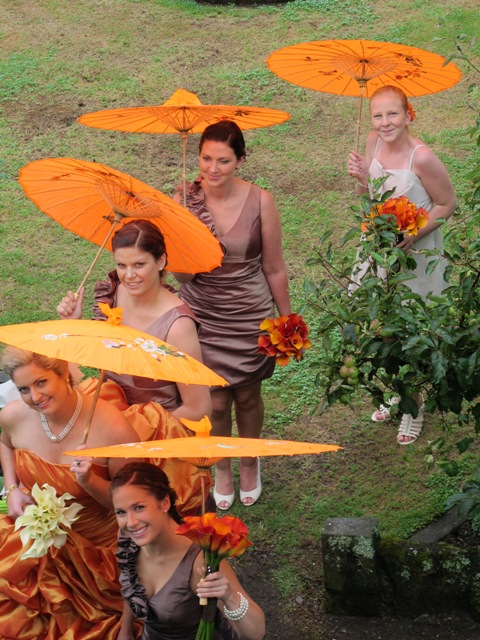
A Cautionary Tale about Excessive Rain (subtitled: The Bride Wore Orange)

Did I mention the bride wore orange?

Did I mention the bride wore orange?

As a rule we don’t do garden weddings here but the request came from Second Daughter’s Best Friend so we made an exception on New Year’s Eve. It sounded like fun. The ceremony, cocktail party and dance were all to be in the one place, culminating in fireworks at midnight. Our greatest worry was the potential fire hazard if we had a dry spell. Ha!

The preparation was humming along when the rains started last week. We had the garden ready, edges and hedges sharp and the lawns mowed despite the rain. We just needed one dry spell of a few hours to do the final blower round to present it all at is best. The dry spell never came.
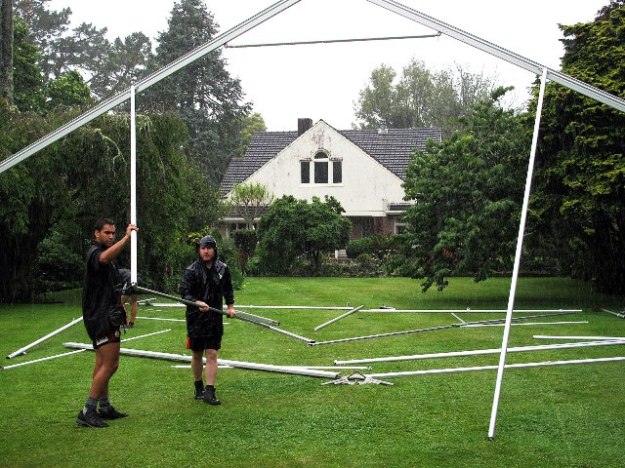
Just likeJust like putting up the family tent, really, but on a grand scale and without the arguments (even in the rain). Photo: Michael Jeans putting up the family tent, really, but without the arguments (even in the rains). Photo: Michael Jeans

Just like putting up the family tent, really, but on a grand scale and without the arguments (even in the rain). Photo: Michael Jeans

On the Friday morning, the marquee company came in. And the rains continued. In case you have wondered, putting up a large marquee (in this case 20m by 10m – we do have a large front lawn) is not unlike a glorified version of putting up the family tent but without the arguments. The marquee men were wet to the skin and had the second, smaller marquee up when the bride arrived to point out that the large one was not in the agreed place and it needed to be moved about two metres. To their everlasting credit, they moved it (in the rain) with remarkably good grace.

The second set of contractors was now on site to do the sound, lighting, furniture, stage and dance floor. They too were wet to the skin and amazingly good natured. But the wheels were starting to fall off. We couldn’t dress the marquee because 100% humidity meant tablecloths and seat cushions would all soak up too much moisture. Nor could the parquet dance floor go down. Practicing an aura of calm (after all, it wasn’t my daughter’s wedding), I told the bride’s mother not to worry and I would do it in the morning for her because the bridal party and family all had hair and makeup appointments.

In the morning, the rain was unrelenting. Now all the rain which would normally be absorbed into the lawn was being directed down the sides of the marquees and flowing like a small sea in underneath. Needs must. The dance floor was laid. I dressed the marquees. And as the rain got worse, the need for crisis management grew. We were doing a bit of reconfiguration using four extra small gazebos which was all we could rustle up. I established umbrella stations (we own quite a few brollies) for the dash between covered areas. The cake had to be brought in under an umbrella (couldn’t have the icing pockmarked). The band were loading in gear as fast as they could in the rain. We could at least park the caterers with undercover access though the bar staff were getting saturated moving alcohol and glasses to their location in a wheelbarrow.

By this time, I was soaked to the skin and dressed like an old tramp but abandoned all plans to find the time to get changed and flossied up (we were invited guests at the event) until after the guests had arrived on the three coaches. We have issues with the need to get large vehicles off our road here but are very experienced at managing our available space and can turn and park the largest coach. So did I need to meet prima donna coach drivers who tell me that I have no idea what I am talking about and there is insufficient space? No I did not. But rather than argue in front of guests (I was feeling at a sartorial disadvantage), I headed out to the road to manage any traffic there (it is designated petro chemical highway, is our country road) while the prima donna drivers disgorged passengers and then thought nothing of blocking both lanes as they fluffed around sorting out turning their coaches.

It was about this time, I noticed the rain had stopped. Such are the wonders of our drainage that we only need 20 minutes without rain and all surface water disappears.
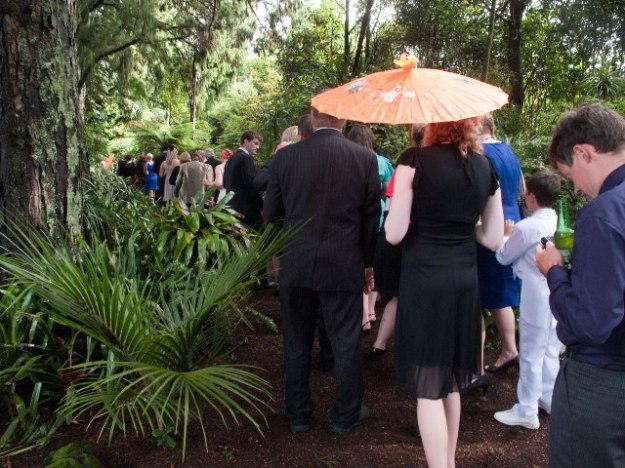
I had no idea the garden tour would be so popular

I had no idea the garden tour would be so popular Photo: Michael Jeans

Now, I thought, I shall go and have a hot shower. But no. Two late arrivals on the last coach had been flying for 20 hours and really needed to shower and change. Was that all right? Of course. Unfortunately for me, dear Reader, we may be a five loo establishment but we are a one shower household. All I could do was to change for the… wait for it… garden tour. When first suggested, I had scoffed. “People who come to events here are not interested in the garden,” I said. “They are here for the event and to party.” So I thought maybe 10 of the older guests would join me. In fact I had about 70 or 80. Given that they were teetering along in stilettos wearing cocktail attire, I only did the shortened tour of the top gardens but even so, herding up to 80 people along is a mission.
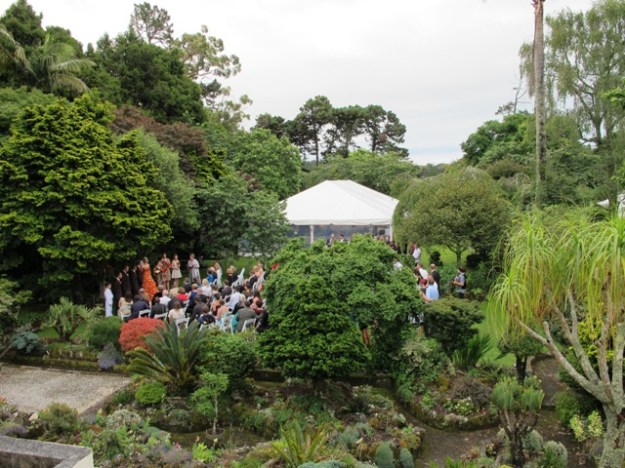
The rain stopped. It was a miracle. The ceremony could be held outside, as planned.

The rain stopped. It was a miracle. The ceremony could be held outside, as planned.

I finally got to shower and change. And the rains held off. The actual ceremony was, at the last minute, held outside as originally planned. The event ran seamlessly and everybody had a wonderful time and absolutely loved the venue. The fireworks at midnight were spectacular. Nobody wanted to leave so the band played on until 1.30am and I completely ignored the prima donna coach drivers who had to sit out on the road with their hazard lights on and wait for the extra hour. If they had been pleasanter earlier, I might have looked after them.

The torrential rains did not return until the pack out the following morning. Over 20 cm (8 inches) of rain we had in that period of under three days. But the lawns are fine. They will recover quickly.

I, on the other hand, have realised there are good reasons why we don’t do garden weddings here.

First printed in the Waikato Times and reproduced here with their permission.

Rata and pohutukawa – the metrosideros family

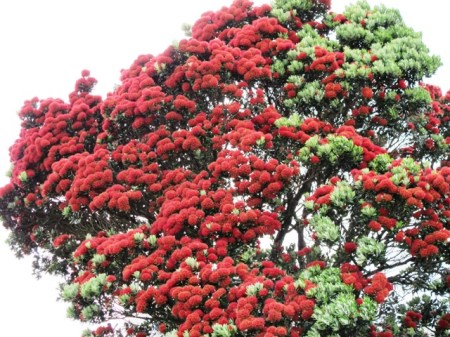
Pohutakawa, maybe Scarlet Pimpernel, in Hamilton on Christmas Day (photo: Michael Jeans)

Pohutakawa, maybe Scarlet Pimpernel, in Hamilton on Christmas Day (photo: Michael Jeans)

I have to start with a touch of mea culpa. I will never misspell pohutukawa again. It had never even occurred to me that I did not know how to spell it correctly. See, I had a Dunedin childhood and in the deep south, we probably had rata on our spelling lists rather than pohutukawa. At least that is my story. My only consolation in the matter is that my misspelling of the Maori name for Metrosideros excelsa apparently escaped the notice of everyone else involved with the production of the paper I write for, so I was not alone. But I was probably alone with my embarrassment. In case you missed it last Friday (before I corrected the website post), I turned the second u into an a.

As a peace offering, I give you a photo of a lovely pohutukawa in full flower at Millenium Heights in Flagstaff, Hamilton. The owner, Bronwyn, tells me it was meant to be a dwarf but it is already three metres high and it flowers profusely every year. When she said it was meant to be a dwarf, I thought initially that it might be one of the Kermadec pohutukawa (M. kermadecensis) which is sometimes used as a smaller selection – though only relatively smaller. However, I ruled that out because the Raoul Island pohutukawa flowers intermittently all year in dribs and drabs and it does not put on a mass display as shown. Added to that, it is more frost tender so it is never going to be happy in inland Hamilton. It is more likely to be a selection of the common form, M. excelsa. In fact it may even be the one named Scarlet Pimpernel (which was selected by my late father-inlaw). There is considerable variation within this species. If you start looking at trees you see over the next couple of weeks, you will pick huge variation in colour. Some look almost rusty brown from a distance, some deep red. The ones that stand out in the landscape tend to have orange tones to the colouring which gives vibrancy. It is called seedling variation – they don’t grow identical from seed. To get an exact clone of the parent, you have to propagate by cuttings.

The yellow pohutukawa are sometimes seen as a novelty. They are pretty enough in their own way but to my eyes they are nowhere near as spectacular as a good red specimen. The yellows are just another seedling variant of the same species, most common on Motiti Island. The reason you see them in mainland gardens and public plantings is because Duncan and Davies Nursery produced them commercially some decades ago – always the quest for the different and the new. It was that quest that also saw variegated forms offered for sale. These are not my favourite. I am not a great fan of variegated plants so I am unconvinced that a variegated form of our iconic pohutukawa was ever going to be an improvement on the usual forms in the wild. But because they were seen as different and new, they sold well for a while and there are big specimens around.

M. excelsa grows naturally as far south as Poverty Bay in the east and North Taranaki in the west. The pohutukawa that grows and flowers in the top of the South Island is a different species, M. parkinsonii. It tends to be rather more scruffy in its habit of growth.

The rata does not just go up, it goes along in every which way

The rata does not just go up, it goes along in every which way

It is of course the rata that is to the South Island what the pohutakawa is to the North Island, though we do have the northern rata as well. These are all the same family (so all metrosideros) but different species. Think of them being like cousins, perhaps. So the South Island rata is M. umbellata and the North Island rata is M. robusta. It is the latter that starts life as an epiphyte, living on a host tree that will ultimately die. The rata sends down roots that eventually reach the ground and develop into a strong vine. Over time, the vinous roots fuse together to form what looks like a trunk (called a psuedotrunk) so, by the time the host tree is strangled, dies and rots away, the rata can hold itself up. We have this rata here in the garden and we find that it does not just go up the host trees, not at all. In an hospitable garden woodland situation, there is little holding it back as it attempts to take over the entire area. I have to have words with it about its smothering ways. There is a limit to how much ground cover we want. Besides it only flowers on the tops and even then is but a shadow of the magnificent display the pohutukawa put on.

The southern rata is less determinedly epiphytic and can establish itself on its own roots in conditions which vary from nearly sub alpine to wet coastal forest. I recall as a child the excitement expressed by adults at the flowering of the rata in the wild, but it tends to be more a haze of red than an in-your-eye statement of summer and Christmas as with the pohutukawa. Unfortunately rampant possums have destroyed much of the impact of the southern rata in bloom.

Of the family, it is the good red pohutukawa or M. excelsa that remains my firm favourite.

First published in the Waikato Times and reproduced here with their permission.

Oh Christmas tree, oh Christmas tree…

The pohutukawa - often called the NZ Christmas tree

The pohutukawa - often called the NZ Christmas tree

Ah, the Christmas tree. I was a little amused by a comment on Twitter from somebody that their potted pohutukawa had arrived but was considerably smaller than they had expected so their decorations were now placed beside it. Somebody else posted a photo of their potted karaka tree festooned in gold tinsel, Christmas balls and lights. It looked odd, but logic says it is no odder than adorning a pine tree in similar fashion.

Some brand the pohutukawa as the New Zealand Christmas tree. Living near the coast as I do, pohutukawa feature very strongly in the landscape. They obligingly flower at Christmas, lighting up the landscape. But of course there are large parts of New Zealand where they don’t grow or aren’t needed and residents there may well question the seasonal accolades bestowed upon it. When I say they don’t grow, the problem is that this special tree is not overly hardy. Indeed it is distinctly frost tender when juvenile. If you look at the distribution, it is largely coastal because disturbed air flows from the sea prevent frosts. Head just five or more kilometres inland and it can be too cold for them.

The other aspect of pohutukawa is that they are a wonderfully obliging and resilient coastal tree, putting up with salt laden wind and making enormous buttress roots to hold back the ravages of coastal erosion. They will grow where most other trees struggle badly, defoliate and die. Our coastal areas would be barren wastelands without them. Once you move to more sheltered areas inland, you have a much larger palette of trees to choose from so the tough pohutukawa might not be the tree of first choice. So for those of us who live in coastal areas from about the lower middle of the North Island upwards, the pohutukawa is our New Zealand Christmas tree but there will be New Zealanders who have never seen one in flower.

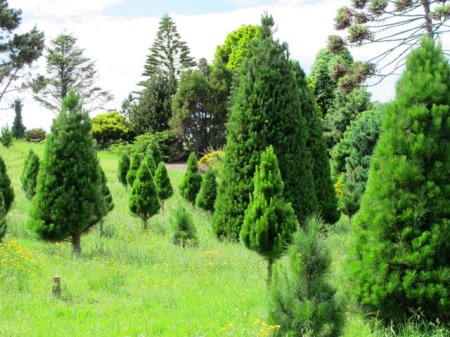
Did some not make the grade in years past? A commercial grower's roadside field. Spot the two that have never been clipped

Did some not make the grade in years past? A commercial grower's roadside field. Spot the two that have never been clipped

For others, it has to be said the common old pine tree is more likely to deserve the award. Many people do not realise it is in fact native to California – it grows wild in a limited area of the Monterey Peninsula. But I think we could probably crown this country as the Pinus radiata capital of the world and certainly other countries don’t tend to use the humble pine as a Christmas tree. The handsome abies family are the favoured tree in Europe, particularly A. procera and A. nordmanniana, and these are so much slower growing that there are good grounds for raising eyebrows at the environmental vandalism of severing them to become temporary frames for Christmas lights. At least Pinus radiata grows so quickly in this country that it is more or less disposable. It also clips very well and if you buy a cut tree from a commercial grower, you should get a well shaped specimen with shorter needles. We were always into gathering wildlings, though the children would have liked better shaped specimens when they were young. They used to bewail the unbalanced shapes, the scruffy branches and the extra bits tied in to pad out particularly sparse areas.

Should you contemplate a growing Christmas tree in a pot as a last minute green alternative, you need to factor in three aspects. A large tree has a correspondingly large root system and is damned heavy. Don’t expect a living tree of two metres plus unless you have a small fork lift. It then takes a fair amount of skill to keep large plants healthy for an entire year so thinking you can keep your living Christmas tree and reuse it in future years may not be entirely practical. You are far more likely to have a moth eaten looking specimen with dead patches, badly root bound and hungry come next December. Thirdly, should you have purchased a living tree with a view to planting it out in the New Year, make sure you harden it off slowly to the bright sunlight when you bring it outdoors, saturate the root ball before planting and keep watering the poor thing all summer. But above all, choose the site carefully. Most living Christmas trees are forest giants in their infancy. They are not generally suitable candidates for suburban gardens, even less so if you are planting one a year.

The grapevine version

The grapevine version

If you are still determined to try a live option for the future, take a look at our native matai and start clipping and training it early.

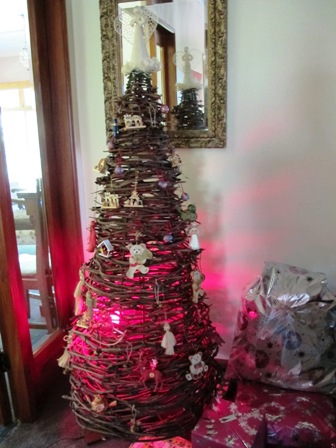
If the live Christmas tree is an ethical option based on concerns about the abject waste of severing a tree in its prime to adorn your house for two short weeks, it would probably be kinder to the environment to stick to the disposable pine tree or go for the reusable option. As a family which shuns the horrors of the tinsel Christmas tree, I am hoping my efforts with the woven grapevine pyramid will be greeted by the returning adult children today as an acceptable alternative.

Merry Christmas everyone and best wishes for a safe and happy festive season.

First published in the Waikato Times and reproduced here with their permission.
Gardening books that stand the test of time

Over the past decade or so, a fair number of new publications of New Zealand gardening books have come across my desk for review. Precious few remain on the bookshelf. After being critical of the recent offerings for the Christmas market, I wondered at the manner in which NZ publishers are reacting in the face of competition from the internet. With all the information in the world available on one’s computer screen with a click of the mouse, I would have thought that the future of the reference book was as a highly credible, accurate, reliable, expert presentation of related information in one place. After all, one has to wade through a vast amount of dross on the internet and weed out unreliable information. It is often easier and a great deal more convenient to reach for the traditional book, but only if you trust its contents.

Reference books often used to be peer reviewed before publication to iron out errors and to identify problem areas. Wide ranging topics often had multiple authors, each working in their own area of expertise. Authors had solid credentials and there was a general expectation that information be accurate. Books were produced on the assumption that they could last for years, maybe even decades, and good ones would be reprinted. It took time to produce a new book.

Not anymore. The NZ gardening book today is more akin to the glossy magazine. Here today and gone tomorrow but looks good in the short time it is in demand. Who cares about the rest of it as long as the customer is seduced into buying it right now?

In both NZ books and magazines, the advice being dispensed so freely in visually appealing ways is too often coming from commercial interests which want to sell product to the consumer. And it is not always accurate advice, let alone best practice. Bring back independent, non aligned advice and information, I say. You know – the sort of information we used to get from books. I like to think that readers are neither dumb nor gullible. Would that NZ publishers thought the same way. Alas, they have redefined readers as consumers.

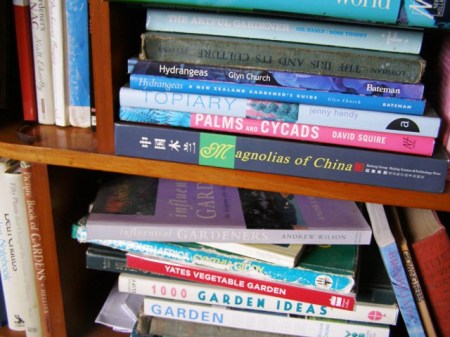
This train of thought led me to look at the books which we reach for regularly. We own a lot of gardening books. The dross goes to charity. Many of the specialist ones are particular to our interests but there are a few more general ones that we use regularly and which have stood the test of time and I am happy to recommend for any gardener’s bookshelf. Some will only be available second hand – try Touchwood Books who offer a mail order service.

1) Bulbs for New Zealand Gardeners and Collectors by Terry Hatch and Jack Hobbs. First published by Godwit in 1995, it may look a little dated and it is not the most comprehensive bulb book available. But it is accurate, written for NZ conditions and covers the bulb material available here. We trust it.
2) The Hillier Manual of Trees and Shrubs (Redwood Press). The version we have has no pictures but is still the best comprehensive listing of trees and shrubs we know. There are good reasons why it has had multiple reprints and editions.

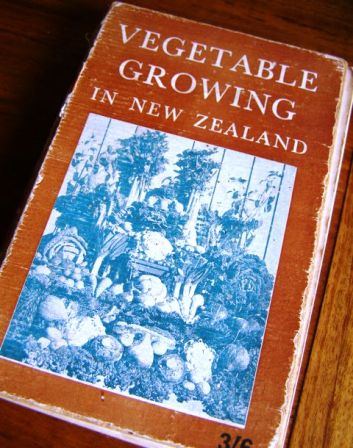
3) Grow It Yourself Vegetables by Andrew Steens (Batemans, 2010). It is not the smartest looking of the latest crop of vegetable books and the sow/harvest diagrams are an unreliable afterthought, but the text is practical, helpful and reliable. According to Mark, the real gem if you can find it, is Vegetable Growing in New Zealand by J A McPherson and F J E Jolie. It was published by Whitcomb and Tombs and we have the sixth edition with no date but it retailed for three shillings and sixpence.
4) Koanga Garden Guide by Kay Baxter (Body and Soul, 2007). Simply the best and most comprehensive guide to organic and sustainable fruit and veg gardening that we have found. It is self published and a little rough around the edges (the edition we have lacks an index which makes it harder to use), but serious gardeners will read it cover to cover and take heed. What is more, they will keep going back to it which is a measure of a good book.
5) Like a shining beacon of hope, came New Zealand’s Native Trees by John Dawson and Rob Lucas from Craig Potton Publishers this year. A comprehensive, high quality and credible publication which is likely to remain on the bookshelf as a key reference for decades to come. We never did get the definitive two volume edition of Eagle’s Complete Trees and Shrubs of New Zealand (latest version is 2007 from Te Papa Press) – equally credible and enduring but more expensive.

6) We still use the 1993 Perennial Gardening in New Zealand by Christine Dann (Bridget Williams Books), particularly for identification.
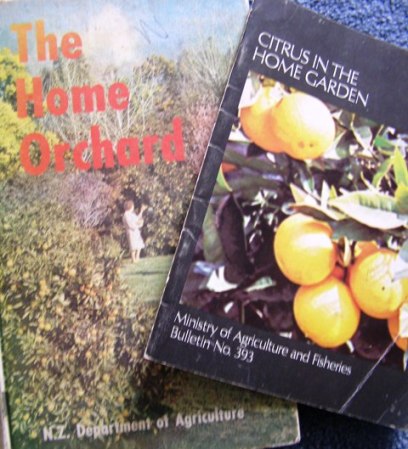
7) The old (and I mean really old) Department of Agriculture publications on fruit trees – the bulletins and their 1973 book “The Home Orchard”. Treasure these, if you find them. Technically they are still very good on basic fruits though they are way out of date now with modern options and new cultivars. Use them for information on planting, pruning and general care but with the proviso that the excessive and toxic spray regimes can be totally ignored. They have their origins in the Chemical Ali times and we have since moved on.

I cannot think that many of the New Zealand gardening books published in recent times will still be on the bookshelves in decades years to come. Even fewer will be a resource of first choice. What happened to professional pride?

First published in the Waikato Times and reproduced here with their permission.
A mast year for strawberries in the quest for semi self sufficiency here

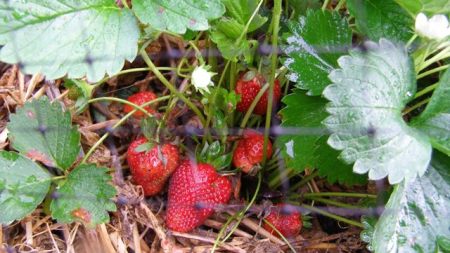
It appears to be a mast year for strawberries here. That is a term for when plants produce a significant abundance of fruit. In nature this can be important. Apparently kakapo need rimu to have a mast year in order to breed. But here it just means we are having a bumper strawberry harvest. Not wanting to overstate the case, but they are coming in by the bowl full.

This leads me to the issue of self sufficiency and the observation that if you want to be self sufficient, you have to accept that there will be mast years and there will be famine years for some crops. At least we have the supermarket option these days so the famine stakes are not as high. I have noticed that self sufficiency has become trendy again, often espoused by people who claim that it is terribly easy and achievable in very small areas, taking relatively little time. All I can say is that self sufficiency must mean different things to different people and varying levels of home provision are being hailed as self sufficiency.

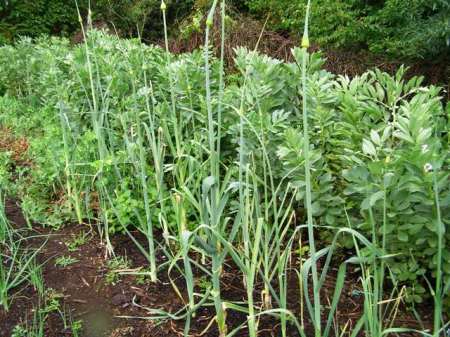
We describe ourselves as relatively self sufficient in fruit and vegetables. We produce enough fruit for high individual consumption all year and only buy additional fruit for variation in the diet and seasonal treats which cannot be grown successfully in our area. We generally produce sufficient vegetables but there are times we have to supplement. The husband felt such a failure when I had to buy a bag of potatoes last week because we had run out of old ones and we had eaten the first crop of early ones already. The onion harvest was poor this year so we have had to buy. Purists would maybe go without onions for the year.

But we are nowhere near self sufficient if you take in grains and animal protein. We don’t even attempt to produce our own grains. While we raise our own beef, we haven’t done our own poultry for years. To be genuinely self sufficient, you would need to factor in sufficient grain cropping to be able to feed the poultry as well.

Nevertheless, it is astonishing quite how much area gets taken up in providing sufficient to keep us going at the level we like for just the two of us and how much time it takes on the part of He Who Produces it All (aka Mark). Fortunately he enjoys doing it. If it was left to me, it would be a poor harvest of basil and lettuces at best because I would rather grow flowers. Mark has long scoffed at suggestions that you can achieve self sufficiency in a tiny plot and in dinky raised beds so we returned to The Oracle to see how much land she thought was needed. The Oracle is Kay Baxter, founder of the Koanga Institute. She only preaches what she practices and she has close to 40 years of experience in food production, organics and self sufficiency. We have the utmost respect for her opinion. According to her: “To grow all your veges and grains, you will need 100 square metres per person.” Yes that does include grains, which not many of us produce, but it does not include fruit. That is a hundred square metres of healthy soils in full sun with good shelter – per person. For a family of five – five plots of 10 metres by 10 metres. There are reasons why modern society has turned to the industrialisation of food production and one is the economies of scale.

If you want to produce your food on organic principles, you may need an even greater area. Generally speaking, organic production relies on producing crops at optimum times and not pushing the boundaries either end of the season (because that is when pests and diseases will strike more readily). You also need to be meticulous on crop rotation and soil management because you don’t have the fall back position of a chemical arsenal to rectify problems.

Factor in time as well. Time every week, not just when the gardening bug strikes in spring. To get reliable production in the vegetable garden requires constant vigilance, planning and regular work. If we costed in our time, it would be cheaper for most of us to buy all our food.

For us, it is a measure of a very high standard of living that we can produce most of our fruit and vegetable requirements. It is not a point of principle so much as a measure of quality – quality of both produce and life. When our lives were more frenetic and we had the demands of running a seven day business, there was not the luxury of time to produce food which could be bought cheaper and more conveniently from the local shops. There can be luxury in simplicity. Just don’t believe the current advice that you, too, can be self sufficient in fruit and veg in next to no time with minimal area and effort and it is all wonderfully simple. Ask such proponents again in twenty years time and you may be told something very different.

First published in the Waikato Times and reproduced here with their permission.