Category Archives: Abbie’s column

Abbie’s newspaper columns

More lessons learned. Plants to avoid

I am busy a-diggin’ and a-dividin’ perennials. While autumn is indubitably here, the soils are still warm and there should be several more weeks for the fresh divisions to settle in and start to establish before the winter chill of late June and early July. In colder climates this is more commonly recommended as a spring activity but with our distinctly wet spring season and late onset of winter, we prefer to do it in autumn.
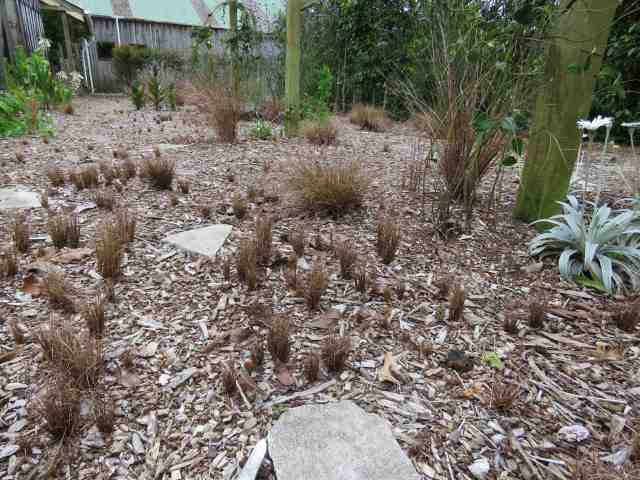
I did not realise how much digging and dividing would be needed when we embarked on some large areas of perennials in open, sunny conditions. We have always had plenty growing in shady conditions but they are pretty self-maintaining and undemanding. Give them sun and it is a different story. Sun, mild winters, friable, volcanic soils and regular rainfall – in optimum conditions they R O M P away with gusto.
Much and all as I love Japanese anemones, they are not a good option for perennial beds because of their invasive ways

If I had my time again, there are perennials I would not unleash to start with. Some I have written about before but off the top of my head, I can not recommend planting the following:

Saponaria. Photo credit: Rosser 1954 Wiki Commons
  • Saponaria (soapworts). Pretty they may be in flower but those underground runners run both deep and far. Dangerously invasive. They are not generous enough on the flowering stakes, to justify their existence. And in the absence of a soap shortage, I do not feel the need to keep them to use the foliage as a soap substitute.
  • Jerusalem artichokes – foliage to flower ratio is way too high and they are altogether too enthusiastic at producing tubers.
  • Bluebells in cultivated garden situations. I am digging out every one I come across, knowing there will be plenty I miss but still they are being measured by the bucket-load. They are difficult to dispose of, too. They grow rather than rotting down so I am having to send them to landfill.
Japanese anemones. The pretty flowers belie what is happening below the surface.
  • Japanese anemones. I love the flowers in early autumn but these are another invasive plant genus that either needs to be confined tightly in a garden situation or avoided from the start. Because they put out very long runners, they are difficult to get out when they creep – or sprint, actually – amongst other plants.
  • Mondo grass. Mondo grass. Mondo grass. Too much mondo grass here, there and almost everywhere. I am carefully picking out their seeds as I go, too.
  • Forget-me-nots, be they annuals or perennials. I love their sea of blue, coming in just after the bluebells and they are easy enough to pull out but I am pretty sure every single seed grows. And they are incompatible with Ralph the dog who is no great respecter of gardens and can spend months coming indoors with multitudes of sticky little forget-me-not seeds all through his fur.
  • I have now added violets to the banned list too, after spending yesterday digging out plants I am sure snuck in and weren’t planted. They may have a sentimental attachment, being Mark’s great grandmother’s violets but it doesn’t stop them being invasive. They are another plant that will entwine themselves amongst the roots of neighbouring plants so I have had to dig those out too, to extract the interloper.

There are other plants that need caution and constant management. Crocosmias and ixias are in that group. I removed yellow crocosmia bulbs by the bucket load in late summer but I am aiming for containment on those because I like them in bloom, just not everywhere.

The Iolanthe garden on January 2, 2021
Where have all the flowers gone? The same block on December 30, four years later. Time for some attention.

Zach and I have been working our way through the Iolanthe garden, our bee and butterfly garden which is a cross between a perennial meadow and a cottage garden. I planted the whole area up back in 2019. During summer just passed, I thought it wasn’t looking as pretty and flowery as it had been and too many of the perennials were looking scruffy and somewhat rank. I have high hopes for next spring and summer; it had better be good because a lot of work and time have gone into it so far.

The underplanting on this mixed border has never been exciting but it had crossed to line to neglected
Primula denticulata – somewhere I have better photos of it en masse but goodness knows what I filed them under.

I was distracted from the Iolanthe garden for a couple of weeks onto the border at the back of the sunken garden area. We were in danger of losing the pretty Primula denticulata. At the end of a dry late summer, they were fast dwindling away to nothing.  I realise that to keep them going, I probably need to dig, divide and feed with compost every two years. There aren’t a lot of plants I am willing to give that amount of attention but they are one. Some perennials just quietly waste away if left to their own devices. Stokesias and echinaceas also fall into this category. Having started on that border, I had to keep going because the whole border, I realised, had passed over from being relatively anonymous to so unloved that I was avoiding even looking at it as I walked around. I dug the lot and did a full reorganisaton and cull before replanting. That was when I found how dangerously invasive the saponaria is. Those underground runners were up to a metre long, sending up shoots all the way along.

Freshly dug, divided, carefully considered and replanted all the way along. Now it is waiting for spring.

It was interesting, to me at least, moving between the two areas. The border in the sunken garden is planted in defined blocks whereas the Iolanthe garden is much more casual, naturalistic mix and match. Different styles for different areas but no matter what style we choose, we prefer complex plantings involving many different plant varieties to utilitarian mass planting of a single variety. It is  more complicated to manage but also a great deal more interesting.

It never fails to surprise me, when I lift an entire area, just how many plants it takes to fill the area back up again with fresh divisions. We want it to look well-furnished by spring and summer so I am planting fairly close together. You would not want to be buying the plants unless you have very deep pockets but the advantage of perennials is that most divide easily. I haven’t had a lot of surplus plants to compost – some sedums, campanula and stokesia but that is about it.

I am not big on anthropomorphism but I like to think of the fresh divisions heaving a sigh of appreciation as they settle back into fluffed up, friable soils still warm from the summer but now moist from the autumn rains. Hopefully, these areas will perform for another five years or so with just spot interventions before the next round of lifting and dividing is needed. This is not a low maintenance style of gardening but neither do we want that.

Bluebells – best kept to loose meadow or park situations. Never again will I unleash them in a cultivated garden.

How many Nerine bowdenii did you say?

There is nothing too special about Nerine bowdenii. It is the last of the autumn season to flower for us. We have a particularly attractive patch which is a delight every year, planted on the edge of the main lawn, just beneath Camellia sasanqua ‘Elfin Rose’ which is more or less the same shade of sugar pink.

Camellia ‘Elfin Rose’ and Nerine bowdenii beside the drive

There were three large pots of N. bowdenii sitting on an area of mat left over from our nursery days which I thought I would gather up because I had a space to plant them in an area of the Iolanthe garden which I am working over. “There are more in the propagation house,” said Mark. Good, I thought. I have just the spot where they can star in autumn and be anonymous and unobtrusive for the rest of the year.

I don’t often go into the propagation house; it is basically Mark and Zach’s territory. So when I went to gather up the bowdeniis to plant, it came as a shock. Reader, there are seven trays of them with an average of fifteen pots per tray and many of those pots had multiplied up to be about five per pot. That is a lot of bowdenii.

More surprising to me was the variation within them and it dawned on me that these were not straight species bowdenii,  but Mark’s hybrids. Over twenty years ago, it had entirely escaped my notice that he was faffing around hybridising bowdenii. It is way easier to grow as garden plant and to keep flowering consistently than the more desirable N. sarniensis types and he was trying to see if he could combine that robust nature with the variations in colour and size of sarniensis.

Not many flowers left as it is the end of the season but you get the drift

It was the deep colours that surprised me. The species can show variation but is commonly sugar pink. Indubitably sugar pink. Mark’s seedlings ranged from almost white, through pale pinks and bicolours to very deep pinks verging on red to some knocking on the door of the smoky shades that Felix was working on with his sarniensis hybrids.

Clearly, I will have to expand the area I was giving over to bowdenii in the Iolanthe garden and it is going to be a great deal more interesting than just a seasonal wave of sugar pink. I am looking forward to next year. In the meantime, my challenge is integrating hundreds of bowdenii hybrids into a garden that is perennial-cottage in style without turning it into what looks like a nursery trial bed. It may be more river than stream or wave.

Planting them in their new home beside the raspberry coop. I expect a good show next year.

In recalling the history of those nerines this morning, Mark tells me he was inspired to start experimenting with bowdenii crosses when Auckland plantsman and nurseryman, Terry Hatch, showed him an impressive hybrid he had high hopes for. “But,” he added, “they are still eclipsed by the nerines created by Monty Hollows in Palmerston North”. I remember over 50 years ago, when we were both students at Massey University, that Mark took me out to see Monty Hollows’ astounding chrysanthemums but I never saw his nerines.

I had to look up Monty Hollows. Brother of more famous Fred Hollows, he died in 2019, aged 91, and is largely remembered as a giant in the local cycling scene. A man of many talents and enterprises, horticulture also featured and he exported nerines to Asia. Monty, others may remember you for your energy, enterprise and loyalty to cycling but Mark has never forgotten your achievements with nerines where you set a very high bar.

Autumn flowering fillers

Truly, I have never given much thought to plectranthus. They are just one of those filler plants that can occupy a difficult waste space and put on a good show in flower but need a tight hand to control their spread. Not unlike abutilon and brugmansia, perhaps.

And then there is this one. I have no idea where it came from although I must have planted it in the borders. Maybe it was in an unlabelled pot in the old nursery and, as a juvenile plant, I mistook it for a salvia? That seems the most likely scenario. It is really pretty and, considering the family it comes from, well behaved. It is also a woody shrub.

Most plectranthus are herbaceous perennials that can spread far and wide. There are about 85 species, mostly from tropical and southern Africa and all in the sage family. Presumably frost controls their spread in colder climates but here it is human hands that keep them contained. Mark tells me there is a large patch in our stand of native bush on our property across the road that we need to eradicate. I don’t go over there much so I haven’t seen it but he described it as now taking about the space of our house beneath the stand of tawa trees. That is not the place for it; we can control it in a garden situation but we try and keep that bush restricted to natives, eliminating exotic interlopers.

Quite a good colour but no woody stems on this one so it is not the same as the one I want more of.

I had assumed that the plant in the borders must have crept in from another part of the garden so I set off to look at the others we have. Nope, it is different. It is a more intense colour and definitely woody as opposed to a spreading perennial. I see it has a layer on it so I will remove that and it should also propagate easily from cutting. I want more of it in the borders as a splash of autumn colour.

The one in the centre is my good, woody one that I want more of. Most of the others were a little washed out in comparison and not the right growth habit. On the left is what we knew as P. argentatum but is now a coleus, not a plectranthus at all.

In looking up plectranthus, I see the silver one we have with pastel flowers and which we knew as Plectranthus argentatus is in fact an Australian native and is part of a whole group of plectranthus that have now been transferred to the coleus family, so it is now known as Coleus argentatus. It is always interesting to learn something new.

The odd red abutilon is acceptable.
i have a soft spot for the pure yellow or clean orange shades.

I mentioned abutilons and brugmansia as similar fillers, except they spread by seed. I can’t get excited about abutilons but they fill a space. They cross readily and I only want clean colours so I pull out any murky colour mixes, keeping only the good reds and pure yellows or oranges. I did see a beautiful, big, bushy one in an open garden last year that was laden with bell flowers in the prettiest shade of lilac. It was a showstopper but the owner, one of the best plantsmen in our area, told me it was also the most difficult abutilon he had ever come across to strike from cutting. It won’t grow true from seed, assuming it even sets seed.

We have brugmansias in semi-double white, peachy pink, apricot and a rooted cutting of a pure yellow waiting to be planted out

Brugmansias are also a great autumn feature. They are very brittle and can get extremely tall but the flowers are best observed from below or from some distance. The few we have are generally in shade so they stretch for the light rather than spreading sideways. They are not what one could call a tidy plant but at this time of the year, they can be striking.

How do you tell a brugmansia, common name angel’s trumpets, from its close relative the datura, known as devil’s trumpets? Brugmansias have pendulous flowers that hang down while daturas face upwards or outwards. Both are highly poisonous but it seems only datura has psychoactive properties as well, known to kill suicidal youth who don’t factor in the toxicity in their search for a free hallucinogenic experience. Interestingly, brugmansias are now rated as extinct in the wild; it is only their use as a garden plant that has ensured their survival.

Some plants need a closer eye kept on them than others. If you have spreading plectranthus, never turn your back on it because, in our climate, it will get away and smother whatever it comes across.

‘Autumn is icumen in’

It is not ‘sumer’ that is icumen in here, but very much autumn that has announced its arrival.

It seems a lifetime since I studied English literature at university. I guess it is almost a lifetime ago and I have long since lost my ability to read texts such as Chaucer’s tales and ‘Sir Gawain and the Green Knight’ in their original Middle English. But how have I reached this age without ever knowing about the farting billy goat in ‘Sumer is icumen in’? (see below) I only found it this morning when I looked up the lyrics. It is perhaps a sign of times that were more bawdy than vulgar.

‘Icumen in’ does not translate to ‘is coming in’. It means it is here and nothing makes that seem more real than the end of daylight saving. I used to find the onset of autumn somewhat depressing, describing myself as a summer bunny. But now that I garden, it heralds the start of a new season with all the freshness of new season flowers.

Nerine sarniensis season! This is one of Mark’s hybrids – the long stems mean it would probably be better grown as a cut flower than a garden plant. The weight of the head can drag the stems down but we don’t do cut flowers so we just persevere with it in the garden.

In our climate, it also heralds the time when we can get back to planting, digging and dividing and renovating parts of the garden that are crying out for more drastic action. We still have up to two months of the growing season left here; the ground doesn’t get cold enough to stop plant growth until June. Indeed, for those people who live in areas with hotter, dry summers, autumn planting is often a much better option than spring planting because the plants can settle in and get their roots out before the stress of summer conditions sets in. Spring planting is the better option for those who live with harsher climates where the ground can freeze or is waterlogged and very cold in winter but most of our country can happily plant away in autumn,  safe in the knowledge that that the plants will over-winter and leap into new growth in springtime.

Autumn is the second season for the rockery. While there is always something of interest flowering 52 weeks of the year, autumn and early spring are when it bursts with colour and variety. Nerines feature large, particularly the sarniensis hybrids.

Most of our nerines are hybrids from both Felix and Mark’s efforts. We once named and sold a few but nowadays they mostly just exist in our garden. Every year, my camera fails to capture the truly startling shade of highlighter pink in this clump.

Felix started with a few named ones from Exbury. This is ‘Inchmery Elizabeth’ and has proven to be such a pretty and reliable performer down the decades.

I found this one snapped off, which may have been due to slug chomping on the stem or it may have been Ralph the dog who is no respecter of gardens but ploughs in when pursuing a fly, bee or wasp. What I think is interesting is the shade of purple it is fading to; presumably there are enough blue genes in there to indicate it is only a matter of time and determination by somebody to get to true purple and blue hybrids in the future.

Camellia sasanqua ‘Elfin Rose’

Autumn is sasanqua camellia season. This is sweet little ‘Elfin Rose’, which we cloud prune. Sasanquas don’t have to be white, as per the long-running fashion in this country.

Camellia sasanqua ‘Sparkling Burgundy’

The flower on ‘Sparkling Burgundy’ is not so very different to ‘Elfin Rose’ but the habit of growth is. This plant is decades old, maybe 50 years or so. We lifted it and thinned the canopy to turn it into a graceful, open small tree rather than a bushy shrub.

Camellia sasanqua ‘Crimson King’

Sasanqua camellias have softer flower forms and laxer growth than the more common japonica and hybrid camellias that flower in winter and spring but they don’t get petal camellia and we have grown to appreciate their relaxed informality of flower form. Alas that is a wasp feeding on the flower above but they are equally a source of food for the more desirable bees. Exposed stamens and pollen are the key to feeding bees.

The lyrics to ‘Summer is icumen in’, courtesy of Wikipedia. Composed, it seems, to be sung as a round. Spot the farting billy goat (and the politer alternative).

Middle English
Sumer is icumen in
Lhude sing cuccu
Groweþ sed
and bloweþ med
and springþ þe wde nu
Sing cuccu

Awe bleteþ after lomb
lhouþ after calue cu
Bulluc sterteþ
bucke uerteþ
murie sing cuccu

Cuccu cuccu
Wel singes þu cuccu
ne swik þu nauer nu

Sing cuccu nu • Sing cuccu.
Sing cuccu • Sing cuccu nu
Modern English
Summer[a] has arrived,
Loudly sing, cuckoo!
The seed is growing
And the meadow is blooming,
And the wood is coming into leaf now,
Sing, cuckoo!

The ewe is bleating after her lamb,
The cow is lowing after her calf;
The bullock is prancing,
The billy-goat farting, [or “The stag cavorting”]
Sing merrily, cuckoo!

Cuckoo, cuckoo,
You sing well, cuckoo,
Never stop now.

Sing, cuckoo, now; sing, cuckoo;
Sing, cuckoo; sing, cuckoo, now!
What is there not to love about Cyclamen hederafolium. First the pretty, dainty blooms and then the lovely marbled foliage to carry through winter.
A flower lay I prepared earlier, showing the various hues of nerines in the rockery at the time

Let there be flowers and the gentle change of seasons

In a world that seems to be growing more chaotic, unstable, downright dangerous and even vicious by the day, let there be flowers.

I know I am not alone in limiting my time following the news and on social media. Never in my life did I think I would be taking life guidance from RuPaul but his advice to ‘look at the darkness but don’t stare’ are words that I repeat to myself every day. It is one thing to be aware of what is happening but it can be overwhelming if I spend too much time following it closely.

The bright cheer of the dwarf helianthus makes me smile. This is a named cultivar but I have forgotten where I recorded the name.

Instead, I give you the gentle predictability of the change of season from summer to autumn here with photos from yesterday. I have used the shorter version of the helianthus in the borders but the tall leggy form – likely closer to the species or as it is found in the wild – seemed to fit better in the controlled abandon of the Court Garden. No more. We are in danger of losing it because it is not as capable of coping with competition as I thought. As soon as this remaining clump has finished flowering, I will relocate it to the more cultivated environment of the borders where it will be given its own space to thrive.

The Jerusalem artichoke is also a member of the helianthus family but it does not justify its place as an ornamental plant. Not enough flowers, I am afraid, but an abundance of tubers which I dare not eat. While tasty, no matter how hard I try, I can not find ways to prepare it that improve its digestibility without the unfortunate side effects. Its name as fartichoke is fully justified.

The heleniums are in the twilight of their season but remain eyecatching. These have one of the longer flowering seasons of the summer perennials and fully justify their prime position in the borders.

Cyclamen hederafolium are coming into their autumn peak and what a delight they are. We have many of them, many many in fact because we encourage them to seed down in their pretty pink and white charm. I am not a fan of the bigger cyclamen hybrids but the species are a source of great delight throughout the garden.

The rockery is hitting its stride with its autumn display. The colchicums are a fleeting delight but one we would not be without. The nerines are just starting, mostly red so far but plenty about to open in other colours. I live in hope that the Lycoris aurea will stage a reappearance. I planted a pot of flowering bulbs out in the rockery years ago but I can’t remember where and it has never flowered since. It may have gently withered away to nothing or it may still be masquerading as a random clump of nerines which I just haven’t noticed aren’t flowering. Perhaps our hot, dry summer will have triggered it to flower. Or maybe not.

We have two dwarf crabapples in the rockery, standing little more than 1.2metres high after about 50 years. Their flowering is insignificant and their form and foliage unremarkable but they justify their place with their ornamental fruit in autumn.

Moraea polystachya, an autumn form of the peacock iris, seeds around enthusiastically but harmlessly and rewards us by popping up randomly – on the edge of the drive in this photo – and having one of the longest seasons in flower of any of the autumn bulbs because it keeps opening a generous succession of buds.

The belladonnas are bold, a bit scruffy and have bulbs and foliage that are too large to make them obliging garden plants. But they are a welcome addition in wilder areas, in this case on the site of the old woodshed we removed this summer before it fell over of its own own accord. We don’t know anything about the grinding wheels except that Felix must have gathered them up fifty years ago and there are three in graduated sizes.

The first cymdidium orchid is opening. This somewhat understated one is always the first of the season and is a top performer in its spot, arching over the old stone millwheel which has been repurposed a bird bath.

Finally, camellia season has started. Camellia sasanqua ‘Crimson King’ is always one of the first to open. Even with climate change, there is a reassuring predictability in the cyclic nature of the seasons.

May there always be flowers. I can stare at them as long as I like without fear of being overwhelmed by a sense of despair, anxiety and helplessness. In the flowers and the seasons lie promise and joy and we need a whole lot more of that at this time.