Tag Archives: digging and dividing perennials

Autumn dig and divide

The borders need some intensive attention but, I admit, we were doing the easier areas first. There is so much detail in the borders that it is harder to manage access to some areas. The Iris sibirica will all be lifted shortly for thinning and dividing and Zach tells me that was one of the first jobs he did when he started here in 2021. So, it seems we can get five years out of them before they need a total revamp.

Zach and I are busy, a-diggin’ and a-dividin’. The advice is often to do this in springtime when the plants are in growth and that is probably true for gardeners with heavy soils and colder winters. We prefer to do it in autumn, even if it means getting hoses and buckets out in dry spells. Our winters are short and we will have at least six weeks and maybe longer before growth stops for winter. Autumnal conditions can extend as far as the winter solstice.

In contrast to our long, mild autumn, springtime is usually wet and we are slower than some areas for soils to warm up. It is fine to dig and divide at that time but, by doing it now, plants have a jump start. Besides, we have a lot to do. Many summer flowering perennials are demanding plants when it comes to care.
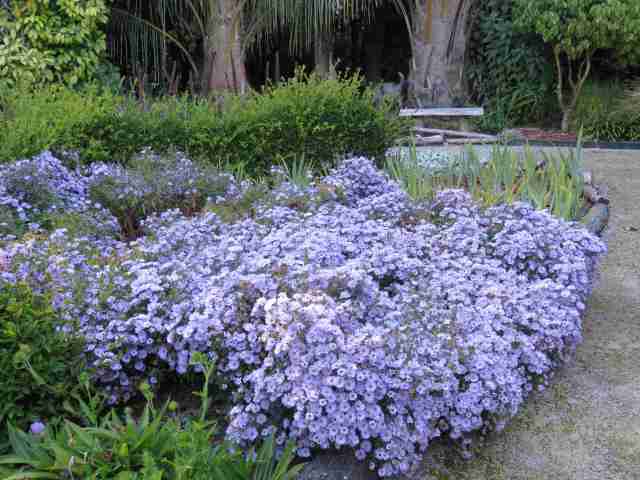
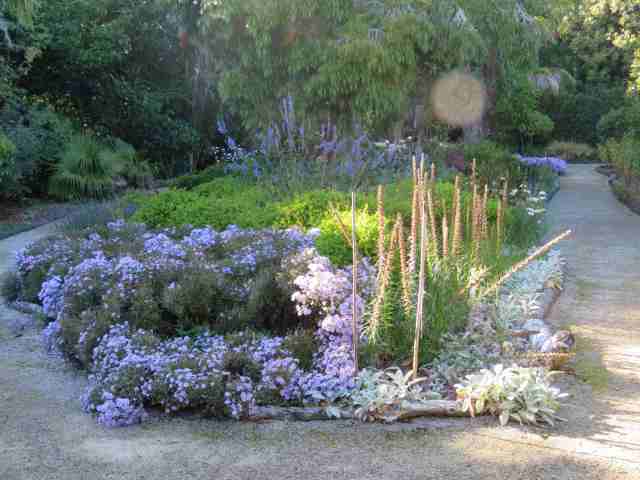
The aster with a name that defies all but the most particular type of memory, at its very best. Alas, it does not stay looking its very best for long enough,
And the same aster riddled with mildew and falling apart even though it was only a year since it was last dug and divided to address these very issues

Zach started on the asters in the Wave Garden. While a variety of mid-sized asters carry the twin borders through autumn, we had just used a compact blue aster in two of the bays of the Wave Garden. In its first couple of years, I loved it and so did the butterflies. It is a clump-forming Michaelmas daisy. I fell out of love with it when it started to get the white haze of mildew in summer but even more so when we realised it needed to be lifted and divided pretty much every single year to keep it as a carpet of blue. By the second year it falls apart. Nice it may be, but it is not nice enough to warrant that amount of individual attention.
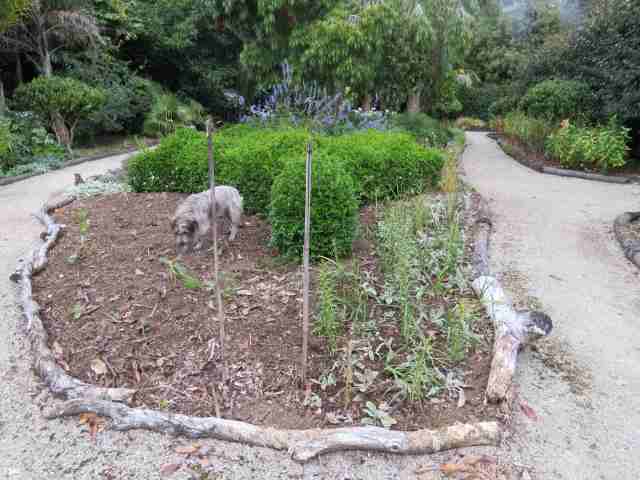
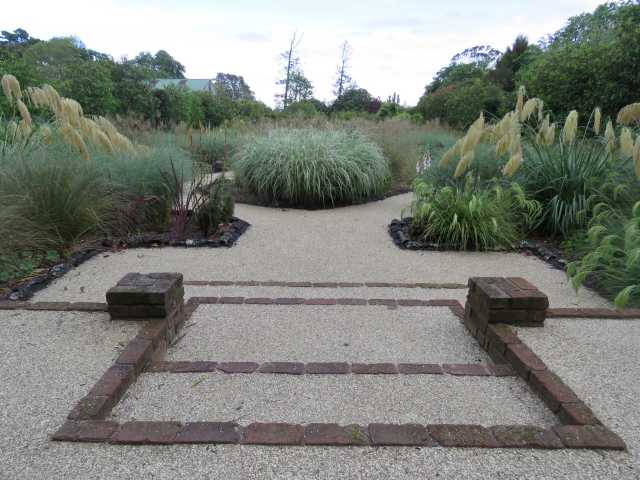
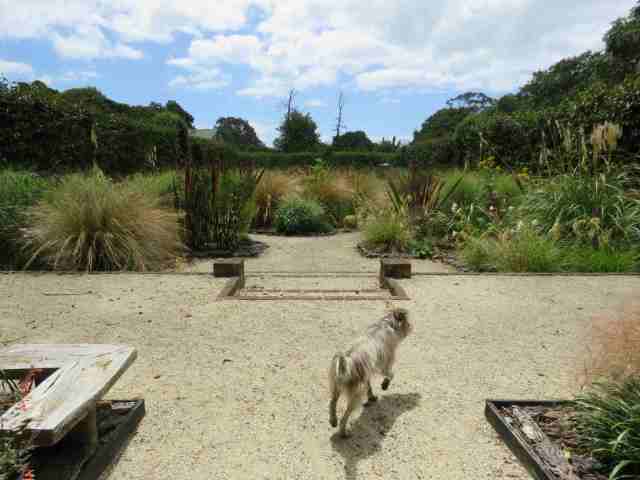
The same view stripped out and replanted, but not in asters. It should be fully furnished again by mid spring

This blue aster has a name but I have to look it up every time because who can remember Aster novi-belgii ‘Professor Anton Kippenberg’? Even worse was when I discovered that the plant has now been reclassified and is no long an aster but… wait for it… is now Symphyotrichum novi-belgii ‘Professor Anton Kippenberg’. Too much, I say, too much. It has gorn forever from the Wave Garden, replaced by a compact blue salvia we had elsewhere and blue bearded iris.

Gardening for us is in part constantly refining areas, acting on what has worked and what is less satisfactory. And we have done a lot of learning since I planted the summer gardens, because large plantings of summer perennials are new territories for us. We fully lifted, dug, and replanted 4 of the 12 outside bays in the Wave Garden, replanting with fresh compost and mulch.
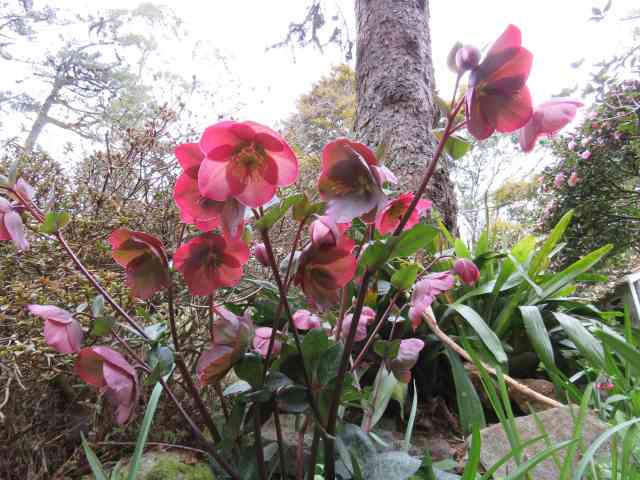
In a moment of woolly thinking, I labelled this photo ‘Anna’s Pink’ which is clearly wrong because Anna is red and Penny is pink but now I am not sure which it is. But it is from the Frostkiss series and it is very good, as are the others I have.

Zach moved on to the Court Garden and I moved into other plantings. In one border, I lifted all the hellebores and consigned them to the compost heap. We have fairly large plantings of hellebores and I wouldn’t be without H. argutifolius, H. x sternii and H. foetidus in particular,  but I wouldn’t give you anything for most of the more common H. orientalis in our conditions. We have tried really hard with them, Mark has done controlled crosses and we have admired their merits in places with cold winters but I truly think they are over-rated in milder climates. Out they go. The only ones that I will give prime garden space to are the marvellous ‘Frostkiss’ series bred by Rodney Davey. ‘Anna’s Red’ and ‘Penny’s Pink’ were the first ones to be released here but there are more later ones and I aim to buy the lot now because they are so good. Lovely foliage, plenty of flowers held above the foliage and they all seem to be sterile so not producing endless seed to be weeded out. I dug my plants – I see I have  7 different varieties already – divided them and consolidated them into one border where they have prime position with spring bulbs. I expect them to take a year or two to re-establish well but my hopes are high.
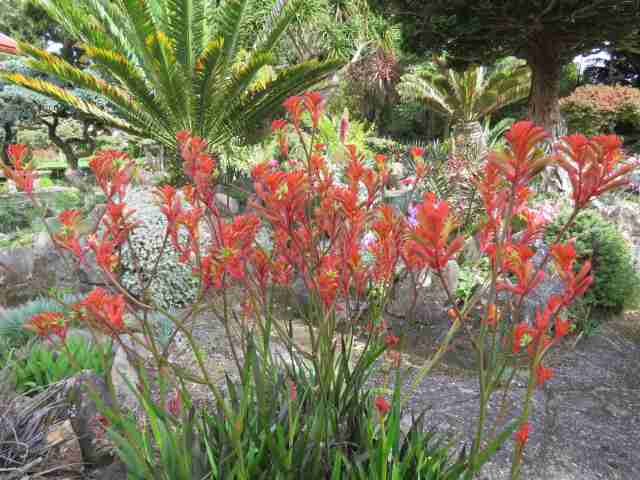
Anigozanthus can sit and sulk for a while but digging, dividing and replanting in a sunnier position paid dividends, 18 months later.

Some plants take a while to re-establish. I had all but given up on this anigozanthus (kangaroo paw) after dividing it and replanting it in full sun two or maybe three years ago. I have lost plants from this family before. But it took a year to rest, do very little and review its options before stunning this year with the best show it has ever put on.
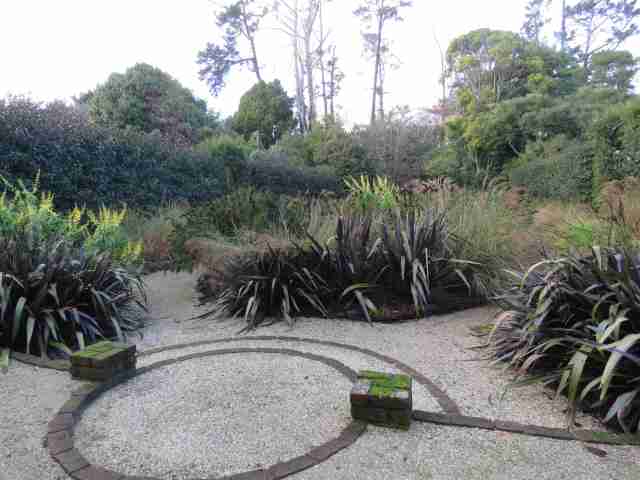
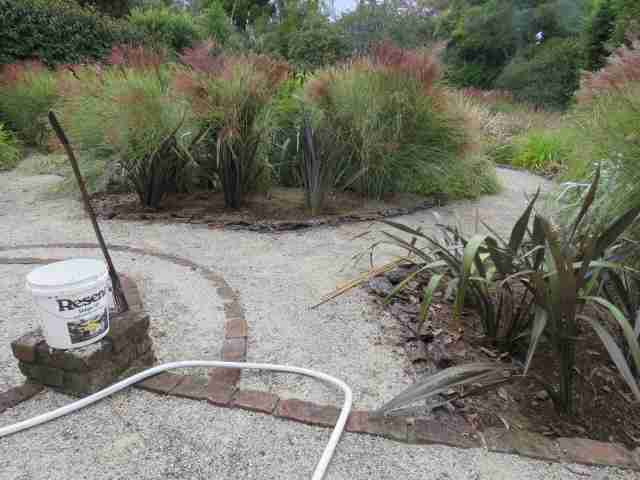
Last year – the flaxes have just had a bit of tidying up in the past 7 years
Completely lifted, divided up and replanted with just a few smaller divisions last week – hopefully to last another 7 years, largely untouched.

Zach is doing a major lift and divide in the Court Garden and I am grateful he is doing it because most of the plants are large. I planted this garden in 2019, starting with a blank canvas and reasonably large divisions (not small nursery plants in pots). In the time since, it has had very little attention bar a major cull and replant on the Miscanthus ‘Morning Light’ in 2022. Zach isn’t lifting everything but he is lifting quite a bit and we are reviewing the plantings metre by metre. It seems that about six years is how long that sort of planting of strong growing, large perennials can last looking good. An intensive three weeks of work every six years along with a bit of ongoing care and weeding is not exactly a high maintenance demand.

Long may this autumn last. We still have plenty to get done.
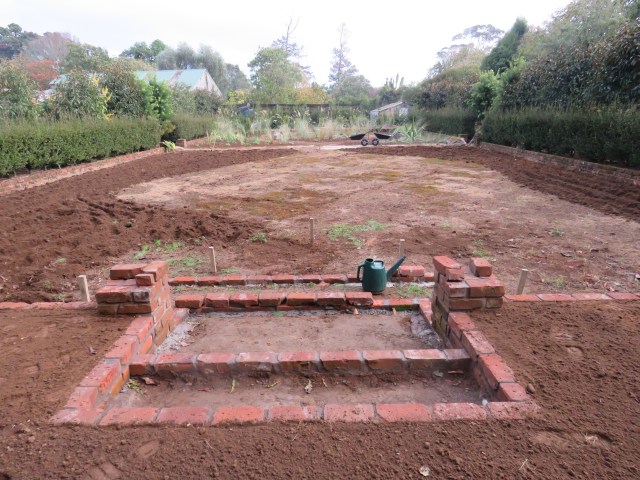
May 2019, the southern end of the Court Garden
Just 18 months later in November 2020. The growth rate was rewarding.
Late last year so another five years on – the dominant plants have changed a bit but the overall impression is pretty stable and little major work has been done.

Our very own mountain daisy, the celmisia

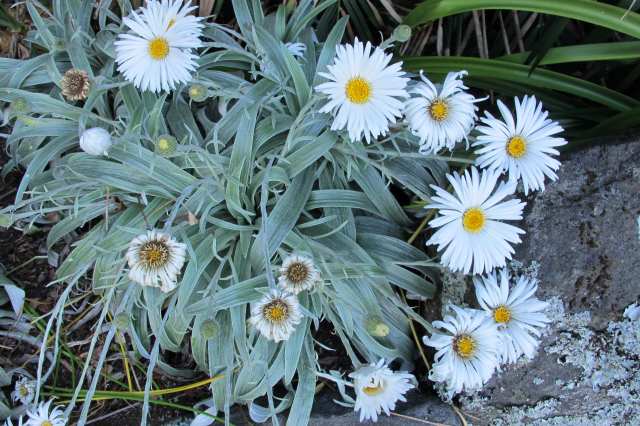
The three species crosses resulted in broader leaves and silver colour all year round

Celmisias are our very own mountain daisies. They have never been a common garden plant because they aren’t easy in nursery production and rarely thrive in the average home garden. It is likely that their greatest fans are trampers and botanists but that should not blind us to their charm. Many people just don’t know of them. And I suppose, when you think about it, quite a lot of our native plants have white daisy flowers.

I was surprised when I looked them up and found a far greater number of species than I ever knew existed. Some dedicated botanists have clearly spent a lot of time unravelling this genus.

When Mark’s father, Felix, was still alive, he became very interested in seeing whether he could hybridise different species to get plants that would thrive in our lowland, humid conditions. Most celmisias are subalpine to alpine plants. I remember Felix and Mark heading up our maunga, Mount Taranaki, in search of the form which grows there naturally – Celmisia major var. brevis – and being thrilled to find some flower variations into pink. This was about 40 years ago, you understand, when people didn’t feel so bad about collecting plant material in a national park. They collected some plants, including a few of the pinks which they only saw growing in one area.

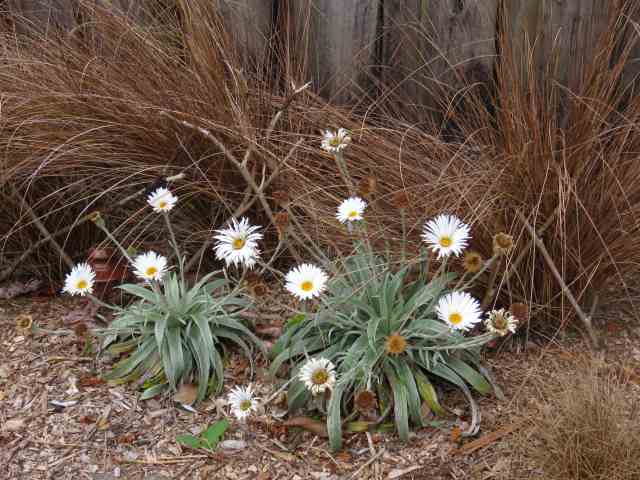
The first season after their relocation. I have moved them again because the grasses were overhanging them and these plants do not appreciate having to compete for space and light.

Felix set about crossing three species – C. coriacea which comes from Fiordland, C. hookeri  from the Otago area and the aforementioned C. major, in various combinations. Forty years on, we still have some of those hybrids growing and flowering in the garden here. It is the three way cross which gave us the broader leaves in distinctive silver all year round. Over the decades, we lost many of them, including all the pink ones, and have, at times, run close to losing the lot but for a bit of quick intervention. They have never seeded down for us; we have to increase them by division. They do set seed which we could gather and sow in seed trays but, in a busy gardening life, we don’t seem to get around to it. These are plants that need to be lifted and divided every few years or they rot out and fade away so we can never claim that they have naturalised here.

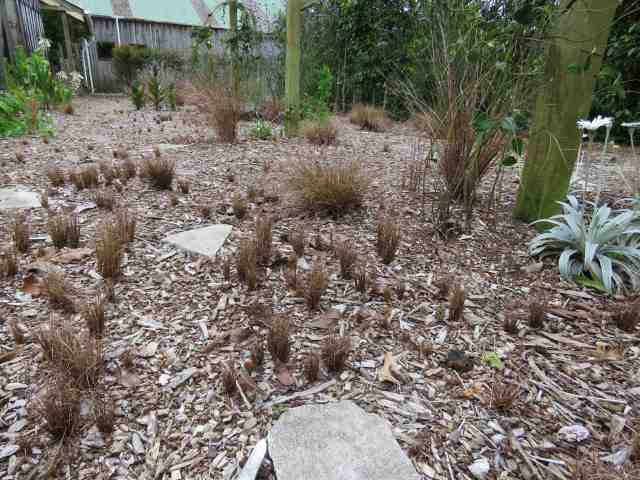
The area we refer to as ‘the grasslands’ when I first planted it in 2022 – one of the few celmisias to the right

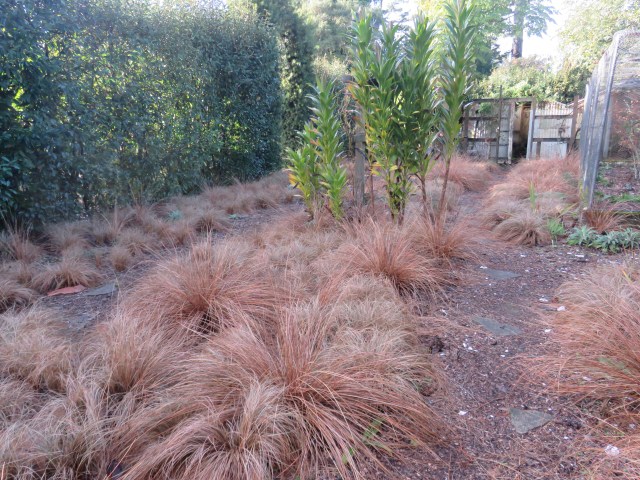
When I planted my tawny brown area of two native carex grasses, C buchananii which is specific to our maunga and C. comans, I envisioned a simple breathing area of just those two plants. Mark looked at it and wanted more detail and colour. He suggested moving some of the celmisias which we were in danger of losing, into the newly cultivated area. So I did. There weren’t many left to play with. In the first year, I probably only had half a dozen divisions.  That was in 2022. It was like they breathed a sigh of relief and set about growing with renewed vigour. Last year I divided a few clumps that were large. This year, I divided most of them and I lost count around 58 or 60 plants. Some are small but they are surviving and I have done my best to give them optimal growing conditions. It was enormously satisfying. There aren’t many perennials I am willing to lavish such frequent and individualised care upon but the rewards feel worth it with the celmisias.

The same area in 2025 but now with the addition of 58, or it may be 60, celmisia plants

It is mighty hard to be original in a garden. Pretty much everything has been done before, some time, some place. I always scoff silently to myself when I hear the occasional gardener declare that somebody ‘stole their ideas’ or copied them. “But who influenced you in the first place?” I want to ask (but never do). However, I doubt that the celmisia and carex combination will be replicated soon, at least not locally. It is a successful subalpine planting in coastal, subtropical conditions and I am moderately chuffed by its unexpected nature in that context.

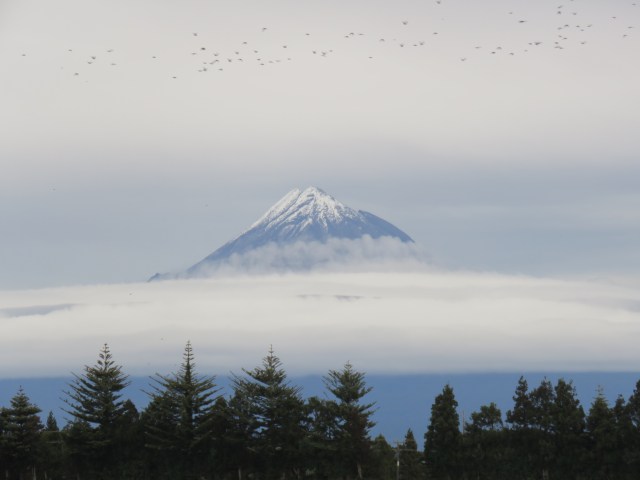
Te maunga, our mountain, Mount Taranaki, as I drove to town on Wednesday. The snow cover is abnormally light for mid-winter. There may be no more skiing days this season.

In a world gone mad, there are flowers

The cheerful yellows and oranges from the summer borders

I was going to finally get around to tabling three books that recently came in to my life, but I found I was too distracted. It is a weird feeling to be part of history unfolding minute by minute in this strange new world in which we are living.

In a country that is 95% eligible fully vaxxed – 96% eligible first dose only – and tens of thousands choosing of their own free will to get a third dose every day, the motley crew currently occupying what used to be the lawn in front of our Parliament and dominating our airwaves and social media just seems … bizarre. To have swastikas, nooses, talk of Nuremberg 2, guillotine imagery, even, on display with declared intentions to kill politicians, media, health practitioners, civil servants and – extraordinarily – architects and engineers all sentenced to execution in their absence – it is all too bizarre for me to process in my brain.  What have the architects and engineers ever done to that mob? And how many of us actually believe that our Prime Minister eats the foetuses of babies? Alas some do, though nobody in my personal circle, I am pleased to say.

Really? I mean really?

Try getting over 90% of New Zealanders across the political spectrum to agree on anything and yet that number of us chose to get vaccinated and to wear masks and physically distance to keep others safe even before widespread mandates  and vaccine passports were introduced. Far from being a divided nation, I have never seen us so united; the loud messages from the disaffected few just don’t compute for me.

I am, however, greatly amused at the Speaker of the House of Representatives, first ordering the sprinklers on Parliament’s lawn to be turned on overnight to drench the protesters who are defying the trespass orders served on them. Then last night, he ordered speakers to be set up blasting the music of Barry Manilow (sorry, Barry!), the Macarena and Covid 19 vaccination messages on a 15 minute loop to annoy protesters. I am surprised he didn’t include Rick Astley on that irritation tape but I love living in country with a sense of humour.

The blues and whites currently in flower in the Wave Garden

In the face of all this and a wet day, I made a couple of flower flat lays. Ephemeral these may be, I find the gathering of flowers and laying them out in pretty sequence is very soothing to my troubled mind. Maybe it is a shame I don’t do Instagram?

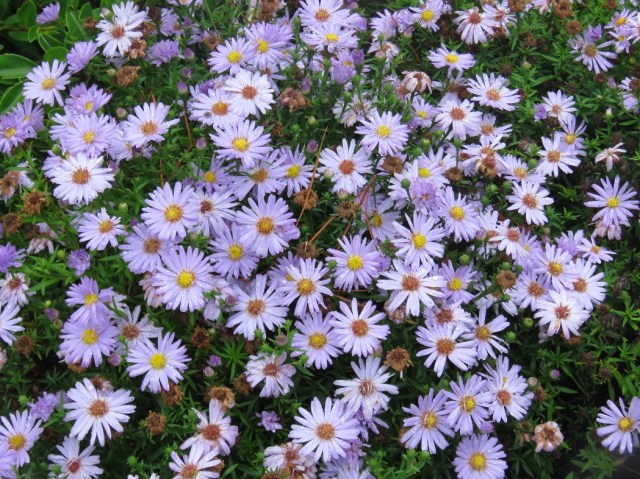
Aster novi-belgii ‘Professor Anton Von Kippenberg’ looking how it should

Gathering all the blues and whites from the Wave Garden, I could not help but notice – again – the sorry state of the dwarf blue aster which goes by the fearsome name of Aster novi-belgii ‘Professor Anton Von Kippenberg’. It should be a uniform sea of blooms covering the foliage and dancing with bees and butterflies. Alas, it is falling apart in the middle. It should have been dug and divided immediately after flowering last year when it was starting to show the first signs of splitting. It will be done this year and put on a two yearly cycle. We will dig the lot and replant about one third of them at the most.

But pull the camera out further and I am ashamed to admit this is how it is looking this year

The thing about learning to garden with perennials is working out by plant variety which ones need individual attention, be it staking, dead heading or dividing on a regular basis. Some do not improve with age at all.

You will find me hiding in the garden. It is balm for the soul in these times.

Tikorangi notes – winter, reversions and grubby knees

IMG_8604‘tis the winter solstice today. This marks the point where the days will start to lengthen again, which is always encouraging. However, it usually marks the point where we descend into the worst of winter weather from here through July. But I tell myself that a winter so brief is not too bad, really.  We are still enjoying plenty of autumn colour – which is more early winter colour here – and more camellias are opening every day. The spring bulbs are pushing through the ground.
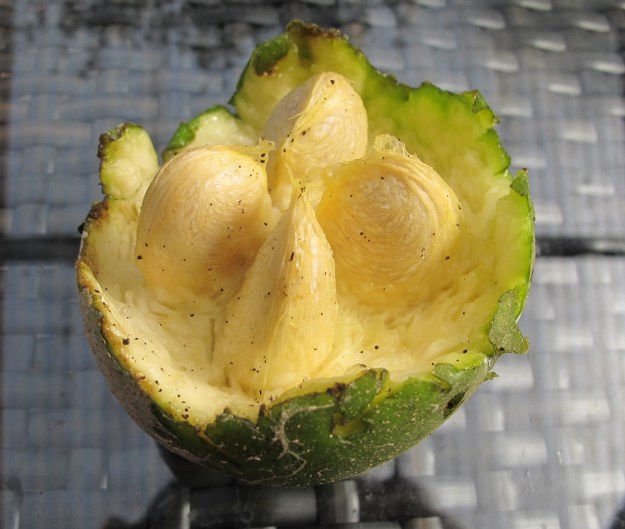
Casimiroa edulis

Casimiroa edulis

The absence of any significant frost means the tree dahlias and luculia flower on and we are eating the white sapote crop (Casimiroa edulis). Now there is a taste of the tropics in mid-winter.

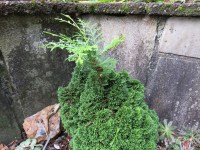
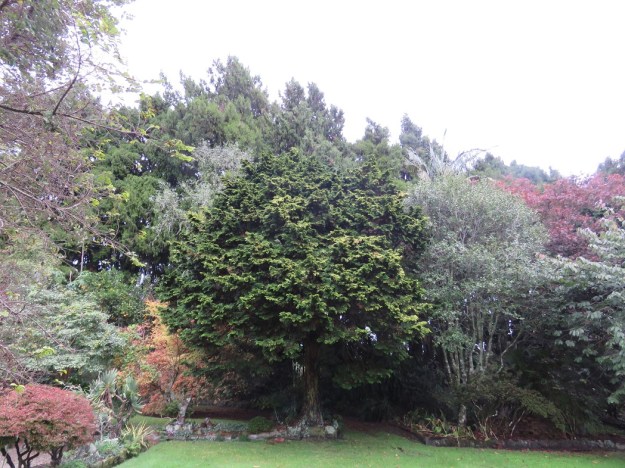
IMG_8616I had been meaning to photograph this reversion on a dwarf conifer. Many plant selections, especially amongst the conifer families, are sports or aberrations on a parent plant. Part of plant trialling is to test that sport for stability but even so, you may often see reversions to the original plant. Generally, it is going to be much stronger growing so if you don’t cut it off, over time it will dominate. A quick snip with the secateurs was all that was required on this little dwarf in the sunken garden. The major growth that Mark removed from the top of the variegated conifer in the centre of this photo required a tall ladder, some tree climbing and a pole saw.
IMG_8390

IMG_8619Reversions are also apparent in these perennials. The silver leafed ajuga to the left is showing reversion to plain green. While that particular ajuga is not my favourite (the silver reminds me a bit much of thrip-infested foliage on rhododendrons), it is better than the boring green which barely blooms. I weeded out an ever-growing patch of the plain green. The other little groundcover must have a name but I have no idea what it is. The clean white variegation is sharp and smart but it has a definite inclination to revert to its plain green form, which is much stronger growing. The same rules apply where variegated hostas are reverting to a plain colour. If you want to keep the variegated form, cut out the reversion or you will end up with just plain foliage.
I like the yellow polyanthus with blue corydalis but the polyanthus need relatively frequent lifting and dividing to stay looking good

I like the yellow polyanthus with blue corydalis but the polyanthus need relatively frequent lifting and dividing to stay looking good

I have been much preoccupied with digging and dividing perennials. Still. This may be ongoing but the good news is that the more you dig and divide, the easier it is because the soil doesn’t compact as hard. Over time, I am sure I may cast out some of the plants that need very frequent digging and dividing to stay looking good (particularly polyanthus) but at this stage, I am fine with grubbing about in the garden borders on my hands and knees. Mark laughs at me. Even though I use a kneeling pad, I am a grubby gardener. There are no two ways about that. Mark can come in from the garden, wash his hands and be relatively clean. I come in and have to soak clothes in a bucket of cold water, to loosen the dirt before washing them.

Why so much digging and dividing? Because I am on a steep learning curve with perennials. In the main, I would say that we are pretty knowledgeable about gardening with trees, shrubs and bulbs. But gardening well with perennials is a whole different ball game. I went looking at local gardens a few years ago and it was a revelation to me how badly otherwise-reasonably-competent gardeners managed underplantings. There is so much to learn – not only what perennials like which conditions (that is the easiest bit), but which perennials combine well together, have compatible growth habits and stay looking good over a long period of time. Landscapers usually take the easy path – mass plant a large area with a single variety that will like the conditions. But that is not our style. It is the combinations that make it interesting and take the garden through the seasons.

January 27 this year

January 27 this year

And on June 20

And on June 20

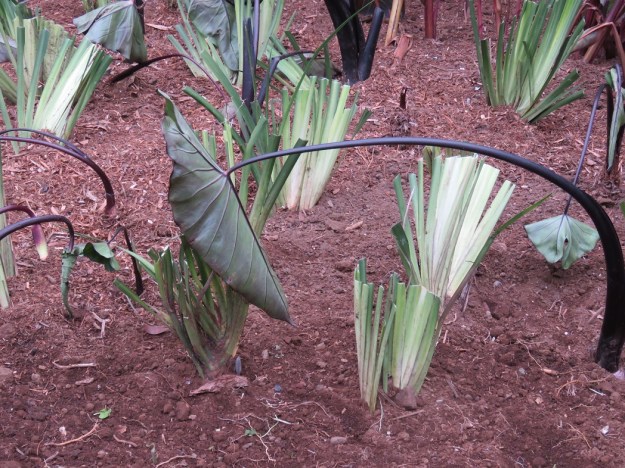
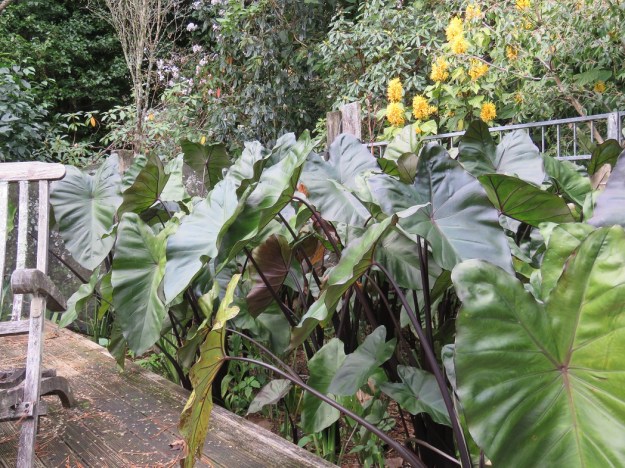
Because we have some big plans for all-new perennial gardens, we have both been turning our attention to learning more about the specific  requirements of many varieties and how best to manage them. This is not a six month project. More like a six year one, at least. But with perennials, the results are quick. I lifted much of the messy swimming pool garden in late January (mid-summer and I didn’t water because there is no tap nearby) and replanted a block with Dietes grandiflora and an ornamental taro. For a while they sat around wilting in the extended autumn heat. But look at it now, in mid-June. The dietes haven’t moved but still have green foliage so they are biding their time for spring. The taro looks great. When a combination works, it is hugely satisfying. When it stays working all year and into the next few years with minimal attention, that is even better.

When perennial plantings work well - Curculigo recurvata with Ligularia reniformis (also in the pool garden)

When perennial plantings work well – Curculigo recurvata with Ligularia reniformis (also in the pool garden)

Garden lore

The more one gardens, the more one learns; and the more one learns, the more one realises how little one knows. I suppose the whole of life is like that

by Vita Sackville-West.
(1892-1962)

Farfugium tussilagineum argenteum - standing up well after being dug and divided last autumn

Farfugium tussilagineum argenteum – standing up well after being dug and divided last autumn

Digging and dividing

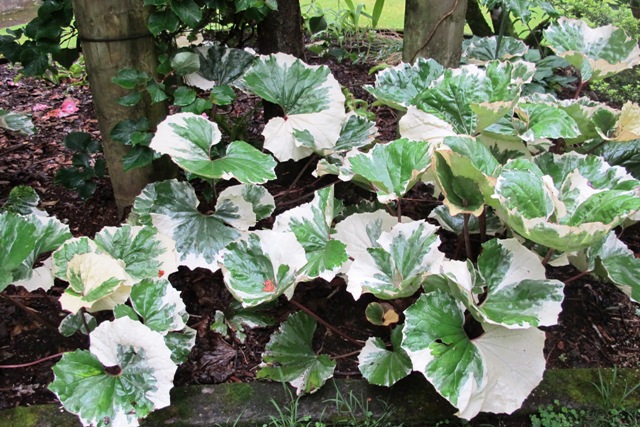
While the advice is freely given to dig and divide perennials, it is often the garden task that slips so far down that it falls off the to-do list because it is rarely urgent. If you have clumping, leafy plants which are either dying back in the centre or flopping all over the ground, that is a sign that they will benefit from being lifted, divided into smaller pieces which are then cleaned up and replanted into well dug and composted soil. This patch of Farfugium tussilagineum argenteum (some of you will know it as a ligularia) received this care and attention last autumn and now it is sitting up looking much more attractive, rather than falling apart with leaves lying on the ground.

In our comparatively mild climate, we can do this pretty much any time of the year though hot, dry summer is best avoided unless you water twice a day. In cold climates, plants can rot out if dug and divided when dormant, so times of growth in spring and summer are usually recommended.

First published in the Waikato Times and reprinted here with their permission.