Tag Archives: autumn garden tasks

Autumn dig and divide

The borders need some intensive attention but, I admit, we were doing the easier areas first. There is so much detail in the borders that it is harder to manage access to some areas. The Iris sibirica will all be lifted shortly for thinning and dividing and Zach tells me that was one of the first jobs he did when he started here in 2021. So, it seems we can get five years out of them before they need a total revamp.

Zach and I are busy, a-diggin’ and a-dividin’. The advice is often to do this in springtime when the plants are in growth and that is probably true for gardeners with heavy soils and colder winters. We prefer to do it in autumn, even if it means getting hoses and buckets out in dry spells. Our winters are short and we will have at least six weeks and maybe longer before growth stops for winter. Autumnal conditions can extend as far as the winter solstice.

In contrast to our long, mild autumn, springtime is usually wet and we are slower than some areas for soils to warm up. It is fine to dig and divide at that time but, by doing it now, plants have a jump start. Besides, we have a lot to do. Many summer flowering perennials are demanding plants when it comes to care.


The aster with a name that defies all but the most particular type of memory, at its very best. Alas, it does not stay looking its very best for long enough,
And the same aster riddled with mildew and falling apart even though it was only a year since it was last dug and divided to address these very issues

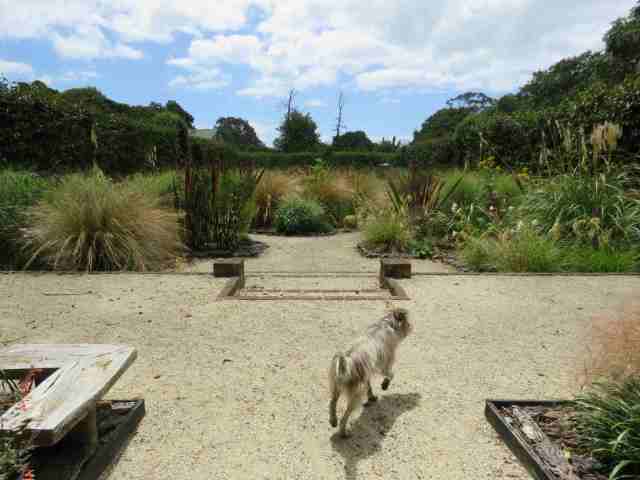
Zach started on the asters in the Wave Garden. While a variety of mid-sized asters carry the twin borders through autumn, we had just used a compact blue aster in two of the bays of the Wave Garden. In its first couple of years, I loved it and so did the butterflies. It is a clump-forming Michaelmas daisy. I fell out of love with it when it started to get the white haze of mildew in summer but even more so when we realised it needed to be lifted and divided pretty much every single year to keep it as a carpet of blue. By the second year it falls apart. Nice it may be, but it is not nice enough to warrant that amount of individual attention.
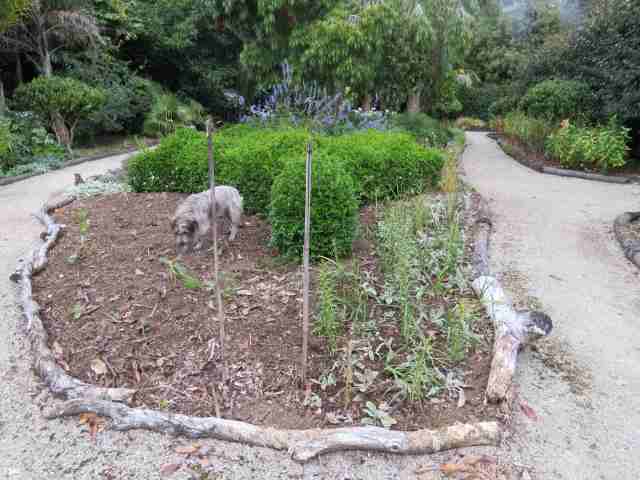
The same view stripped out and replanted, but not in asters. It should be fully furnished again by mid spring

This blue aster has a name but I have to look it up every time because who can remember Aster novi-belgii ‘Professor Anton Kippenberg’? Even worse was when I discovered that the plant has now been reclassified and is no long an aster but… wait for it… is now Symphyotrichum novi-belgii ‘Professor Anton Kippenberg’. Too much, I say, too much. It has gorn forever from the Wave Garden, replaced by a compact blue salvia we had elsewhere and blue bearded iris.

Gardening for us is in part constantly refining areas, acting on what has worked and what is less satisfactory. And we have done a lot of learning since I planted the summer gardens, because large plantings of summer perennials are new territories for us. We fully lifted, dug, and replanted 4 of the 12 outside bays in the Wave Garden, replanting with fresh compost and mulch.

In a moment of woolly thinking, I labelled this photo ‘Anna’s Pink’ which is clearly wrong because Anna is red and Penny is pink but now I am not sure which it is. But it is from the Frostkiss series and it is very good, as are the others I have.

Zach moved on to the Court Garden and I moved into other plantings. In one border, I lifted all the hellebores and consigned them to the compost heap. We have fairly large plantings of hellebores and I wouldn’t be without H. argutifolius, H. x sternii and H. foetidus in particular,  but I wouldn’t give you anything for most of the more common H. orientalis in our conditions. We have tried really hard with them, Mark has done controlled crosses and we have admired their merits in places with cold winters but I truly think they are over-rated in milder climates. Out they go. The only ones that I will give prime garden space to are the marvellous ‘Frostkiss’ series bred by Rodney Davey. ‘Anna’s Red’ and ‘Penny’s Pink’ were the first ones to be released here but there are more later ones and I aim to buy the lot now because they are so good. Lovely foliage, plenty of flowers held above the foliage and they all seem to be sterile so not producing endless seed to be weeded out. I dug my plants – I see I have  7 different varieties already – divided them and consolidated them into one border where they have prime position with spring bulbs. I expect them to take a year or two to re-establish well but my hopes are high.

Anigozanthus can sit and sulk for a while but digging, dividing and replanting in a sunnier position paid dividends, 18 months later.

Some plants take a while to re-establish. I had all but given up on this anigozanthus (kangaroo paw) after dividing it and replanting it in full sun two or maybe three years ago. I have lost plants from this family before. But it took a year to rest, do very little and review its options before stunning this year with the best show it has ever put on.
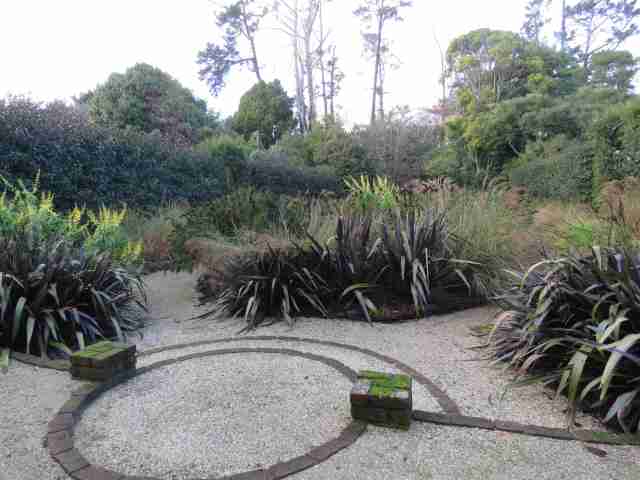
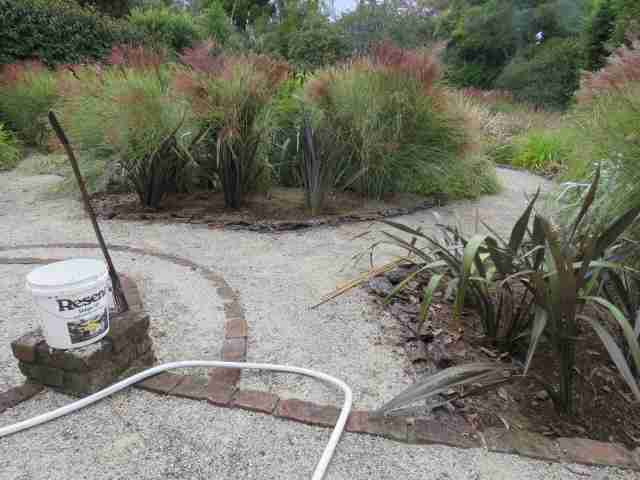
Last year – the flaxes have just had a bit of tidying up in the past 7 years
Completely lifted, divided up and replanted with just a few smaller divisions last week – hopefully to last another 7 years, largely untouched.

Zach is doing a major lift and divide in the Court Garden and I am grateful he is doing it because most of the plants are large. I planted this garden in 2019, starting with a blank canvas and reasonably large divisions (not small nursery plants in pots). In the time since, it has had very little attention bar a major cull and replant on the Miscanthus ‘Morning Light’ in 2022. Zach isn’t lifting everything but he is lifting quite a bit and we are reviewing the plantings metre by metre. It seems that about six years is how long that sort of planting of strong growing, large perennials can last looking good. An intensive three weeks of work every six years along with a bit of ongoing care and weeding is not exactly a high maintenance demand.

Long may this autumn last. We still have plenty to get done.
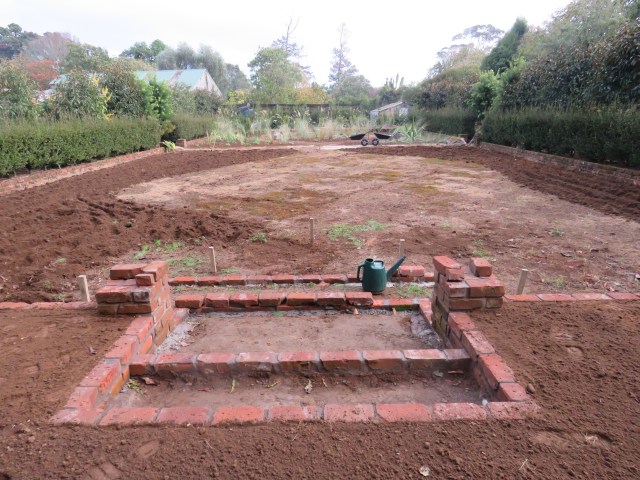
May 2019, the southern end of the Court Garden
Just 18 months later in November 2020. The growth rate was rewarding.
Late last year so another five years on – the dominant plants have changed a bit but the overall impression is pretty stable and little major work has been done.

In the Garden this week: Saturday 23 April, 2011

• I was wrong. The first wintery blast did not wait for Easter but arrived last Monday morning. Fortunately we should not stay cold for a while yet, but it was a good reminder to make the most of remaining mild autumn weather in the garden. Nothing saps gardening motivation faster than cold, wet conditions.

• Easter should signal the time to be out doing the autumn clean up. Tell yourself that you are working off the extra calories consumed by most of us at this time. Remove spent crops in the vegetable garden and do a weeding round. If you don’t need to use all the area for winter and spring crops, either sow down bare areas in a green crop or at least mulch it to keep the invading weeds at bay.

• Silver beet is a rewarding vegetable to grow for those who are willing to eat it (and apparently some people like it) because you can continue harvesting repeatedly from the same plants. It is also hardy so makes a good winter stand-by. It is best to put in small plants this late in the season. There is not a lot of growing time left before winter.

• In the ornamental garden, the time for autumn feeding is over in colder, inland areas and fast running out in milder parts. The idea of feeding now is to allow the plant to take up the goodness before growth slows down or stops during winter. There is no point in feeding dormant plants.

• Last gasp, too, for perennial cuttings this season. After this, perennials need to be increased by division, not cuttings.

• Slugs and snails are undeterred by the cold. Watch for signs of them around emerging spring bulbs and set up bait stations if need be. We often use a low-sided plastic bottle top such as those from milk containers with a paua shell covering it to stop the bait from dissolving.

• Wrench plants which you intend to move to another site. Wrenching involves making straight cuts down two sides of the plant’s roots now, following up with cutting the other sides in two or three weeks’ time. This reduces the stress on the plant but is only necessary for well established plants which have been in the ground for some time (as in more than a year or two). Plan to take as large a mass of roots as you can physically manage.

• If you have not yet given hedges a tidy up trim, don’t delay on it. Trimming forces a new flush of growth and you don’t want it so fresh and tender that the first hint of frost will burn it off.

In the Garden: Friday 1 April, 2011

A game of chance with the pepper crop this year

A game of chance with the pepper crop this year

• The capsicum crop this year has been causing me problems. Peperone Padron is apparently a Spanish heirloom variety, renowned for the fact that it bears both mild and hot peppers but you can not tell the difference until you eat them. The seed packet proudly proclaims that eating a portion is popularly linked to Russian roulette. I prefer a little more predictability in the harvest so we may be more conservative with next year’s varieties.

• The spring bulbs are bolting into growth so if you have patches you have been meaning to dig and divide, do them this weekend and handle them gently. You have longer if you are buying dry bulbs which are still available at all garden outlets.

• We should still have at least five weeks of very mild weather, albeit with cooler nights, before the threat of frosts in inland areas and the first blasts of winter chill. So it is perfect planting time for trees and shrubs.

• The mild conditions are also the reason why right now is a good time to do an autumn fertilising round. The plants have time to benefit from the feed before they either go dormant or slow dramatically in growth over winter.

• Sow new lawns and over sow bare patches now. The grass has time to germinate and get some roots out before winter.

• Don’t walk away from the vegetable garden after you harvest the autumn crops, even if you are not intending to replant until springtime. It is time to do a big tidy and clean up. Remove blighted and mildewed plants entirely from the site to try and break the cycle. You don’t want the fungi and diseases wintering over in your patch. If you are going to dispose of them by burying them, don’t do it in your vegetable garden and only compost them if you make a hot mix. It is also good practice to rake up the leaves from fruit trees as they fall. You can help break the cycle of pests and diseases by good hygiene.

• With cooler nights, mice will be moving indoors. If you are storing seed, move the packets to rodent proof containers.

In the Garden – May 7, 2010

• It is time to make the second cut to large plants you are wrenching (root pruning) in preparation for shifting when the rains finally come. You should have cut two sides several weeks ago. Make the remaining cuts now and let the plant rest for another couple of weeks before you cut any roots below and start the moving process. We remind again to keep the root ball as large as you can physically manage. You can still shift plants that haven’t been wrenched but it does help plant health to do the preparatory work.
• Alas winter is just around the corner and motivation for intensive gardening can wane when it gets cold. Although we are still dry, cooler temperatures mean less stress on the plants and less evaporation so take full advantage of the extended, calm autumn weather to get the autumn clean up done and to plant out if you can get the hosepipe close to water in.
• Polyanthus respond particularly well to lifting and dividing every year or two and the rewards in increased vigour and flowering come quickly. Heucheras are another plant I have found need to be lifted and divided regularly if they are to retain their size and vigour. Give them a cooler position in the garden (not the sunny borders) and plenty of humus-rich, friable soil without root competition from nearby plants.
• Most deciduous perennials will be looking sad and tired. Cut off the dying tops and compost them unless you have noticed that their seed heads are feeding the birds.
• You can plant garlic from now onwards. Don’t plant the cheap Chinese imported stuff – it is from the wrong hemisphere so out of its growing season and often carries viruses which will affect production badly. If you haven’t saved your own fresh garlic from the summer harvest, go and buy some proper New Zealand bulbs. The large cloves will give the best results – each clove should grow to form a bulb. There is a great deal of debate about spacing but if you keep to around 15cm apart and space the rows at 20cm you should be right. Full sun, good drainage and lots of feeding will help get a better crop.
• Sow broad beans.
• If you subscribe to Sky, make a point of watching the Living Channel at 5pm on Sunday afternoons. The British show how to make a really informative and interesting garden programme with BBC Gardeners’ World and what is more, this is actually hot off the production line and is the 2010 series (as opposed to being five years old!).

In the garden this week: April 23, 2010

• We are dry. If you dig down a little, you will probably find that even if you have watered, the soil is very dry. Rain will come, we know that. But in the meantime if you have been busy planting, you will need to water until we get some consistent rain. Keep an eye on container plants too. They can get stressed by drought even at this time of the year. If you have laid new lawn or oversown bare patches, it will probably need regular watering.
• It is time to cut back the old Helleborus orientalis foliage and any seed heads that you have left on them. This is optional as an activity but does greatly improve the visibility of the winter flower display. It may also reduce the infestations of aphids in your garden. I have found some heavily infested plants. While you are about it, pull out germinating seedlings to avoid overcrowding. Hellebores are one plant which is less than grateful to be lifted and divided. Raise fresh plants from seed, rather than splitting up established clumps. They can last for years in quite heavily compacted soil. We like to lay a blanket of compost after cutting off the old foliage.
• For cheap winter colour, pansies, primulas and polyanthus can be very cheering. Existing polyanthus plants need dividing often and can be done right now. Proper English primroses are delightful but prefer a cool climate – here we tend to get mostly foliage and little flower. Sadly the auricula branch of the primula family also likes it much colder. Inland gardeners may manage them but in coastal areas, they are more likely to be a waste of effort.
• If you haven’t trimmed your formal hedges, don’t delay.
• If you like silver beet, it is one of the most reliable stand-by plants for the home gardener because you can just keep harvesting off the same plant all season and it will keep growing. Spinach, on the other hand, which some of us much prefer, is picked once and that is generally it. Both can be still be planted.
• Planting in the veg garden continues to be focussed on brassicas but not Brussels (it is a bit late for those now unless you have large plants ready to go in), broad beans, peas and leafy greens. You may enjoy trying some of the quick maturing Asian and oriental greens of the pak choy and mizuna types. Kings Seeds have a superb range of these less common crops available by mailorder but we have also noticed local garden centres extending the range they stock. There are a host of alternatives to silver beet, spinach and Buttercrunch or Iceberg lettuce.