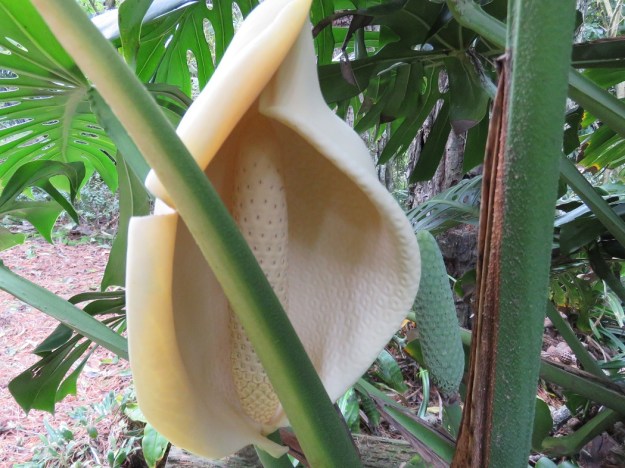
The quilted spathe of Monstera deliciosa with the distinctly phallic green fruit from a previous bloom to the right
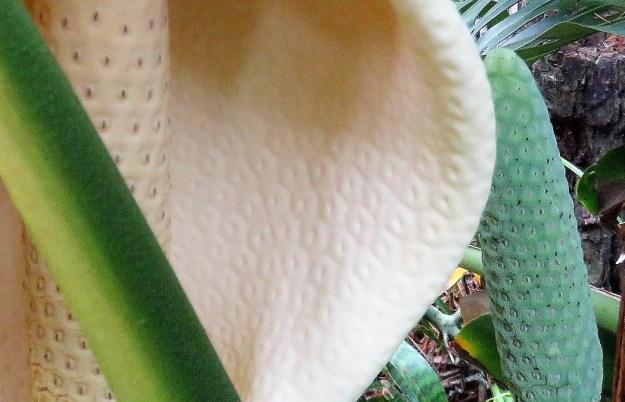 I had not noticed until yesterday that the interior of the spathe on the Monstera deliciosa is delightfully quilted. For quilting enthusiasts, they are hexagons – six-sided figures. The spathe is the curved hood on the flower – botanically a modified leaf but most of us will continue to call it a flower. Some readers will know the monstera better as the fruit salad plant – most often seen as a house plant or perhaps more as an office plant where there is greater space. I would rather doubt that it flowers, let alone fruits, when it is treated as an indoor plant.
We have it as large, shade plant, climbing our trees and furnishing some of the back areas of the woodland gardens where it never gets frosted. It is a bit rampant, a monster even, although easy enough to cut back when it roots its way along the ground. It is more difficult to contain when it romps its way up the trees because it puts out strong aerial roots all the way and our largest ones are now a good ten metres up the trees. Looking tropical, even in the depths of winter. Fortunately, this is not a plant that will smother or strangle its host tree.

Monstera deliciosa can indeed be a monster plant when liberated in the garden
Our plants set fruit but we are not hot enough to ripen them to the allegedly delicious stage. Sometimes we get them to the point where the segments are ripe enough to fall apart, as they do, but the taste, while somewhat ‘tropical fruit salad-y’ in flavour, remains too sharp to eat many. A bit like cut glass, we say, which is apparently to do with oxalic acid. Our guess is that in hotter climes, the oxalic acid is less dominant.
Coming back to the flowers, I hadn’t really noticed how lovely they are until I saw this one yesterday and noticed the matching quilting on the central spadix (which develops into the phallic shaped fruit) and the interior of the spathe which embraces it.

Arum lilies, photographed in somebody else’s garden
“Aroids”, Mark said which had us googling a few other plants with flowers of similar form which were otherwise totally different and yes, they are all members of the araceae family, though not all are members of the aroid sub family. Arum lilies are probably the best known. Arums are a great deal more prized overseas than in New Zealand. Here, they are seen as an indicator of poor land management (our pioneer roots are as farmers in this country), invasive and widely banned from sale but not on the total eradication list, as far as I know. As a garden escape, the problem with arums is that stock don’t eat them and they are difficult to control once they have established themselves. I once wrote giving advice on how to get rid of them. The coloured calla lilies are still grown as ornamentals but I dug most of mine out this year. I found them shy flowering and they didn’t justify the garden space. Too much foliage for too few blooms.
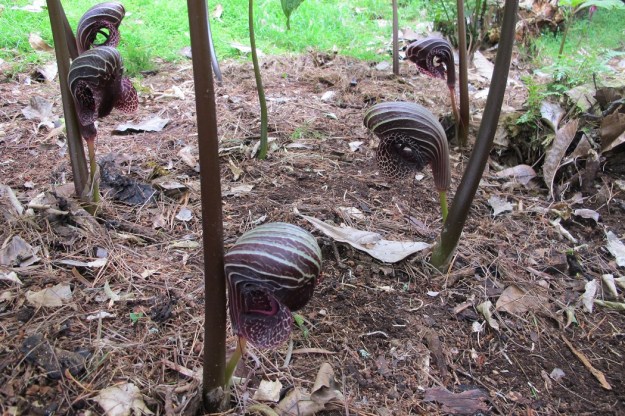
Arisaemas we grow a-plenty. Theirs is a very curious plant group, though not beautful in the usual sense. A. dahaiense
What surprised me more was to find that arisaemas and lysichiton are also members of the araceae family. They have the distinctive hooded flowers, but that is about all that looks the same as monstera or arum. I am sure I have photographed the lysichitons here (unromantically referred to in common parlance as ‘skunk cabbages’) but I can not find the photos in my files. We have both the yellow American species (americanus) and the white Asian species (camschatcensis) which we grow as bog plants.
Alocasias also belong to the same family. This includes taro, which is widely sold in New Zealand because it is a food staple for Pacific Island people, though it has never made its way into the general diet of most others and I admit I have never tried it. It has never been touted as delicious. Should you happen to be in Missouri, the botanic gardens there have the world’s largest collection of members of the araceae family. Munich Botanic Garden also has a splendid collection owing to world expert working there, the ever-handy internet tells me. I was just a bit surprised by the diversity of araceae we grow here. I was looking up the toxicity because some can cause burning of the skin and I wondered if it was connected to the aroids. But no, it appears that it is only a characteristic of some family members – chemically speaking, calcium oxalate crystals in the form of raphides. So now you know. This will explain the sensation of eating tropical flavoured glass shards when sampling the monstera fruit that are less than perfectly over-ripe.
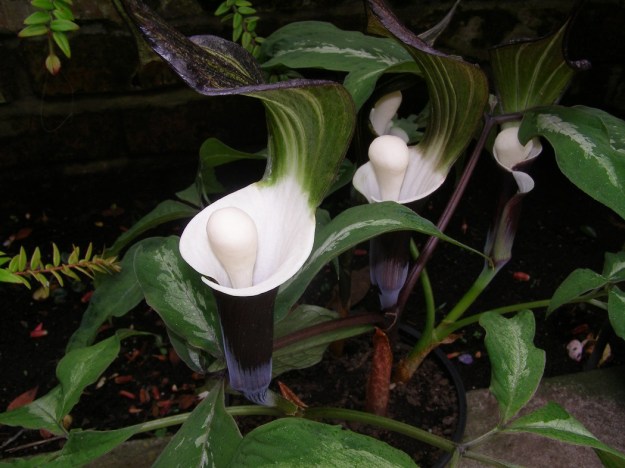
Arisaema sikokianum – not easy to keep going as a garden plant but eye-catching
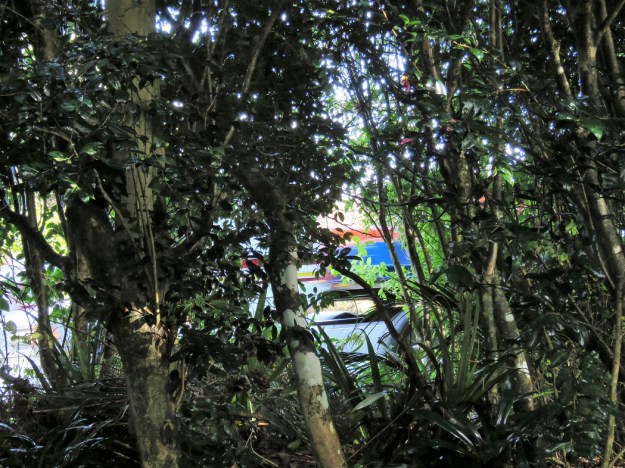
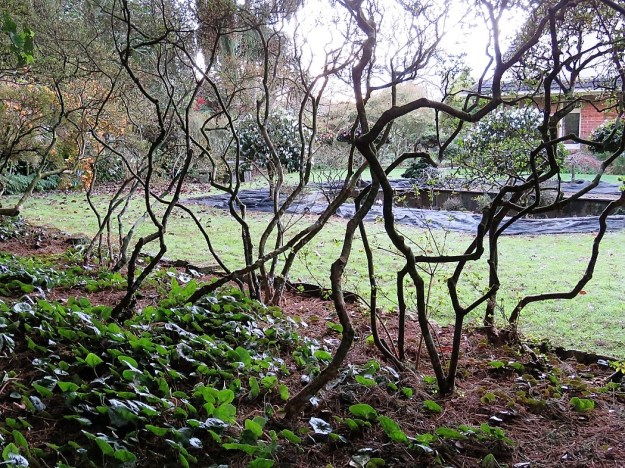
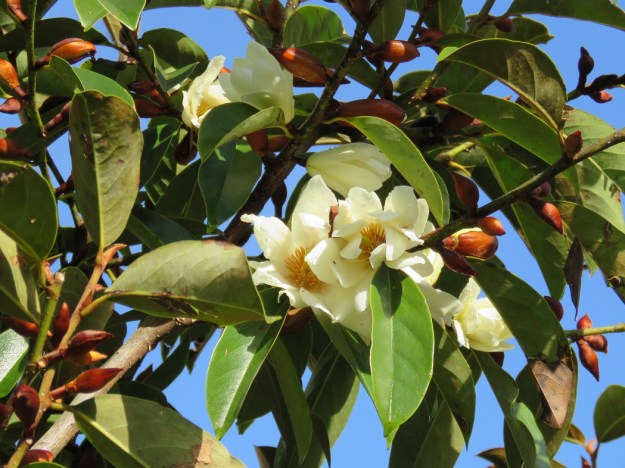



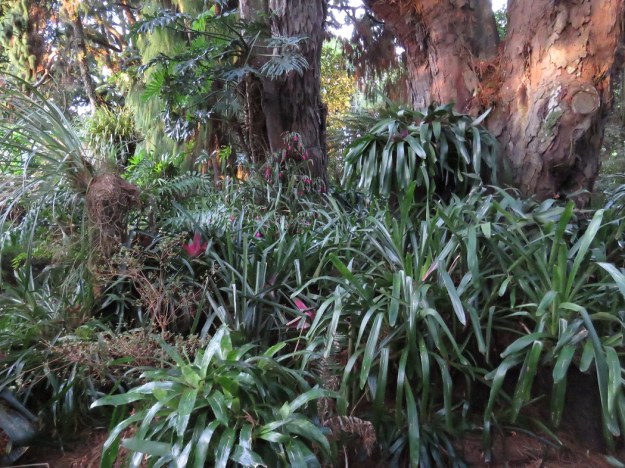
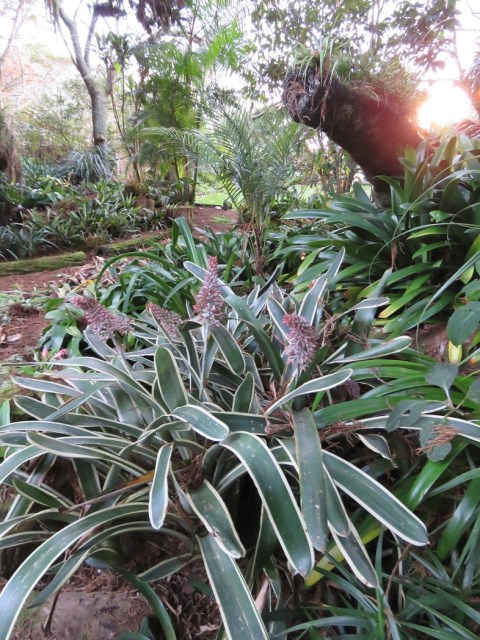 Beneath these rimu, we have what is probably the most complex planting of anywhere in our garden. Oddly, it occurred to me this week that it is the least demanding in terms of regular maintenance. This is not related to the complexity of the planting; it is to do with the fact that it is all in dry shade and also to the plant selection over time. In the last five years, we have gone through it and pulled out fallen branches and a bit of occasional debris but it has not had the loving attention to detail that I am currently giving it.



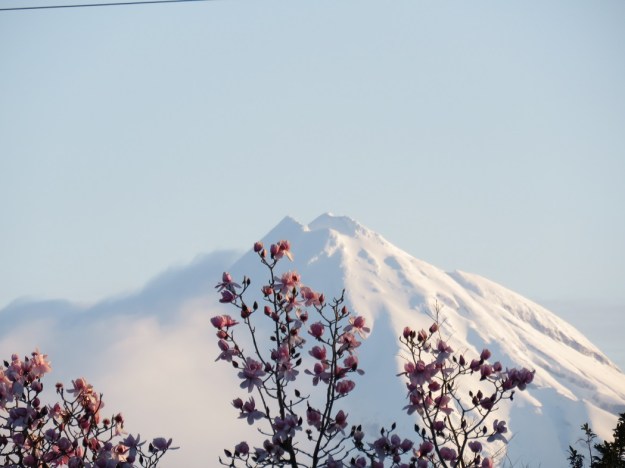
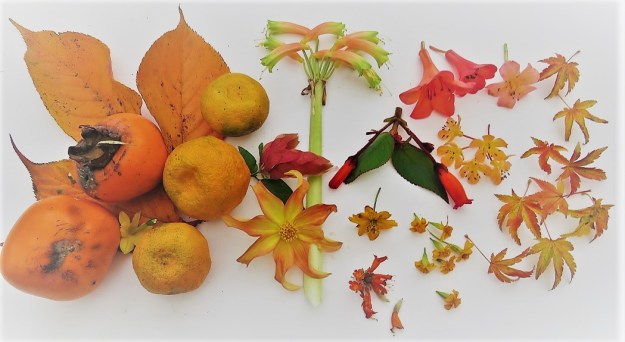
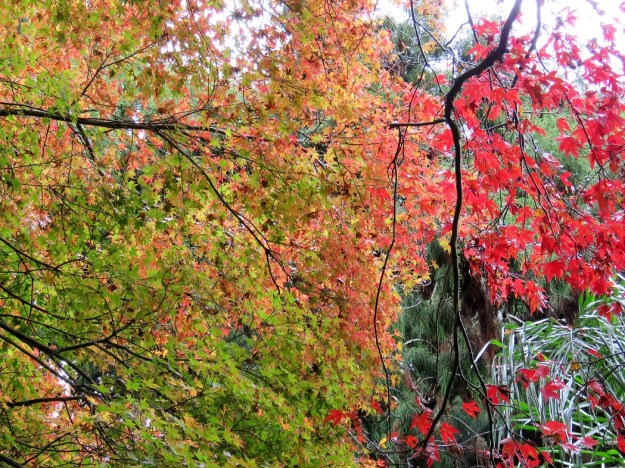
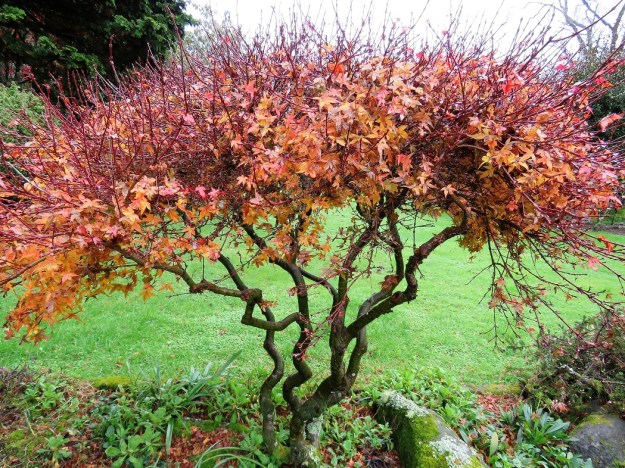
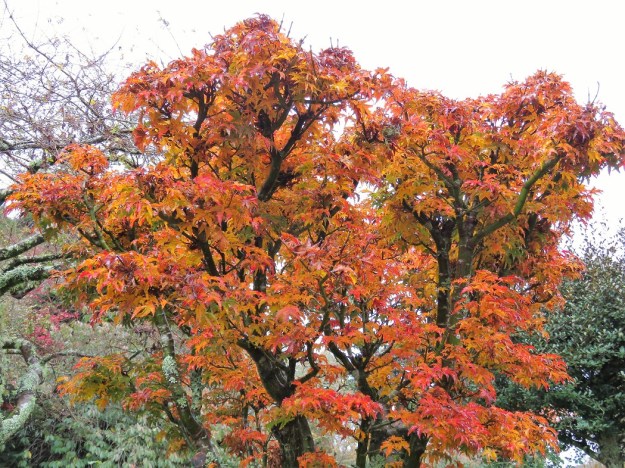 But as late autumn draws in, the orange outside is very cheering. On Monday, I thought I must get out and photograph the dwarf Japanese maple that turns its raiment from modest green to blazing orange as winter approaches.
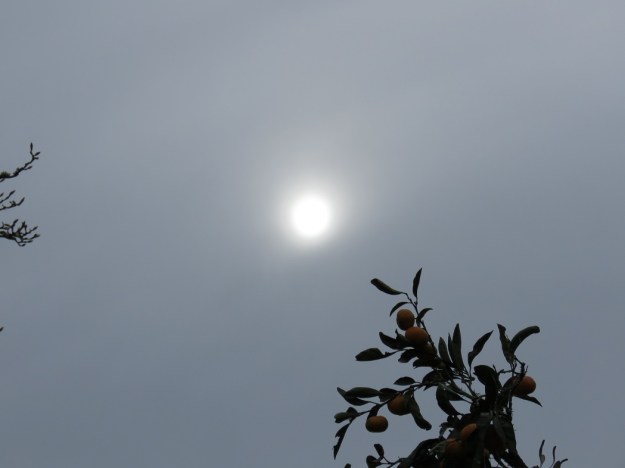 The day was grey with the sun attempting to break through, a light so unusual here that I also photographed it. I have only been to the UK once in December and I remember a similar light on the day we visited the Russell Page garden at Leeds Castle. The difference is that here, the sun did indeed come out and shine brightly – if intermittently – as the day progressed while my UK family said that was as good as it got there, closing in on the shortest day.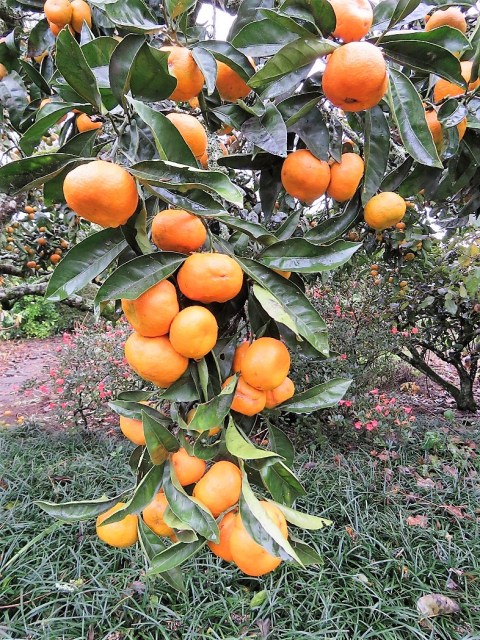
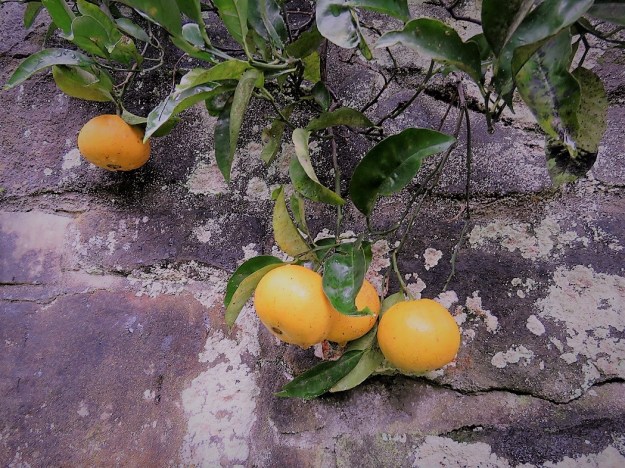 I became entirely focused on orange. Mind you, it is hard to ignore it as the citrus trees flaunt their wares. We are blessed to have a climate where we can grow citrus and also to have inherited a garden where the trees have large been included in the wider garden, rather than confined to an orchard situation. Citrus are both decorative and functional. I once wrote a fairly lengthy piece on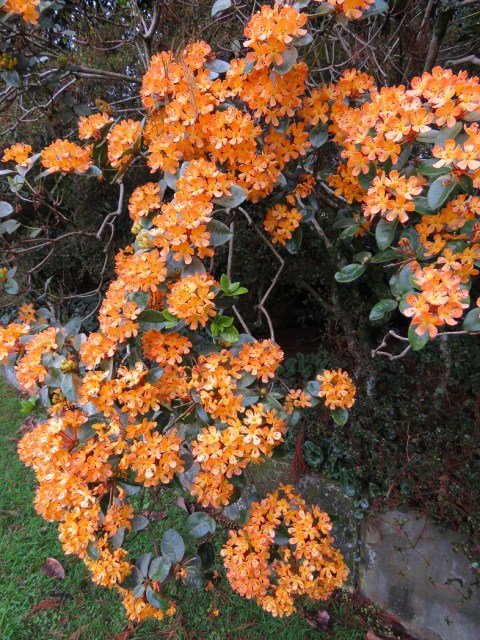
 Tikorangi The Jury Garden