
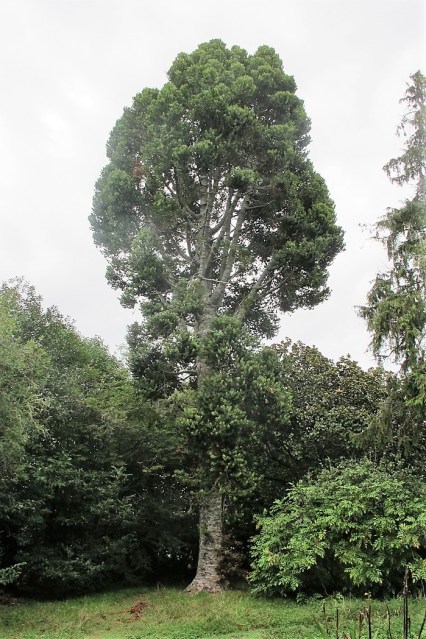
The kauri in our park – a high value native tree beyond reproach but it has taken over 60 years to get this size and is not suitable for most urban settings
I can’t tell you how irritated I get by this sentiment and I have seen it trotted out on several occasions recently. I get irritated because it rarely reflects a thoughtful position. And when you drill down, it only applies to trees. The speaker is just as likely to be drinking tea, coffee or wine – all from imported plant material. Indeed almost 100% of food we eat in this country comes from imported plants originally, even if it is now grown in the backyard. All our fruit, all our vegetables. All our meat is raised on pasture that is comprised of exotic grasses. Our grains are all imported species, as are our grazing animals. Even the dominant earthworms include many foreigners.
The vast majority of flowers that adorn our gardens or we buy to bring indoors to beautify our environment are of foreign origin. Our forestry industry is built on imported plant species.
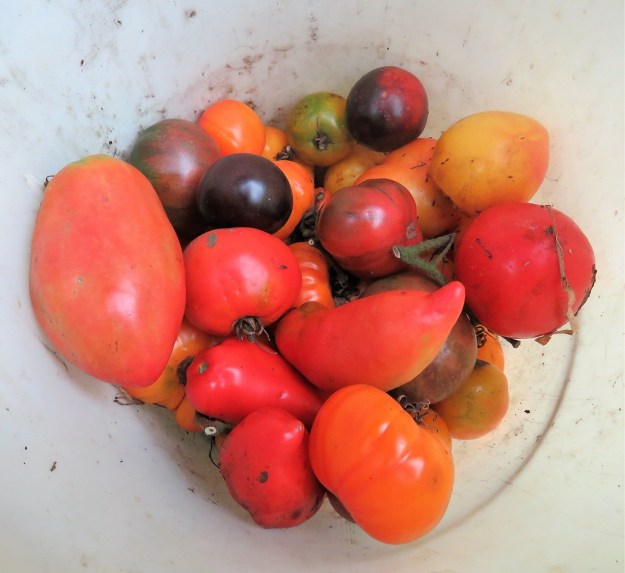
All our foods have been imported at some stage of our history. Mark grew a fine range of tomatoes this season – selections from around the world
Most of us live in very heavily modified environments and lead lives that would be totally unsustainable without imported plant material. This is not to say that we should not value and defend the very few pockets of land which remain with vestiges of original vegetation. These are of high value and we should be trying to protect, extend and restore these. But your suburban street, small holding or farm is never going to achieve native plant purity. And only planting dwarf fruit trees is not going to do anything to modify climate change or produce much of the oxygen that we breathe.
Alas, we are also a nation that, in the main, does not value trees and is ready to fell them at the first opportunity. “It is not a native,” is the justification often put up by the chainsaw brigade. (Or, if it is a pohutukawa, “it is a weed”!) That does not mean it is expendable and of no value. The world has even more beautiful trees than delicious food crops. And it takes a lot longer to grow a mature tree than a lettuce or basil plant. Some of those trees will adapt and grow in conditions where few of our native varieties will survive. Most of our native trees evolved in a forested environment, used to growing in company. There are not that many that will adapt to being single specimens or even a row of trees on an exposed coastline or a windswept road verge.
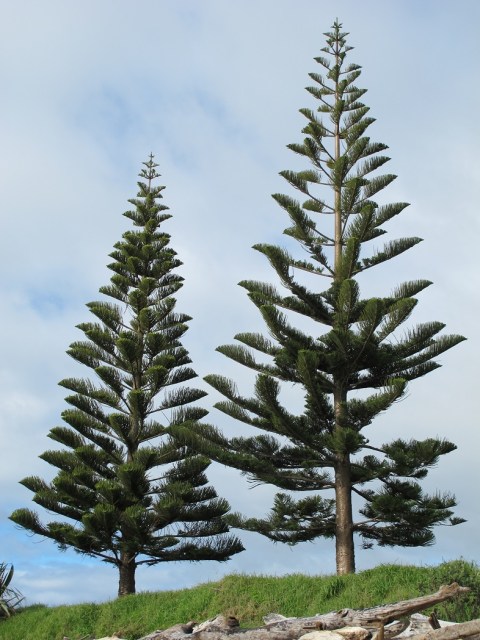
The much maligned and derided Norfolk Island pine
Particular contempt is often reserved for the Norfolk Island pine which does very well in many parts of New Zealand, looking handsome and healthy, even on exposed coastlines. Stop and think for a moment, before you reach for the chainsaw with contemptuous dismissal of this tree. It comes from the same plant family as our native kauri. It also originates on Norfolk Island which is about as close as any ‘foreign’ land gets to us.
A variation on this line is “I only grow plants that are native or edible”. Oh, okay. All of the above arguments apply. It is fine for you to declare that you only want a garden where every plant is either native or edible. Just don’t espouse this viewpoint as though it is the higher moral ground because it is actually quite a naïve position. Lawn and grass should of course be banned in such a garden, unless you are going to locate and harvest one of our native grasses.
What the world needs is more trees to purify the air, to provide oxygen, to enhance eco systems and the environment, to slow down erosion and to modify climate change. I understand that some people do not see any aesthetic value in trees. I don’t agree with that view but I see evidence of it so I must acknowledge that not everybody sees big trees as being something of beauty. But it is no accident that wealthy areas of cities are often referred to as ‘leafy suburbs’. Pretty much without exception, they have established trees to soften the hard concrete and sealed urban landscape. There are not many New Zealand native trees that will tolerate, let alone thrive in the harsh, urban landscape. Rule out exotic trees and all we will have in cities are nikau palms, kowhai and pohutukawa in northern areas.
The problem with trees is that they take 20 years to get established and upwards of forty to start reaching maturity. Yet they can be felled in minutes. But, still many argue, if they are not native, they are of no intrinsic value.
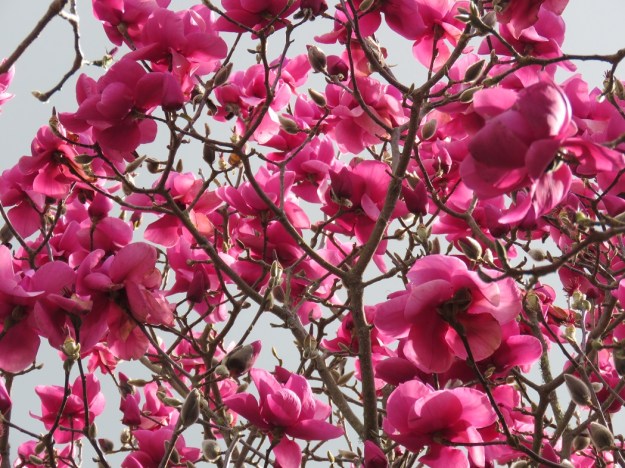
A life without magnolias would be unthinkable for us, but they are anything but native
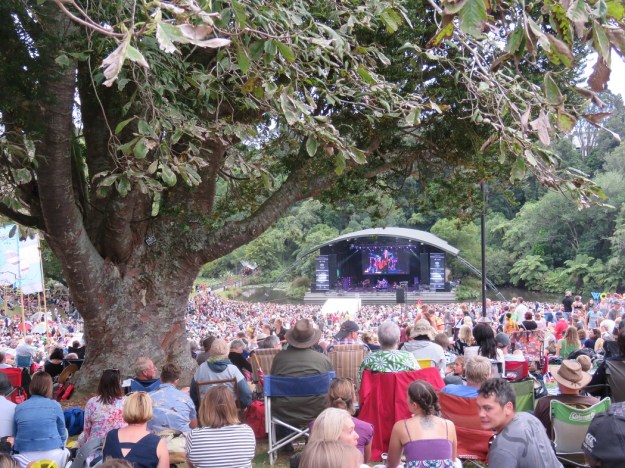
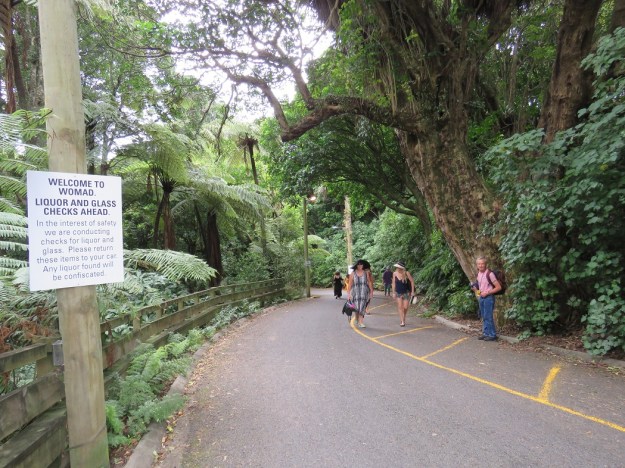 The entrances alone set the scene. That is Mark in the coral pink tee shirt, standing by George’s tree. I wrote a
 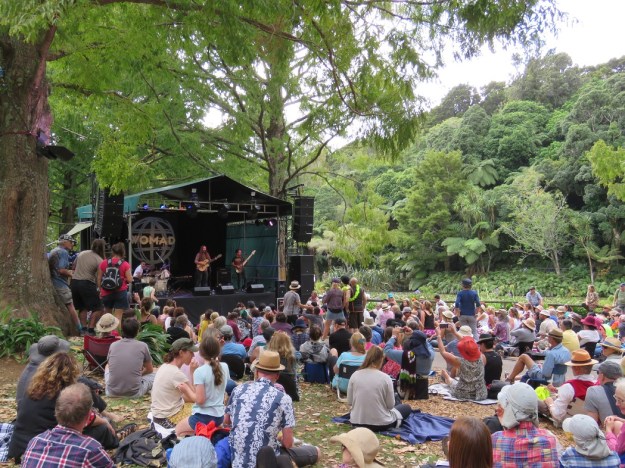 The entire WOMAD festival takes place within the embrace of trees. I particularly like the small Dell Stage for its intimacy and charm.
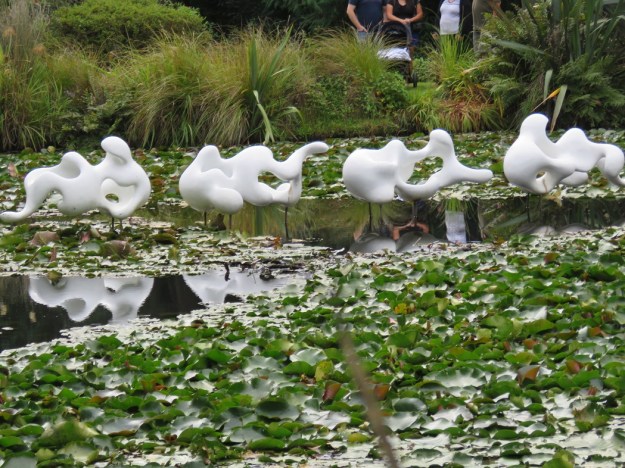 Adjacent to The Dell is this lily pond. It is a good exercise in knowing your water lilies. Some lilies S P R E A D to take up all the water, which rather defeats the reflective qualities. If you plan on growing a few water lilies at home, my advice is not to plant these overly strong triffids but to seek out smaller growing, named varieties which may be less inclined to stage a takeover bid. There are easier maintenance tasks than thinning water lilies.
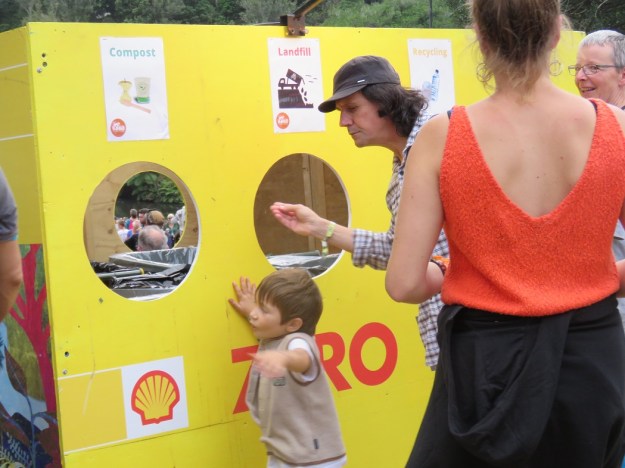 One of the other aspects of our WOMAD that really impresses me is the zero waste priority. Unlike most events that attract thousands of people, WOMAD is simply remarkable for its total absence of rubbish on the ground and the use of compostable or reusable serving dishes and drinking vessels. It is proof that with a good set-up and plenty of good management, litter and plastic waste can be eliminated.
 “Daisy, Daisy, give me your answer do
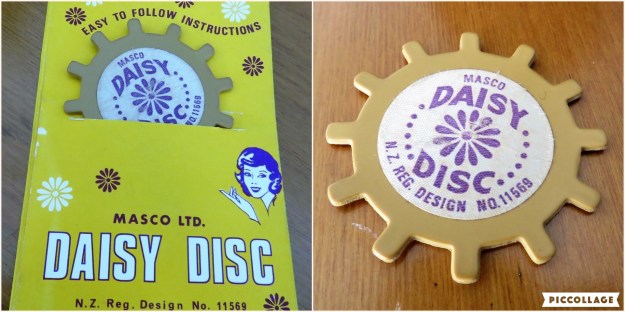 In sorting out my haberdashery – in other words, reorganising my sewing desk – I came across this delight, the Daisy Disc. I can’t recall having noticed this before so it must date back to my very late mother-in-law whose sewing desk I inherited. I see it has the price of 30c on it, so I can date it to post July 10, 1967 when New Zealand swapped to decimal currency. It was the instruction folder that delighted me, with its pictures of projects and the following bold statement:
 The instructions are something else. Step one was fine – wind the wool 2 or 3 times around opposite spokes in turn. But then we come to the second step:
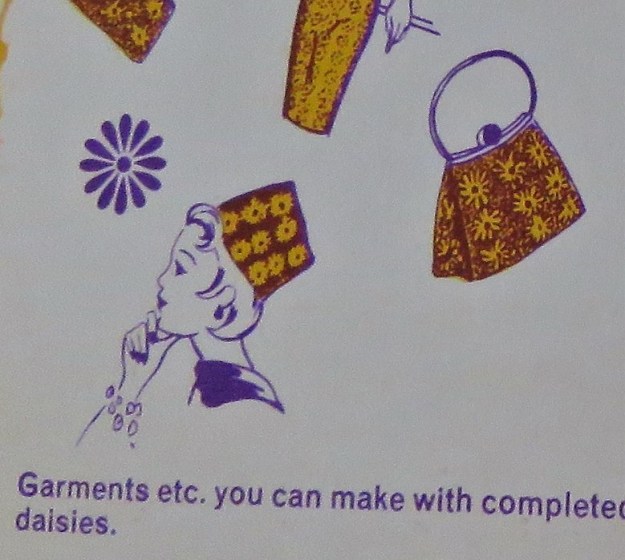 I looked at the suggested projects for our daisy motifs and I was struggling to find a clear winner. Would it be the wildly impractical baby blanket, the adorned evening shoe or the daisy earrings? But then I spotted the fez-style hat. Ladies and gents, that must be the clear winner.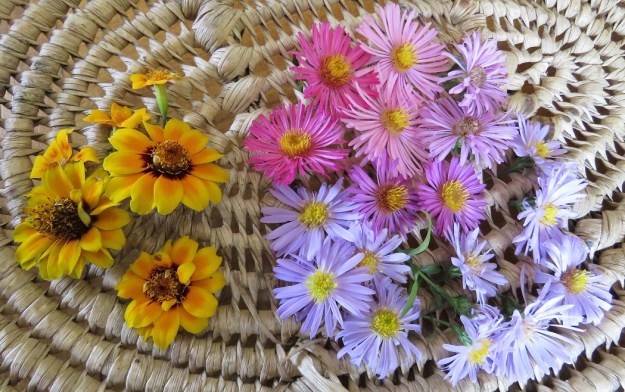
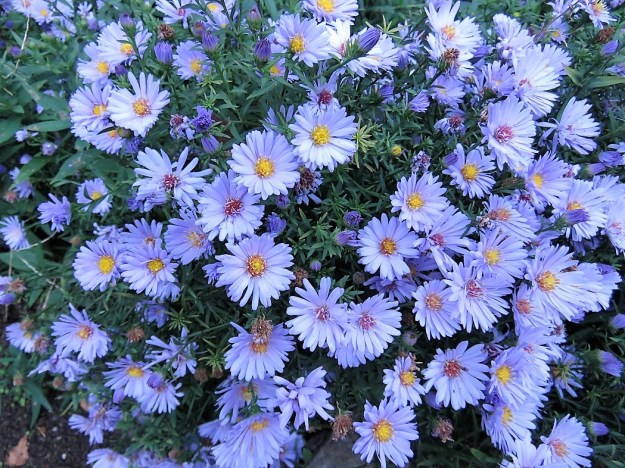
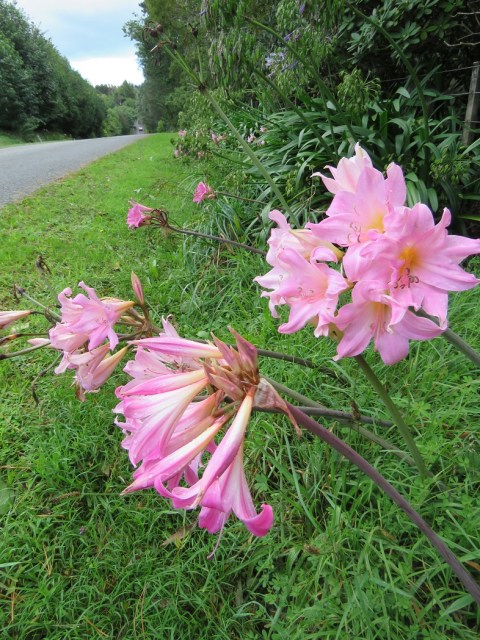
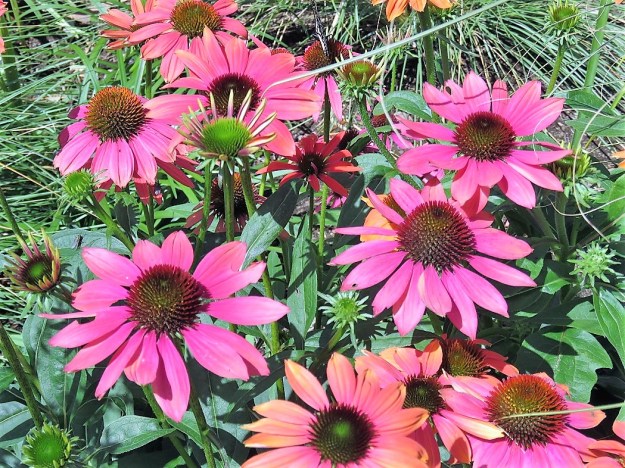 I went looking for daisies in the garden to illustrate this post but came up rather short. I did not go far enough, I tell you. I should have done some googling first. Their family of Asteraceae is huge. Not just the obvious asters which are so pretty in flower at this time of early autumn, but also cosmos, tagetes (marigolds), sunflowers, echinacea, rudbeckia, even dahlias. I was sad that one of our largest and showiest daisy plants, the spectacular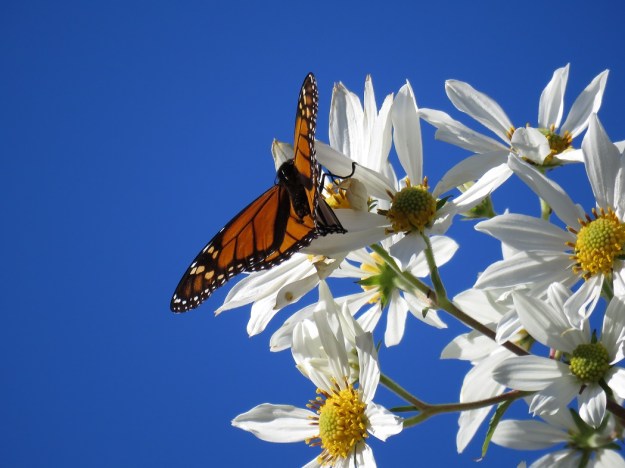



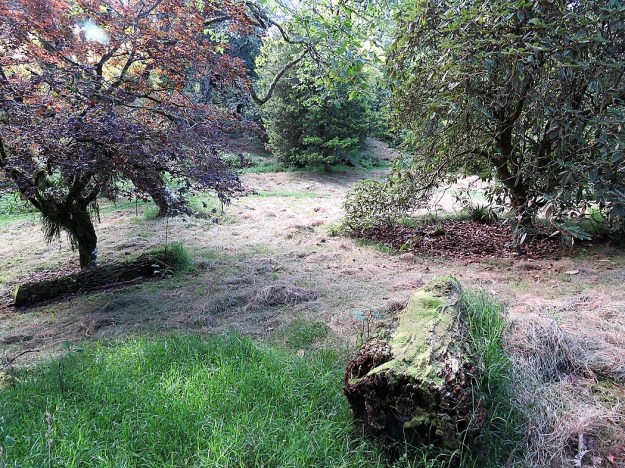 We have mown the meadow for the season. Well, Lloyd has. With our special sickle bar mower, imported from Germany. We are still learning how to best manage the meadow in our conditions and Mark thinks that we are leaving the mowing too late and that it would be best done soon after Christmas for the first mow with a follow up in autumn. Maybe next year.

 Tikorangi The Jury Garden