
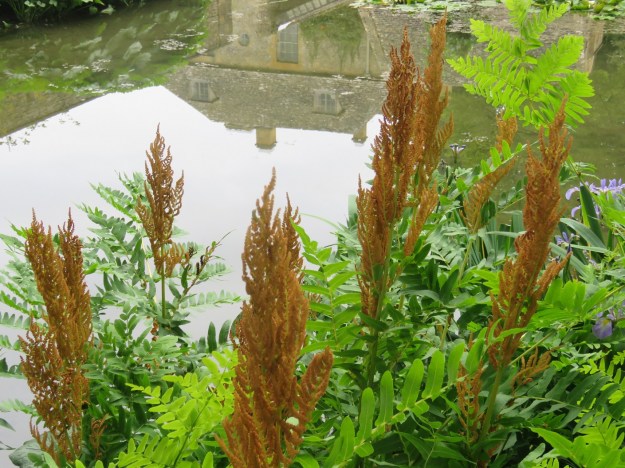
The elliptical pool reflecting the house
Is there such a thing as a perfect garden? I would have said no until we visited a private garden in a little village in the Cotswolds. It was as close to perfect as I have seen.
Let me explain what I mean when I say perfect, by starting with what I don’t mean. I don’t mean it is the best garden that I have ever seen or the most exciting one – we don’t rank gardens like that. Nor that it is static and frozen in time. It is anything but. What I mean is that on the day we visited, it was a garden in perfect harmony where all the elements came together at the same time.
I would list those elements as:
- the owners’ expectations, wishes and lifestyle
- the designer and his design within the particular location
- the plantings
- use of colour
- the hard landscaping
- the underpinning infrastructure,
- the maintenance of the garden
- and the incidents of surprise and delight.
All these elements were in balance, to an extent that I have not seen before. There were no jarring notes.
The designer is Dan Pearson, a gentle tour de force in the contemporary gardening scene. He has a strong focus on enhancing nature by working with it, bringing a naturalistic philosophy to his gardens.
 To set the scene, from memory the owners told us it is an acre in size. It is flat and Pearson took it back almost to a blank canvas. With the typical Cotswold two-storeyed cottage in the local golden stone being on the road side of the site, the body of the garden has four distinct sections, three of which feature water. The first is by a charming stream boundary and centres on a large elliptical pool with restrained plantings. The second is a formal garden built around a canal, with a dining area closest to the house. The third is the most spacious and contains a swimming pool. It was apparently the first garden Pearson had done that included a swimming pool and he was not keen. I can understand why. Pools are awfully difficult to integrate without turning it into the Miami look. But this pool was beautifully executed, though that is easier when you don’t have our laws requiring childproof fencing close in on all swimming pools.
The fourth area contains contemporary block plantings adjacent to another outdoor entertaining area.
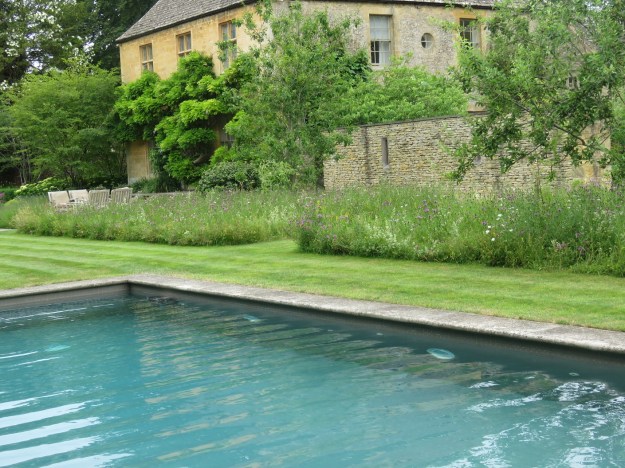
The swimming pool and meadows
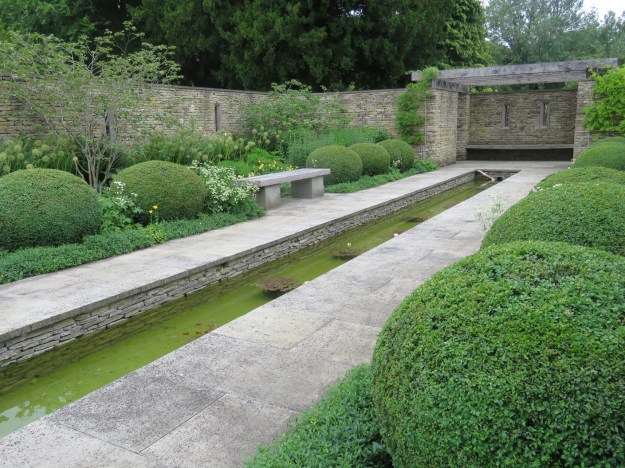
The canal garden
There is a feeling of timelessness, particularly in the canal garden, that I attribute to the proportions the designer has brought to the space. We had been thinking about issues of space, proportions and symmetry in Italy the week before. It is those which make classic Italian gardens classic. Looking at it in a much smaller-scale domestic garden reinforced the view that this is what you can get if you choose the right designer. The key word is “can”. It is not guaranteed from all designers but I will say that it is even rarer to see an amateur gardener achieve this. That confident use of space and proportion underpins everything but done really well, it is not obvious.
 What I call the ‘hidden infrastructure’ of the garden is well camouflaged to the point where it was not apparent at all. Again, attention to detail is paramount. There is no pond lining visible on the elliptical pool. I asked and the pool is made the old fashioned way, presumably with clay lining to remove the need for an unsightly pool liner. I did not spot a single skerrick of plastic anywhere in the garden. No cheap solar powered lights either. There were no visible hoses hanging about, no clumsy afterthoughts of garden edgings. The swimming pool filter was housed out of sight. The motorised pool cover was near to silent and the wiring was hidden. The compost bins and inevitable wheelie bins were discreetly housed. Everything had been thought of. We fall well short of that in our own garden but we admire the impressive attention to detail.


Look at the attention to detail on the dry stone walls
The visible infrastructure – more commonly called the hard landscaping – was beautifully executed to the highest of standards. Just look at the wonderful oak-framed arrow slits in the new stone wall.
The maintenance of the garden was unobtrusive but immaculate. Britain has a long, enviable tradition of training professional gardeners. Not for them the experience of the self-claimed garden maintenance contractors. An Auckland friend ruefully noted recently that “The woman doing my “gardening” was moved to “prune” my daphne last month. I will have a daphne-free winter.” These are high level skills that keep this Cotswold garden in peak condition and true to the original vision while meeting the owners’ expectations. There is a wonderful eye for detail and a sure hand in knowing what to leave and what to ‘edit’, as is said in modern parlance.

Roseraie de l’Hay, I think
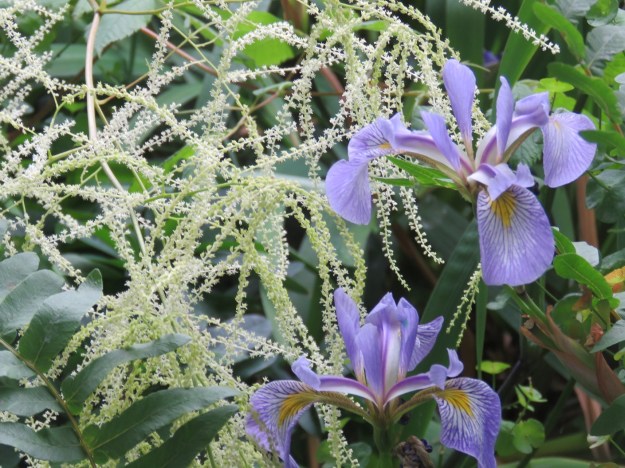
The plantings were botanically varied but more restrained than the current UK fashion for large and vibrant perennials in ever more shocking colour combinations – and probably easier to live with for that. But I appreciated the unexpectedness of colour – the bright golden aquilegias and the yellow Clematis tangutica, the latter combined with red crocosmia. A less bold planting would have gone for the safe but cliched option of the white rugosa, Rosa Blanc Double de Coubert, rather than the bold, deep cerise of what I assume is Roseraie de l’Hay.
This is a garden of charm, restraint and timeless elegance. It has the good bones that may allow it to endure down the decades. On the day, for us, it was simply a delight of gardening perfection.
Again, I have posted an additional album of photos on Facebook for those who would like to see more pictures around the garden.
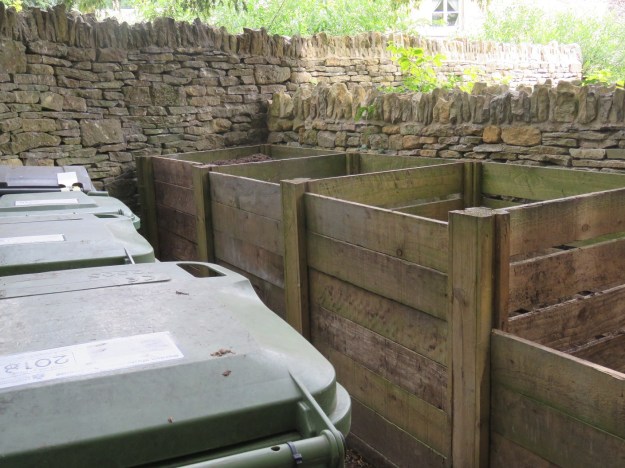
Even the wheelie bins and compost bins were screened from view by dry stone walls.
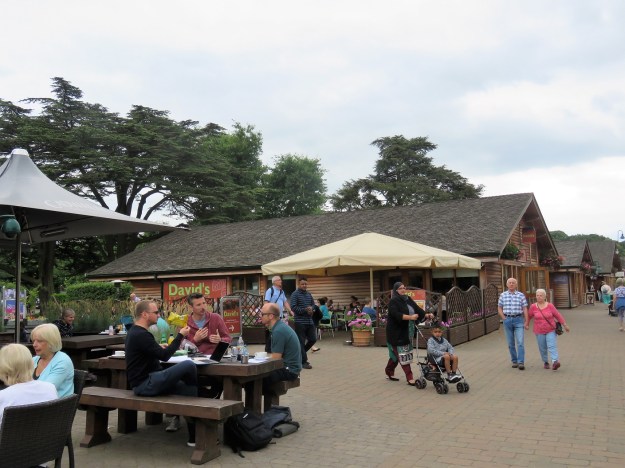
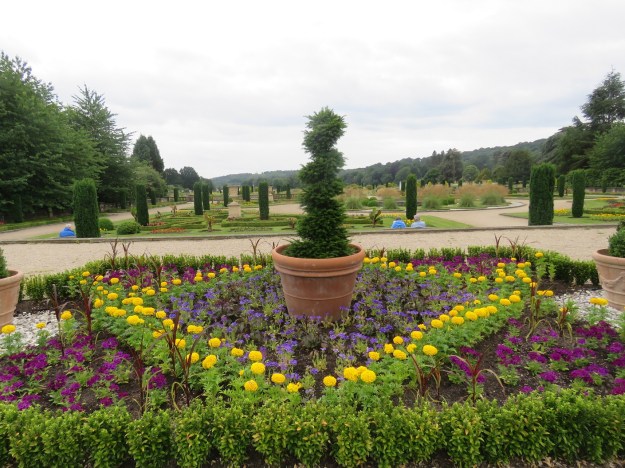
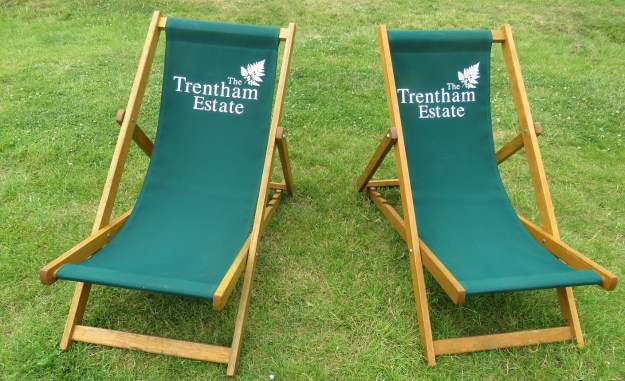 Trentham Gardens shows that it can get pretty close to being all things to all people. Even on a cool, grey Monday afternoon, the place was humming. Mark and I have a running gag about the “sense of arrival” at gardens. One day I will explain the origin of our cynicism about this but we worked out long ago that the greatest “sense of arrival” is a full carpark. And on this Monday afternoon, I photographed our rental car so we could find it again later. As an aside, you can have any colour of car you like in Britain, as long as it is black or grey. And one grey rental car looks pretty much like 80% of the other cars.
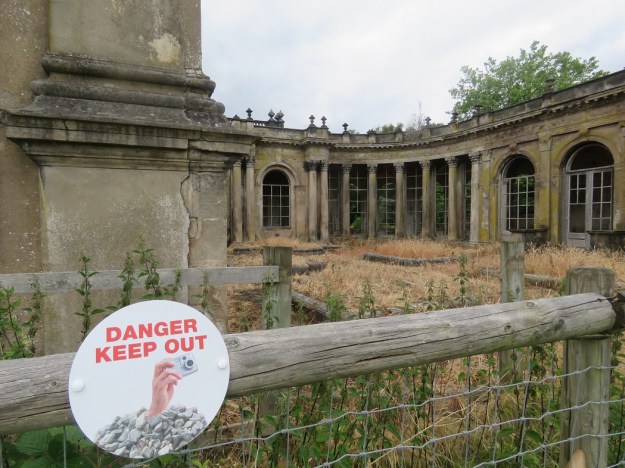
 Those plans included extensive gardens, monkeys, a luxury hotel on the site of the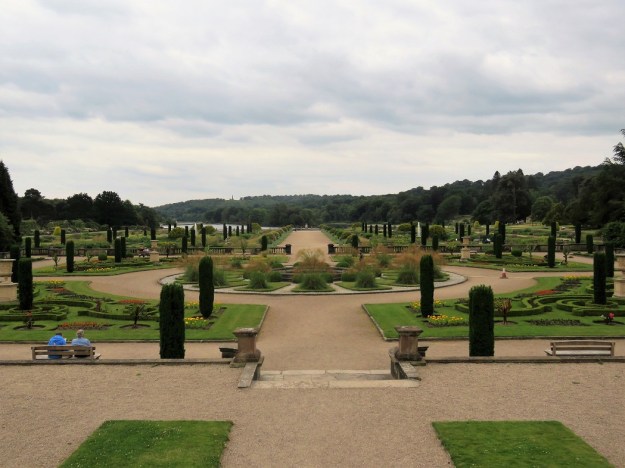
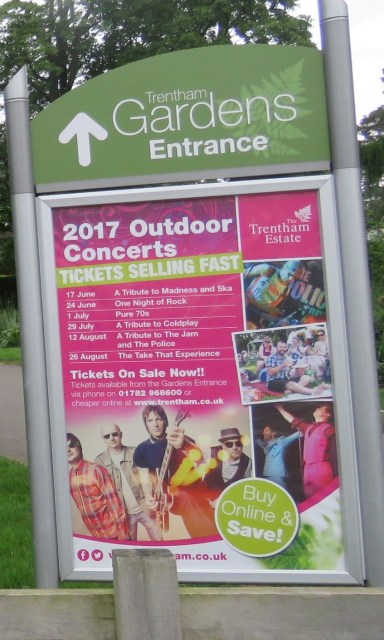 Postscript *I do not want to overstate the evening concerts. In fact I looked at the programme boards and wondered if it was just the one contracted band in different guises. The amphitheatre stage was but modest. Maybe they are catering to a specific local demographic, this year at least? On our last visit we saw Hatfield House in London preparing for a major concert. U2? Or was it UB40? I have waited three years to use my photo of the portaloos at Hatfield. Trentham is not trying that scale of concert at this stage but give them time. I am sure they will be looking at it for feasibility and profitability.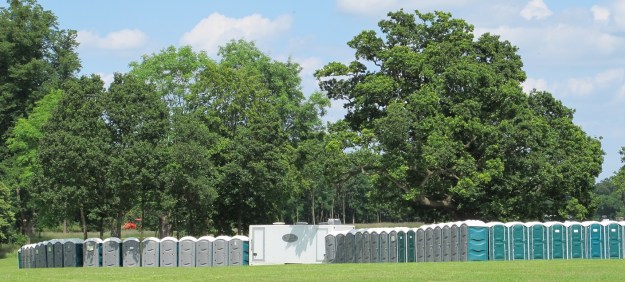








 From
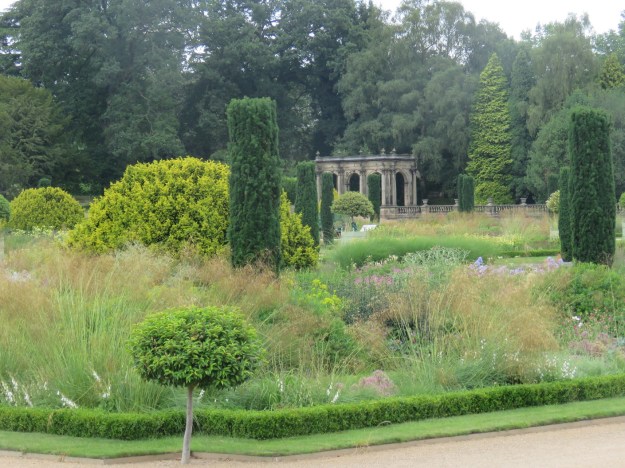
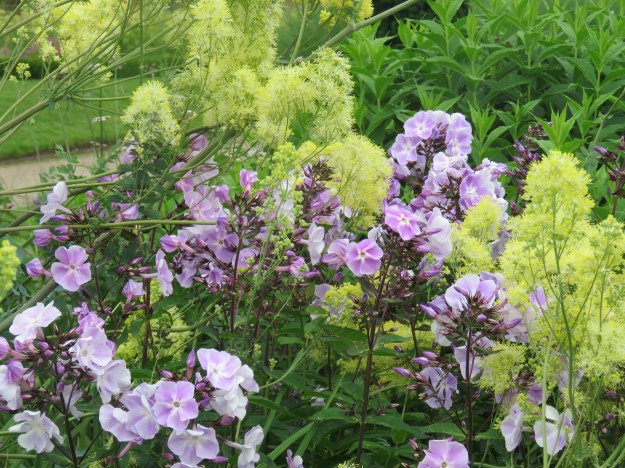
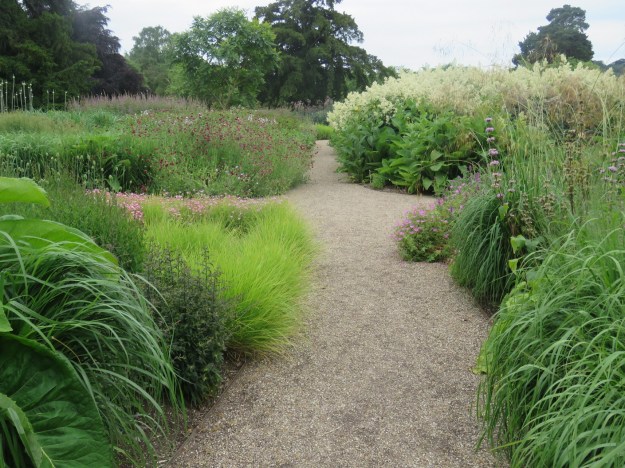
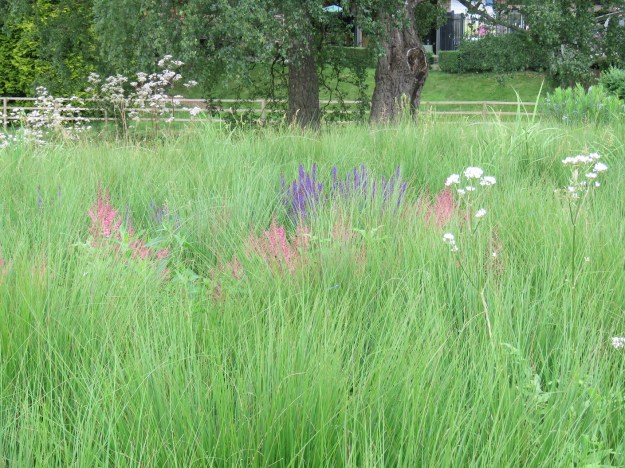
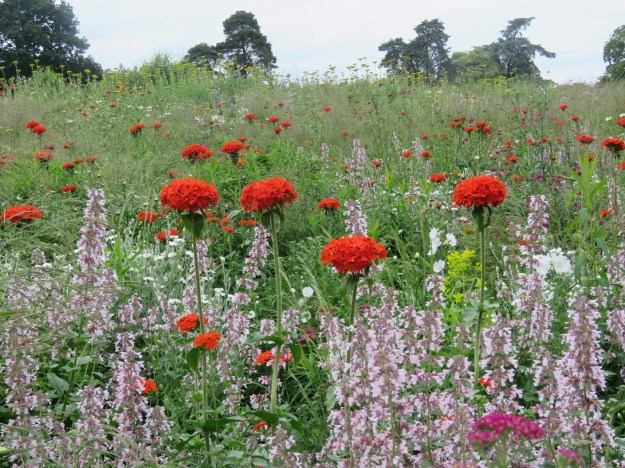
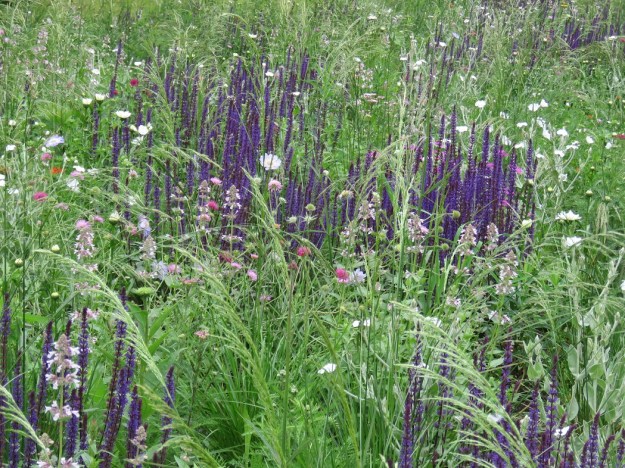
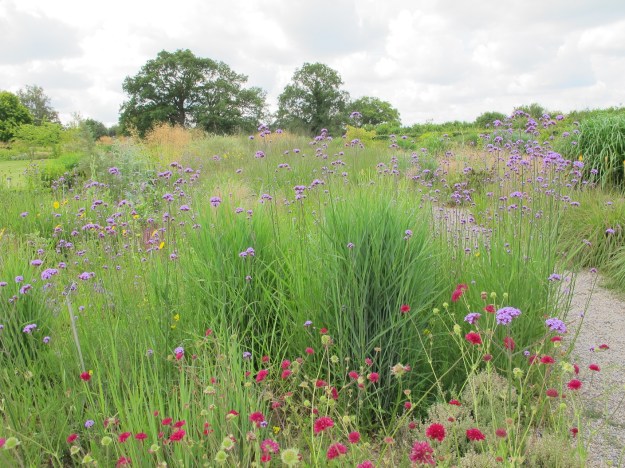
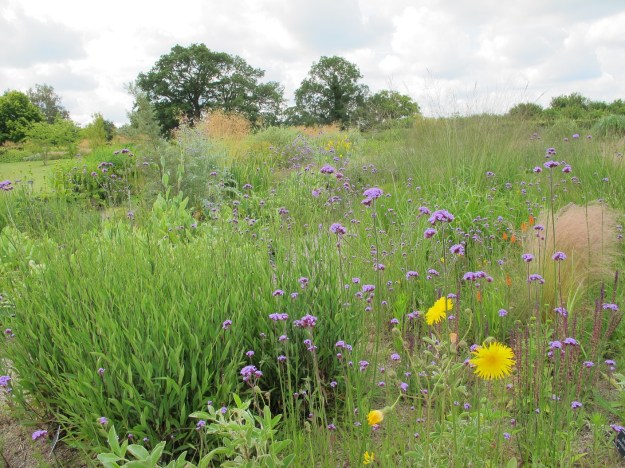
From 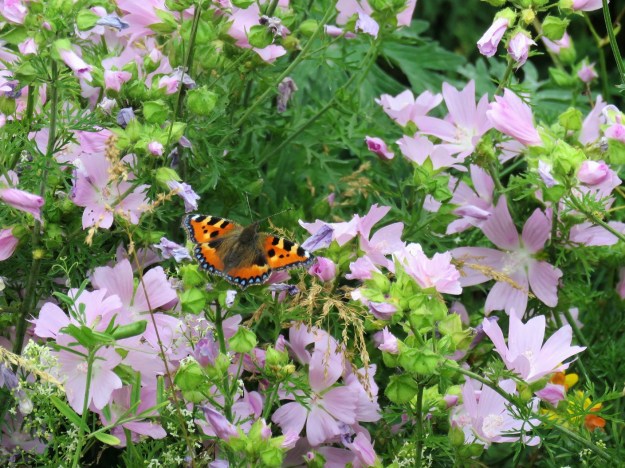 A prairie! Almost. Maybe. Though I admit I have never seen a genuine prairie. I think of early summer meadows as lush and green. These were more white and golden with a heavy population of grasses already in flower and seed and perennials that have naturalised within the environment. I bet a lot has been lost since 2012, but there are lessons to be learned in what can cope within this competitive environment. The charm within the detail was a delight.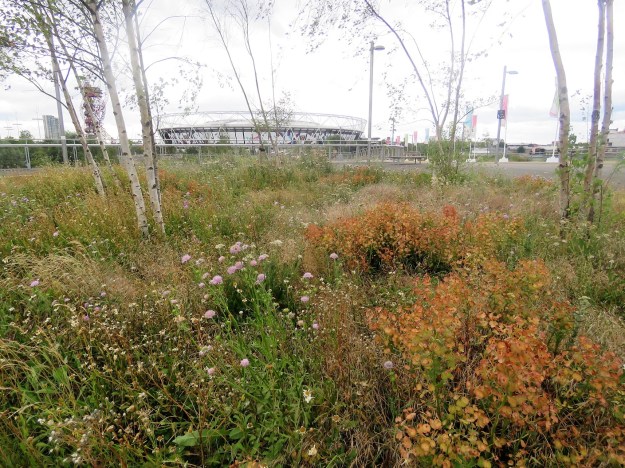

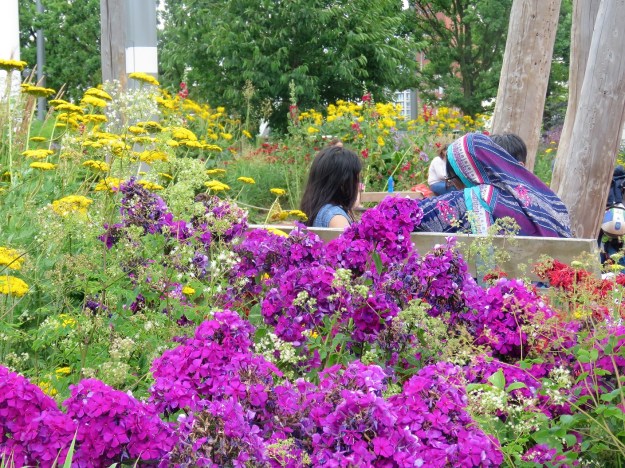
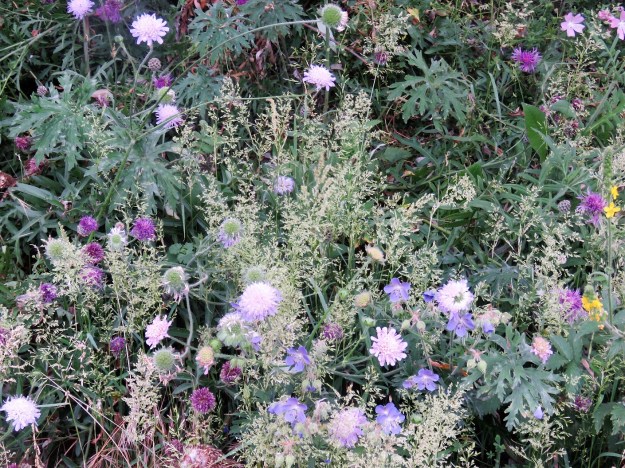 The work of the Sheffield School concentrates on environmentally friendly plantings which can be achieved for hugely lower costs than more traditional approaches. They are not alone in this position and the acceptance of the need to work with nature, not to bend it and control it to human will seems to be widespread in the UK. A friend tells me much of Regent’s Park is now wide mown paths through meadow land and we have seen similar changes within the Hampstead Heath green belt. There is much to learn for New Zealand but it will be a brave local council that leads the charge.
