
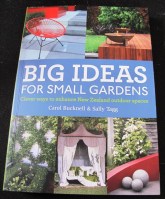
 While I am a big garden specialist, I recognise that the allotted outdoor space for most people is getting ever smaller and tiny urban sections, teensy courtyards or even a balcony is now the lot for many. This is an excellent book of ideas for those who want to make the most of turning small outdoor areas into attractive living spaces.
The photography was always going to be high quality because it is by Sally Tagg, one of our most professional garden photographers and stylists. Unlike their previous joint venture (Contemporary Gardens of New Zealand), all photographs are now fully captioned and the book has the usual good production values one expects from Penguin. There is a bit of contrived urban chic and big budget show-garden stuff going on, but not too much.
What sets this book apart is the sure hand of the author. She is a fund of information for the DIY enthusiast, rendering into simple language the strategies for gaining privacy, blurring the tight boundaries, avoiding an over-stuffed parlour outdoors, how much space you need around your outdoor dining setting, getting shelter, even managing an edible garden in a tight space. It is all about design principles relayed at a thoroughly practical, hands-on level. I was won over as soon as I read: “To create more unity, consider painting …. (pretty much all vertical surfaces) the same colour, or colour tones.” The italics are mine but that was a light bulb moment. Instead of the obvious technique of using one colour everywhere, the subtle change of tone can give complexity without clutter. There is plenty of that type of useful advice along with a wide range of different ideas.
The Plant Directory chapter is the weakest aspect of the book. Essentially, it contains lists of recommended plants which are random, decidedly eclectic and often best suited to gardens in the warmer north – Auckland, really. The author’s skills lie more in the design and planning stages than in the wider world of plants. Those 17 pages might have been more usefully given over to the conundrum of the washing line, the compost bin, hiding the wheelie bin and recycling bins, managing taps and hosepipes and general storage solutions. These mundane matters have to be accommodated in some manner and with good planning there must be ways to minimise the visual impact without sacrificing practicality. I felt it was a wasted opportunity because I suspect the author has more to suggest in this area than in plant lists.
Despite that reservation, this book as a really useful resource for people struggling with ideas on how best to utilise small spaces to create something both practical and aesthetically pleasing, life-enhancing even.
Big Ideas for Small Gardens – Clever ways to enhance New Zealand outdoor spaces by Carol Bucknell, photography by Sally Tagg (Penguin; ISBN: 978 0 143 56884 1).
First published by Waikato Times and reprinted here with their permission.
 Twenty three gardens by twenty one New Zealand designers – this book has certainly prompted a great deal of discussion here over the past couple of weeks. There is a heavy bias towards high budget properties with stunning views in or around Auckland, often with hard-edged modern, architecturally designed houses. The response is dominated by hard edged, angular gardens, pared back planting schemes largely stripped of colour and heavily dominated by native plants. Water features and swimming pools abound, usually with wet edges of the infinity style (so that the body of water melds into the sky or sea in front) and sometimes with the water lapping at the walls of the house. Generally, there is little evidence that the property owners want to garden themselves. Most want an exterior which will complement their homes, their lifestyle and, apparently, the environmental context of the property.
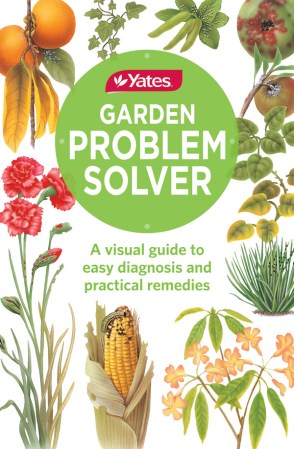 This is a handy reference book for diagnosing many common problems in the garden, predominantly of the pest or disease variety. It is reasonably comprehensive though not encyclopaedic. Each ailment is given a brief description, usually with a clear illustration, and then advice for dealing with it or avoiding the problem happening again. I like the fact the illustrations are paintings, not photographs because it gives a much clearer picture. I also like the fact that not every recommended treatment involves buying a Yates product. So when spinach bolts to seed prematurely, the advice is that this can be caused by long days, summer temperatures, dry conditions and overcrowding. Sow summer spinach (well, ‘Summer Supreme’ actually – presumably one of Yates’ own). There is a fair amount of handy general information which is not commercially driven, though the organic section is pretty perfunctory. That said, we are talking an interventionist approach to gardening and where products are recommended, they are branded Yates products – it is their book after all. We double checked the ingredients of branded sprays and the in-house expert here gave the advice a general thumbs up for accuracy. I am a bit suspect about spraying cheap annuals like pansies and hollyhocks. I am more of the view that you rip out diseased plants and try a different strategy with replacements but if you are an older style gardener who reaches for the sprayer at the drop of a hat, at least you will have a diagnosis and know which spray to use.
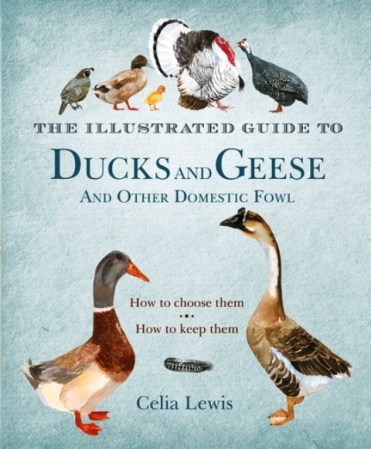 This is intended as a reference book but is actually the most delightful coffee table book I have seen in a while, even for people who have no plans to raise ducks, geese, guineafowl, peafowl, quail or turkeys on their piece of land. That is because all the illustrations, of which there are a generous number, are charming watercolour paintings, many of which might be lovely framed on the wall. One could describe them as the avian equivalent of botanical art in that they aim for accuracy.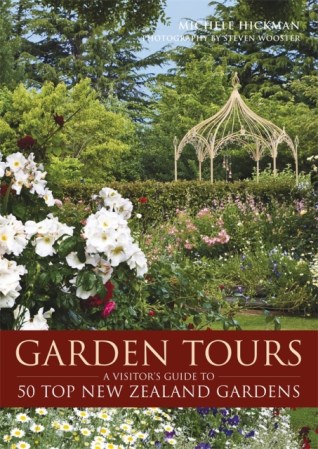
 Tikorangi The Jury Garden