Category Archives: Garden lore

Wisdom and hints

Garden Lore

“It is unchristian to hedge from the sight of others the beauties of nature which it has been our good fortune to create or secure.”

Frank J Scott The Art of Beautifying Suburban Home Grounds (1870).
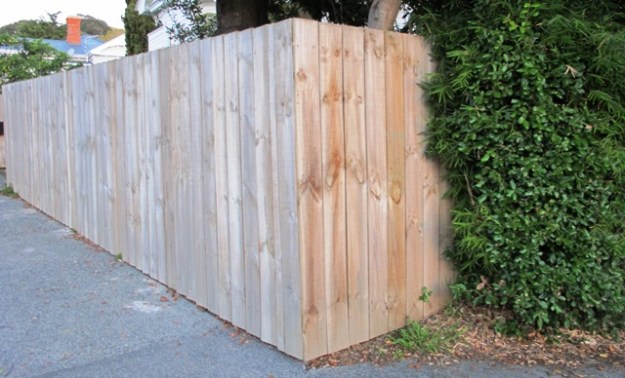
The brutality of the utility wooden fence

The brutality of the utility wooden fence

Wooden fences

I spent the weekend in Mount Eden in Auckland where walking the streets offers a study in hostile fencing. There is a bigger story in fencing, now that I am getting my eye in for it but I couldn’t help but notice how little it takes to turn a large wooden affair into something more pleasing than a utility, gang house-styled barricade. It seems quite remarkable that people who own a million dollar house see nothing wrong with a basic tanalised board construction of zero aesthetic merit. If you feel the need to erect a solid barrier between your home and the riff raff who pass by on the footpath, a little thought can make a big difference.

A little detailing can make a huge difference

A little detailing can make a huge difference

Incorporating the vertical supports as part of the fence breaks up the expanse of wall into separate panels. Topping the verticals with a simple finial – or abacus to go to classic terms – adds little to the expense but a lot to the design. A horizontal baseboard is both practical and adds a little finishing detail. Narrow palings generally look classier than wide ones. An unobtrusive colour in charcoal or dark grey tones mutes the impact further. It is attention that detail that counts.
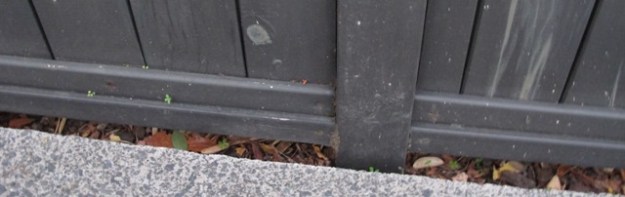
Simple base boards add a finishing touch

Simple base boards add a finishing touch

First published in the Waikato Times and reprinted here with their permission.
Garden Lore

“America owes its 200 million starlings to the American Acclimatization Society which, under the chairmanship of New York pharmacist Eugene Schieffelin (eccentric or nutcase depending on your opinion), set out to introduce to America every bird species mentioned in the plays of Shakespeare. Shakespeare makes about 600 mentions of 50 different birds in his plays…. and starlings appear only once, in Henry IV, Part 1…. but it was enough to get 100 starlings released in Central Park, and the rest, as they say, is history.”

Ken Thompson Where Do Camels Belong? (2014)

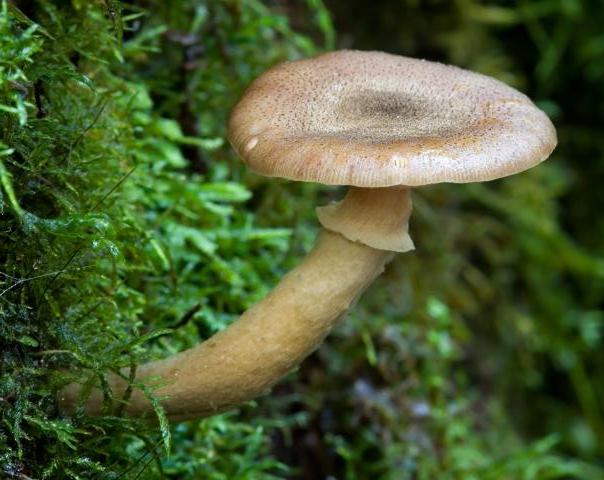
Armillaria hinnulea - one of three species we have in NZ (photo Wiki Commons)

Armillaria hinnulea – one of three species we have in NZ (photo Wiki Commons)

Garden lore: armillaria

In last week’s column, I said that few fungi will kill their host. Unfortunately one that can and does is the pesky armillaria. Generally this starts on dead wood but has an alarming capacity to spread below ground and take hold on perfectly good, growing plants. Armillaria is the main problem with cutting off woody plants and leaving the stump and roots where they are in the ground. If this fungus turns up as part of the decomposition process, you run the risk of it attacking the healthy plants around and once it has taken hold, you usually have to let it run its course over the next few years. It has been a significant problem in kiwifruit orchards where internal shelter has been taken out and stumps left behind.

Sometimes it is possible to get a stump grinder in or to manually dig out stumps. In other situations, we have to risk it and leave stumps to rot naturally. We appear to have three different types of armillaria in this country. These mushrooms develop a distinctive skirt on their stems below their caps, but by the time you identify that, the fungus has taken hold. The caps we see on top are little like the tip of the iceberg. It is the capacity to spread below ground that makes control very difficult, with long tenatacles called rhizomorphs. These are often described as looking like bootlaces, hence the term bootlace fungus. On the bright side, armillaria is apparently edible.

First published in the Waikato Times and reprinted here with their permission.
Garden Lore

“Did you ever meet a gardener, who, however fair his ground, was absolutely content and pleased?…Is there not always a tree to be felled or a bed to be turfed?…Is there not ever some grand mistake to be remedied next summer?”

The Rev Samuel Hole (1819-1904)

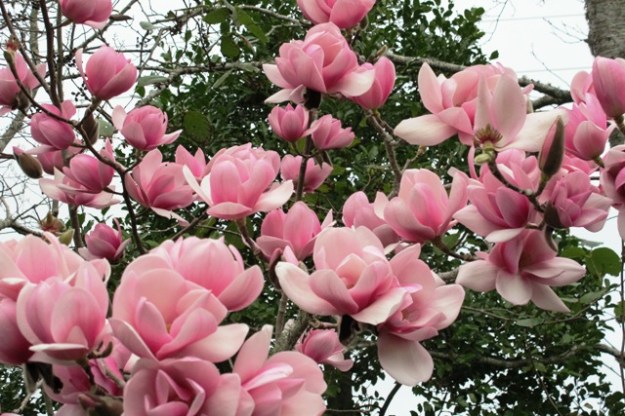
Magnolia Sweetheart (AGM)

Magnolia Sweetheart (AGM)

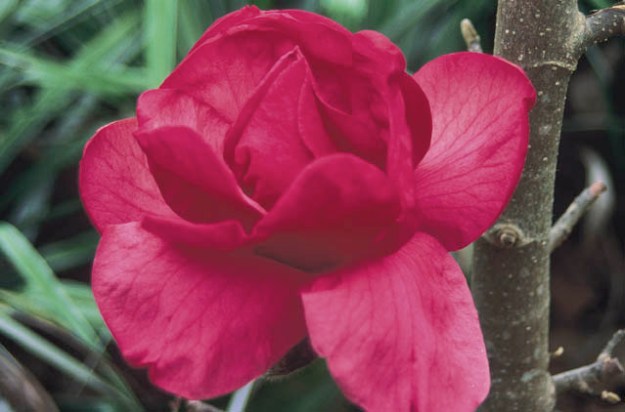
It was a nice surprise this week to discover that Britain’s Royal Horticulture Society has conferred an Award of Garden Merit (commonly called an AGM but not to be confused with annual general meetings) on our Magnolia Felix Jury. This is assessed on how it performs in UK conditions so it is not particularly relevant to NZ. Two of our flagship magnolias – Vulcan and Iolanthe – perform consistently well here but don’t like the cooler, greyer conditions over there. But any international recognition is gratifying.

Mark named the plant for his father, Felix, because it was what the latter had been aiming for in his magnolia breeding and it was only possible for Mark to achieve it by building on the work his father had already done. There are only four other NZ deciduous magnolias which carry an AGM. Athene and Milky Way are earlier hybrids from Felix Jury. Starwars was bred by the late Os Blumhardt in Whangarei and is still widely sold. We have seen it flowering in both Northern Italy and the UK and it looked better there than it does here, in our opinion. And finally, Sweetheart was raised by Peter Cave (formerly Cave’s Tree Nursery near Cambridge) and remains one of the prettiest small to medium-sized pink flowered magnolias that we know.

Magnolia Felix Jury (AGM)

Magnolia Felix Jury (AGM)

First published in the Waikato Times and reprinted here with their permission.
Garden Lore Friday 25 April, 2014

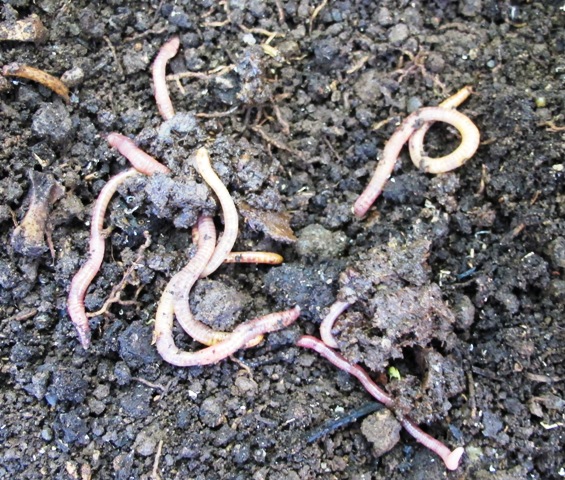
“It is something of an urban myth that a worm will be perfectly happy if you cut it in half. It may continue to wriggle for a while (so would you after you had been shot or stabbed) but it will die not long afterwards. Only if you nip off just a little of its tail end does it have the capacity to repair itself.”

The Curious Gardener’s Almanac by Niall Edworthy (2006)

048Garden Lore

Today’s Lore is brought to you from an intensely irritated husband here who despairs at the ongoing affectation of referring to “worm wees” and “worm poos”. We are not juveniles struggling with potty training though I guess we should perhaps be grateful that we have not yet descended so low as to talk about worm “number ones” and “number twos”. Worms do not urinate and defecate in the same way as humans. Perish the thought, we would not want to put our hands in the soil. What worms produce is correctly referred to as vermicasts or worm casts. They pass the soil and decaying vegetation through their gut and in so doing aerate the soil, create better drainage and make the nutrients more accessible to living plants. The resulting vermicasts are rich in accessible potassium, phosphorus and nitrogen. Can we cast out the baby talk now that we grown up gardeners? Please.

Sydney daughter lives in a local authority zone that, in return for attendance at a free half day course, supplies free of charge to inner city residents either a worm farm or a compost bin. The choice is dependent on what best suits the individual’s circumstances. It seems an innovative initiative to tackle the huge problem of urban household green waste. I have not heard of local authorities following suit in this country.

First published in the Waikato Times and reprinted here with their permission.
Garden Lore

“I like trees because they seem more resigned to the way they have to live than other things do.”

Willa Cather (1876-1947)

002 - Copy

Autumn harvest and freezing tomatoes

The autumn harvest is being wheeled into house by the barrow load at the moment. They are melons in the photo – both water and rock varieties. The annual challenge for Mark is to get good crops of both through and to this end he takes some care and plants several different varieties of each. This year we have a bumper crop – too many to eat and give away so we have gone to juicing them for lunchtime smoothies. I did worry this week that the current fad of mixed fresh fruit and vegetable smoothies may in fact be the hipster take on Complan, that powdered product that used to be fed to fading elderly folk with no teeth. My anxiety is that we may be on the cusp of moving way past hipster age and approaching the elderly door.

But about the tomatoes. Experienced preservers will have their own tried and true techniques. For novices, faced by a surplus of tasty toms, I offer my method. In a fair division of labour, Mark grows them, harvests them, washes them, cuts out the tough stem end and any bad bits and lays them in a single layer in baking dishes. They are fan baked for a couple of hours around 130C. I then take over, strain off much of the clear liquid which is very flavourful and excellent for creamy winter soups. This I decant to plastic bottles and freeze. I then pull all the skins off the baked tomatoes. It takes a fraction of the time to do it after cooking rather than before. I then pack to meal-sized containers and freeze them. That is it. I add any extra flavourings at the time I cook with them, not at the time of freezing. I know tinned tomatoes are cheap to buy, but the only dollar cost in freezing our own is running the oven. The time required in preparation is minimal and, given the choice, we prefer to know where our food came from.

First published in the Waikato Times and reprinted here with their permission.