Category Archives: Grow it yourself

Grow it Yourself: dwarf beans

Variously called dwarf, green or French beans, these are an easy and reliable summer crop for the home gardener, even more so if you are willing to plant in succession to ensure continued supply. They are a staple in our garden and kitchen. The first crop has been sown and we will continue to sow another double row every three weeks until the end of February.

We sow the bean seeds about 10cm apart, with side by side rows as close together as 20 to 25 cm. Cover with about 3cm of soil. They do not require staking or a frame to climb on. Beans are a reasonably hungry crop because they grow quickly with plenty of leafy growth. Being a legume, they do not require nitrogen but a mulch of compost feeds the soil and stops the roots from drying out. They may need watering in summer – excessive dryness will affect the crop quality and quantity. Pests and diseases are minor and rarely require attention. You can expect to start harvesting from about eight weeks onwards so a crop sown now will be ready for picking in early January.

The favoured varieties here are Top Crop and Chef’s Choice. We are not so keen on the butter beans but they are just as easy to grow. The attractive Borlotti Fire Tongue Beans have to be eaten very young or allowed to mature and used as dried beans. The stage in between is not so nice. There is some debate about whether green beans are safe to eat raw – we err on the conservative side and lightly blanch them.
Grow it Yourself: gherkins and cucumbers

Gherkins are a pickling cucumber. Cucumbers are actually a tropical plant so are not going to want to be planted out until temperatures have risen. By all means start them from seed now but keep the babies under cover for a few more weeks. But is it worth growing gherkins at home? Fresh, home pickled gherkins should always taste much better than those commercially produced but you have to be pretty passionate about them to want to grow them yourself. Just don’t make the mistake of thinking you will put in one plant because then you will get a few baby gherkins every few days whereas what you want is plenty of them all at once so you can start the pickling process. You probably need about five plants, each of which will take up a square metre, and then pull them out and compost them as soon as you have harvested sufficient quantities.

All the cucurbits are gross feeders (hungry plants) so they need rich, fertile soil in full sun with plenty of depth to get their roots well down. They also need plenty of water during the heat of summer but as they are prone to mildew and all sorts of nasty diseases including Fusarium wilt, you are best to direct water to the root zone and avoid wetting the foliage. Keep the sprinkler well away. You can train the runners over a frame or structure to reduce the amount of ground space required or you can just leave them to sprawl over the ground like pumpkins. Personally, I think it is worth making more effort with a few cucumber plants which will gently crop from January to early April, when salad veg are most in demand. I am particularly keen on the little Lebanese cucumber. But then I would say that because we have neighbours who adore pickled gherkins. We make land available, they grow them and pickle them and give us a jar or two.

Grow it Yourself – beetroot

Beetroot is enjoying something of a renaissance these days. It has gone beyond the large tinned slices which made sandwiches and hamburgers soggy, as it has progressed past being grated and set in vinegar flavoured jelly. These days you are more likely to find baby beet, golf ball sized, served with fresh curd cheese and toasted fresh walnuts in upmarket lunch dishes or flavoured with balsamic vinegar and roasted. The good news is that it is a root crop which is dead easy to grow at home and fresh young beet will always taste sweeter and more delicious than woody old things you may have tried in the past.

Being a root crop, it likes well drained, friable soils which are not too rich in nitrogen. Usual practice is to sow it in a spot where you previously grew a green, leafy crop. The seed is usually sown directly into the ground. Cover them with about 2cm of soil. As they germinates, go through and thin the crop – these thinnings are delicious and often found in salad mixes. Essentially you want to reduce the crop to allow about 10cm spacings between each plant to give them room to develop the tubers. Do not expect good crops if you miss the thinning process. They take about two to three months to mature. This is not a time specific crop. You can sow any time between early spring to mid autumn (about September to April), though you may find the summer crops bolt to seed too readily, especially if the soils are dry. Chief Veg Grower here advises that he prefers to keep to spring and autumn sowing because there are plenty of other more time sensitive crops to fill the garden in summer. Root crops appreciate plenty of moisture to develop juicy roots. Left too long in the ground, they will become large, old and woody. It is better to harvest them, remove the leaves and store in cool conditions – this will probably have to be the fridge in summer. With the rise in popularity, there is now a whole range of different varieties available with variation in both shape and colour, even a cerise and white candy ringed version.

Grow It Yourself: Potatoes

The history of the potato is a remarkable one and surely warrants further exploration at a later date. But is it worth growing at home? If one potato is much the same as the next to you, then probably not, because they are so cheap to buy. But if you love your taties and can tell the difference between varieties, then of course you will be growing them. And the message from the Head Vegetable Grower here is that if you want new potatoes for Christmas dinner, you will have to get them in this very weekend because most early varieties take from 75 to 90 days to mature, though Swift and Rocket can do it in 60 days. Potatoes are vulnerable to disease so it pays to start with fresh certified seed potato from garden centres each year rather than using your own old potatoes which are shooting.

Potatoes are heavy on space. Because this is not a problem for us, we do them in rows digging narrow trenches about 20m deep and wide (full sun, well cultivated friable soil, fresh ground if possible), piling the soil to the side of the trench. The potatoes are then laid on the bottom of the trench and covered with 10cm of compost. As the shoots reach about 20cm, more soil is layered on top – a process called mounding. The potatoes form on the stems so you need to encourage stem growth and keep a thick enough layer of dirt to keep the potatoes well covered and stop them going green. The mounding process continues until the plants have flowered and it may be necessary to water in dry spells because the mounds lose moisture.

In smaller spaces, the stack of tyres is a popular technique, though hardly aesthetic. Potatoes need good drainage so it is better to build your stack on dirt rather than concrete. Start with one tyre and fill with good soil or compost, making sure you fill the rims as well. Plant about three potatoes and, as mounding is needed, add another tyre and fill with soil. You will probably end up with a stack of 3 or 4. If you plan to use potting mix instead of soil, they will become expensive potatoes.

One of the reasons for getting potatoes in now is to try and get crops through before the dreaded blights hit. In our experience, if you are not willing to spray your potatoes regularly with copper (about every fortnight), unless you know what you are doing, get your crop in early and manage them very well, you will get disease. Don’t use nitrogen based fertilisers as they are a root crop. Favourite early varieties here are Liseta and Jersey Benne, for main crop Red Rascal and Agria.

GIY Sweetcorn

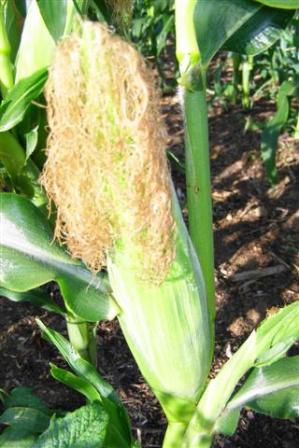
I am married to one of the world’s biggest fans of sweetcorn. Maybe he has been reincarnated from an indigenous tribe from the Americas, where our modern sweetcorn has its antecedents as the primary carbodydrate staple. He has planted his first seed of this season into small pots to get them started under cover and he will plant them out, in accordance with NZ tradition, at Labour Weekend. From there, he will sow in succession through as late as the end of January in order to get fresh corn for a period of five months of the year. Sweetcorn is worth growing at home because the freshly picked product is infinitely superior to anything you will buy. The natural sugars start turning to starch almost immediately on picking.

Corn can either be sown direct into the ground (well cultivated soil and full sun, as with most vegetables) or started in small pots. He Who Grows the Corn here does not subscribe to the advice sometimes given to sow closely together. Quite the opposite – too close and the tall stems lack strength and fail to develop full cobs. You only get one or two good cobs per plant anyway. He recommends spacings of 20 to 30cm between plants and up to a metre between rows. They need lots of sunshine and light and growing in open conditions means the stems will be stronger and hold themselves up. Corn is a gross feeder so needs plenty of compost added and they respond well to superphosphate if you want to add a general garden fertiliser.

Modern corn is far removed from the old heritage crops which are more akin to tougher maize. These days we save our own seed but started from Honey and Pearl which is one of the newer generation hybrids which made corn more palatable to eat and easier to prepare.