Category Archives: Outdoor classroom

The DIY Christmas Tree – mark 2 (for 2011)

Last year’s Christmas tree constructed from toetoe plumes (overseas readers may like to think pampas grass) was a tour de force, though I say so myself. On the downside, it did moult badly and I can recall quite a mess as we manoeuvred it out of the house after the event. Though the same can be said for the traditional pine tree too, and pine needles are a great deal more difficult to vacuum up. The step by step instructions for this model are still available.

The tree this year does not lend itself to last minute creation. It needs a sturdy frame to hold the shape. Fortunately we have one, most kindly given to us by a friend.

We saved the grape vine stems from the winter pruning round and kept them under cover. It takes quite a few and I only just had sufficient. Any flexible, long whippy growths could be used – willow, soft canes or wisteria come to mind.
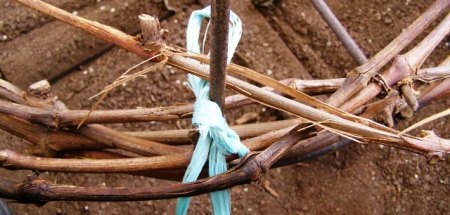
Build in layers by simple weaving. I tied the first rows in place temporarily, to hold them in place. By the following day, they had set in place and no longer wanted to spring out.
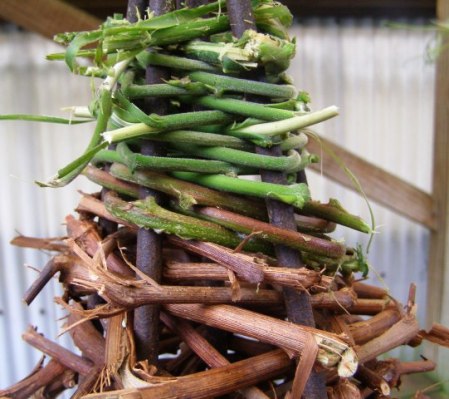
Because the top of the frame was very narrow, the grape vines were not sufficiently flexible. I swapped to fresh wisteria vine for the peak. It will dry to a brown shade but will be covered by the angel anyway.
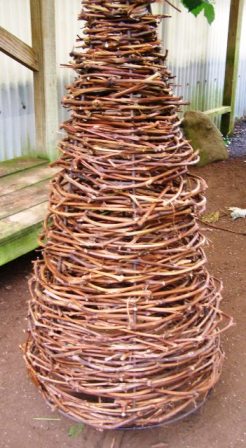
I trimmed any large ends which spoiled the shape. If I had more grape vine, I would have packed the weaving tighter as I went, but I didn’t so I couldn’t.

The finished product is in place and decorating can start. It is possibly the easiest tree ever to decorate, because the ends of the vines make handy little hooks all over the surface. Rather than adding Christmas lights on the outside, we are lighting from the inside of the tree using a table lamp.
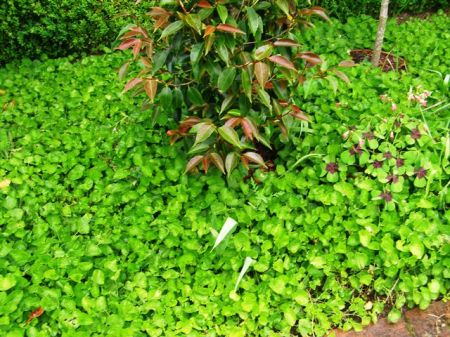
On the case with Grandma’s violets (subtitled: it is hard to find the perfect groundcover).


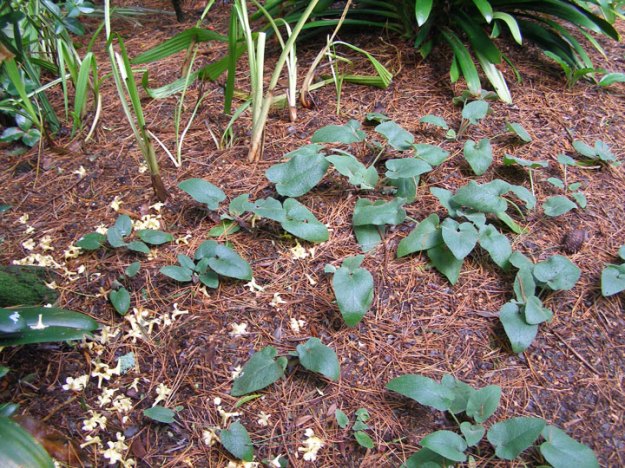
I see it was only a little over two years ago that I gave the death sentence to Rubus pentalobus (commonly called the orangeberry plant because few of us can recall its proper name) and chose Grandma’s violets as a ground cover instead. In fact they are more likely to Mark’s great grandma’s violets because they date back to the 1880s house site and have gently survived paddock conditions there ever since. Once divided and planted into the garden, they have taken off with alarming vigour. Sweetly scented and charming though they are in flower, they were starting to overwhelm everything in their path.

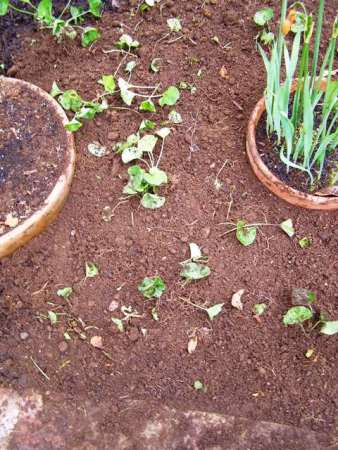
Last year we tried thinning the patch and it was a surprisingly difficult task because the violets had formed an impenetrable mat. I figured this year it would be easier to dig the entire patch and replant small divisions. Digging is only difficult when the ground is heavily compacted or with a blunt spade. Using a sharp spade, I cut the violets into squares as one does with turf. Each square was easy enough to lift.

I raked over the bare soil to level it. Some of the clumps I had dug fell apart quite readily, giving me small divisions to replant immediately. Others, I pulled apart as required, spacing at around 15cm intervals.

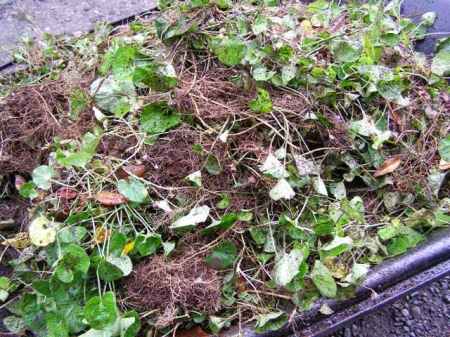
There was a large surplus of violets. Not every plant is precious. This barrowload (one of several) is destined for the compost heap.

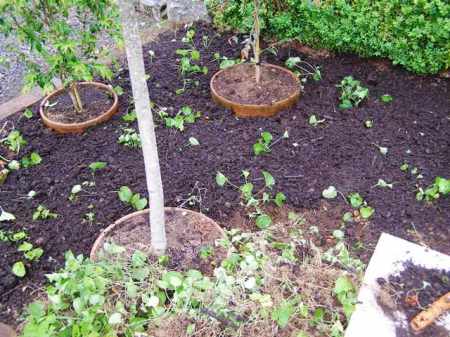
A final topdressing of compost feeds the soil, reduces water loss from the poor stressed plants and makes the whole area look more attractive. There is an open verdict here as to whether I want to persist with a groundcover that looks as if it will need drastic digging and dividing every year. I will make the call next spring.

Dividing calanthe orchids

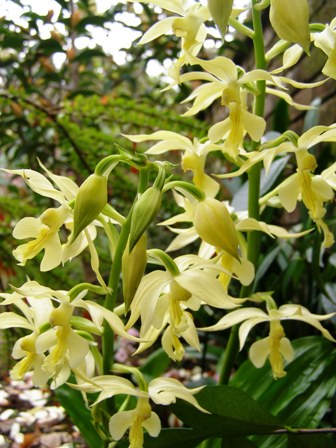
1) We are besotted with calanthes which are an obliging ground orchid suitable for humus rich woodland areas which do not get too frosty or cold. Mark is out digging and dividing them right now, though he feels he should have been onto it in June or July. He is having to take great care not to break off the flower spikes which are showing now.

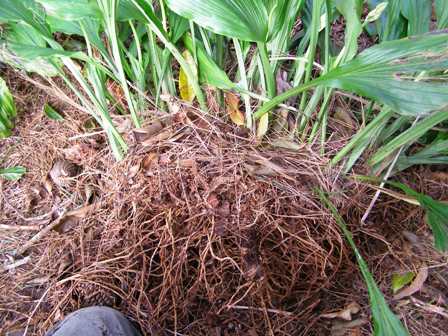
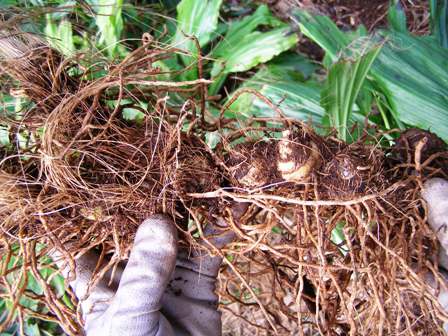
2) When the clumps are teased apart, it becomes clear that each section of foliage has a chain of rhizomes attached.

3) Break the rhizomes apart with care. Each will form a new plant. Discard any soft or mushy rhizomes. While these orchids will make a full set of new roots each year, leaving the old ones on at this time gives something to anchor the nubbly rhizome into place when you replant it.

4) The top rhizome of the chain will have the foliage attached. Leave this intact and attached to the first rhizome. Replant in well cultivated soil with plenty of compost or humus added. As the rhizomes tend to run along very close to, or on the surface, they only need to be lightly covered but they need well tilled soil below to get their roots down. The division with foliage will still flower this year. The dormant rhizomes should come into growth soon and some may flower next year, the remainder the year after.

A short lesson in hooping, no less

Hooping the long whips on the apple trees

Hooping the long whips on the apple trees

Many woody plants concentrate their hormones at the tips of branches. If you bend the branch closer to the horizontal, then the hormones which lead to flowering are more evenly dispersed along the length which encourages the growth buds lower down to flower and grow.

Our Friend of the Garden, Colin, braved the snow and frost this week to come and stay and he has pruned the apple trees. He has hooped over some of the long whips to encourage the plant to push out growth buds along the length, which should result in the production of stronger fruiting spurs to replace old, spent spurs.

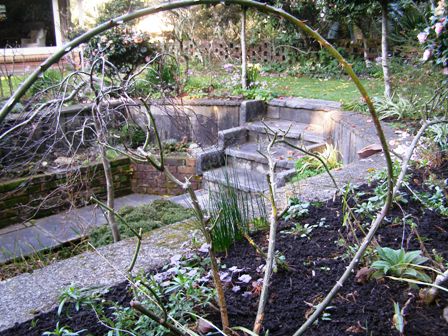
Hooping roses which put out long growths increases the flowering markedly. It is a technique I first saw done at Ayrlies Garden (back in the days when Neil Ross was head gardener there). It takes up a lot of space but is worth the effort. I tie the long whips down to wire hoops in the garden. Many of the David Austin roses put out long whips which are ideal for hooping.

Hooping the roses to maximise flowering this season

Hooping the roses to maximise flowering this season


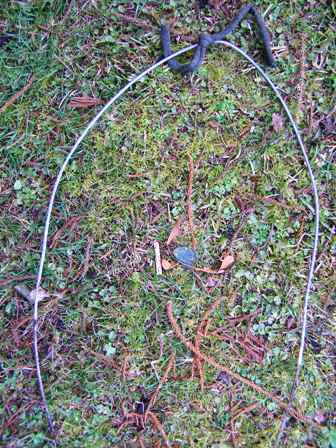
Using a simple wire hoop to tie down the long rose whips

Using a simple wire hoop to tie down the long rose whips

It is of course the same principle as using espalier techniques to increase cropping. Espalier is not just a space saving exercise in keeping plants as close to flat as possible. It can also maximise fruit yields in a restricted space. You need to make sure that ties are flexible so they don’t cut in and damage the branches – stockinette or similar. The apple hoops were secured with a tapener or tying machine which staples a small piece of flexible plastic tape in place.

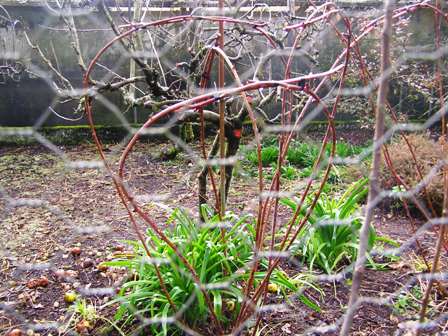
Postscript: A man on a mission, Colin is now hooping the raspberries. This is a particularly strong growing variety and this hooping is in part to keep the growth under control and to prevent them making an escape out the top of the raspberry cage. It should also make picking easier.

Any woody plants which make long, whippy growths can be hooped to maximise flowering and fruiting. Colin, a retired horticulturist of vast experience, assures me that when it comes to fruiting plants, the redistribution of the plant’s hormones achieved through hooping encourages leaf buds to form flower buds as well which increases potential fruit yield.

A man on a mission, Colin is now hooping the raspberries

A man on a mission, Colin is now hooping the raspberries

Outdoor classroom – rejuvenating tired perennial patches

[1] Many of us have areas of garden which look like this – tired and dull. Although this patch has been kept weed free, mulched and deadheaded, it is many years since it has been actively gardened. There is no alternative to a bit of hard digging.

tired and dull

[2] Dig out all the plants. You can see how heavily compacted the soil has become over many years. It was originally rotary hoed which made it light and fluffy but that was a long time ago.

OC-2A-13-5-2011

Placing the plants on a mat beside where you are working will reduce the mess.

OC-2-13-5-2011

[3] Dig to at least the depth of the spade and dig again, breaking up any clods of dirt. This incorporates air into the soil and encourages worm activity. Rake the area to an even surface for replanting.

OC-3-13-5-2011

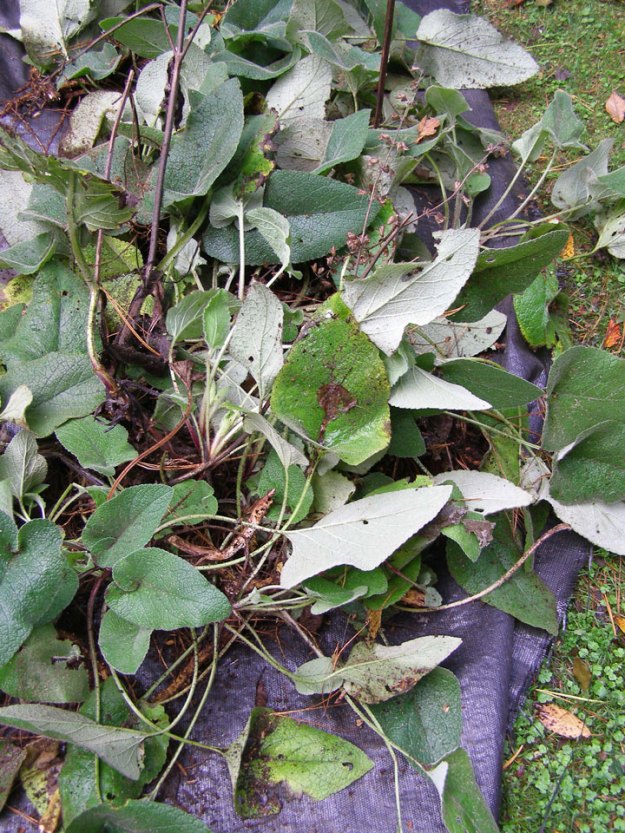
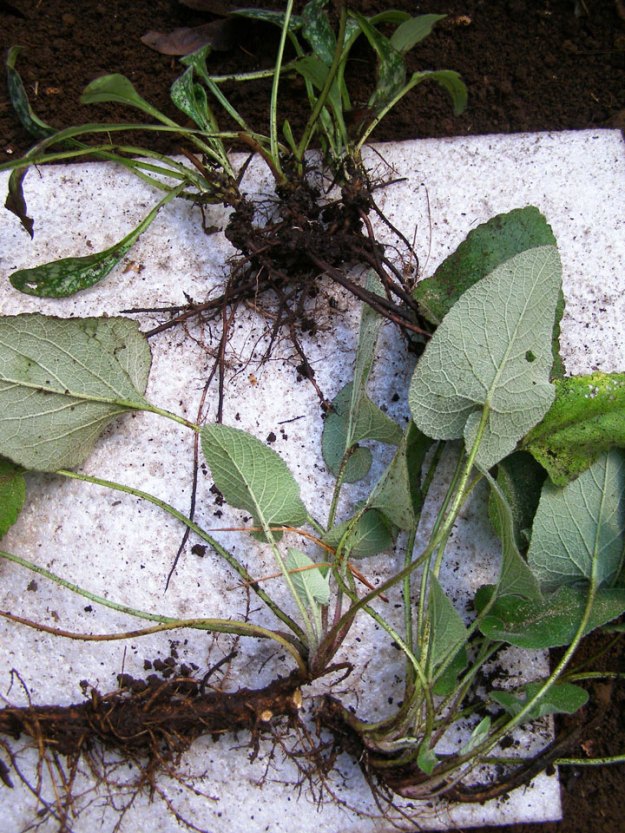
[4] Different plants divide in different ways so look closely at the plants. The pulmonaria at the top of the photo will pull apart easily to three separate pieces, all with roots and growing crowns. The phlomis at the bottom of the photo could be cut into many plants but I will take this to just two strong plants, reducing each to only one or two growing points.

OC-4-13-5-2011

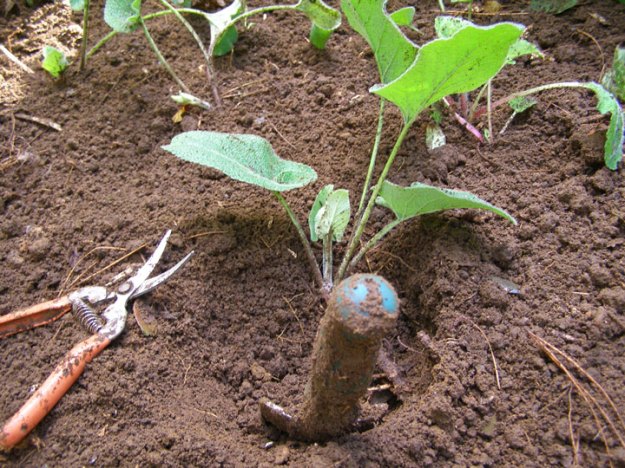
[5] If you have dug well, you can replant using just a trowel. Try and avoid planting in rows – staggered drifts look better. I want a quick result so am planting at about 15cm spacings. Take the oldest leaves off the little plant, leaving fresh new growth tips. Remember that the soil is fluffed up and the next rains will compact it a little, so don’t plant at too shallow a depth. Only plant the strongest and the best divisions.

OC-5-13-5-2011

[6] We give a light feed of an all purpose fertiliser – in this case our locally produced Bioboost – and then mulch. This patch was dug, divided and replanted about three weeks ago and has a mulch of wood chip from our shredder. It should be well established and look lush and vigorous in spring time.

OC-6-13-5-2011

A step by step guide by Abbie and Mark Jury first published in the Taranaki Daily News and reproduced here with permission.