Category Archives: Plant collector

flowering this week, tried and true plants

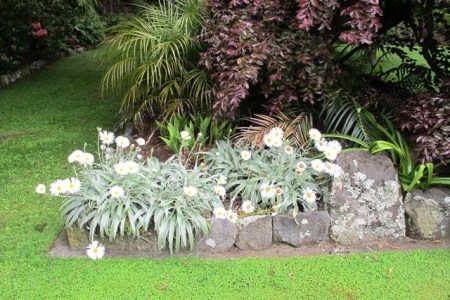
Plant Collector – celmisia

Celmisias - New Zealand's mountain daisies

Celmisias – New Zealand’s mountain daisies

Sometimes nature needs a small helping hand and getting these New Zealand mountain daisies to grow in humid and mild coastal conditions is one such case. These are celmisias and to get them to survive here, we have had to cross two species. That gives hybrid vigour to the offspring and means they don’t die out in the first summer though it has to be admitted that they are still not long lived here and often die out by the fifth or sixth summer. It is perhaps easier to understand when you consider that one of the parents is Celmisia coriacea which is common in Fiordland and also found around Mount Cook in the scrub above the bush line and into the alpine meadows. It is coriacea which brings the lovely silver leaves which are so desirable.

The other parent is Celmisia hookeri which is an Otago species, found from coastal to montane areas so it has more tolerance of lowland conditions. Its foliage is greener rather than grey but it brings more vigour. Why do we bother? Because they are lovely daisies which mass flower in spring for us and look good all year round with rosettes of slightly furry silver foliage. We like to integrate out unique native flora with other plants and it is particularly satisfying to see the celmisias growing beneath our rimu trees.

First published in the Waikato Times and reprinted here with their permission.
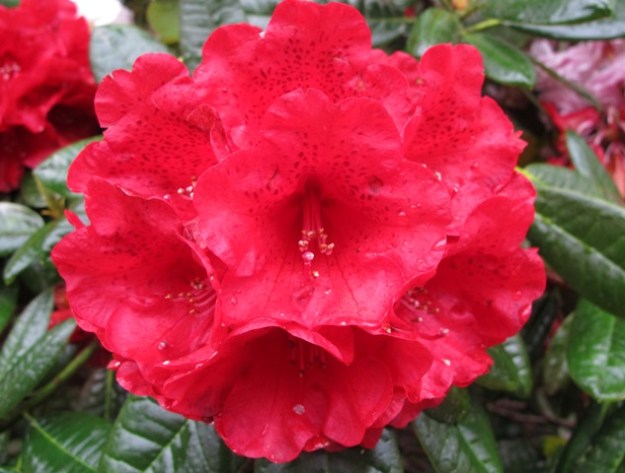
Plant Collector: Rhododendron Rubicon

Rhododendron Rubicon - in our opinion, the best big red in the country.

Rhododendron Rubicon – in our opinion, the best big red in the country.

In the world of red rhododendrons, Rubicon stands clear of the rest – at least in my opinion. It is the purest of reds without that common tendency to develop pink tones as it ages, has lovely foliage and a very tidy, rounded habit. It is pretty much perfect in that big full truss class. I should perhaps have qualified my first sentence by saying in the New Zealand world of red rhododendrons because I don’t know how successful it has been overseas but it sure beats the imported varieties we grow. It was bred by the late Ron Gordon from Taihape and first became available in the late 1980s. It is a cross between Kilimanjaro and Noyo Chief and it is superior to both its parents though it was the latter which contributed the good dark, heavily veined foliage that is a feature of Rubicon.

The one downside for us is that Rubicon can get attacked by thrips – those nasty, leaf sucking critters which turn rhododendron leaves silver. Because our plant is in such a prominent position, it is one of the few Mark will spray here. He uses an insecticide but other people report good results using Neem oil to beat thrips.

Rubicon is widely available on the market in this country and is an essential in any collection.

First published in the Waikato Times and reprinted here with their permission.
Plant Collector: Rhodohypoxis

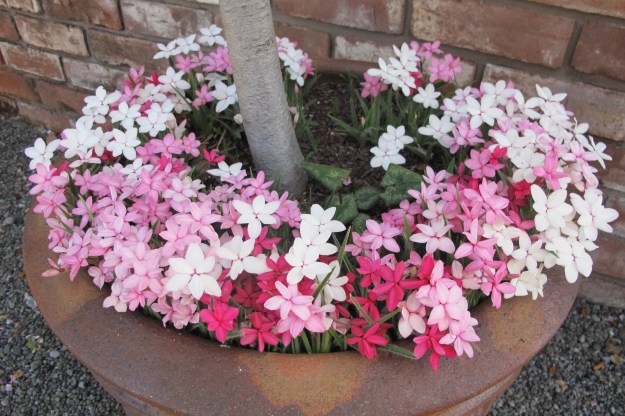
Pretty little rhodohypoxis - Ruth (white), Susan (pink), Albrighton (dark)

Pretty little rhodohypoxis – Ruth (white), Susan (pink), Albrighton (dark)

As the peak time for spring bulbs passes over, the South African rhodohypoxis come into their own. These are cracker little plants, forming a colourful carpet in well drained, sunny conditions. They are also great in wide, shallow bowls or underplanting shrubs in containers, as illustrated. Their fresh growth is triggered by autumn rains and they have a long flowering season from mid spring into early summer, as long as they don’t dry out. The foliage is short and grassy and hangs around unobtrusively until autumn when the plant goes dormant for a brief time.

There are a mass of different named rhodohypoxis, though most are just selections of R. baurii. Essentially they come in sugar pink, deep pink to red, white, bicoloured variations and occasional double forms. They are really easy to grow and multiply up most satisfyingly, with one proviso. The rhizomes are tiny and dark brown – sometimes not unlike the clawed ranunculus and other times just small, brown lumps. This means they are alarming anonymous when dormant and I am sure that is when most people forget where they are and either flay them round when weeding or plant something on top of them. If in doubt, plant them in a pot and sink the whole pot in the garden while you build up numbers.

With a rhodohypoxis expert staying here this week, we had a discussion on whether these bulbs are technically tubers, corms or rhizomes. The internet uses all terms interchangeably. The decision came down fair and square on rhizome status.

First published in the Waikato Times and reprinted here with their permission.

Plant Collector: Satyrium corrifolium

Satyrium corrifolium

Satyrium corrifolium

The complex orchid family has a large number of different satyrium species and most of them, including S. corrifolium, are native to southern Africa. These are terrestrial orchids which means they grow in the ground and these ones are tubers. Corrifolium is fully deciduous and come mid spring, delights us with its vertical accents of orange and yellow bicoloured flowers in the rockery. The references tell me that they get to well over a metre high but ours are all around the 60cm mark. At a metre high, we would have to stake them with our winds in this country. The leaves are fleshy and few in number, forming a rosette at the base. The biggest problem is that they come into growth in winter and are a bit frost tender so would need protection in inland areas.

This is another plant probably best sourced through local orchid societies. Once you have one, with care you can increase it from the tubers but you will probably have more success doing this in a pot than in the ground. Keep the pot on the dry side when the plant is dormant so the tubers don’t rot. In a garden situation, plants need good drainage and will grow in both full sun and semi shade.

Note: We don’t have S. corrifolium available for sale but we do have plenty of Satyrium odorum with its green flower spike and scent reminiscent of lemon cloves. It is just coming in to flower now.

First published in the Waikato Times and reprinted here with their permission.

Plant Collector: Prunus x yedoensis ‘Ivensii’ with collospermum

Prunus x yedoensis 'Ivensii'

Prunus x yedoensis ‘Ivensii’

Trying to delve into the origins of flowering cherries of the Japanese types was far more complex than I expected so I will keep it simple and say that this is a hybrid, sometimes known as the ‘Yoshino Cherry’. This particular variety was named at the UK’s famed Hillier Nurseries because of its weeping habit and wonderful tortuous branches. Our mature specimen looks a bit like a rigid octopus and has a near flat top. Prunus do not have a long flowering season but while it is in full flight, it is a veritable froth of white single blossoms reputedly with a sweet almond scent but I wouldn’t buy this as a fragrant tree. Even when mature, it is only a small specimen – maybe four metres high and about the same in width.

The rather odd effect of the native epiphyte, Collospermum (probably hastatum) looks like tuft of hair poking out of the centre. These flax or astelia-like plants are sometimes referred to as the perching lily or, less romantically, widow-makers. That is because they can be large and heavy and have a habit of eventually falling out of the tree. Other than that, they do no harm.

First published in the Waikato Times and reproduced here with their permission.