Category Archives: Seasonal garden guides

Weekly garden guide, In the garden this week, In the Taranaki garden

In the garden this fortnight: April 26, 2012

A fortnightly series first published in the Weekend Gardener and reproduced here with their permission.
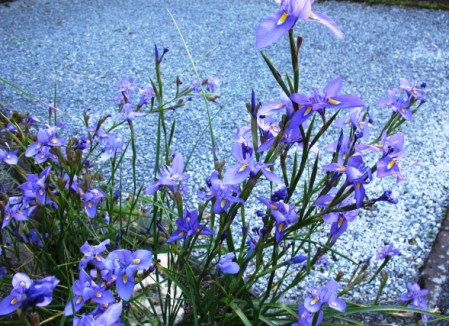
The pretty Moraea polystachya has a long flowering season

The pretty Moraea polystachya has a long flowering season

We are not noted for autumn colour here. I can’t think that anybody has ever said: “Oh but you simply must go to Taranaki to see the autumn display.” The trigger to deciduous plants to turn is temperature related and we drift so imperceptibly from summer through autumn to early winter, that even plants renowned for their capacity to blaze with colour are usually a disappointment. Besides, we are so verdant and green and our native plants are all so resolutely green that all we can do is to admire the occasional single deciduous specimen. Generally it is inland areas with drier climates and much sharper variation in seasonal temperatures which put on the big displays.

However, our autumn is marked by much smaller, pretty pictures of autumn bulbs. We garden extensively with bulbs. In a large garden with some huge trees, it is the dainty, often ephemeral pictures which give the charm and detail. Autumn flowering bulbs are harder to find for sale because most people don’t think beyond the more common spring bulbs.
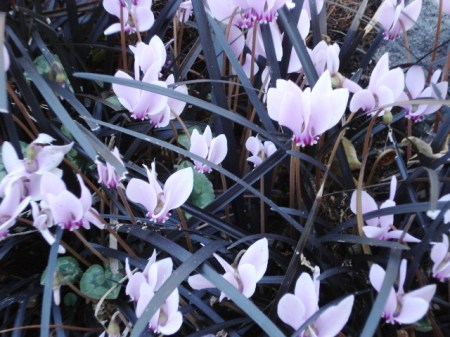
Cyclamen hederafolium - the easiest of the species in our climate

Cyclamen hederafolium - the easiest of the species in our climate

At the moment, it is the pink and white Cyclamen hederafolium, blue Moraea polystachya (autumn peacock iris), a rainbow of colours in the ornamental oxalis, bold lilac colchicums (often incorrectly referred to as autumn crocus), the real autumn crocus and the beautiful hybrid sarniensis nerines which are carrying the season in the rockery. Out on the roadside, the belladonna lilies are in bloom. Some, like the colchicums, do not flower for long but are very showy. Moraea polystachya is a gem of a bulb. It flowers down the stem so it has an exceptionally long season stretching into months rather than weeks. It can seed down but is easy enough to thin out if necessary.

Cyclamen hederafolium (formerly known as neapolitanum) is the easiest and most reliable of the species cyclamen. It too has a long flowering season, followed by attractive, heart shaped leaves with white markings. It combines very well with black mondo grass and in places we have English snowdrops (galanthus) to come through in late winter, extending the seasonal interest amongst the cyclamen foliage.

Top tasks:
1) Cut off all last season’s leaves on the Helleborus orientalis and remove them to the compost heap. We have done this for many years now, following the advice from Terry Hatch at Joy Plants. It removes any build up of aphids and it means that the flowers are highly visible as they come through with just delicate new leaf growth. As the season progresses, the new foliage takes over and fills the whole patch. Timing is important – if you leave it too late, you have to trim carefully around all the emerging flower stems.
2) After raking off the hellebore foliage, I will weed out the rash of germinating seedlings and then cover the whole bed with a mulch of compost to a depth of about 3cm. This feeds the soil and discourages weeds. Hellebores are one perennial that is best left undisturbed. It is better to raise seed than to try and divide existing clumps. They can sulk for years before recovering.
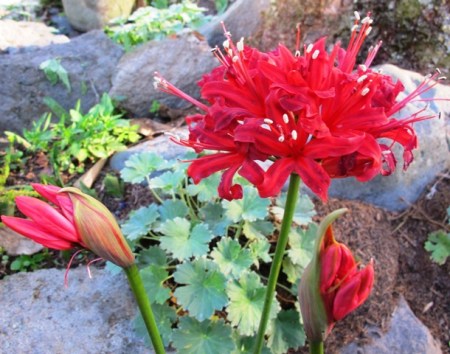
The Nerine sarniensis hybrids are a real autumn feature in the rockery

The Nerine sarniensis hybrids are a real autumn feature in the rockery
In the garden this fortnight: April 12, 2012

A fortnightly series first published in the Weekend Gardener and reproduced here with their permission.

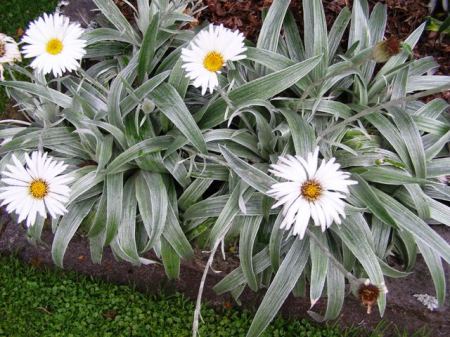
Celmisia (New Zealand's mountain daisy) are not within their normal climatic range here

Celmisia (New Zealand's mountain daisy) are not within their normal climatic range here

We have a garden where we are constantly trying to push the climatic boundaries and grow plants which are not naturally adapted to our conditions. For us it is what makes gardening really interesting. But we had a wry smile at the suggestion from Christchurch paeony growers that anywhere south of Auckland should be able to grow these herbaceous beauties. There are reasons why Taranaki gardens do not have paeonies and it is not for want of trying. We can grow some of the tree paeonies but those beautiful, over the top rose paeony types simply don’t perform. As they are not even successful in inland gardens where winters are much colder, it seems more likely that our high rainfall and high humidity levels are the problem. If we could grow them we would.

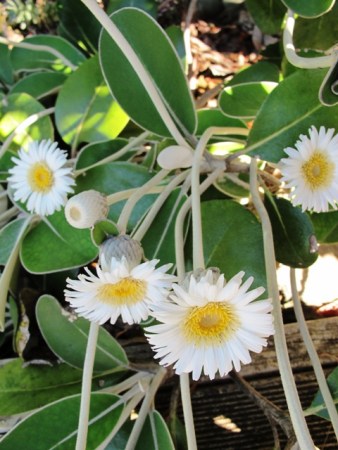
Pachystegia insignis (the Marlborough rock daisy) is also used to somewhat different conditions

Pachystegia insignis (the Marlborough rock daisy) is also used to somewhat different conditions

We have to work at plants which prefer drier, open conditions. The Marlborough rock daisy (Pachystegia insignis) can keel over for us but generally we keep it going on an exposed bank. To our ongoing embarrassment, the excellent form we have is one stolen by my late mother from the Dunedin Botanic Gardens. She was a fine gardener but she was also one of those old ladies to be feared with her handbag and secateurs when a normally strong moral code deserted her entirely. We only succeed with the celmisias (mountain daisies) and meconopsis (Himalayan blue poppies) because of the work Mark does to bring some level of hybrid vigour into his seed strains. It takes constant effort to keep them going.

We continue experimenting with orchids as garden plants. Cymbidiums are easy and we have a great deal of success with dendrobiums, calanthes and pleiones. The masdevalleas have not been successful and Mark is still working on the disas to see if we can naturalise them by our stream. Similarly, we push the boundaries with heat loving plants. While most sub tropicals will grow here, without real summer heat, the genuine tropicals are a challenge. We dream of a big solar heated glasshouse.

Top tasks:

1) Autumn planting. We are hoping for our usual long, mild autumn when conditions are perfect for gardening, particularly for planting out. Plants then get a chance to settle in and establish before the rush of spring growth.

2) Finish getting the piles of firewood under cover. We rely entirely on wood for winter heating and we get through a large quantity. Fortunately we are entirely self sufficient but the winter firewood does not cut itself up and get itself in. Free it may be, but it is not without effort.

In the garden this fortnight: Thursday 29 March, 2012

A fortnightly series first published in the Weekend Gardener and reproduced here with their permission.

The little known Rhodophiala bifida

The little known Rhodophiala bifida

We keep talking about sustainable gardening here. For us, sustainable garden is twofold – both managing the maintenance of a large garden with a small labour input (wouldn’t we love legions of skilled gardening staff?) but also following garden practices which are not damaging to the environment. To this end we make our own compost, mulch heavily, use a mulcher mower, eradicate or control plants that threaten to become invasive, shun chemical fertilisers and hardly use sprays at all to keep plants healthy. We have a few plants of exceptional note that warrant a touch of insecticide, but generally, if a plant can’t grow well in good conditions, we will not persist with it. A few more roses are destined for the incinerator as I cull further. We do use glyphosate for weed control and Mark lives in fear that it may one day be ruled environmentally unacceptable because we would find it very hard to maintain standards without it.

The enormously useful leaf blower

The enormously useful leaf blower

But our biggest environmental footprint here is the internal combustion engine – the lawnmower, weed eater, mulcher, chainsaw, water blaster and motor blower (leaf blower). We console ourselves with the thought that we are only a one car household and that car often has only one outing a week so maybe that compensates for CO2 emissions. The motor blower is a huge timesaver for a big garden. We started with a cheap handheld one but progressed to a backpack model. It is possible to sweep and groom one’s way right around the garden at walking speed. That is an awful lot faster than doing it with a leaf rake, broom and barrow. As we hurtle at alarming speed from deeply disappointing summer into premature autumn, the blower comes into its own. Fine debris gets dispersed (it does generate dust) while larger leaves can be hustled into discreet areas to break down and rot.

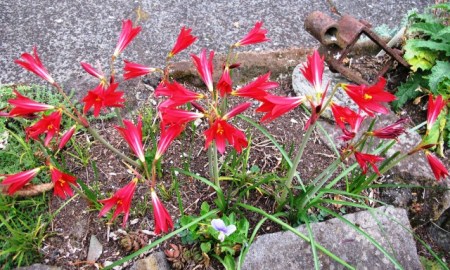
The autumn bulbs are starting. At the moment the little known Rhodophiala bifida is looking terrific as are the red paintbrush blooms of Haemanthus coccineus (the plant many readers may know better as elephant ears). The lovely blue Moraea polystachya is coming into bloom, along with Cyclamen hederafolium and the early nerines are open. These seasonal delights offer some compensation for a summer which never really got going.

Top tasks:

1) As perennials pass over and many fall over, we need to do a tidy up round of the garden borders. Because our temperatures are mild here and we have soils which never stay waterlogged, we can and do lift and divide perennials most of the year. There is still time for plants to re-establish before winter temperatures stop growth.

2) Where repeated use of the blower has led to too much of a build up of debris (mostly in our hellebore border), I need to get through and rake off the surplus for the compost heap before we add this season’s leaf drop.

The music of Mongolia

Anda Union in the garden

Anda Union in the garden

The unusual experience, highly likely to be unique in New Zealand, of hosting Anda Union, playing the bygone music of ancient Mongolian tribes in the garden at Tikorangi. For more on this event, please go to our Tikorangi Diary.

In the garden this fortnight: Thursday 23 February, 2012

The natural look can take a surprising amount of effort and intervention

The natural look can take a surprising amount of effort and intervention

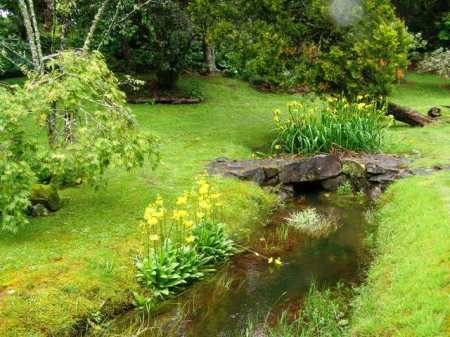
We have been making a major, combined effort to return our natural stream closer to something resembling pristine condition. I say natural stream because it is entirely natural where it enters and leaves our property but in between we manipulate it quite a bit. We have ponds, we play with the levels to create little rapids so we have the sound of water running and we have total control over what happens with flood water when we get torrential rain – achieved by a simple weir, flood channel and stopbanks. What we don’t have control of is the build up of silt and invasive water weeds.

What started as a pleasant summer activity reducing the water weeds (Cape Pondweed, oxygen weed and blanket weed are the worst), has grown to be something more major. We have hand pulled and raked most of the weed out. The clumps of streamside planting (mostly irises but also bog primulas, pontederia and a few others) are all in the process of being dramatically reduced in size. We hadn’t noticed quite how large they had grown in the years since they were first planted. The build up of silt in the water channel – up to my knees in places – is being stirred up and then flushed through to settle in the ponds. To flush it through requires holding the water back and then releasing it in one swoosh. To do it properly requires the building of a second, simple weir. Once all the silt is in the ponds, we will hire a sludge pump to clear it. Trying to stay on top of water weeds (none of which we introduced ourselves) is an ongoing task. We are thinking a bit more regular maintenance may keep the silt under control. Our access makes getting a digger in very difficult and the mess afterwards is such that we prefer to do things by hand.

The end result is that we will have a natural looking stream again. Sometimes it takes a lot of work to achieve and maintain a natural look in a garden.

Top tasks:

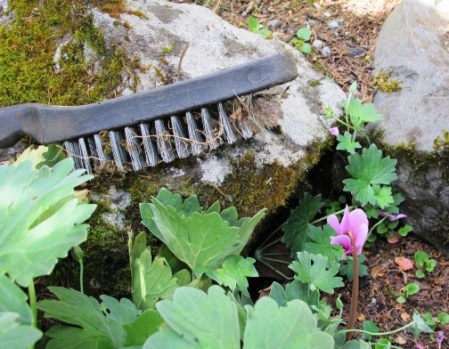
1) Continue reducing mossy cover and lichen on rocks and paths in the rockery. In our humid climate, we have continual moss growth and while some of it softens hard lines and adds a certain look, too much of it obliterates lines altogether and makes the place look unloved. I use a wire brush and I know I will probably have to continue doing it for the rest of my gardening life here.

2) And on the theme of having too much of something, no matter how good, I need to finish my radical thinning of the black mondo grass (ophiopogon) and the cyclamen hederafolium which seem determined to try to choke each other out. The mondo grass goes on the compost heap. The large cyclamen corms I am laying as ground cover in an area where I have given up on both Rubus pentalobus (orangeberry) and violets which both proved to be too strong growing.

A fortnightly series first written for the Weekend Gardener and reproduced here with their permission.