Category Archives: Seasonal garden guides

Weekly garden guide, In the garden this week, In the Taranaki garden

Tikorangi Diary: Friday 8 July, 2011

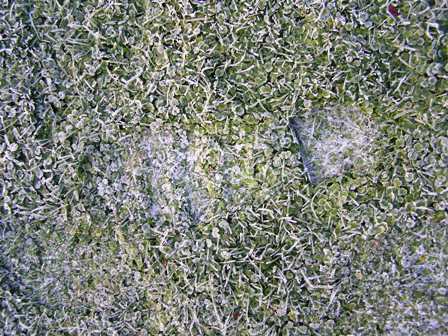
Footprint in the frost

Footprint in the frost

Today feels like the first blast of real winter. As it is now the second week of July, I guess we can hardly complain. Spring starts here in August. A visible frost earlier in the week had me out with the camera which is an indicator that they are not common events here. As Lloyd and I tramped across the lawn and I photographed the footprints, I did briefly ponder the advice not to walk on frosted grass. Sure enough, the footprints had turned black the next day.

The bananas are partially tucked up for winter, just in time

The bananas are partially tucked up for winter, just in time

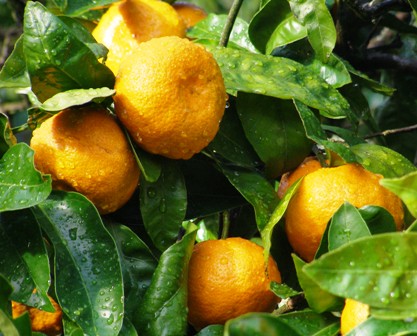
Fortunately, Mark had covered his bananas a few days earlier. This is one fruit which we have to nurse through the winter, though we did scoff a little at the advice in the local paper last week to cover your citrus in frost cloth. We have never worried about the citrus and it has never been a problem.
Lloyd does build a nice stone pillar when required

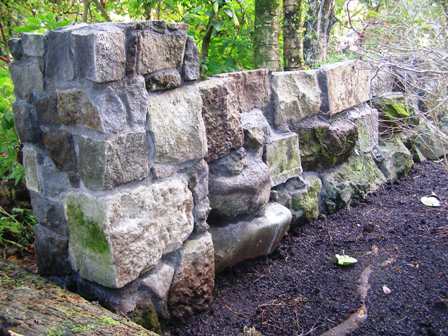
Lloyd does build a nice stone pillar when required

Lloyd finally finished the repairs to one of the stone walls – he does build a nice stone pillar when needed, does our Lloyd. This one was started from scratch. Since then, poor man, he has been out lifting the last of the open ground magnolia crops. We still have to sell some plants here to pay for the garden so the call of the nursery has taken him away from the garden. So too for Mark, who has been spent most of his time putting in cuttings (mostly michelias from his breeding programme as he conducts propagation trials). It is getting close to the end of the cuttings season now, though we only put in a shadow of what we used to when the nursery was in full production.

Mark is out and about most evenings after dark with the dogs in search of troublesome possums who may be developing a taste for magnolia buds. Every year without fail, we get asked about magnolia trees which are opening badly deformed flowers. In our experience, the culprit is always a possum, and usually only one. Magnolias are not possum magnets as the oranges or fresh growth on roses are, but one single minded critter can take out most of the buds on a single tree over a matter of nights. Because they chew down into the centre of the bud, the damage is not obvious until the tree tries to open the flower. Mark usually does autopsies on the possums he shoots (which is to say, he analyses the contents of their stomachs to see what they have been feeding on) and upon occasion he will find one chock-a-block with magnolia buds.

Besides doing a little fiddly-faddly potting of plants to sell during our annual garden festival at the end of October (a very important time for us), I have abandoned my efforts on the rose garden (I just don’t enjoy working in that area and I have not worked out yet what is wrong with it). I will have to return to it to finish, but it has been much more fun to work in an under-used area of the woodland. I have been planting drifts of bulbs – big bulbs like Scadoxus puniceus (given that we can sell each big bulb for about $25 because it is rare here, it felt wonderfully indulgent to plant a drift of about 30 of them), Scadoxus katherinae, Haemanthus albifloss and Haemanthus conccineus. I find bulbs much more rewarding than those wretched roses and I can live with their scruffy foliage when they start to go dormant – though H. albifloss is evergreen and the others have quite short dormancy periods. I am only just getting to grips with the fact that large clumps of bulbs need more regular lifting and dividing to stop them from falling apart when in full growth. We did the auratum lilies this time last year and most of them held themselves up in summer, without needing staking. Every three to four years seems to be about right for these types of large bulbs.

For a change from grubbing in the dirt, I have been pruning rhododendrons. These are a backbone plant in our garden and winter is the ideal time for hard pruning. They do look better when dead wood and wayward branches have been removed. A few get subjected to a really hard prune back to bare stems though this sacrifices this year’s floral display for a better long term outcome.

I was going to dig some of the huge clumps of yellow clivias today, replant the largest sections and pot some of the smaller divisions for sale but it was too cold for me to want to garden. It can wait. Clivias are tough, forgiving plants and the timing of lifting and dividing is not critical at all. In fact, they won’t turn a hair, as long as they are treated properly, no matter when it is done. It shouldn’t stay this cold for long. I even caught myself with the camera, starting a photo shoot on how to divide clivias for an Outdoor Classroom – old habits die hard.

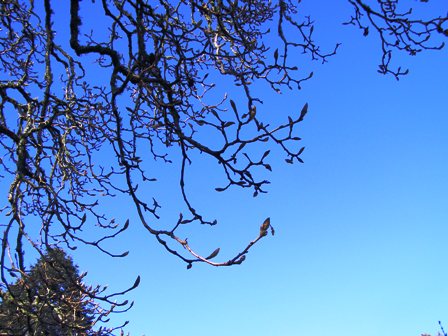
The magnolias are coming into flower. At this stage, just M. campbelli and Vulcan but the buds are swelling fast and starting to show glimpses of colour on many others. It makes this time of year one of the most exciting for us.
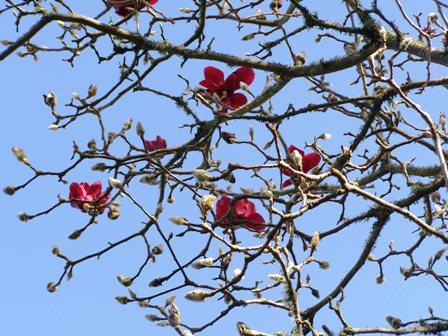
Magnolia Vulcan is coming in to flower
Magnolia Vulcan is coming in to flower
Tikorangi Diary: Sunday June 25, 2011

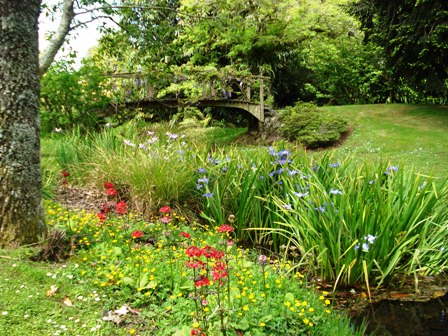
The wisteria festooned bridge in spring

The wisteria festooned bridge in spring

I have pruned the wisterias. I have a bit of a love-hate relationship with wisterias which seem to make a leap for freedom the moment my back is turned, but they certainly add to the spring display. The blue (sinensis Blue Sapphire) and white (floribunda Snow Showers) which festoon one of our bridges in the park look terribly romantic in flower, but they are inclined to try and join hands across the middle. And I am worried that some of their thicker branches are threatening the bridge timbers. We don’t worry about the borer attacks. Wisteria are not shy and backward plants which need nurturing so I just cut out badly affected branches as need be. Mark’s mother had a lovely blue wisteria up the wall of the house outside her bedroom window but Felix took it out. I can’t recall now whether he waited til after she died (when the climbing roses went west) but I can remember being a little sad at his actions. These days I know exactly why he removed it. I have had the spouting cracked outside my office window. The last thing we need is a rampant wisteria lifting the concrete roof tiles on the house and cracking our vintage spouting there.

I am also pruning the roses and my relationship with these leans more to hate than love. Yes they have beautiful flowers and fresh foliage in spring. Because we don’t spray, come summer they have some beautiful flowers but cruddy foliage. In winter, all they do is try and ensnare me as I work around the areas where they are planted. I do not feel the need to plant more roses until breeders start to offer us more options in beautifully full, fragrant blooms (of the David Austen type) on bushes that repeat flower and don’t get diseased, preferably without thorns. By far and away, the best performers here are Rose Flower Carpet white and coral, the rugosas and one called, I think, Golden Celebration which has fearsome thorns but very good habits otherwise. But none of these give me the soft and subtle flowers of the lovely Austens.

I had a matched pair of standard Mary Roses of which I was very fond. Note the past tense. Today I dug out the one that is all but dead and which has for a long time persisted in putting out strong shoots from the root stock. And therein lies a demonstration of the problem of matched, formal plantings. What do you do when one dies or ails badly? It is much easier to get the formal look with inanimate objects. I could probably source a replacement standard but I am not going to. I do not think anyone but me will notice that there is one half of a pair missing. It is a garden which, at its best, is full of froth and flower within a formal setting. I think the setting is enough – I will not worry about trying to repeat the formality in framework planting.

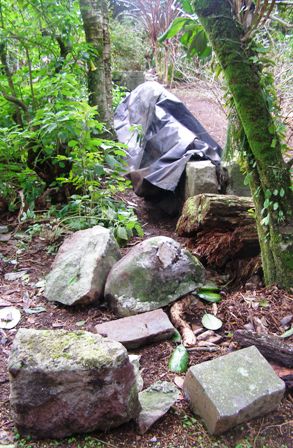
Repairing the stone wall (a pine tree fell on this section some years ago)

Repairing the stone wall (a pine tree fell on this section some years ago)

Shamed by a current shortage of greens, Mark is out planting a large quantity of broad beans and peas. I could tell he is going for overkill when he wanted to discuss whether broad beans would freeze well if picked young. The deep freeze is currently full of his frozen corn which, he pointed out to me, we need to be eating at the rate of one packet every 72 hours if we are to get through it before the next crop comes in. The garlic is long planted and is well into growth. These days, he takes Kay Baxter’s advice (from Koanga Institute) and aims to get it planted in autumn so it gets away before sodden winter conditions set in. He is also trying her recommended approach to plant it in a metre grid on a 10 x 10 arrangement (so at 10cm spacing) which is a great deal more economical in space than the usual rows. Keeping it to a metre square means it is easy enough to reach into the middle to weed. I am hoping Lloyd is going to remember that he said he would smoke me some garlic while we still have plenty of last summer’s crop hanging in good condition. Lloyd is the one who owns a smoker here. Smoked garlic is particularly delicious when raw garlic is called for in recipes such as aioli.

When not fluffing around with his vegetable garden, Mark has been giving his attention to his michelia propagation trials. With the flowering season just starting, the hybridist’s hat is back on his head and we face many months where the first call on his time will be his plant breeding. It is easy to underestimate just how much time and energy goes into a controlled plant breeding programme as opposed to people who just pick out chance seedlings (or worse: copy what other breeders have already done successfully. Expect to hear more on this topic, which is a sore point here).

Lloyd is continuing with repairs to our stone wall. I did say last week that these activities are best measured in terms of results, not costs….

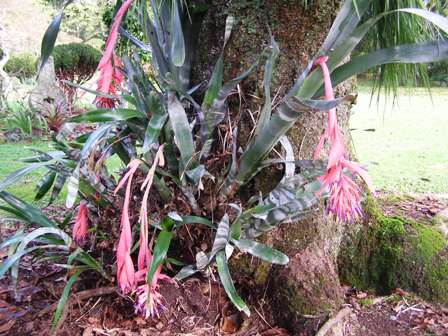
And while the winter/early spring bulb season is just starting (Narcissus bulbocodium, galanthus, leucojums and the early lachenalias), it is the bromeliads which are the unsung hero for winter colour this week. If you can grow broms, they sure are eye-catching in bloom.

Bromeliads for winter colour. This one is a Bilbergia.

Bromeliads for winter colour. This one is a Bilbergia.

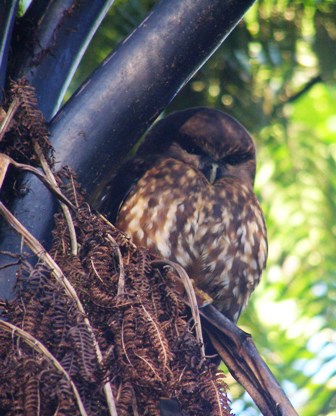
Meet Hedwhig the Morepork

Hedwhig the New Zealand Morepork

Hedwhig the New Zealand Morepork


Our New Zealand owl, morepork or ruru does not often make itself obvious during the day but the alarmed calls of the other birds alerted us to Hedwhig perched in a ponga tree. Alas his beautiful big golden eyes are not visible but he was keeping a very close eye on our dogs three metres below him. They are a familiar sound at night as they make their call (“More pork, more pork”, they call with a particular pitch) and from time to time we see the flash of feathers as one swoops in to pick the moths attracted to night time lights.
Hedwhig – a New Zealand joke, or maybe even a highly specific Whanganui reference.

Tikorangi Garden Diary: Sunday 19 June, 2011

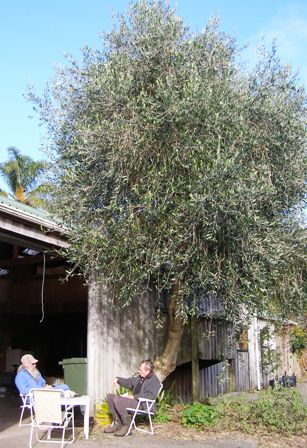
Morning coffee in our work area by the olive tree

Morning coffee in our work area by the olive tree


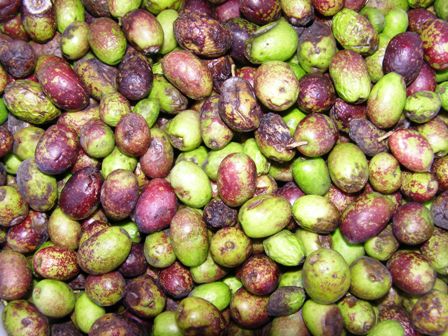
Rather optimistic, hoping to extract oil from the olives

Rather optimistic, hoping to extract oil from the olives

Mark has been much preoccupied by the olive crop this week. In the past I have tried with less than stellar success to pickle olives. Alas, the big imported olives I buy at the delicatessen counter are more delicious than my home grown efforts. We only have one olive tree which we keep primarily because it gives us some shade and privacy in the spot where we often have our winter workday morning coffee. But the olive crop this year was so bountiful that Mark felt compelled to gather it. I have taken a passive role on the attempts to extract some olive oil from this ripe crop but there may be good reasons why Google does not yield up a multitude of sites which give instructions on low tech olive oil extraction. His expectations were modest – a spoonful of pure, super extra virgin, zero carbon footprint oil would keep him happy but at this stage it looks as if pomace may be the winner, not oil. I do not think self sufficiency in the olive oil stakes is close.

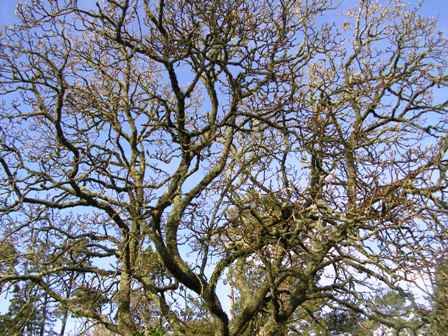
The dominating presence of the original Magnolia Iolanthe

The dominating presence of the original Magnolia Iolanthe


Oranges (or mandarins here) and....

Oranges (or mandarins here) and....

Having completed the once in decade (or longer) makeover of the Avenue Gardens, I have moved in to what we loosely call the kitchen garden or driveway garden. Over the years, this area which was traditionally the main vegetable garden has changed in character and use. The original Magnolia Iolanthe, heeled in temporarily in the very early 1960s, is now of such generous proportions and iconic status, that Mark has gradually been relocating most of the veg growing to other sites. These days it is a mix of quick maturing vegetables, herbs, butterfly garden, nurse area for holding plants which are destined for relocation, existing citrus trees (lime, lemon, tangelo, three mandarins and three orange trees) and the omnipresent Iolanthe. At least Mark came up with a splendid purpose for this area as we plan our new garden developments. A citrus grove, he suggested. We could designate it the citrus grove and underplant with some of the many, very beautiful Camellia yuhsienensis we have looking for a forever home, as well as the annuals for butterfly food. Sounds good to me – low maintenance, purposeful, attractive and an undeniably romantic designation. So I will do a holding pattern maintenance round while we plan the next stage of development.

... and rather a lot of plants of Camellia yuhsienensis looking for forever homes

... and rather a lot of plants of Camellia yuhsienensis looking for forever homes

On a practical level, we are chipping away at hydrangea pruning and rose pruning as each area gets a winter clean-up. The rose prunings go out in the rubbish. Burning is the only other option. They can not be composted or mulched.

Having finished cleaning up after me, (oh but I am blessed to have such a competent person following behind with the mulcher, chainsaw, leaf rake and tractor) and relocating a huge clump of self sown king ferns which had established in the wrong place, our multi-skilled Lloyd has started work on restoring a stone wall which had long ago collapsed beneath a falling pine tree. Stonework is incredibly labour intensive and it is best to measure it in terms of end result, not labour costs.

On a non gardening note, I have been spending hours working through proofing a biography of my brother. He died in an avalanche in the Himalayas in 1983. At the time, communications being pre mobile phones, it took two weeks for us to learn of his death. Around that time our second daughter was born and soon after a postcard arrived saying how much he was looking forward to seeing us and meeting our new baby on his imminent return. By then, we knew he was already dead. To me, he was a beloved brother who died too young. To the wider world, he was one of this country’s foremost mountaineers and it is quite an extraordinary experience to read the story of his achievements, much of which I never really grasped. The working title is Bold Beyond Belief and the biography of Bill Denz, written by Paul Maxim, is scheduled for publication towards the end of the year.

Tikorangi Garden Diary: Sunday 12 June, 2011

Fattening magnolia buds signal the need for a nightly possum patrol

Fattening magnolia buds signal the need for a nightly possum patrol

Despite the torrential rains this week attempting to undermine our gardening efforts, we are nearly at the end of the renovation of the Avenue Gardens. Now it is just a case of getting the mulch on to suppress the legions of weed seeds which will be triggered to germinate by digging and cultivating the soil. We have done a lot of lifting and limbing, reclaiming vistas that had gradually disappeared over the years. It always feels rather brutal cutting off branches laden in flower buds (both rhododendrons and camellias in this case) but it is best to carry out hard pruning in winter.

It may be fine in a small garden to plan hard pruning for the exact time as flowering passes its peak, just before the plant puts on its new growth. The timing is different for every plant and maybe in a small garden, one is out and about every day, ready with the loppers, saw and secateurs to seize the moment. But in a big garden, it is far more likely that we working somewhere else entirely and the opportunity passes without notice for another year. So we are hard pruning right now. Overcrowding had forced many plants to grow out at an angle so some of the pruning has been an attempt to counter that inclination.

The mulcher is working overtime (with Lloyd on the end of it). Small mulchers tend to be so slow and limited that they are more trouble than they are worth, but ours is a reasonably grunty machine capable of most of what we require. If the wood is too large for the mulcher, then it is big enough to warrant cutting up for firewood. We do not, however, mulch hydrangea prunings. Not after Lloyd told us he tried mulching his at home one year and discovered micro-propagation. The carpet of mulch became a carpet of hydrangea buds which all took root and grew.

Hydrangea and rose pruning has also started. While gardeners in colder climates may prefer to leave this until after the worst of winter (pruning can trigger fresh new growth which then gets frosted), our winter temperatures are not low enough to cause problems.

Mark thinks he is getting on top of the rat population but is now starting possum patrol. The magnolia buds are swelling and while they are not a favoured food for the pesky possums as the oranges are, every year at least one develops a taste for them. As they gnaw in and eat out just the tasty centre of the bud, it is not clear that anything has happened until the flowers open in a sad and deformed manner. Year in and year out we receive phone calls from concerned magnolia owners wondering what is wrong with their tree at flowering time. Nothing that high velocity lead earlier in the season can’t cure. Often the gaudy rosella parrots are blamed but in our experience, it is the other pesky Australian import – the possum.