
I am thrilled to accept the ALCOHOL SPRONSORSHIP PRESS AWARD for the week, administered by NZ media star Steve Braunias, for my work on the Penguin and Tui story (More Bad Penguin). It is not that we are rum drinkers. It is just that I think it might be the greatest highlight in my writing career to date, supplanting my pride at being voted second most popular writer (beaten only by the TV reviewer) in the local paper some time ago. Fame and rum await, if not fortune.
Category Archives: Stop press
An award, no less – as opposed to a rum deal.
I am thrilled to accept the ALCOHOL SPRONSORSHIP PRESS AWARD for the week, administered by NZ media star Steve Braunias, for my work on the Penguin and Tui story below (More Bad Penguin). It is not that we are rum drinkers. I think it might be the greatest highlight in my writing career to date, supplanting my pride at being voted second most popular writer (beaten only by the TV reviewer) in the local paper some time ago. Fame and rum await, if not fortune.
Deja vu

Dr Hessayon may be surprised
Dear oh dear Penguin NZ yet again Same author, same editor, same publisher, same series, same sponsor BUT DIFFERENT BOOK. First the Tui NZ Fruit Garden ever so slightly embarrassingly recalled because of “allegations of plagiarism”, now the companion volume Tui NZ Vegetable Garden is recalled and to be destroyed for the same reason. A bit more than just allegations, do we think?
Welcome back to our resident gecko, Glenys

Gecko, probably Hoplodactylus pacificus.
We are very pleased to see our resident gecko back sunning herself in the same spot as last year on the gnarly old pine tree trunk. As this is apparently the behaviour of a pregnant female, it means we have more than one gecko in residence. If she was successful in bearing her babies from last year and they survived all the predators which includes adult geckos, it may mean we have several. Given that spotting one gecko is a rare occurrence (last year’s event caused considerable excitement amongst local herpetologists), we are never going to know, but we are hopeful that Glenys’s behaviour may become an annual event. The sunbathing is apparently part of the incubation process of the young.
It takes an eagle eye to spot a sunbathing gecko. We may well have others in less prominent spots and we may have had them here all the time and just never spotted one before. It is likely that Glenys is a fine specimen of Hoplodactylus pacificus.
Earlier stories from last year:
1) Gecko update
2) The first story (and best photo) about our gecko, as well as the flocking kereru and monarch butterflies which were delighting us at the time – Wildlife in the Garden, New Zealand style.
Tikorangi – the new Texas?
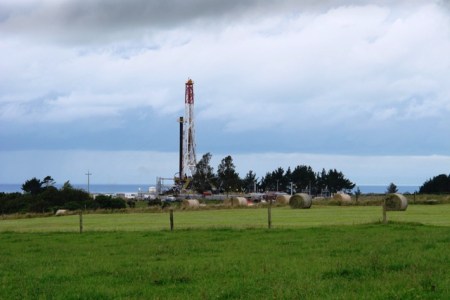
Next door - not quite the Tikorangi locals signed up for when they settled here
I can’t honestly say we are thrilled to learn of the deal between Todd Energy and Methanex which will see up to 25 wells drilled to frack the sub strata of the area where we live. Tikorangi isn’t very big and the first three wells are next door to us, with more scheduled to follow on the same site.
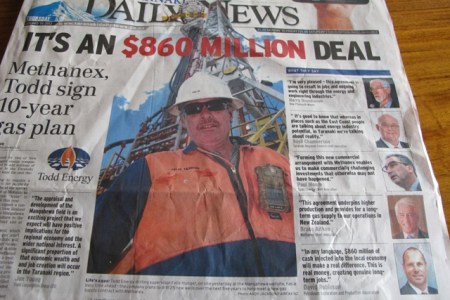 But we are pretty much alone in that. Industry thinks it is wonderful. Most Taranaki locals think it is wonderful because it brings jobs and money. The mayor thinks it’s wonderful. Somewhat disturbingly, the CEO of the regional council thinks it is wonderful (I say disturbingly because that is the body tasked with regulating and monitoring the industry’s activities and it is clear that they are very kindly disposed to the key players). The editor of the local paper thinks it is wonderful – which indicates that the paper will maintain its position of being the PR mouthpiece for the energy industry.
The bottom line is that the oil and gas industry may well be good for the national economy. It is certainly very good for the regional economy and means we have a superior class of cafe and restaurant in New Plymouth.
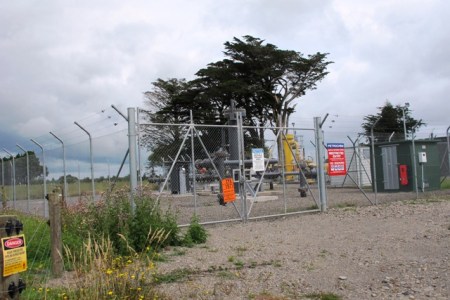
An increasingly common sight in our landscape
But there ain’t nuthin’ good for the locals who live by the sites. Nothing. At. All. They are ugly, industrial sites in the middle of rolling, green countryside. Drilling is noisy. The increase in traffic, especially heavy transport, has been major over the years. Flaring is abominable – flaring being the exercise of cleaning up the wells and testing the flows by igniting the gas. Considering there is nothing good for the environment in drilling either, I am somewhat surprised that the industry continues to get away with flaring. Don’t even try and tell me that anything I can do to reduce carbon emissions will help the planet – not when I live in an area where flaring takes place.
Over the years we have seen changes and some for the better. The first well drilled next door to us, maybe three years ago, was flared for many weeks on end. It was so bright, we could see the glow as we drove out of New Plymouth, 25km away. It lit our house all night. But worse was the noise – the constant, unabated, low grade roar which meant that living here was like living on the flight path to Heathrow, but this was 24/7. When you have lived for years in the relative silence and total darkness of the country, flaring has a huge impact on quality of life.
Flaring was greatly reduced for the second well on the same site and I am hopeful that the third currently being drilled (we can hear the rig grinding away in the quiet of the night and the morn), may see flaring reduced further.
Less high handed bullying from the companies is another change. We are lucky. We are dealing with Todd Energy who appear to be one of the better companies to deal with. I had thought the divisive bully-boy tactics of the petrochemical cowboys were in the past now (though only the relatively recent past) until I saw the media statements coming from another company on another site.
But we have also seen changes in the way the councils handle consents and the winding back on the definitions of affected parties. It is very difficult to convince councils that you are an affected party now and if you acquiesce and sign the agreement for one well, essentially you have signed away all rights to object in the future.
I have met with successive mayors and councils over about fifteen years, pleading with them to be more proactive in planning to mitigate the negative effects. They are terribly concerned and sympathetic and nothing happens. Planning, such as it is, remains completely reactive.
I have tried to get District Council to require, as part of the consents process, that sites be screened from public view by planting. I think they should only be visible from the air. High security industrial sites have no place in a rural landscape. Nothing has happened.
Today’s newspaper, where both District and Regional Council hail all the positive benefits of the economic boom gives me no confidence at all that any negative aspects will be even be acknowledged, let alone addressed.
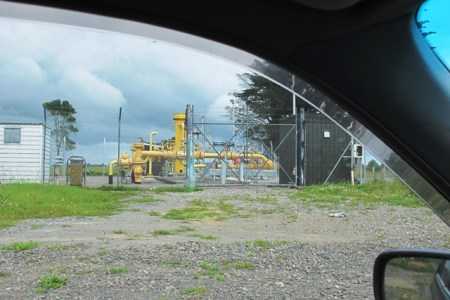
I try not to look but in this case, it is both sides of the road. They should be screened from view.
So the gentle area where we live, a soft rural landscape with reasonably high density population and a solid core of very longstanding families, both Maori and Pakeha, will just roll with the changes as we have for the past decades. We will be the guinea pigs for fracking here. We will let you know if it does cause earthquakes or contaminate our water supplies. The ground below us is about to be fracked in every direction. We will adapt to the increase in traffic though we probably all hope that the ridiculous practice of laying gas pipelines down our roads and verges won’t happen again (how to cause maximum disruption to the largest number possible and completely without apology!) We will grit our teeth and only complain when the noise incidents get beyond the pale. And some of us will wait.
I think it likely that in a decade or two, all the viable reserves of oil and gas beneath us will be gone. The companies will pull out. The multitudes of small industrial sites I try not to look at will be reclaimed by long grass and then by other vegetation. Processing plants will be mothballed. The traffic will reduce and peace will return. I have to take the long view because the juggernaut that is the petrochemical industry rolls on unchecked in Taranaki in the short term.

The adjacent house is, I understand, still occupied by a very long term Tikorangi resident
 Tikorangi The Jury Garden