Category Archives: Tikorangi notes

The weeks that come may very well be worse than the week that was but there are always flowers

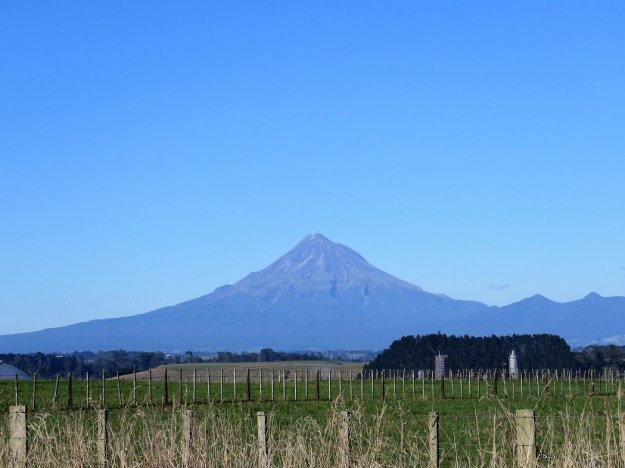
Our mounga is unchanged

I doubt that anybody really thought through how much our world could turn upside down in such a short space of time. It is different in every country. In New Zealand, at this stage it is an exercise in how long we can stave off widespread community transmission, how we can get travelling NZ residents home when air flights around the world are ceasing with little or no warning (up to 110 000 NZ travellers stranded around the world is the latest estimate I have seen) and how we can best protect the Pacific Island nations to whom we have a duty of care and who are extremely vulnerable to an outbreak.

Other countries are facing different challenges and the impact is more extreme at this stage. The message from our Prime Minister is clear – be kind, be considerate, be caring, be careful.
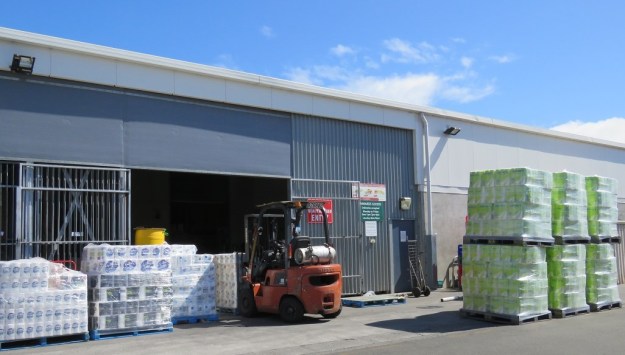
I am pleased to report that there is no shortage of toilet paper at the Waitara supermarket. The shelves were full on Friday with plenty out the back. Amusingly, most of it is manufactured in NZ so there are no supply chain issues.

The world as we know it has changed, if not overnight, then certainly in the last fortnight. Nobody has a crystal ball so there is no way of predicting what will happen into the future. All we can do is make our personal worlds smaller, to be the best person we can at an individual level and, for many of us, to take refuge in black humour.
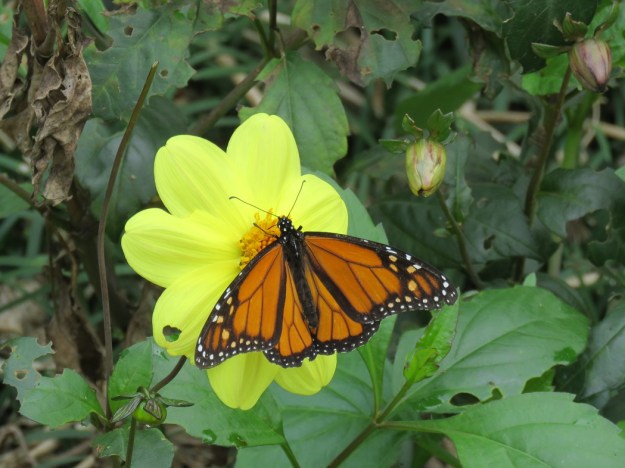
Just a butterfly on a dahlia

But there is always the garden and the cycle of the seasons. There is a correlation between greater interest in gardening and hard times. At the moment it is panic buying vegetable seedlings but as most people adjust to a more confined life at home, their horizons are likely to expand beyond survival vegetables to the pleasures of ornamental plants and gardens as well. Food for the body and food for the soul.

If you are alarmed at not being able to buy vegetable seedlings at this time, here is a guide to raising plants from seed that I published earlier. Online seed catalogues will tell you what you can sow at this time of the year.

We drive a Corona!

We are feeling blessed to live in a situation where we have huge personal space, where maintaining physical distancing is no problem at all and where we can largely control our personal level of exposure to risk. But our children living in Australia have never felt so far away. We are resigned to the realisation that our trip to look at wildflowers in the Pindos Mountains of Greece and then looking at summer gardens in the UK will not happen and we can’t even console ourselves with a family meet-up in Australia. These limitations seem but minor disappointments in this new situation.

All I can offer readers are pretty flowers, a reminder that whatever else is going wrong in the lives of us all, the seasons will continue to change.
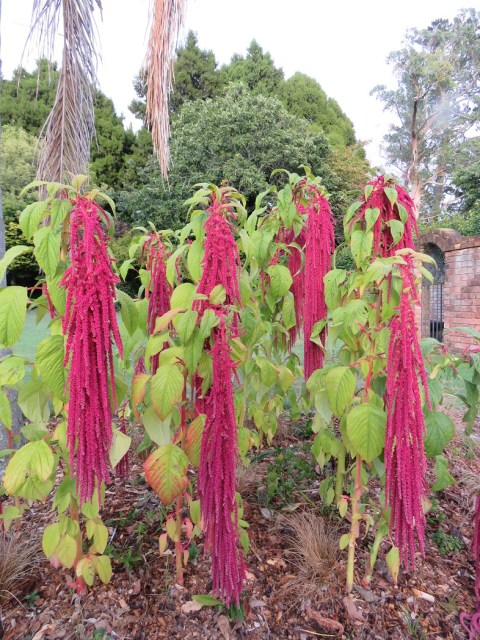
Amaranthus caudatus

The amaranthus has been a surprise volunteer in a garden I replanted earlier this year. It came in with the compost I spread and is perhaps a good example of what happens when I am not careful enough on what goes onto the compost heap. At this stage it makes me smile as I pass that garden bed but I will need to consider whether I want it established as an annual in that area.
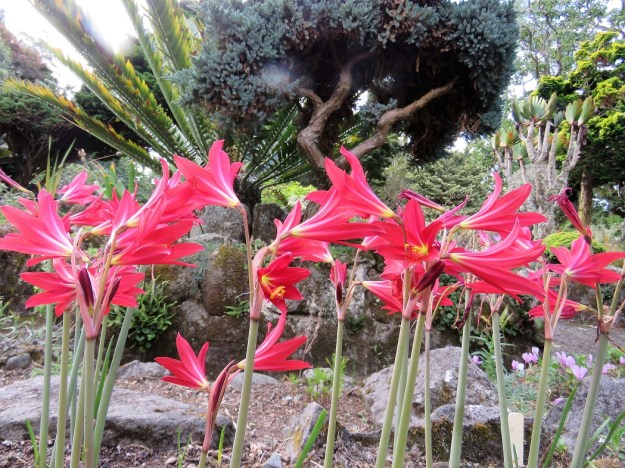
Rhodophiala bifida

I posted this photo of rhodophiala to Facebook earlier this week – a lesser known bulb that is a fleeting seasonal delight. Whether you are willing to give garden space to a plant that is a 10 day wonder is entirely up to you but we like the variety and depth such plants give to our garden. The pink form does not appear to be as vigorous but is also very pretty.
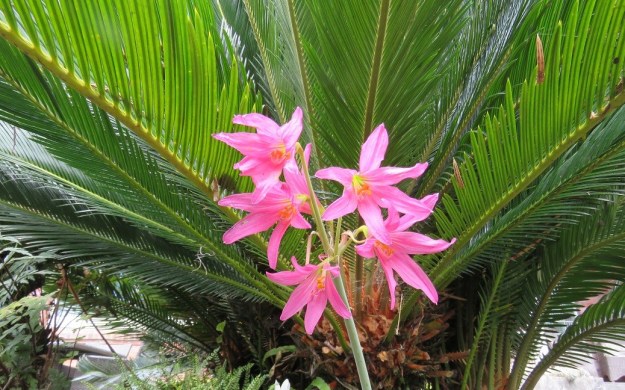
Rhodophiala bifida pink
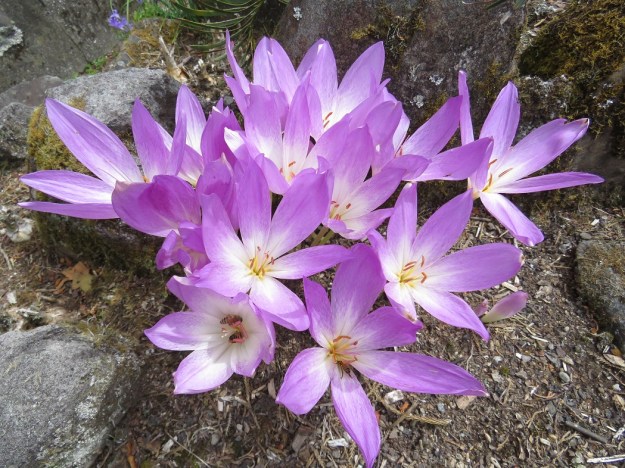
Colchicum autumnale

To be honest, the flowering season on the autumn flowering colchicum is also pretty brief but undeniably delightful. Their foliage comes quite a bit later and stays fresh all winter but does take rather a long time to die off – untidily – in spring.

Haemanthus coccineus

Haemanthus coccineus is even briefer in bloom – days not weeks – but justifies its place because of its rather remarkable foliage. The pair of huge leaves on each bulb resemble big, fleshy elephant ears. But in green, not grey.
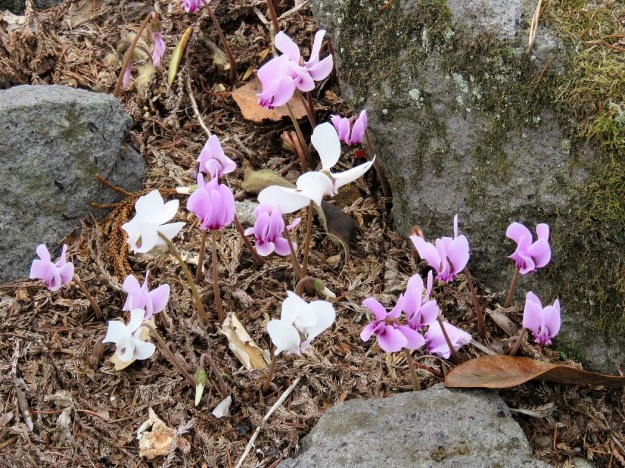
Cyclamen hederifolium

The autumn cyclamen are a different kettle of fish altogether. They really are a well behaved plant, flowering for months from mid to late summer through til late autumn and then putting out charming, marbled foliage. They seed down gently without becoming a menace and just get better as the years go by.
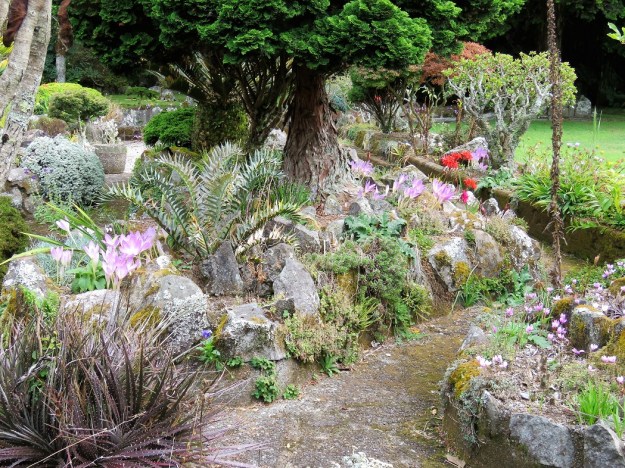
The rockery has two peaks, in early to mid spring and again in autumn. We are just entering the autumn phase when the nerines (the first ones out are the red blobs in the upper right), cyclamen, colchicums and many other autumn bulbs bloom.
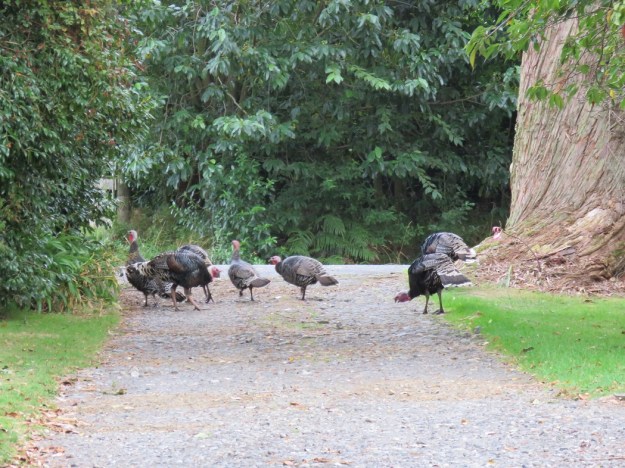
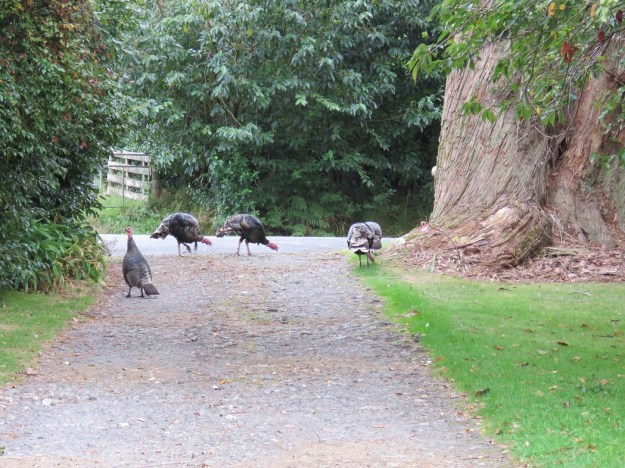
Interlopers on our driveway! The neighbours’ free range turkeys. Should the food supply chains fail in the face of Covid19, we will not starve here.

Batten down the hatches, one and all, and may you stay as safe as possible in these times.
A last resort – getting in a digger

I have commented before that water in the garden can involve quite a bit of work, be it still water, treated water or running water. And water has had us busy this week.

The mill wheel bird bath can become a breeding ground for mosquitoes in summer

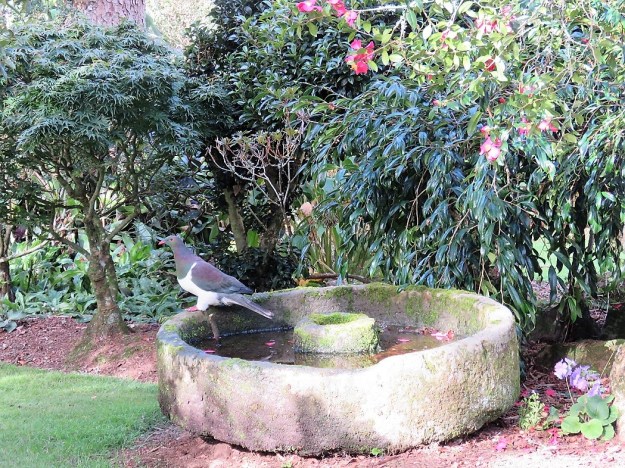
We have treated water – a swimming pool. Once that is up and running for the season, it doesn’t take much to keep it clean because we have a salt filter on a timer. We have still water – two pond features with goldfish and an historic mill wheel which serves as a bird bath. The problem with the mill wheel is that, without fish in it, the mosquitoes breed up within about three days so we have to drain it and replace the water often over summer. True, mosquitoes breed up anywhere there is still water, even in the bromeliads (and we have quite a few of those). But the mill wheel is close to our bedroom window so I blame that for the incursions of nasty, blood sucking critters in the night.

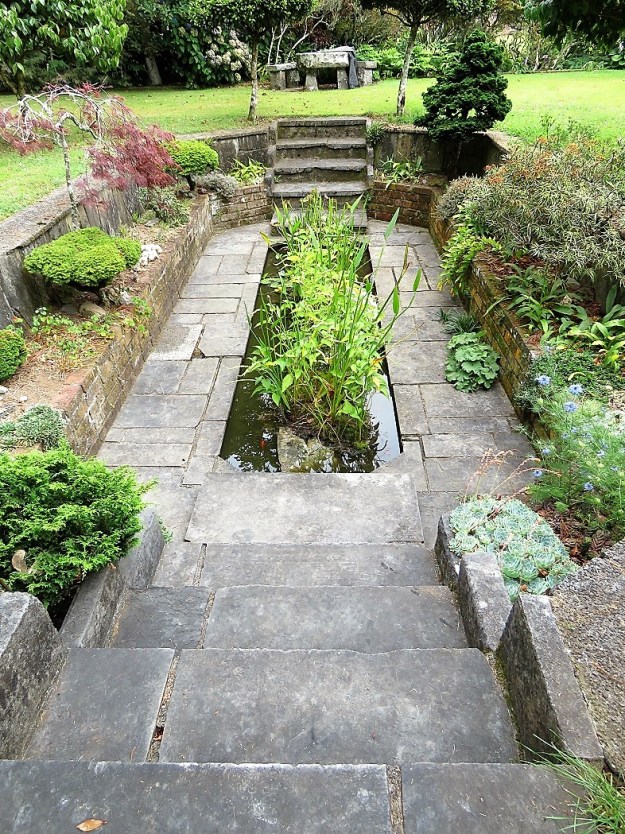
I cleaned out the excessive growth of the aquatic plants in the sunken garden this week. Goldfish stop this from being infested with mosquito larvae.

The goldfish ponds are relatively easy care. I go thorough a couple of times a year to scoop out the build-up of rotting detritus and to restrict the growth of the aquatic plants and we have to top them up with water in dry spells. The pond at the bottom of the sunken garden is too shallow so it evaporates quickly and we often get algae spreading that needs scooping out with a sieve but it is all pretty straightforward.

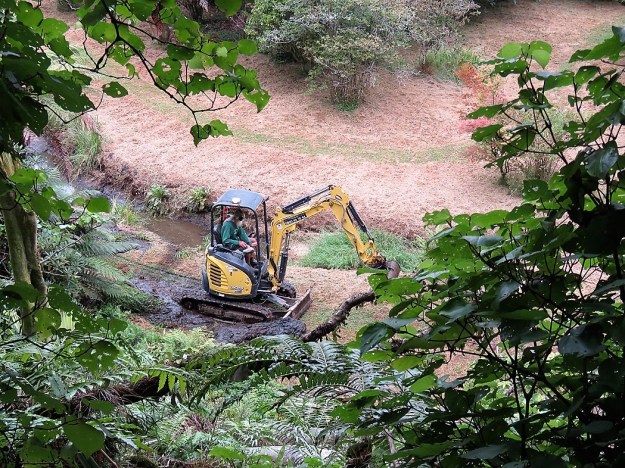
A last resort – Lloyd on the digger. You can see the mat of grass that had established on the choking silt.

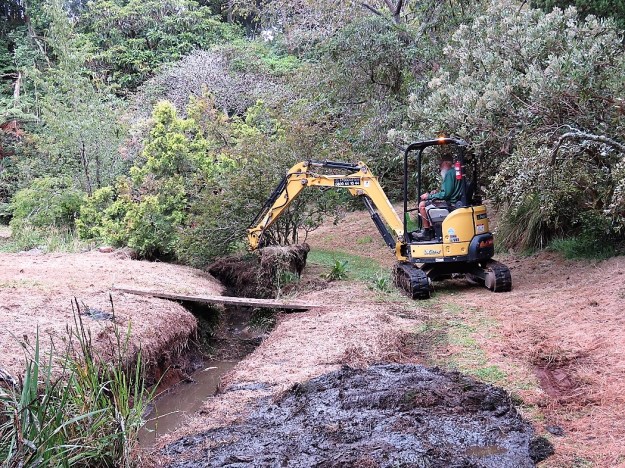
Running water – the stream in the park – is nowhere near as simple to maintain. This week, we admitted defeat and hired a digger. We haven’t put a digger through the stream for about 25 years and it is an absolute last resort because it destroys the entire eco-system. Generally, we can get away with going through with a long-handled rake and drainage fork every couple of years to haul out the excessive growth of choking weeds – back breaking work but kinder to the environment. This time it was beyond that and the issue was the excessive build up of silt. We were at the point where the stream was turning into a swamp with little water movement.

There were four reasons for this state of affairs and only one of those was caused by our management. The water that flows looks clean enough to the naked eye. As Mark observed, it is a good example of how a visual assessment is not an accurate guide to water quality. Because it flows through farmland upstream, the silt loading is high. It runs dirty every time it rains and and over the years, the silt dumped on our stretch had built up. It also carries a very high nutrient loading from farm runoff and that means we are battling water weeds all the time. Then when the culvert at the corner was replaced last summer, it involved earth works on our place and the soil was not compacted so there was a major collapse during a flood. That reduced the water flow through the park by at least 50% with the water going over the weir and down the flood channel instead. Digging out that silt bank blocking the stream was too big a job to do by hand.

Neither Mark nor I were game to try driving the digger but fortunately Lloyd is not afraid of machinery though cautious by nature.

The fourth problem was of our making. When we decided to manage the park as a meadow and reduce mowing to just twice a year, we also stopped strimming the banks of the stream. With the build-up of silt and the greatly reduced water flow, the grass had invaded the river and formed a mat that was too heavy to dig out by hand. Hence the digger. We can’t get a big digger in because of access restrictions and the placement of many trees and shrubs so Lloyd spent two days quietly and cautiously working his way round the areas that could be accessed safely from the cab of the little digger. Its reach is not long enough to scoop the two ponds we have so they remain an unresolved issue at this stage. We are thinking we want to create a channel for the water and turn the ponds into bog gardens but the details of how we manage that transition are not quite clear yet. Natural ponds are even harder to maintain than the stream and we think it is time to draw the line beneath having those.

Mark will probably plant trees to shade more of the stream. When water is shaded, it stops the rampant growth of choking water weeds and it is much easier to stand on the bank and rake out what is there.

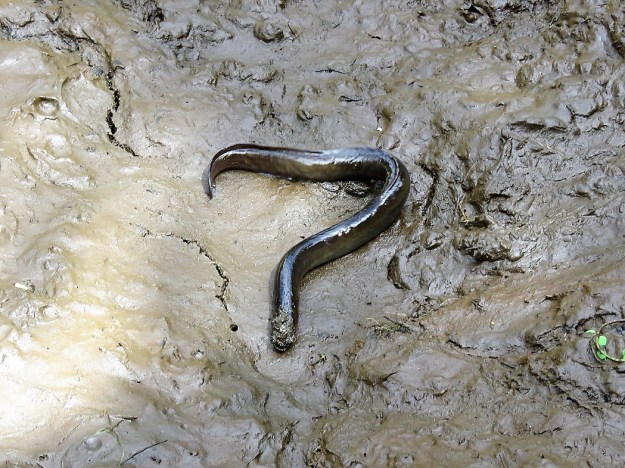
This was just a small eel that appeared a little disoriented at finding itself on dry land. I helped it find the water again.

I have a vested interest in this. I have found that it is easier to weed the stream by dropping the level (which we can do with the weir and the flood channel) and getting in the water to clear it. It is a very muddy procedure but easier on my back than doing it from the bank. I started doing this last week before we decided to get the digger. I cleared one stretch of several metres but I can never get in that water again. The next day, I was back again, this time raking from the bank just down from that area I had cleared. And lo, there was a very large eel undulating through the shallow water. I am always aware of my tendency to hyperbole so I didn’t want to exaggerate its size but Lloyd spotted it sunning itself the next day and estimated it to be about 80cm or more in length with a girth behind its head of close to 50cm in circumference. I knew we had eels. I had to head one in the right direction to get back in the stream and I have seen many small ones. But that is too large an eel for me and there may well be more than one of them that size. I am scared of eels.

The aim is to manage the stream without needing to resort to a digger again – at least in our lifetime.

Summer thoughts

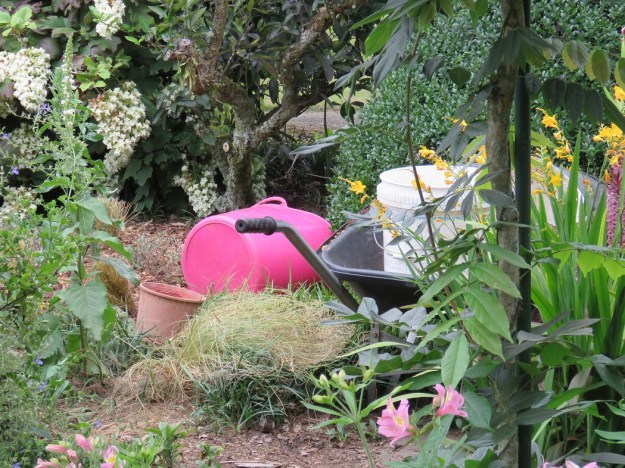
“I thought I saw you bent over, working in the garden,” Mark said. “And then I realised I was talking to a pink bucket.”

I went looking for the pink jacket made from Nana’s old bedspread and I found a whole lot of pink  clothes that the elder daughter does not wish to part with so has left here. Most i sewed for her 20 to 25 years ago and most are recycled from fabric Nana had used or stored, although I can not take credit for the pink prom dress on the right!

In self-defence, he would like it known that he was some distance away at the time. And I would like it known that I would not be seen dead wearing skirts, shorts or trousers in that shade we refer to as highlighter pink – on account of highlighter pens. Mark’s late mother had a penchant for that hue in both clothing and, occasionally, soft furnishings. When we moved in to the homestead, we found one such relic – a nylon quilted and frilled bedspread in bright pink. Our elder daughter was 16 at the time and took a liking to the colour so I made it into a quilted jacket for her, to be worn with a rather small pink brocade skirt also made from some repurposed fabric left behind by her Nana. Amusingly, she has kept onto it and it hangs in the wardrobe of her old bedroom here with other favoured clothes from her youth. It is like a trip down memory lane every time I look in there.

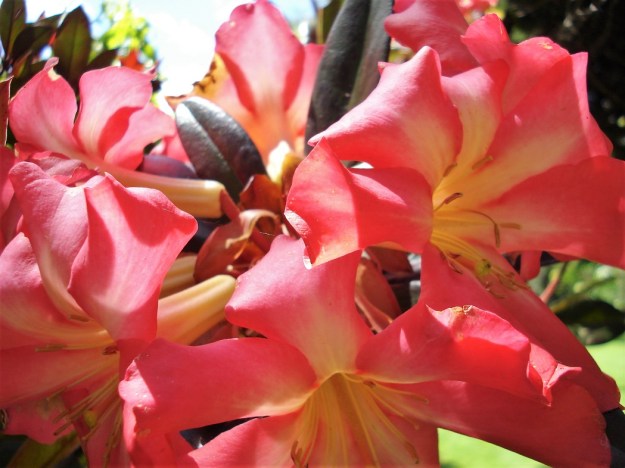
Vireya rhododendron Pink Jazz

It was this passion for pink – bright pink – that led Mark to name a bright pink and yellow vireya rhododendron for her. He prefers descriptive names for his plant selections and rarely names them for people (the notable exception being the magnolia he named for his father, Felix Jury). When he does, it is by allusion. So, our JJ’s vireya was named ‘Pink Jazz’ – Jazz being the name her friends called her. Each time it flowers in the garden, I smile at the memories. (And, to pre-empt enquiries, we have no idea if it is still in commercial production. It is not one we kept any control over so other nurseries can produce it – or not- as they choose.)

I had been admiring the crop of figs that was coming along nicely. Our fig tree carries two crops – the first ripens in mid-summer and the later crop only ripens in autumn if we get a good season. But when I thought the first ones may be ripe, I looked closely and the crop was greatly reduced. The birds are not as fussy as we humans when it comes to savouring the delights of a fully tree-ripened crop.
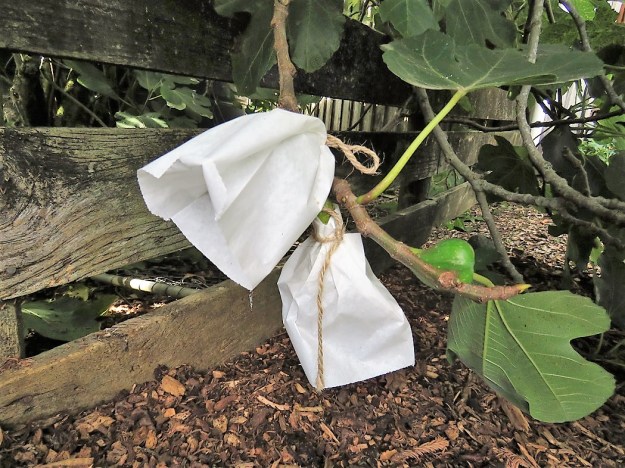
Bagging figs so they can ripen on the tree before the birds get them

Now I am bagging the individual fruits. In a nod to growing concerns, I have shunned the white plastic bags with the bottom cut off and freezer ties we have used in the past. This year, the fruit are individually bagged in paper (no need to cut the bottoms off with paper, Mark told me after I had done the first few) and jute string so fully degradable if any land on the ground. It takes a bit of effort but the rewards of tree-ripened fruit warmed by the sun make it worthwhile. I must put some good camembert or brie on the shopping list. Is there anything more delicious than a platter of ripe figs, soft brie, my fresh grapefruit jelly made this week, walnuts and homemade oat crackers?

It is high summer here and Lloyd has started to mow the meadow. We have learned from our experience that in our verdant conditions, we must mow twice a year – once in high summer and then again in late autumn. The grass loading is just too great to deal with if we only cut it down once a year, as is recommended practice from places where conditions are harder and grass growth is a great deal less.

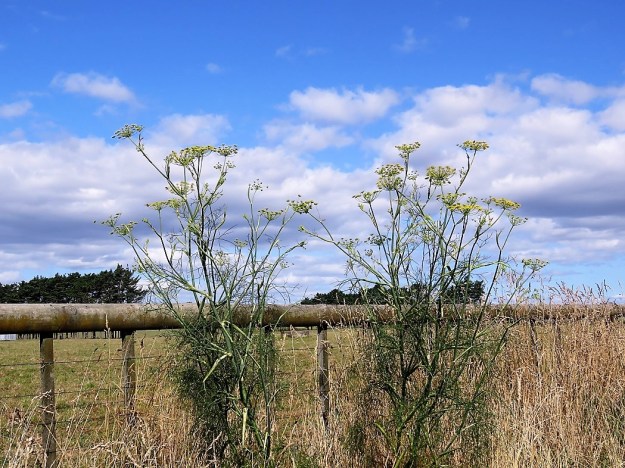
Fennel, not a ‘yellow lace-cap hydrangea’

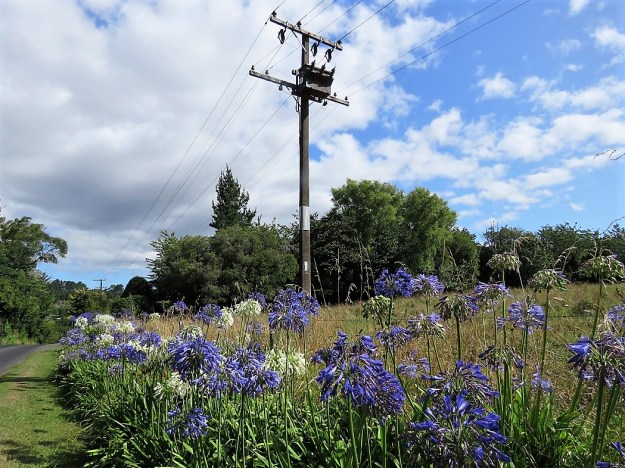
The roadsides in our area are full of flowers at this time of the year – crocosmia, hydrangeas, agapanthus and fennel in particular. Whether you see these as weeds or wildflowers is entirely a matter of personal opinion – it is a bit like the glass half-full or half-empty scenario. I stopped to photograph the wild fennel and agapanthus because it reminded me of the English summer visitors that arrived one year. I have told this story before so apologies to long-term readers who may have read it earlier. These visitors wanted to know what the ‘yellow lace-cap hydrangeas’ and ‘giant bluebells’ were that they were seeing everywhere. I managed to identify the former as fennel but could not for the life of me think what the giant bluebells were – until I drove out our gateway and it dawned on me that they were the lowly agapanthus that is so happy in local conditions that it has naturalised itself. Agapanthus is not generally favoured as a garden plant in most of NZ – too common, more often seen as a weed. But in midsummer, our roadsides are glorious when they bloom.

The maligned roadside agapanthus


Tikorangi Notes: underplanting, gardening with perennials and the magnificent nuttalliis

Pretty Rhododendron Yvonne Scott (nuttallii x lindleyi x dalhousiae) with a named clematis but I have lost its name – relevant to the last para on this post and a prettier photo to lead with than the mishmash of a garden bed below 

Not good at all. The addition of roses was a particularly ill-considered decision

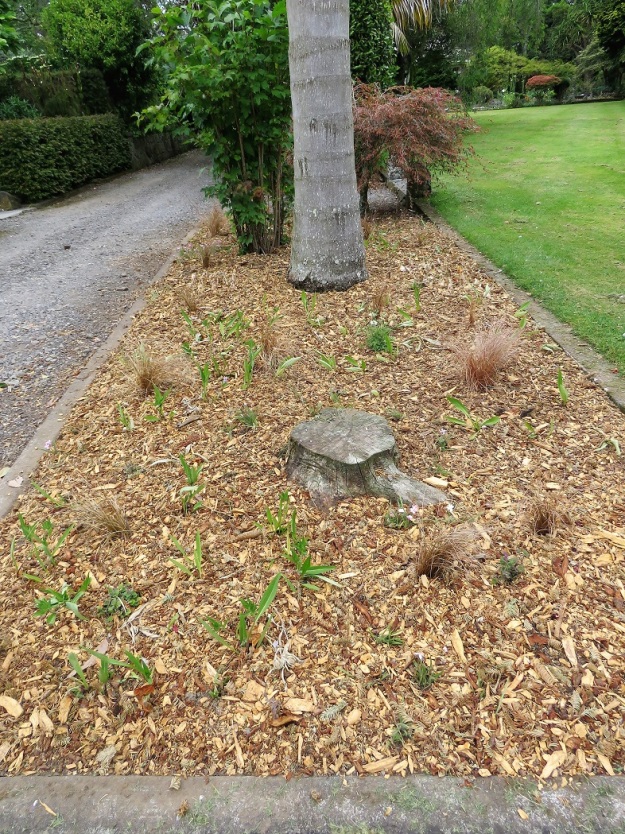
I spent a good four or maybe five days taking this unsuccessful garden bed apart. It was first planted about 14 years ago and the original idea was that it continue the theme of the driveway border – mixed shrubs with predominantly hellebores as underplanting. It has never thrived and over the years, its treatment has followed a pattern that many will recognise – random attempts to spark it up that have made it messier and more disjointed.

I lifted everything except the Queen palm (Syagrus romanzoffiana), an attractive Viburnum sargentii ‘Onondaga’ and Camellia minutiflora. The location is too sunny for the hellebores and they were not thriving, so I planted them elsewhere. And I found why the plants at one end had never thrived. I could only get the spade half way in before I hit what might as well be bedrock. It was the old driveway with very heavily compacted road metal. I recalled that Mark had got the nursery staff to plant that bed when it first went in. Now, our nursery staff were whizzybang at speed-potting plants and doing the hard graft of keeping a production nursery going but gardeners, they were not. I am guessing they chiselled holes just large enough to fit the plants in. No wonder so many failed to thrive. There was nowhere for them to get their roots down.

The aim is to have a carpet of harmonious under planting by the end of summer

I took out any larger stones and rocks I could get out, dug the soil and incorporated compost at a rate of a small barrow-load per square metre. There is still not a great depth of soil but what is there should be better and I won’t try growing any more deeper-rooted plants at that end. When it came to choosing what to replant, I fell back on my mixed border philosophy. When there is a mixture of shrubs in the upper layer, it is better to choose some uniformity in the ground cover layer. The opposite is also true: where there is uniformity in the upper layer of shrubs and trees, it is more interesting to use a mixture of plants at the ground level. It may be a sweeping statement (well, it is) to say that only landscapers, non-gardeners and novices go for regimented simplicity of matching upper layer plants and a single choice ground cover – tidy, visually effective in the immediate stage but essentially dull.

A totally reliable stoeksia that is particularly amenable to being divided and transplanted

Given the feature shrubs and palm are interesting in their own right and the presence of assorted seasonal bulbs, I chose to replant at ground level with the reliable, long flowering blue stokesia which thrives with us, a ground-hugging blue campanula and two forms of our native brown carex grass.  The upright form is Carex buchananii , I think, but I am not sure what the fountaining version of it is called. They are to form the carpet. I like the combination of blue and the mid-brown carex. Then I mulched it all. Now all it has to do is to grow.

May 2019

November 2019

It is quite gratifying to see how much the grass garden has grown since I planted it at the end of May. I am hoping that it will have closed up quite a bit by the time autumn comes. There have only been a small number of deaths amongst the plants – all were  Astelia chathamica and fortunately, I have more plants to hand that I can move to the gaps. The advice from colder climates is not to move perennials in winter because they are not growing and the risk is that the roots will rot out over winter. With our mild winters, this advice does not generally apply here but that may be the case with the astelia. The divisions all had roots when they went in but it may be that some did indeed just rot out before they came back into growth in spring.

My main task in this new garden is staying on top of the weeds. Considering it is new ground, there is not a big weed problem at all and I am determined to keep it that way as it gets established. Weeds getting a hold amongst the fibrous roots systems of perennials and grasses can be a maintenance nightmare. It is better by far to keep them out from the start, as far as humanly possible. Because it is all ground that has been freshly dug this year, it is easy to hand pull those pesky weeds that do try and make an appearance.

Eighteen months to fill in seems a quick result

Even more rewarding is to see the caterpillar garden hitting its stride – nicely filled out, floriferous already, weed-free and colour-toned as I want it. It has taken about eighteen months to get it to this stage. Gardening with perennials is very different to gardening with trees and shrubs. As long as you have plenty of divisions and the ground is well-prepared, the plants can rocket away and fill spaces quickly.

Species selection of R. sino nuttallii, singled out for its unusual pink flush

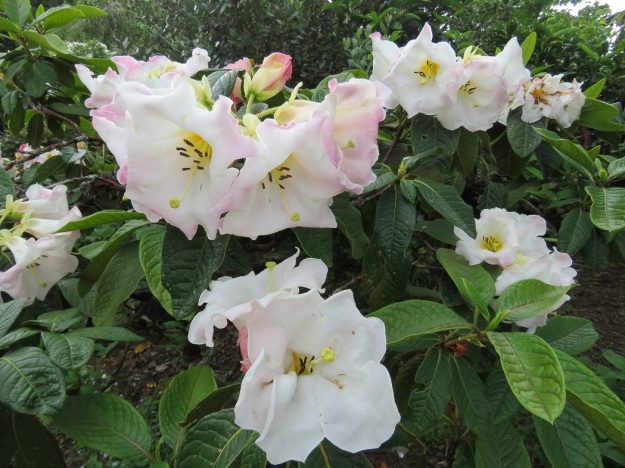
However, no perennial can compete with the sheer magnificence and stature of the nuttallii rhododendrons that flower for us at this time of the year. These are not often commercially available – at least not the sino nuttallii species. You may sometimes find some of the hybrids around that are nuttallii crossed with lindleyi, sometimes with the addition of dalhousiae. If you find ‘White Waves’ on offer in New Zealand, it is proving to be one of the best of the hybrids we grow – reliable and a good survivor as well as very showy indeed. “Mi Amor’ is also available for sale. The hybrids have smaller leaves than the nuttallii species and are not all as strongly scented  but you may just have to take what you can find if you want to try growing these choice rhododendrons.

Rhododendron nuttallii x sino nuttallii – so the Tibetan form crossed with the showier Chinese form


Farewell Noble Fir

Abies procera glauca – a handsome tree in the wrong place

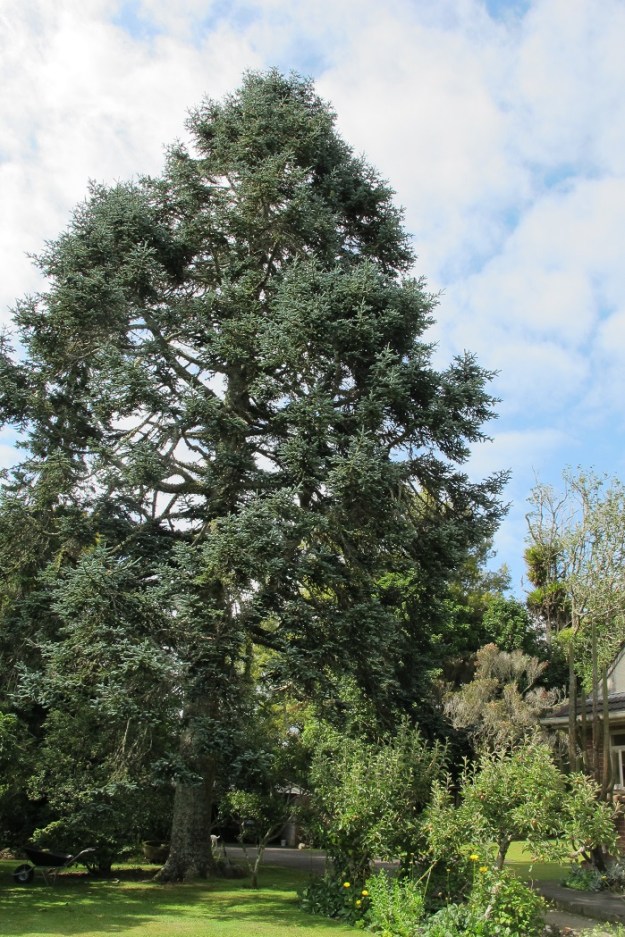
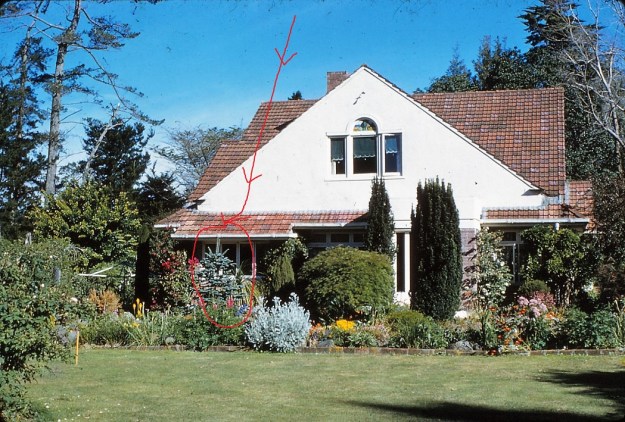
Farewell Blue Noble Fir. The Abies procera glauca is no more. This was not a decision we reached lightly. The tree was almost as old as our house, planted in the early 1950s. It started life here as a pleasingly pyramidal tree in the rockery but when it soon showed that it was not going to remain suitably compact, Felix moved it to a new location beside the driveway. It was placed so it did not block any sun from the house, though it did cast shade over the washing line. And it grew and grew.

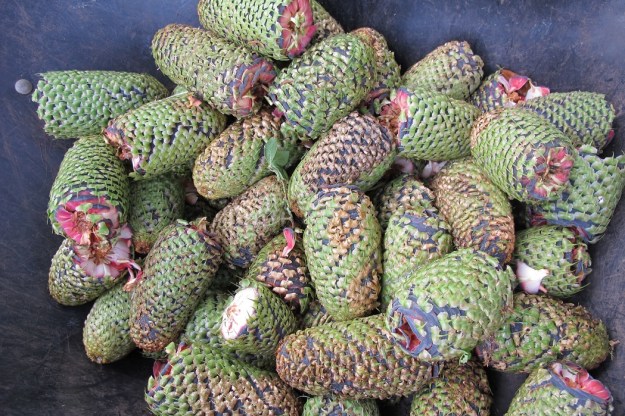
Abies procera cones – several barrow loads fell every year

Abies procera is native to USA, particularly north west California and Oregon and it can grow to 70 metres high, some recorded even at 90m. I do not think Felix checked its potential height when he planted it or he would have put it down in the park. In its 65 years here, it reached maybe 25 metres and it was not stopping growing. Mark began to express anxiety about it several years ago. It took me a while to come around to the idea of removing such a handsome specimen. As it grew taller, its spread also increased and Mark was getting worried that the enormous cones – up to 20cm in size – would soon start falling on our fragile roof tiles. They would crack every tile they hit. We have never had either person or vehicle hit by a falling cone but that is more by good luck than good management, given its prime location.

Oh look! There it is in the rockery in the 1960s before being moved further (but not far enough) from the house

More worryingly, the weight of the tree was on the side closest to the house which meant that if it came down, it would fall on the house. It would, in all likelihood, demolish much of the house. With growing experience of falling trees here and mindful of the high probability of increasingly severe and frequent weather events, it just wasn’t a risk we were comfortable taking any longer. We have many trees, some very large, but this was the only tree that threatened the house.

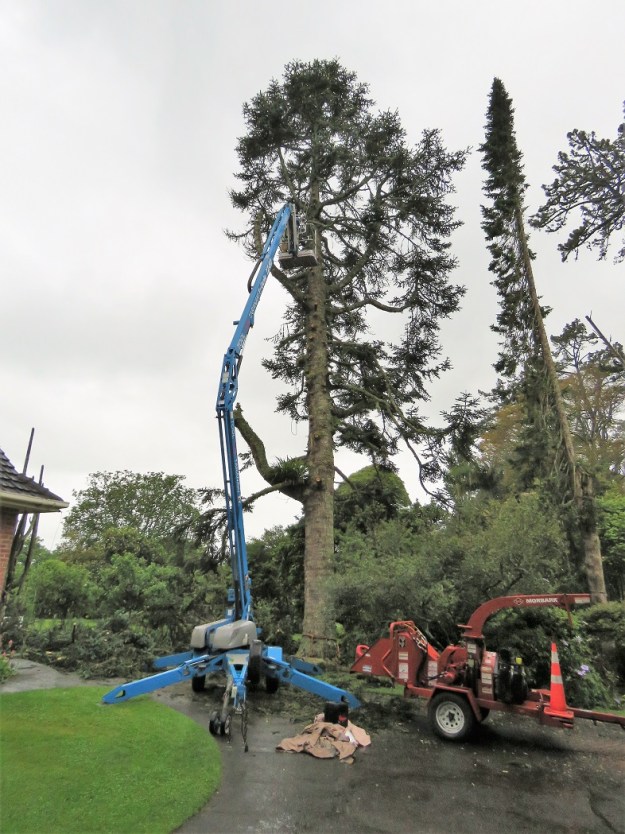
This was a job for a specialist Because of its sheer size, its location close to the house, surrounded by some rather special plants we wanted to save, stone walls, pond, septic tank and other considerations, it was going to need to be dismantled and taken down branch by branch. We discovered we had an arborist up the road and asked for a quote. The price came in at considerably less than I had feared and we crossed our fingers that he knew what he was doing. He did.

The location and flat grown meant a cherry picker could be used, for the lower 17.5 metres at least

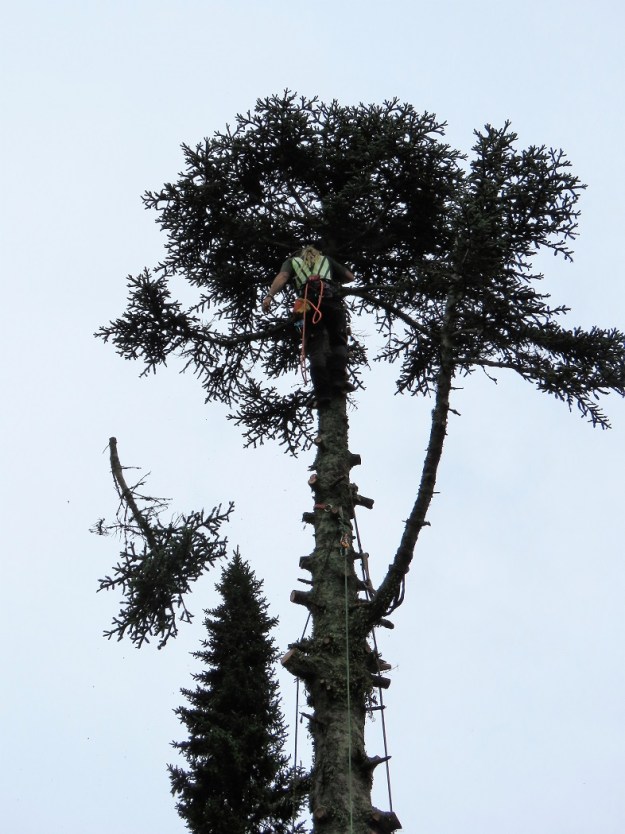
The operation took two days. On the first day, he used a cherry picker with a reach up to 17.5 metres to remove almost all the side branches and foliage. Goodness, the cherry picker makes an arborist’s job much easier, faster and presumably safer. We watched in admiration as he was able to control dropping branches in the few, available clear spaces before he had to move onto roping and then lowering larger pieces by winch. It was only the top eight metres he had to do by climbing into the tree.

On day two, he dropped the last length of stripped trunk in one piece. He and his assistant – on this occasion, his wife – cleaned up as they went, chipping the branches and foliage so that we now have two truckloads of fresh garden mulch. When he left at the end of day two, everything was cleaned up except the wood that is to be split for firewood. All the mess had been raked up and the paved areas cleaned with a leaf blower. The total damage was limited to holes in the lawn where heavy branches had hit and one camellia that is a little smaller than at the start. Given the tight space he was working in, we were super impressed.
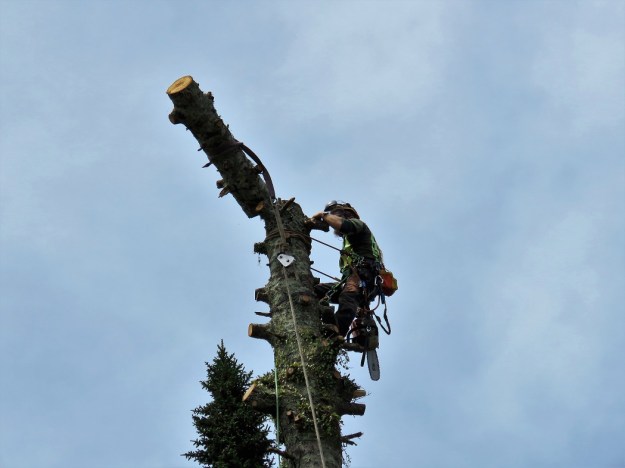
If anybody local wants a skilled (and cheerful) arborist, contact me. We are happy to recommend him.
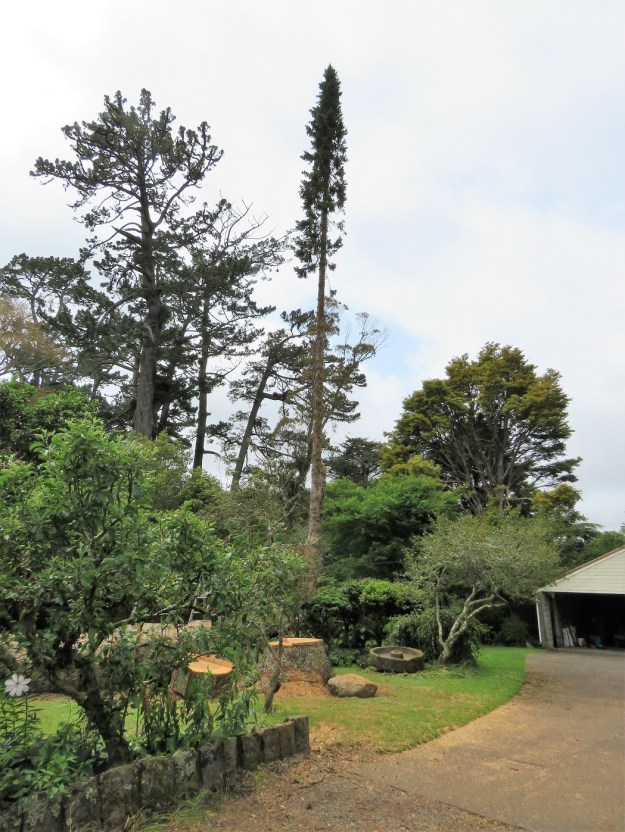

For those of you curious about the firewood: yes, there is plenty of it but it is really just like soft pine so fine for burning but not top quality.

Picea omorika is the narrow tree in the centre. It, too, will have to be felled before it falls of its own accord

The Picea omorika still has to be dropped. Again, we hesitated but it will fall too, and probably sooner rather than later. It is a good example of a tree that was not kept to a single leader in its infancy. It grew with three trunks. Two have split out in storms in recent years, which is why we think the remaining trunk will also go. If we get it dropped, the damage can be controlled and I can still keep the essential bottom two metres to which the washing line is tied.

Alas poor kereru

We certainly felt sad to fell a mighty Noble Fir. We felt even sadder when on day two of the process, a kereru (our lovely native wood pigeon which is regarded as vulnerable, though not endangered) flew straight into an upstairs window and died. We had wondered why birds did not hit those windows when they hit the other upstairs windows, but now realise that it must have been the proximity of the tree that slowed their flight. I went to town the next day and bought a curtain rail and sheer curtains to screen the windows. While we would prefer not to have screened windows, the threat to birds from our double-glazed windows which turn into mirrors on the outside, outweighs our personal indoor preference. Bird strike is not a problem when windows are open because of the change in angles, so we hang screening curtains on curtain hooks and rail (as opposed to curtain wire) so they can easily be pulled to one side when the windows are open.

Maybe the key point of our late Abies procera, is that when planting trees, it pays to look to the future – not 20 years but 50 or more. A miscalculation by the previous generation can leave a vegetable time bomb for the next.