Category Archives: Tikorangi notes

Tikorangi notes: Friday 16 July

Latest posts
1) Early, frilly and fragrant – one of the first rhododendrons for this season is R. cubittii.
2) Exotic trees versus native plants – Abbie’s column (spare me from politically correct ignorance).
3) Cranberry update
4) In the garden – tasks for this week.
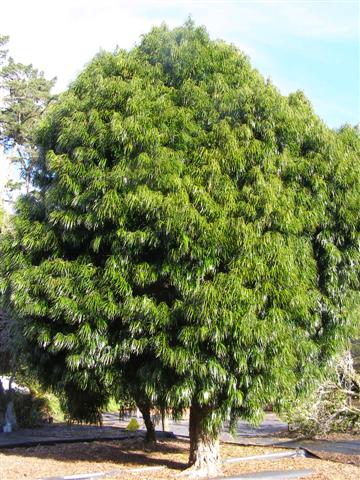
Our magnificent Podocarpus henkelii will see the nursery capillary beds surrounding it both come and go in its lifetime

Tikorangi update:
I was listening to a radio interview last weekend with Peter Arthur, a keen dendrologist and NZ’s foremost retailer of garden and plant books. In a country where it is currently quite difficult to sell any plant which is not a vegetable or a fruit tree, he was asked to predict what the next big gardening craze will be. He didn’t hesitate: trees. A return to trees.

I thought of Peter’s comment as I looked at a beautiful specimen of Podocarpus henkelii. When Mark established the nursery here, he worked around existing trees on site so we have tended to have obstacles – a citrus tree amongst the vireya rhododendrons with the overhead shade cloth cut around to fit, an eriobotrya in the hosta block – and this magnificent African podocarpus set amongst the capillary beds. Now the day has come, as we wind up the nursery, that the capillary beds will go and the P. henkelii will be accorded the status it deserves as part of a planned new garden. It will have to share the limelight with the planned Palm Walk but it has at least four decades on the palms and will no doubt retain its status as the senior plant in this new area for our lifetime. I hope Peter Arthur is right and we will see a wider appreciation of the magnificence of trees. A utility apple tree is not, I think, a match for our P. Henkelii.
Tikorangi Notes: Friday July 9, 2010

LATEST POSTS
1) July 7, 2010: Vireya rhododendron saxafragoides is flowering this week – a distinctly obscure and different vireya species.
2) July 7, 2010: In the garden this week (and why citrus and avocado are essential home orchard trees here)
3) July 7, 2010: Bravely attempting to demystify rose pruning in our latest Outdoor Classroom.
4) July 7, 2010: Counting down to our annual Taranaki Garden Festival.
5) July 3, 2010: Camellia Diary number three where we celebrate Camellia Waterlily, a cultivar which I think could be described in the vernacular as an oldie but a goodie.

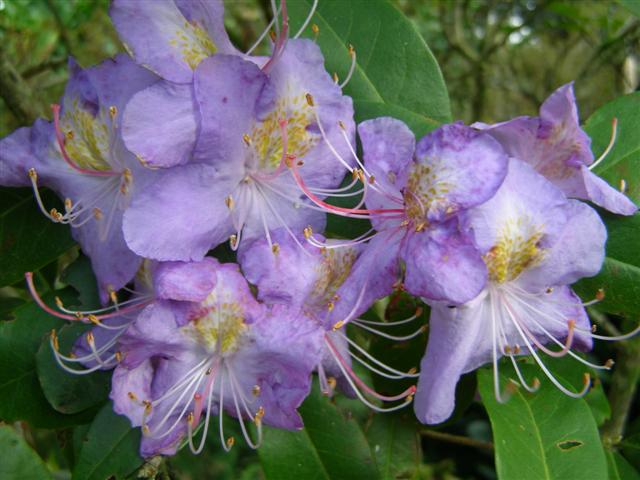
Rhododendron augustinii - a bit of a triumph in our climate

TIKORANGI NOTES
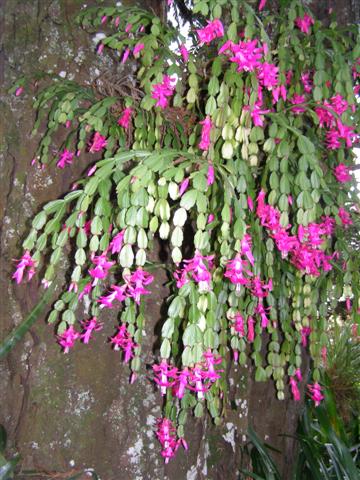
Probably the most exciting aspect of our gardening environment is the huge range of plants we can grow here. We have never been able to understand the mindset of those who favour mass plantings and the so-called restrained plant palette. Mark has been known to ask why on earth anybody would want to mass plant when there are so many interesting plants in the world to grow. So our mid-winter garden pictures this week are of Rhododendron augustinii and zygocactus.

The winter flowering chain cactus - more fun than polyanthus

I am not sure which form of augustinii this is (possibly the Medlicott form) and frankly we are just delighted that it is still alive with us because it much prefers a colder climate than we can give it here. On their day, you can not beat the species and augustinii is one of the loveliest species of all. The bronze beetle attacks the foliage (pretty well every leaf outside the photograph is notched all round), thrips can turn the leaves silver and there are smarter, neater garden plants but we rejoice when those lovely blue flowers appear each winter.

By way of contrast, the exotica of the chain cactus or zygocactus (schlumberga?) lightens up the dark woodland areas and is maintenance free and undemanding. We grow them as epiphytes, nestled into forks of trees or positioned on top of tree fern stumps. They have to be frost free and are generally grown in house plants throughout the world and they add a splash of cheering winter colour which I prefer to polyanthus.

Tikorangi Notes: July 2, 2010

Latest posts:
1) The winter flowering gem, Cyclamen coum ssp caucasicum – well suited to our temperate sea level conditions.
2) It is a funny thing that satire can get more response than a tightly argued piece. The response to this morning’s column published in the Taranaki Daily News on the topic of total public funding for Pukeiti Rhododendron Trust has been both positive and also considerably greater than I would expect from a usual fortnightly column.
3) It may be mid winter, but that does not mean gardening stops and we give our weekly hints on tasks which can be done.

The harbingers of spring - galanthus

TIKORANGI NOTES
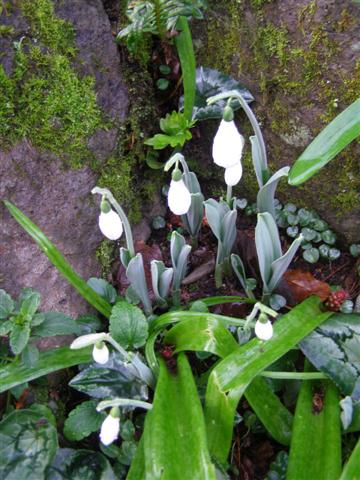
The first of the snowdrops, Galanthus elwesii, are now open and the daintier Galanthus S. Arnott are not far behind. These winter joys may be fleeting, but it is hard to find a simpler or lovelier winter picture. That said, we never get snow here. Never. While daytime temperatures in winter can drop down to single digits (as low as 8 degrees Celsius on a bitter cold day), they are interspersed with glorious days like today – bright sun, blue as blue sky and temps around C16. That is not bad for a temperate climate in the depths of winter, especially as it wasn’t preceded by a frost. That is why we garden for the full twelve months of the year here.

Tikorangi notes: June 25, 2010

Latest posts:
1) The formal perfection of Camellia Mimosa Jury – the cultivar bred by Felix Jury which we rate as his very best.
2) Mark’s Monarch Rescue Centre and other garden tasks for the week.
3) While we certainly don’t have gardening conditions that resemble its native habitat of sand dunes, Aloe thraskii shows a tolerance of wide range of condtions.
4) Outdoor Classroom this week is a step by step guide to pruning hydrangeas. Macrophylla hydrangeas.

Daphne bholua

TIKORANGI NOTES
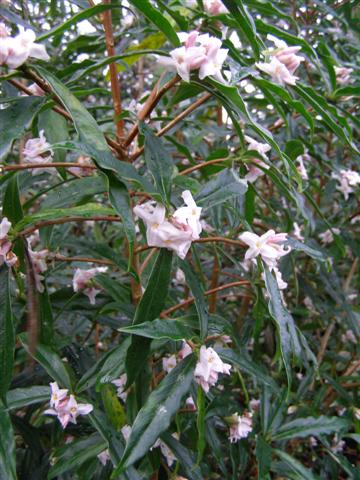
When Daphne bholua, the Himalayan daphne, first became available here, it seemed liked the best thing since sliced bread and we gathered every form we could find. While it remains a valued plant in our garden, it has not proved to be such an all-round wonder plant as we had hoped. After a few years, it can look pretty scruffy and its habit of being slightly semi-deciduous doesn’t help because it doesn’t drop its spent leaves early enough. Added to that, it sets seed so freely that it pops up throughout the garden to the extent that one can see some element of noxious weed about its ways. And it suckers all round the parent plant. But of all the daphnes, it must have the loveliest scent and a single plant can waft that fragrance metres away. And when that happens on calm days in the depths of winter, all is forgiven.

Tikorangi Notes: June 18, 2010

LATEST POSTS:

1) June 18, 2010 Camellia Diplomacy to breach closed doors in China in 1970 didn’t work, but the correspondence from Rewi Alley to Mark’s parents is pretty interesting forty years later – Abbie’s column.

2) June 18, 2010 The flowers of Dombeya burgessiae make a change to the more common camellias putting on a mid-winter show.

3) June 18, 2010 In the garden this week – recommended tasks from winter pruning, cleaning up pleione bulbs to the short directions on preparing an asparagus bed. Don’t forget to plant only NZ grown garlic.

4) Our annual garden festival at the end of October is still four months off, but gardeners around the province have preparations in hand and are counting down to Festival.

Mandarins - fetching winter colour in the garden

TIKORANGI NOTES:
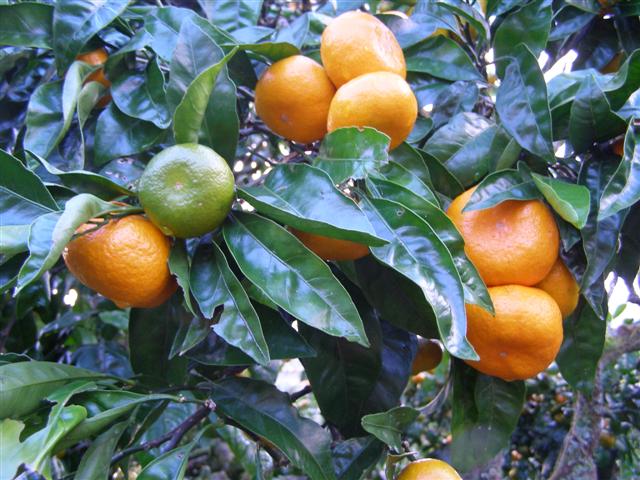
The winter sight of mandarins ripening in the garden here at Tikorangi never fails to delight me. My memories of my Dunedin childhood in the relatively deep south are of mandarins as a fleeting seasonal luxury to be treasured and savoured. I couldn’t believe the sight of entire trees dripping in the little orange orbs when Mark first brought me to his family home. This particular one is easy peel and productive but not the best flavour. However, it puts on a splendid visual display and combines well with the ferns, orange and yellow Lachenalia aloides beneath.

Rescuing the lawnmower from a watery slide

We are sodden here and entire days without rain are a rare treat, or so it seems after the last couple of weeks. Mowing the park yesterday, Lloyd managed to put our prized Walker mower in a slide which saw it in imminent danger of gently slipping into the stream. A chain and the tractor were called for. Roll on spring.