Category Archives: Tikorangi notes

Tikorangi notes: April 9, 2010


LATEST POSTS
1) April 9, 2010 Our chaenomeles never get bletted – Abbie’s column.
2) April 9, 2010 Autumn is the best planting time here for the ornamental garden – garden tasks this week.
3) April 7, 2010 Summer has hardly waved goodbye but it must be autumn – the early camellias are in flower. Camellia brevistyla.
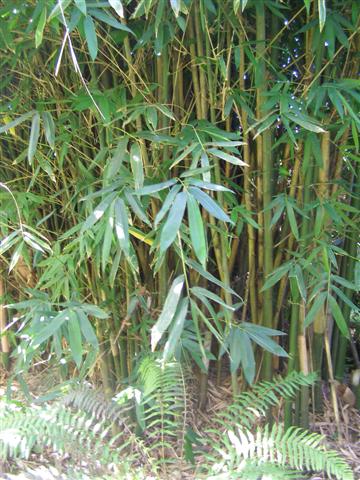
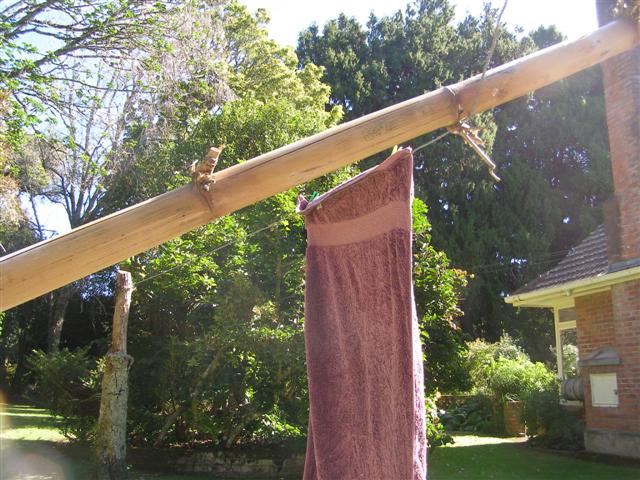
You wouldn’t credit how pleased I am with my new clothesline prop. While 95% of this country favours the rotary clothesline (originally styled the Hill’s Hoist, I am told), I quite like the nostalgia of the one wire strung between a dead tree trunk and another that looks as if it may be on the way out. This wire has served the house inhabitants well for 60 years and who am I to change traditions? The bamboo prop, however, requires replacement every five years or so. Fortunately we have a stand of this giant clumping variety on a small island in our park. Mark says he thinks this particular bamboo is one of the dendrocalamus family. There has been some resistance here to the suggestion that we could follow Asian traditions and build our own bamboo scaffolding when the upper story of the house next requires painting. The do-it-yourself ethos does not extend quite that far.

Tikorangi notes: April 6, 2010

Latest posts:

1) April 1, 2010 Garden tasks for the week, from buying bargain woody trees and shrubs from last season to autumn harvests.

2) April 1, 2010 Trimming and clipping formal hedges, our latest Outdoor Classroom. There is no doubt if you are going to have the sharp definition of a formal hedge, it might as well be done properly. We can’t do the traditional English yew in our climate – we have too high a rainfall and they get phytophthora and tend to die young.

Spike, to the left, ate the Easter bunny. Zephyr would have but he is no match for the speedy Spike

Easter has been and gone. Alas, few Easter eggs here as Spike ate the Easter bunny. Buffa the cat has probably eaten a fair number of the Easter bunny’s brothers and sisters too. We are dealing with a rabbit explosion and would have preferred the early settlers from Britain to have left the rabbits back in their homeland rather than introducing them to this country back in the 1800s. We would have been better off had they also left the possum in Australia. While on the subject, one wishes they had spent the long voyage at sea ridding the plants of the slugs and snails that hitched a ride.

Our autumns tend to be long and mild here, drifting slowly from summer to winter, which makes for brilliant gardening conditions.

Awaiting the mulcher machine, nikau palm to the fore.

The latest project is redeveloping an area of woodland. Most large gardens have messy patches – the areas one walks through quickly with eyes averted but I could no longer ignore this particular area. Lots of lifting and limbing and the removal of surplus plants have allowed more light in, the rediscovery of lines long blurred by too much growth and a feeling of open space again. The piles for the mulcher (chipper) have been prodigious and even the occasional nikau palm (Rhopalostylis sapida) has been sacrificed. This may seem too much for those who treasure the world’s southernmost palm, but they self seed freely here and while very beautiful, there is a limit to how many we need in the garden. Similarly the tree ferns, known here as pongas, seed all round the place and are often removed with the chainsaw. Having seen these greatly prized in Italian and English gardens, we are always a little amused that they are taken completely for granted in this country.

Tikorangi notes: March 26, 2010

Latest posts:
1) March 26, 2010 The colchicum autumnale are at their very best this week.
2) March 26, 2010 I think it is a myth that the mixed border is easier to maintain than a proper herbaceous border – Abbie’s column.
3) March 26, 2010 Dealing to the dreaded cabbage white on brassicas and other garden tasks for this week.

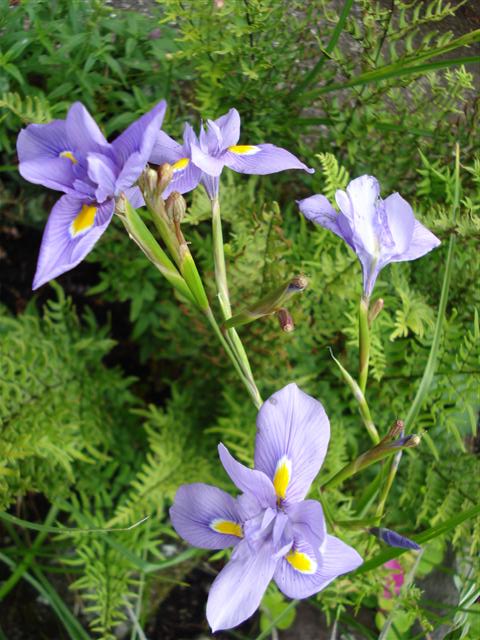
The small pictures of autumn - Moraea polystachya

Autumn is the season that makes us feel just a little forlorn here. In winter (which is fairly short and certainly not cold by international standards) we are always busy preparing for spring. Spring is abundant with flowers and certainly the prettiest time here. Summer is for sitting in the shade sharing conversation and a bottle of wine while enjoying the warmth. But autumn just means it is going to get colder and wetter sooner than we would like. It is not even as if we get good autumn colour, or much autumn colour at all for that matter. New Zealand’s native flora is all evergreen so our landscapes are dominated by green foliage twelve months of the year. And good autumn colour requires sharp changes in temperature as a trigger, best complemented by forests of deciduous plants. We just drift so slowly and imperceptibly from one season to another, particularly in our mild coastal location, that few plants get the message right.

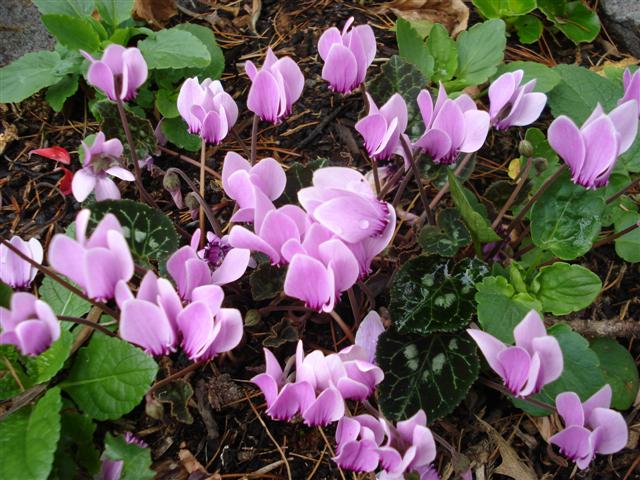
But what we do have are autumn bulbs. Cyclamen hederifolium, Moraea polystachya, the nerine sarniensis hybrids, colchicums, Haemanthus coccineus and ornamental oxalis are coming into their own and make very pretty pictures. They offer some compensation for the fading summer and remind us why, in a large garden, we treasure the very small seasonal pictures that the bulbs contribute.

The autumn cyclamen flower for a satisfyingly long time

Tikorangi Notes: March 19, 2010

Latest posts:
1) March 19, 2010: The simple purity of Lapageria alba and praise for the Chilean climbers which are almost never without a flower for us.
2) March 19, 2010: Outdoor Classroom on lifting and limbing – aka: a little bit of judicious pruning can make a significant difference.
3) March 19, 2010: In the Taranaki garden this week : With autumn approaching rapidly, we offer advice on garden tasks for the week ahead, including our usual plug for green crops and compost, along with advice on using animal manures.

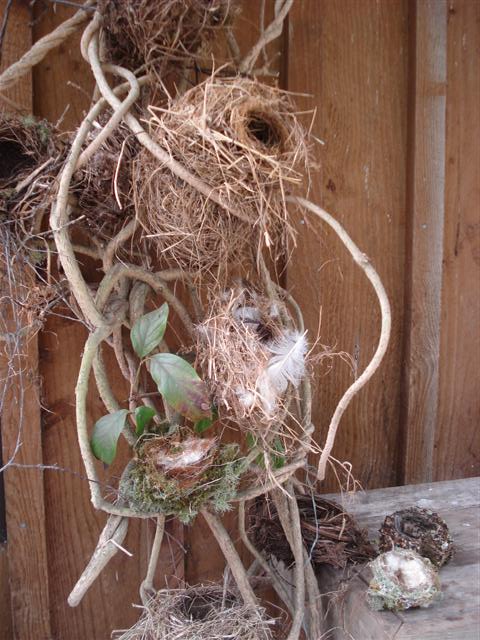
The growing collection of birds's nests

The growing collection of birds's nests

We have recently started a little collection of birds’ nests here and Mark is regretting that he did not start recording his observations years ago so he could chart the changing materials our feathered garden inhabitants have used over the years. While we try and minimise litter here, it is frankly alarming to see the number of Tuflok labels, plastic ties and budding strips that the birds find to line their nests. They are also stripping the threads of fibreglass from a clear roof here. I was particularly taken by the little chaffinch nest constructed from dried grass and lichen and lined in what looks like dog fur (I did trim our long haired sheltie for summer) but which Mark disappointed me by telling me was in fact the fibrous thread from our tree ferns (pongas). We have been bringing in the abandoned nests we find in good condition and arraying them under cover up the vinous stems of Tecomanthe venusta.

Tikorangi Notes: March 12, 2010

Latest posts:

March 12, 2010 The ephemeral delight of Rhodophiala bifida in late summer.

March 12, 2010 Early autumn garden tasks for this week.

March 12, 2010 Who should pay when a garden is uneconomic to run? Transferring the costs of running Pukeiti Rhododendron Trust to the wider public.

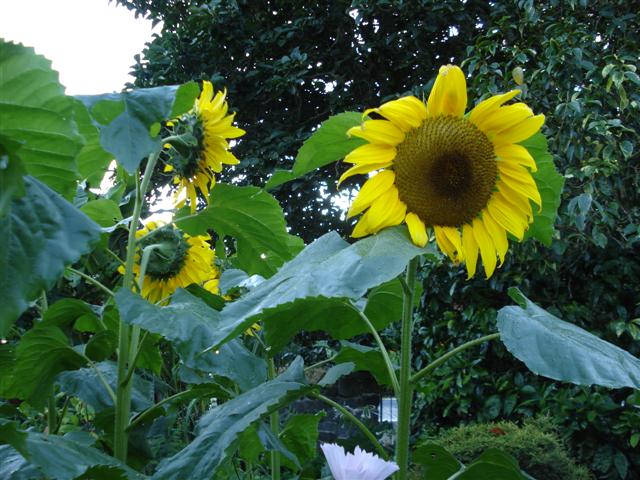
The case of the nonconformist sunflower.

The non conformist sunflower

As anybody who has ever grown sunflowers knows, the flowers face the morning sun. All but this one. In a row of sunflowers standing around two metres high, all are obediently lined up to curtsey to the east, bar one which is defiantly facing west. Theories abound. It has a contrary nature. It is a northern hemisphere sunflower, confused by the southern orientation. It was planted back to front. Mark is of the opinion that the other flowers voted it to be the watch flower to ensure there are no ambushes from behind. I just think it wants to be different.