 Trentham Gardens shows that it can get pretty close to being all things to all people. Even on a cool, grey Monday afternoon, the place was humming. Mark and I have a running gag about the “sense of arrival” at gardens. One day I will explain the origin of our cynicism about this but we worked out long ago that the greatest “sense of arrival” is a full carpark. And on this Monday afternoon, I photographed our rental car so we could find it again later. As an aside, you can have any colour of car you like in Britain, as long as it is black or grey. And one grey rental car looks pretty much like 80% of the other cars.
Trentham had a long and illustrious history before falling on hard times. Very hard times. The splendid Capability Brown lake apparently became the smelly, festering sewer for the Trent River and all who lived and worked nearby – especially the potteries for which Stoke-on-Trent is famous – resulting in the family vacating the grand home. When nobody wanted to take the estate off his hands, the 4th Duke of Sutherland committed an act of great vandalism in 1912 and had most of the house demolished. Why? Many must have asked that question down the years.
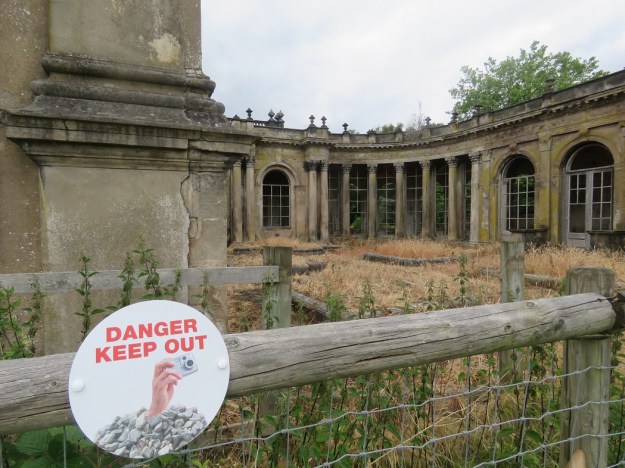
Why? The remains of the original house
St Modwen Properties certainly must have asked that question when they took over the property in 1996 and declared a brave mission statement:
“Regenerate and restore the historic Estate and gardens turning it into a premier tourist and leisure destination of national significance.”
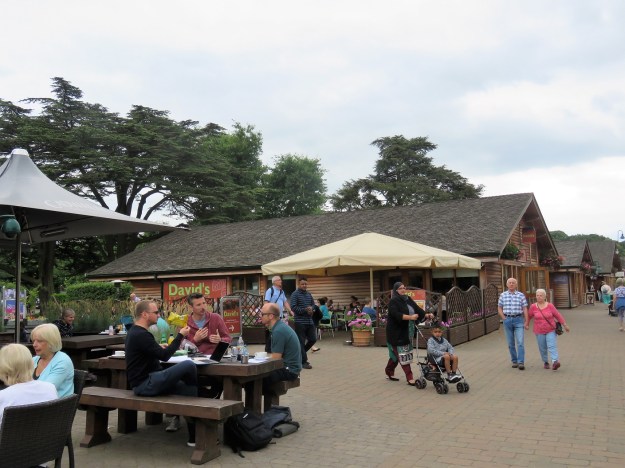
The shopping village – Swiss chalet naff?
 Those plans included extensive gardens, monkeys, a luxury hotel on the site of the original house (yet to materialise) and a whole lot more. Are they on track? They sure are. Moving from the well-filled carpark, you first encounter the retail village. True, it is what I might describe as ‘Swiss chalet naff’ in style but it appears to pull the punters and I bet the main street retailers hate it. We are not good shoppers so we passed through quickly.
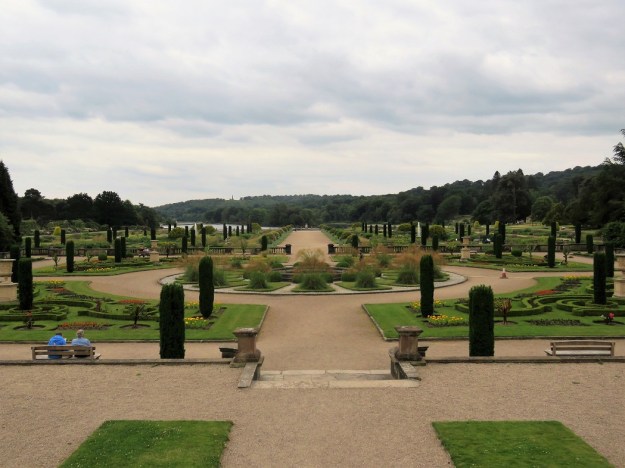
The Italian terraces where the main plantings are by Tom Stuart-Smith
We were there to see the Tom Stuart-Smith and Piet Oudolf gardens and then we found there were extensive new plantings by Nigel Dunnett. Three modern stars of the gardening scene is pretty good. And add in the David Austin rose border to make it four stars. But if ever there was a destination that fitted the “but wait there is more” descriptor, it is Trentham. There are summer concerts (see my footnote *). We did not go to the Monkey Forest (with real monkeys). Nor did we find the maze or the show gardens or go on the model railway. We should have taken the boat ride because the walk around the lake was closed for some reason so we could not get access to all the new Dunnett plantings. But honestly, there is enough there in the gardens around the site of the old house to keep most of us happy.
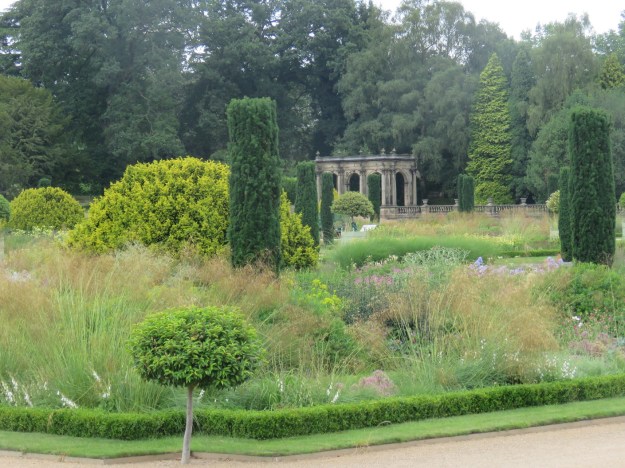
Looking across the Stuart-Smith plantings to a surviving original gateway
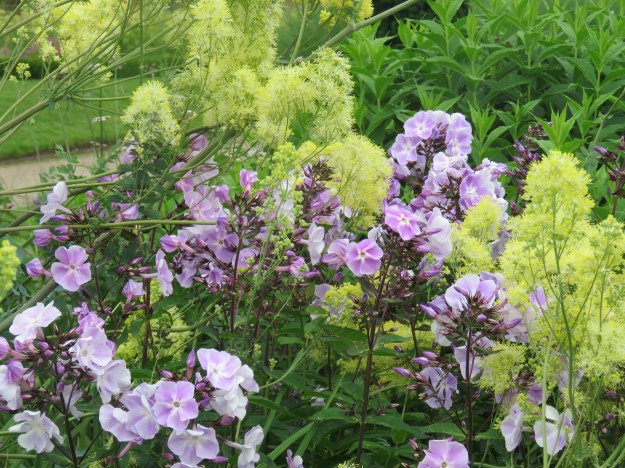
Tom Stuart-Smith planting
Put briefly, Tom Stuart-Smith has been given free rein on the original Italianate terraces. The planting is typical of his signature style that we have seen – big, bold and handsome combinations. The phlomis, Stipa gigantea, eryngiums, geraniums, tall campanulas and thalictrum all come to mind at this time of the year. We saw his beautiful terraces at Mount St John in Yorkshire a few years ago and the Trentham plantings are in a similar mode but on a much bigger scale. The earlier photos I had seen of the Trentham terraces had looked a bit bitsy but these have matured to generous plantings that envelop the visitor.
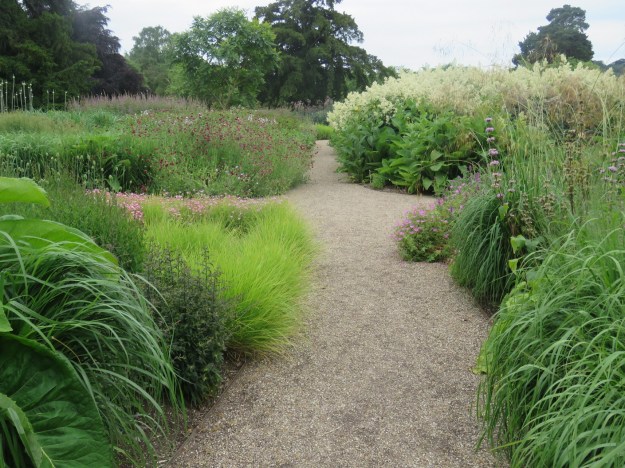
More signature Oudolf than “Floral Labyrinth” and we were a little too early in the season to see its full glory
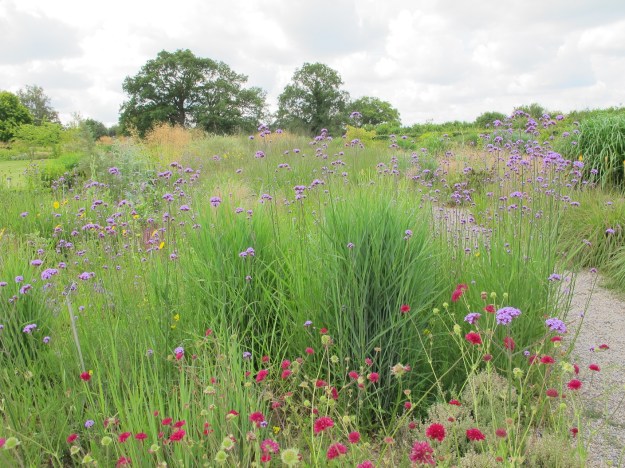
The Piet Oudolf gardens are styled as the “Floral Labyrinth” – do I detect the earnest hand of the marketing wing of Trentham in that name? Stylistically, they were similar to his work we saw at Pensthorpe in Norfolk on our last visit. Mark describes it as Gertrude Jekyll on steroids – carefully composed clumps of large perennials which will hold themselves up and not require ongoing dead heading, knitted together in a harmonious flow. When I say large, I mean a fair swag of them are shoulder or head height but no taller and a clump may be more than two metres across. We were just a little early for the full glory of peak flower but the veronicastrum and geraniums were lovely and there was plenty of other interest.
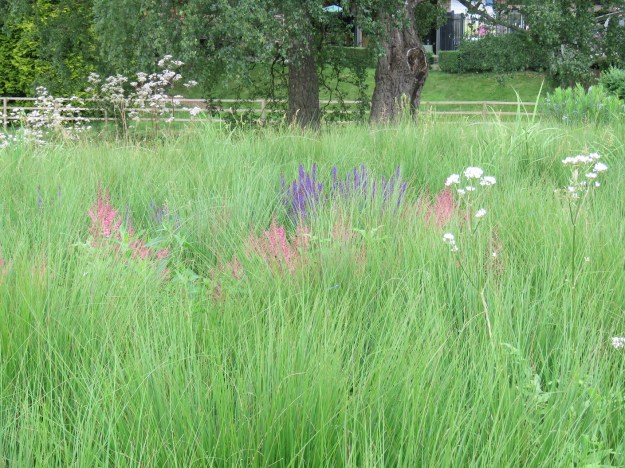
Piet Oudolf’s “Rivers of Grass” at Trentham
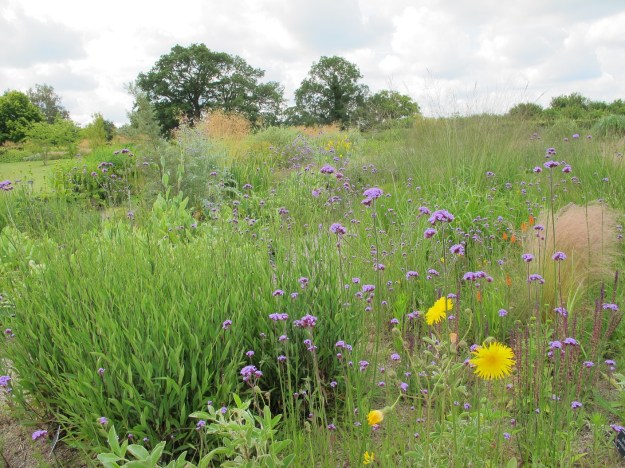
The Rivers of Grass were charming in a much lower key way. I deduced these were also the work of Piet Oudolf because there is a similarity to the meadow at Bury Court so I was pleased to be proven correct on that. Then I realised that Scampston in Yorkshire also has its Oudolf drifts of grass, though I was unconvinced by that one in a more rigid layout. All seem to use molinia which has a shimmering quality, seen at its best at Trentham on the day we were there, with the subtle inclusion of other flowering plants to add richness.
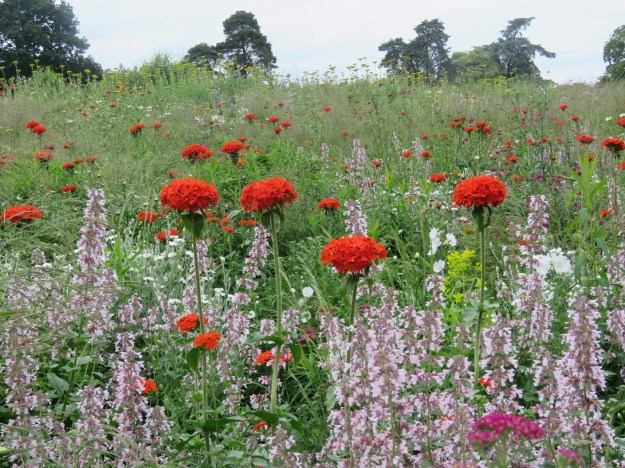
Dunnett at Trentham
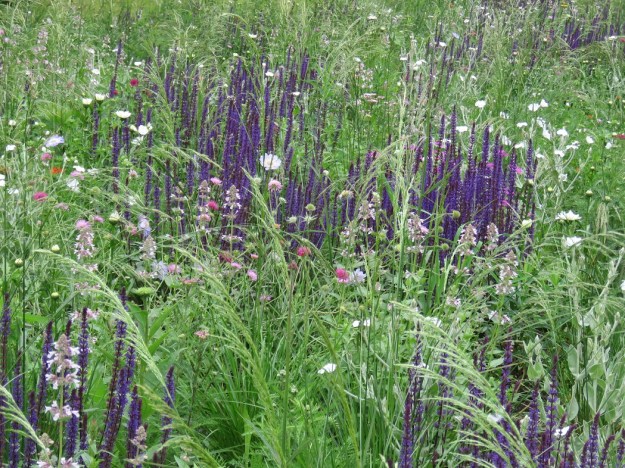
More Dunnett and his Sheffield team at Trentham
The newest plantings are those of Nigel Dunnett and his Sheffield team. The photos tell the story. These are so fresh and deceptively simple. Just a joy. It is the first time I have seen a Sheffield planting that is so tightly colour-toned as the blue border. Consumer demand? Further round the lake, I understand it is more woodland which would have been interesting had the path not been closed because we have only seen Sheffield plantings in full sun so far. What a delight they are. I see their branding is as “Pictorial Meadows” which seems an appropriate descriptor.
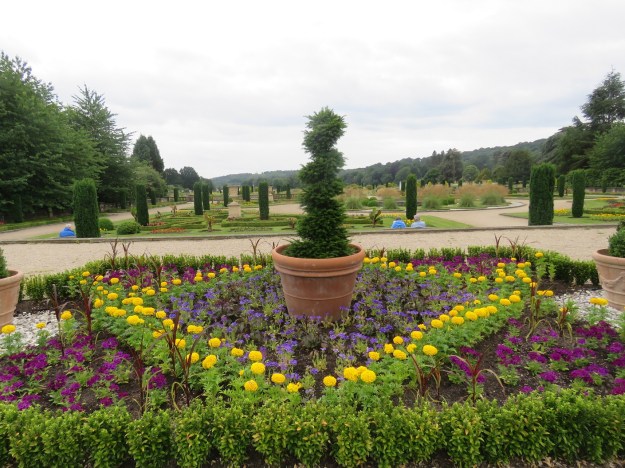
The ‘Upper Flower Garden” – oops
What is really interesting on this massive project is that a private business has looked to some of the top designers and practitioners working in the field of contemporary landscape, design and gardening to turn a very old site into a modern attraction. We are lucky indeed that St Modwen, as owners of Trentham, had the vision to go well beyond the obvious Victorian bedding plant tradition. It is a brave decision. If you are looking at a mass market, the reality is that the average Joe or Josie Public is going to be quite happy with bedding plants of the floral clock genre – lots of tidy colour planted in patterns. These are not entirely lacking at Trentham, as witness the “Upper Flower Garden”. I raised my eyebrows at these but I bet poor old Tom Stuart-Smith has to avert his eyes in horror when he stands on this top terrace to get a long view of his plantings out to the lake. But in the hands of a less visionary investment company, this could have been the story of the entire place.
My photos are entirely ‘of the day’ – a snapshot in time. When top-flight plantspeople are given free rein, they are not planting for a small window of time. These are plantings that are designed to take the gardens through the seasons, or at least three seasons from spring bulbs through to autumn colour with a more static picture of winter rest. This is a high level skill but never more so than in public plantings predominantly of perennials, where one planting must gently age and fade gracefully as the next wave of plants takes over. Which is to say that should you visit a month or two months later, the gardens may look very different but should still look as if they are at or close to their peak.
There is a really complex entry charge system, depending on which areas you want to visit (the gardens count as one area). Goodness me, you can even use Tesco Clubcard vouchers (Tesco being a supermarket chain). It is worth looking on line – I found a two for one weekday voucher there though I then felt a bit mean when I used it.
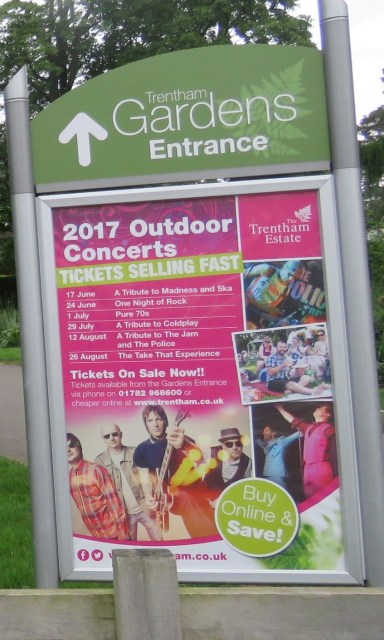 Postscript *I do not want to overstate the evening concerts. In fact I looked at the programme boards and wondered if it was just the one contracted band in different guises. The amphitheatre stage was but modest. Maybe they are catering to a specific local demographic, this year at least? On our last visit we saw Hatfield House in London preparing for a major concert. U2? Or was it UB40? I have waited three years to use my photo of the portaloos at Hatfield. Trentham is not trying that scale of concert at this stage but give them time. I am sure they will be looking at it for feasibility and profitability.
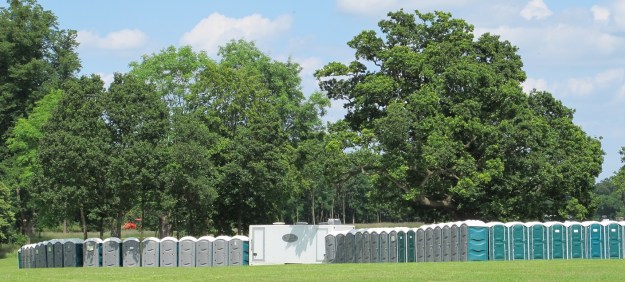
Portaloos at Hatfield House in 2014
Because I had many more photos than I could use on this post, I have added an album on Facebook.











 From
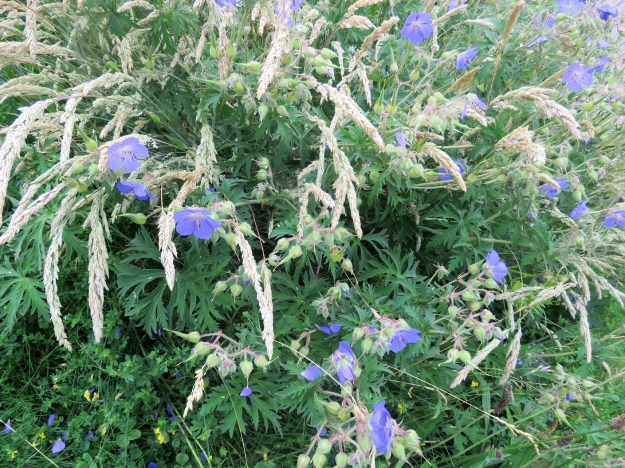
From 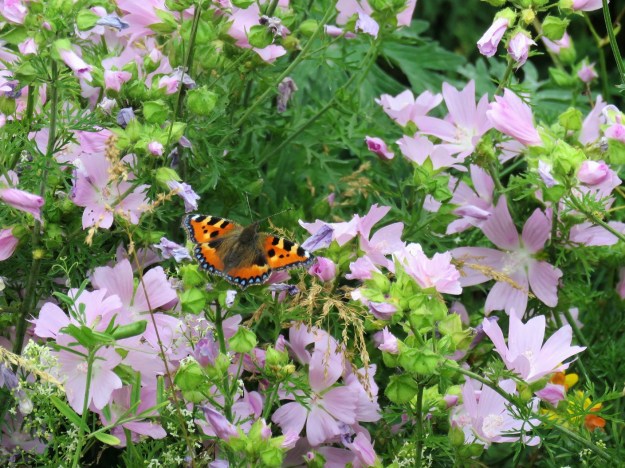 A prairie! Almost. Maybe. Though I admit I have never seen a genuine prairie. I think of early summer meadows as lush and green. These were more white and golden with a heavy population of grasses already in flower and seed and perennials that have naturalised within the environment. I bet a lot has been lost since 2012, but there are lessons to be learned in what can cope within this competitive environment. The charm within the detail was a delight.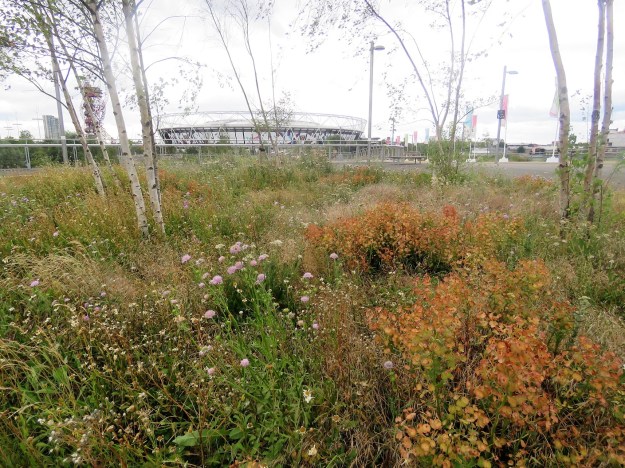
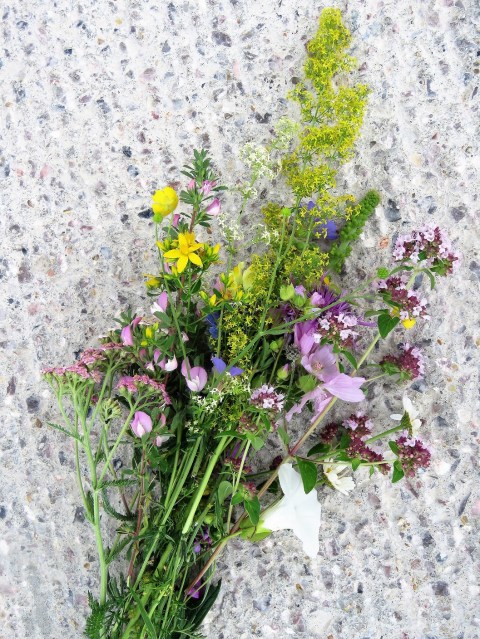
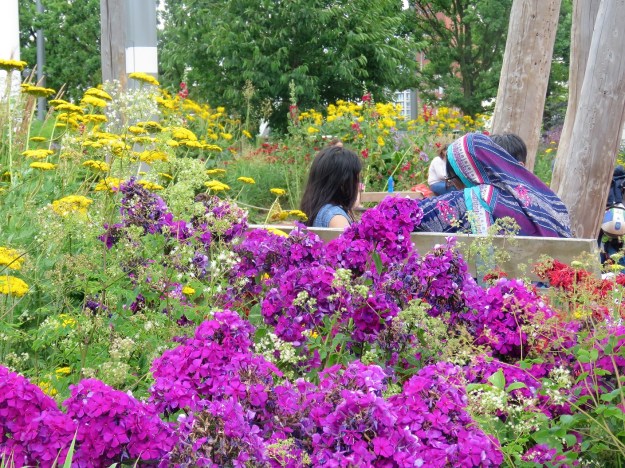
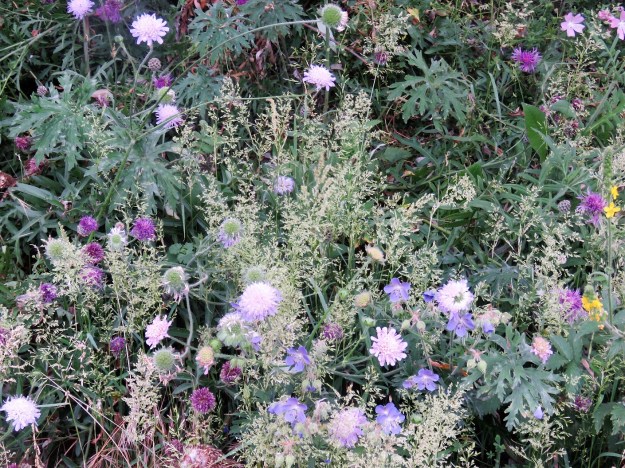 The work of the Sheffield School concentrates on environmentally friendly plantings which can be achieved for hugely lower costs than more traditional approaches. They are not alone in this position and the acceptance of the need to work with nature, not to bend it and control it to human will seems to be widespread in the UK. A friend tells me much of Regent’s Park is now wide mown paths through meadow land and we have seen similar changes within the Hampstead Heath green belt. There is much to learn for New Zealand but it will be a brave local council that leads the charge.
 Tikorangi The Jury Garden