A Red Letter Day

The wretched power lines draped across our park

The wretched power lines draped across our park

Yesterday was a red letter day here. The electricity lines that crossed over the area we call the park were removed. Those lines had nothing to do with us. Our power comes from another line. Back when electricity was first laid on for the district, the publicly owned supplier took a shortcut across our property with a very long span between poles. When there is a long span, the lines get far more of a sway on them. In the decades since, the lines were sold to a private company and our trees grew. And grew. Most of the problem trees were planted by Mark’s father, Felix, who seriously miscalculated how tall they would grow but left the problem to the next generation.

Mark had been getting increasingly anxious about the trees and the power lines. Some trees, like the magnolias, could have branches removed without destroying the tree but we are talking about the upper reaches of an extension ladder to access those branches.
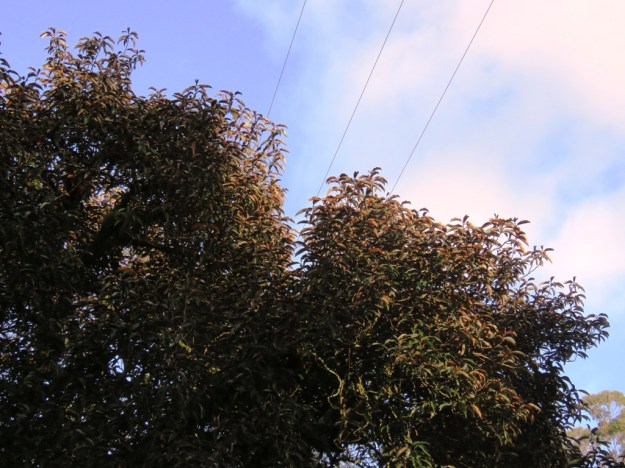
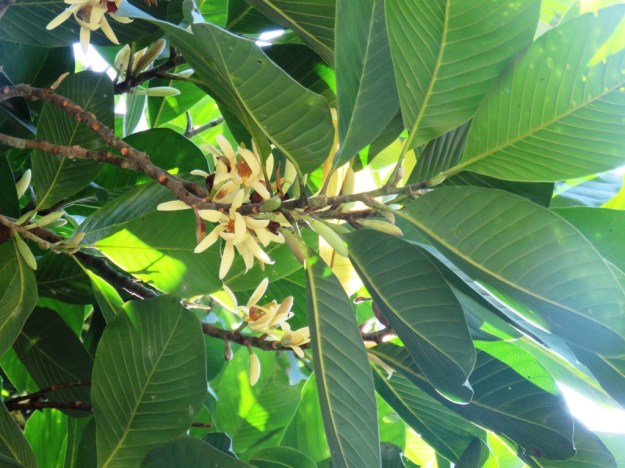
Michelia doltsopa 'Rusty' reaching into the wires

Michelia doltsopa ‘Rusty’ reaching into the wires

Even Magnolia doltsopa ‘Rusty’, though planted on the lowest point, was into the wires. This is a grand specimen and we were reluctant to start interfering with its magnificent stature.  I see I calculated in the past that ‘Rusty’ takes up around 300 square metres of ground area, growing from a single central leader. It can now attain its potential mature size and height.
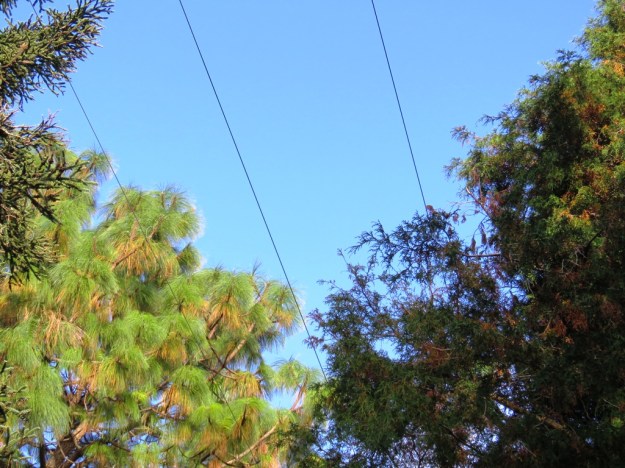
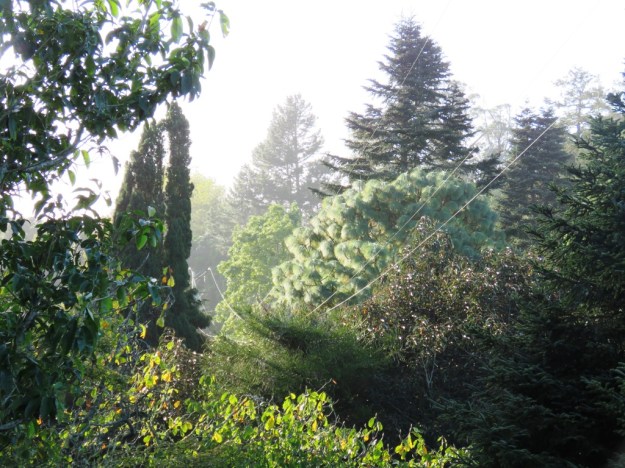
Pinus montezumae has had a reprieve from its death sentence

Pinus montezumae has had a reprieve from its death sentence

More problematic were the conifers. It is not possible to take the central leader out of a conifer and keep a good tree. Indeed, Pinus montezumae was going to have to be removed entirely. Then there were the next trees just out from the lines but at risk of downing them should they fall. The handsome metasequoia or dawn redwood is about 30 metres high but still a juvenile at only 65 years or so. We were always worried that its grip on the ground may not be that good and, should it fall the wrong way, it would bring down the wires. Indeed, the wires have been brought down twice in our time here – both times by falling poplars that were planted long before electricity lines were strung through the area.
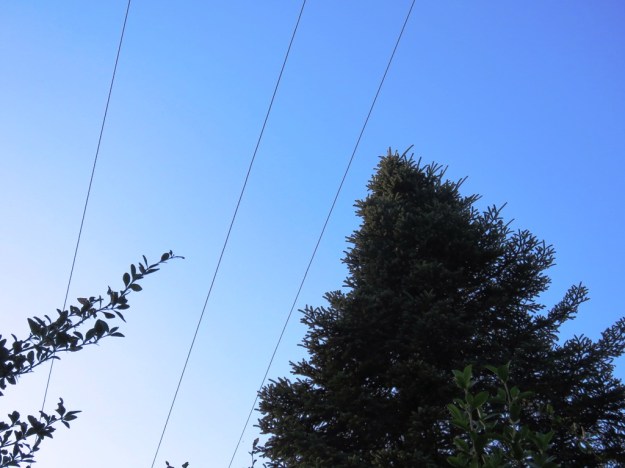
IMG_8367But no more. Yesterday the lines were removed as part of an upgrade on that particular section. We could not be more delighted. And relieved. At least some of the trees should now be free to grow to their maximum size and maturity long past our lifetime.
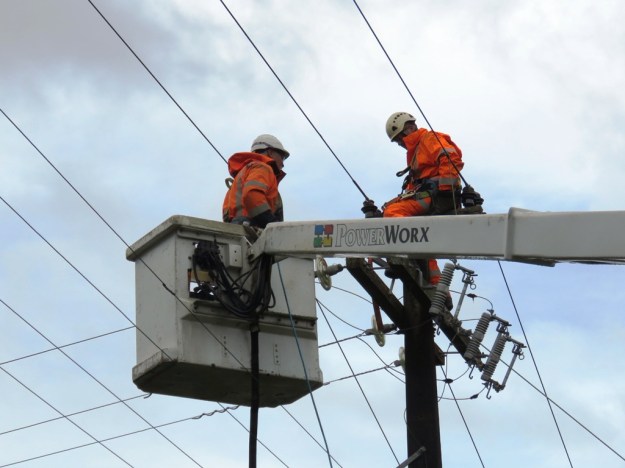
Dropping the lines yesterday

Dropping the lines yesterday

Postcards of China 4 – rocks, *improving vehicles* and plants, both ubiquitous and not

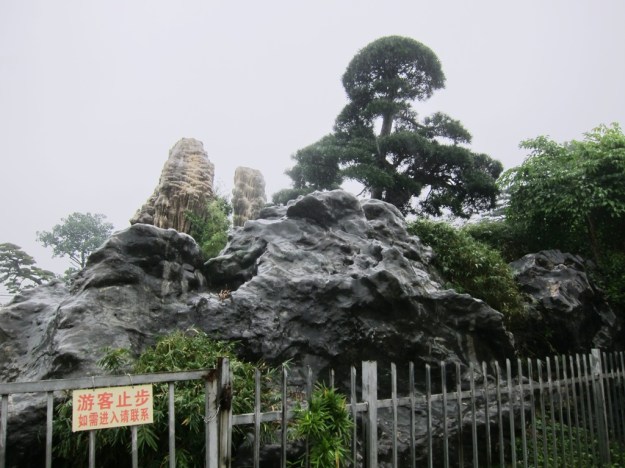
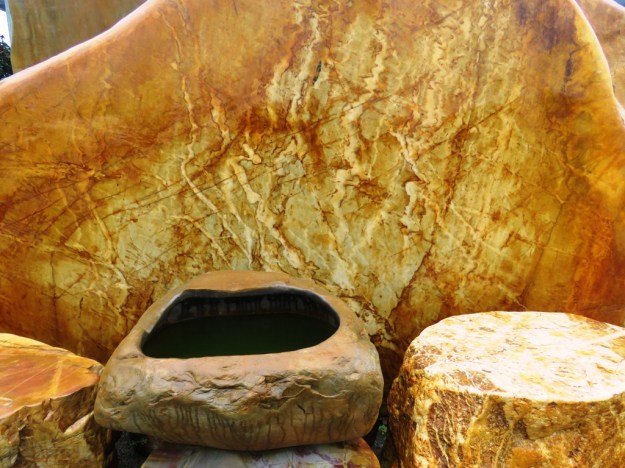
Foshan (46)Foshan is a new city that was completely rebuilt during China’s boom times – which seems to have slowed to a near standstill in the last couple of years. We were amazed to see the scale of businesses selling  mature trees, rocks and even stalagmites and stalactites. It is big machinery that has made this commercial activity possible and many were very beautiful. We couldn’t help but wonder how much of surrounding countryside has been pillaged to bring in these pieces of nature for urban decoration. We were told that it is now illegal to mine the stalagmites and stalactites but you never know, when you are on brief visit, whether you are just being told what the guide thinks you want to hear.
Foshan (60)


I did admire the stone water containers and the slab stools - no longer chipped and shaped by hand

I did admire the stone water containers and the slab stools – no longer chipped and shaped by hand

Foshan (6)Certainly the nursery industry in southern China appeared to be booming and the scale of new public plantings was seriously impressive. We reflected ruefully on the battle we lost, trying to save many of the pohutukawa that once lined the Waitara River back home. About 30 mature trees were removed to make way for grass and concrete. It wouldn’t have happened in China, we thought. Those trees would have been saved, likely clipped to giant bonsais and relocated. The new planting would not have been limited to three small replacement specimens, especially given the prime location in the middle of the town. It would have been an opportunity to create something of beauty and social benefit to be appreciated by the community.   Sometimes we just ain’t as enlightened as we like to think we are.

IMG_7871Mayodendron igneum – a tree jasmine, the signage said – was a spectacular example of cauliflory growth found in Xishuangabanna. That is when a plant flowers and fruits from its main trunk. Most plants flower on either new season’s or the previous season’s growth. A few flower from the oldest growth. We see cauliflory growth on Ficus antiarus and Tecomanthe venusta here, but it is not particularly common. The flying insect you can see in the photo looked distinctly like an aggressive hornet. I was cautious.

IMG_7611Mark was delighted to see these, the most basic of machines, still a-chuggin’ around. We first saw them maybe 14 years ago in the north of Vietnam,  where they were the main transporter of heavy loads. The Vietnamese called them ‘improving vehicles’, our guide told us (something may have been lost in translation). There weren’t huge numbers of  them around Dali, but enough to have us looking as they chugged past, often carrying loads way in excess of what one could ever imagine possible.

Aside from these utility workhorses from an earlier age, the vehicle stock we saw was modern and high quality. The most interesting aspect was the extent to which they are embracing electric vehicles – cars, small coaches and many motor scooters. While some of the charging was done by extension cords across the pavement, we could learn from the extent to which they are embracing electric vehicles.

U-turns permitted

U-turns permitted

A word about Chinese driving, as we found it, this being a hot topic in New Zealand. Yes, they are legally permitted to do U-turns in some pretty interesting locations and even the largest of vehicles will do so. And it is true that they will overtake on blind corners. We noticed. Well, we experienced it.  But they do not have a death wish. They only overtake on corners where there is room for a third vehicle to pass to the side, in case of oncoming traffic. What they are relying on is everybody knowing the width of their vehicles to within a few centimetres and extremely defensive driving. Also the traffic speeds were low. It is no wonder they get into trouble on NZ roads where our driving is at much higher speed and aggressive, not defensive, and where there is an expectation that road rules are rigid at all times.

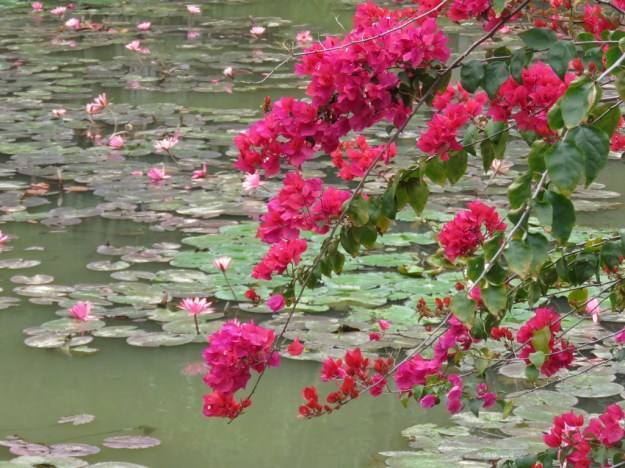
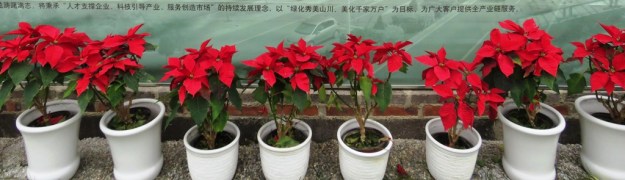
IMG_7805Ubiquitous plants of the world! I don’t travel enough to do an exhaustive study on this topic, but everywhere we go, we seem to see both the bougainvillea and poinsettia. To that can be added the jacaranda (but I can’t recall seeing these in China though I would wager they are there). I am not so keen on the poinsettia but I am pretty sure I have photographed bougainvilleas from Pacifica to Asia to Europe. Truly international plants these days.
IMG_7600

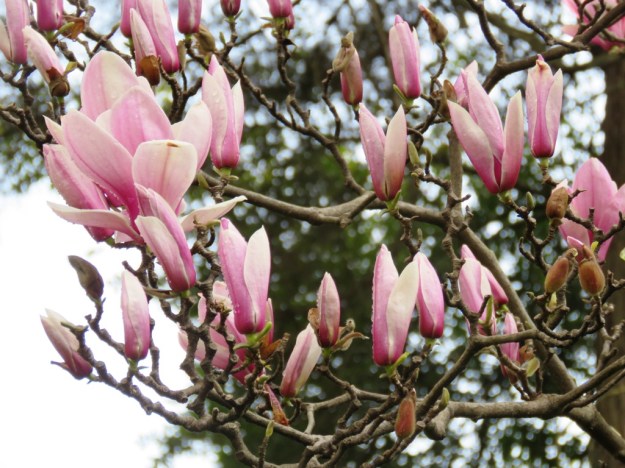
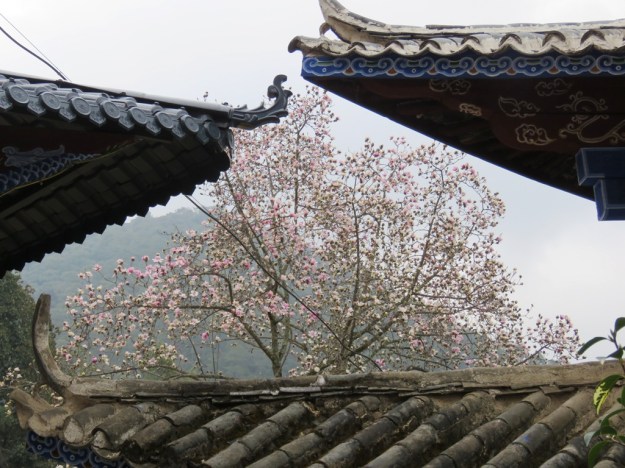
Glimpses of magnolia in China

No yellow denudata image - just soulangeanas at Kunming Botanic Gardens

No yellow denudata image – just soulangeanas at Kunming Botanic Gardens

I missed photographing the most interesting magnolia we saw on our recent trip to China. It looked to be a roadside amenity planting of the yellow form of Magnolia denudata. Or it may have been one of the many big tree nurseries we saw. Because we were in a moving entourage of coaches, we couldn’t stop. I can’t think why it never occurred to us to hop into a taxi and return to the site. It is not as if taxis are expensive in China.

As far as we know, the yellow form of denudata is not in New Zealand, though it would be legal to bring it in because the species is already here. We first heard about it – but did not see it – in Italy about 10 years ago but we didn’t get too excited because we figured it was probably more cream than yellow. I think I did a search on it at the time and found Magnolia denudata  ‘Fei Huang’ or ‘Yellow River’ widely available in Europe with assorted photos showing colour from cream through to bright yellow, but the authoritative sources leaned to describing it as cream with pale yellow tint at best. So we were taken aback by the trees we saw in bloom in China which were indubitably yellow and with a different flower form to the American yellows bred from M. acuminata. We kept enquiring about it as we passed through other areas, but failed to find out more information. It may have been a particularly good form that we were looking at. I just mention this in case anybody happens to be driving along the access road to Longxiadeng Village, which I am pretty sure  is where we saw it.

Magnolia campellii at Mount Baotai

Magnolia campellii at Mount Baotai

We were of course focussed on camellias for this trip. It was the International Camellia Congress after all, but we had hoped to catch some glimpses of magnolias along the way. The M. campbelli at the Forest Administration Station on Baotai Mount was in full bloom but not the best form we have seen of this species.

Tropical Magnolia balansae

Tropical Magnolia balansae

Because we were not there to look at magnolias, Mark took solace in the sight of a solitary tropical specimen at the botanical garden in Xishuangbanna. Magnolia balansae (formerly a michelia) is not one we know at all but there are many tropical species that we don’t have in this country and which are therefore of curiosity value only. It was very handsome, was M. balansae, but large. With small flowers.

Professor Sun Weibang, Tony Barnes and moi at Kunming

Professor Sun Weibang, Tony Barnes and moi at Kunming

book (4)I was honoured to be taken to meet Professor Sun Weibang at the Kunming Institute of Botany. Alas Mark was back in the hotel room, dying of the plague (a bad bout of the flu, to be accurate) so I was painfully aware that I was deputising for him at that meeting with a world expert on magnolia. We bonded over the magnificent book, Magnolias in Art and Cultivation, discovering a mutual friendship with one of the authors. There are several pages devoted to the Jury hybrids.
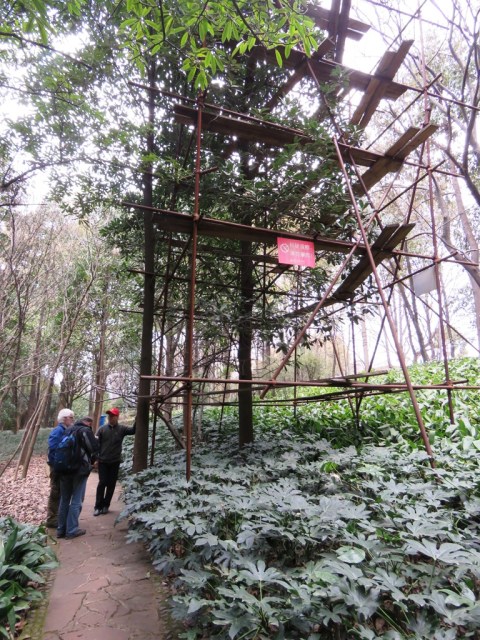
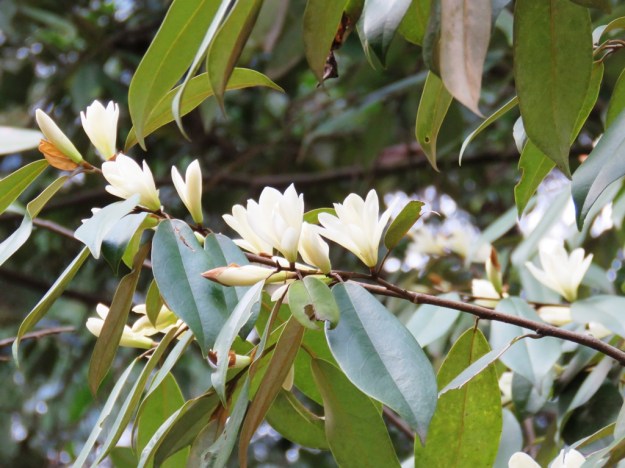
The most interesting aspect of my conversation with Professor Sun was his explanation that their focus had moved away from hybridising to conservation. This was demonstrated clearly when I subsequently came across the huge specimen of Magnolia sinica (formerly known as a manglietia). It was surrounded by scaffolding which is there to enable the systematic collection of seed. For this is one of the most endangered magnolia species in the world. There are only somewhere between 10 and 22 plants known in the wild and there is a concerted effort to build stocks for replanting.

Magnolia sinica

Magnolia sinica

The conservation of indigenous plants was a theme that came through repeatedly on this trip to China. We were not in a position to work out whether the efforts in the field match the official talk, but there is certainly a high level of awareness and public funding being made available for this officially sanctioned priority. It made us think about the quaintly imperialist attitude that sees some in the West thinking that we can preserve the world’s flora. Unless it is a massive project such as the international seed bank at Kew, I think we may over-rate our efforts. There are times we wonder whether the ratepayers of Taranaki realise they are paying to conserve rhododendrons while some of our native flora is under extreme threat. And, frankly, one of this plant here and one of that plant there is not a significant effort in preserving another country’s native flora. This is not to deride the importance of maintaining genetic diversity but the maintenance of indigenous species is surely best supported in their country of origin, where possible.

Random michelia at Kunming. Not, as suggested, M. laevifolia, I think.

Random michelia at Kunming. Not, as suggested, M. laevifolia, I think.

Stumperies – an ecological option

Our Rimu Avenue with its informal raised beds which are essentially a stumpery

Our Rimu Avenue with its informal raised beds which are essentially a stumpery

Stumperies are a thing, overseas if not so much in New Zealand. After all, Prince Charles has one at Highgrove. So has Wisley, the Royal Horticulture Society’s flagship gardens. Indeed, many of the best gardens have a stumpery. The first deliberate construction of old tree roots and stumps is attributed to Biddulph Grange in Britain, where the keen owner wanted to display his fern collection but other shade gardens through history must have had incidental stumperies. They are hailed these days as ecological havens.

When you think about it, the stumpery is basically a naturalistic alternative to trendy insect hotels. But instead of being a confined hotel, it is more like an entire estate.

Our stumperies have rather more pragmatic origins than caring for the under-appreciated critters of the garden. In the area we call the rimu avenue, it has evolved over decades. The rimus are so grand and large now that they suck all the goodness and moisture from the ground around them. Our stump and log constructions are a means of getting informal raised beds so we can establish underplantings, including epiphytic plants like vireya rhododendron species and zygocactus, the so-called chain cactus. It adds a lot more interest and gardening potential to have these elevated areas and pockets for planting amongst the tree stumps and trunks.

When we have dug out the stumps of larger plants, these are re-sited to shade areas, sometimes placed upside down so the roots give more visual interest. There they can gently decay, but in the process they add some structure and height to otherwise flat areas dominated by very tall trees.

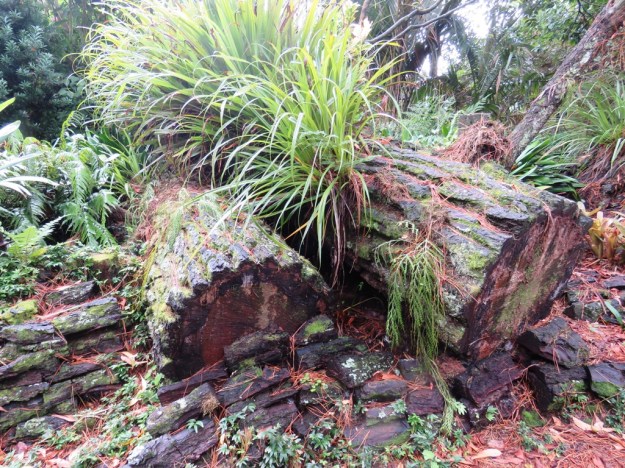
Allowing nature to create a stumpery – two pine logs left where they fell

Allowing nature to create a stumpery – two pine logs left where they fell

The more substantial stumpery efforts come on the other side of the garden where we have venerable old pine trees. As with the rimus, they are up to 140 years old. Unlike the rimus, they lack a good grip below ground and from time to time, one falls. Four plus a gum tree of the same age have done so in recent years. They cause surprisingly little damage when they fall but were we to try and extract the enormous trunks, it would create a swathe of destruction. We do a cleanup of the foliage, the side branches and the prodigious quantities of pine cones but leave the main trunk where it fell and simply work around it, chainsawing back to clear paths where we need to.

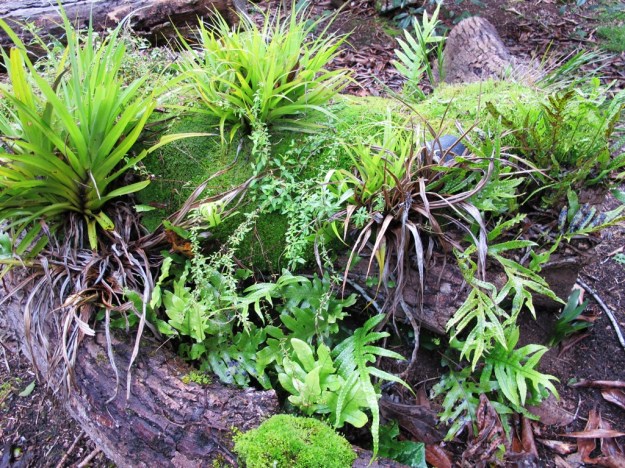
A naturally developing ecological haven on fallen poplar logs

A naturally developing ecological haven on fallen poplar logs

When our instant stumpery installations arrive, they are invariably covered in epiphytes – native astelias and collospermums in particular. We thin these if required but basically leave it to nature to colonise these new areas, adding in special plants to add interest. The ferns just arrive. Dendrobium and cymbidium orchids add seasonal colour and settle in readily. Clivias are often happy at the base. Hostas tend to need more soil than is offered in these situations, but rogersias and farfugiums have settled in well. Hippeastrums and scadoxus are bulbs that we find are happy in this environment and common old impatiens seeds down and adds some summer blooms.

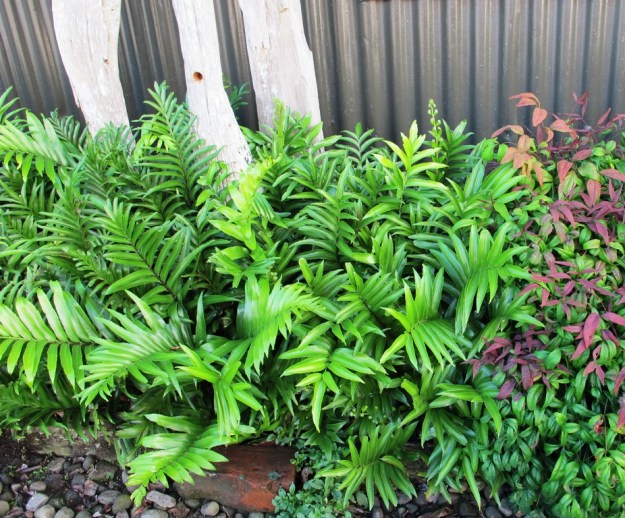
A small stumpery (or stumpette) in a narrow, shaded border in Pat and Brian Woods garden in Waitara

A small stumpery (or stumpette) in a narrow, shaded border in Pat and Brian Woods garden in Waitara

You don’t need a large area to establish a stumpery. Many suburban homes will have a dark and narrow back border (usually the home of the wheelie and recycling bins and the garden hose). As long as you have half or metre or more in width and are not scared of wetas, you can bring in a smaller stump or length of tree trunk and start establishing shade loving plants around it. A little shade garden will contribute far more to a healthy eco-system than gravelling or paving and can be genuinely low maintenance. Fewer weeds grow in shade and once plants are established, it becomes a self maintaining system with the falling leaf litter and gently decaying wood feeding the soil. I did pause to wonder if a very small stumpery became stumperesque in style, or maybe a stumpette?

Amusingly, according to the information board on Wisley’s stumpery, “Not everyone appreciates an artistic garden feature. When the Duke of Edinburgh first laid eyes on the Highgrove stumpery, he allegedly turned to Prince Charles and said, ‘When are you going to set fire to this lot?’”

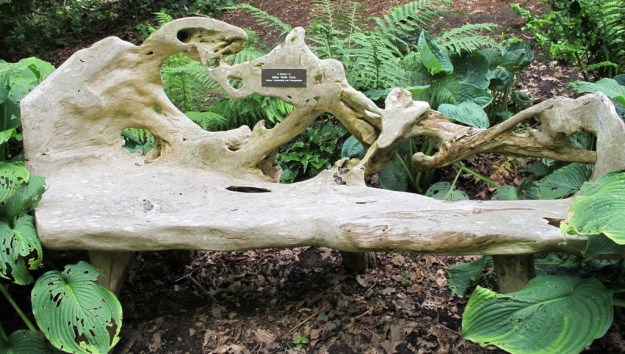
A natural-formed seat in the stumpery at Wisley, though it would look better without the dedication plaque

A natural-formed seat in the stumpery at Wisley, though it would look better without the dedication plaque

First published in the May issue of NZ Gardener and reprinted here with their permission.

Plant Collector: Camellia amplexicaulis

Camellia amplexicaulis

Camellia amplexicaulis

We missed the opportunity to buy Camellia amplexicaulis the one time it was offered commercially in New Zealand. That was by Peter Cave, before he closed down his nursery, if my memory serves me right. And when we saw it in China, we were disappointed that we had not picked it up at the time – though at least it is in the country so we should be able to get a scion at some stage.

It is one of the tropical camellias, a relatively recent discovery in Vietnam. We saw it growing outdoors at the botanic gardens* in Foshan, amongst the yellow camellia collection which is similarly tropical. It was reasonably substantial – a handsome, large shrub at maybe 2.5 metres tall. The foliage was striking with huge, lush, textured leaves while the flowers had very thick petals. The information board below said it flowered from summer to autumn and sometimes all year round. This would be because it is a tropical plant from a climate without marked seasonal change. We were viewing blooms in early spring.

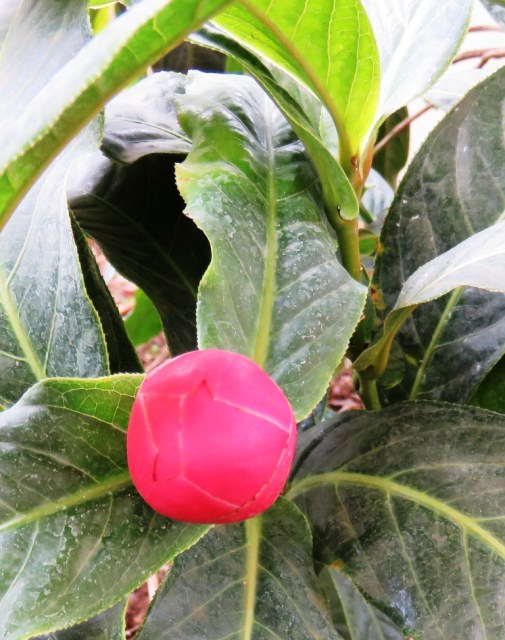
Camellia amplexicaulis in bud

Camellia amplexicaulis in bud

At Kunming Botanic Gardens, it was growing in a covered house with the yellow species. Presumably it is too cold in winter for it to be grown outdoors there (Foshan is coastal while Kunming is inland). The buds have a similar tight, round ball form to the yellow species – more on those in an upcoming article.

Whether our mild, temperate climate would suit Camellia amplexicaulis is not certain. We have trouble getting the tropical yellow species to bloom here. But it is such a handsome and interesting camellia that it is worth a try. And if it does flower here, it may bloom outside peak petal blight season and the heavy texture of the blooms means it would not be as prone to weather damage as many other softer textured camellias.

Not quite a forestry institute as we understand it - Foshan

Not quite a forestry institute as we understand it – Foshan


*I refer to the botanic gardens in Foshan though the official itinerary names it as the Institute of Forestry Science. While we associate forestry with commercial production of Pinus radiata in this country, the southern Chinese forests contain many wild camellias and the forestry institutes appear to have a conservation responsibility for indigenous plants.