
Mark coined a new word for our gardening lexicon – to monty, a verb meaning to fluff around in one’s own garden with more pleasure than urgency. I do a lot of montying.
British gardeners will recognise instantly that this is a tribute to Monty Don, the lead presenter of BBC’s long-running Gardeners’ World. Sure we are watching the 2013 series on NZ television (Choice TV, Fridays at 10pm) but eventually we may catch up? Unlikely. It took us a while to warm to Monty who is quintessentially British. We felt very sorry for poor Toby Buckland, the previous lead host, when he was axed. Toby had earned our respect with the depth of his knowledge and his ability to convey sound information in an unhurried manner. But it appears he lacked the class craved by the audience and, we must admit, the episode involving peeing on your compost heap may have been a step too far. Now we have settled into the groove of watching Monty who so clearly enjoys pottering around in his own garden called Longmeadow, and he is backed up by very capable and knowledgeable co-presenters from around the country. It is light years ahead of any home-grown gardening programmes here. Sure vegetable growing features, but so does aspirational, higher level gardening that is concerned with aesthetics, the environment, interesting plants and design. And Monty is a dedicated organic gardener.
While there is a great deal of critiquing that goes on about Gardeners’ World in the UK and on social media, I just think the Brits do not know how lucky they are. The running commentary on each programme (the 2015 series has just finished) often appears on my Twitter feed under #shoutyhalfhour. It was here I picked up the very funny series of tweets about Monty’s recent attire. My prize for the best tweet went to @milominder: “Monty Don wardrobe update: nonchalant actor in relaxed interval mode at a production of The Three Musketeers”. Monty’s dog Nigel is also a huge hit.
But the viewer who tweeted: “I like Monty Don but with my small garden most items from his vast plot just do not translate. Time for a change?” should consider moving to New Zealand where our only TV gardening is aimed at the lowest common denominator, pretty much lacking in anything of interest to more experienced gardeners.
In fact, I could suggest that we have the Tui Garden infomercial vs the Yates Garden infomercial. How many of the sponsors’ products can be worked into each short segment? The focus morphs into an exercise where the selling of branded product to a gullible public with deep purses takes precedence over fostering good gardening.
I don’t blame the presenters at all. I have met both Lynda Hallinan and Tony Murrell and have a great deal of respect for them. Both are genuinely keen, knowledgeable, experienced and professional. I would love to see them given the freedom to generate quality content that goes beyond that most basic level and using the sponsors’ branded products.
I blame the producers who have kowtowed to horticultural supply merchants, apparently with unsophisticated marketing staff who think endless repetition of the company name and hawking of often unnecessary product will increase their sales and profile. It makes me flick the channel switch to escape.
Tui is arguably the worst of the two. Kiwi Living on Friday evening on TV1 is quite an engaging lifestyle programme. The fashion makeovers, food and architecture sections are interesting. So too is the interior design, even if it is not to my personal taste. The continuity scenes with the hosts, sitting chatting on the couches, are not too embarrassing or forced. And then there is the Tui Gardening Infomercial, masquerading as the garden segment. In case you miss the Tui product when it is mentioned, it is also flashed up on the screen for you to see. So too with the Yates products on the Get Growing Roadshow, but they also work on prominent product placement in the filming and they have a wider portfolio of sponsors to serve.
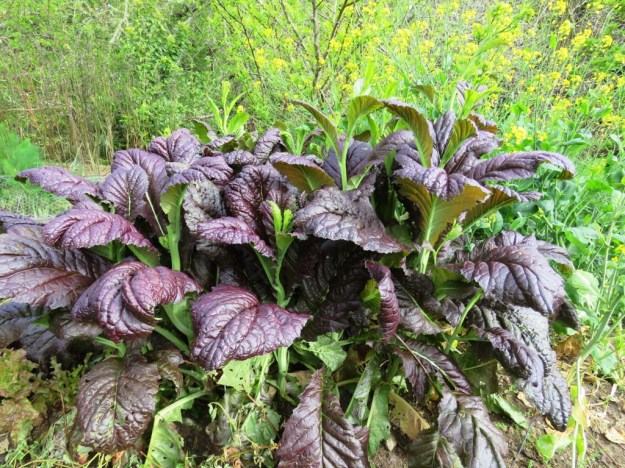
Mustard, in lieu of kale here
We gardeners deserve better and these presenters could certainly give us better if the shackles of the sponsors were loosened. There are folk who garden outside Auckland, who are not absolute beginners under the age of 40 and who do not wish to grow tomatoes, basil or kale.
You don’t see Monty Don and his team of highly professional presenters forever promoting the sponsors’ products. I like the gentle pace of BBC Gardeners’ World. It suits my montyesque gardening style.
 Starting with a small brag photo: michelias used to be white, in the main. At least the hardier varieties are generally white. Sure the tropical M. champaca is orange and
 Glaucina is our stand-out blue, and we once gathered as many different blues as we could. It is variable in colour and somewhat frost tender, but it does at least stay within the blue spectrum (some of the other alleged blues faded out to cream or very pastelle mauve) and it increases well for us.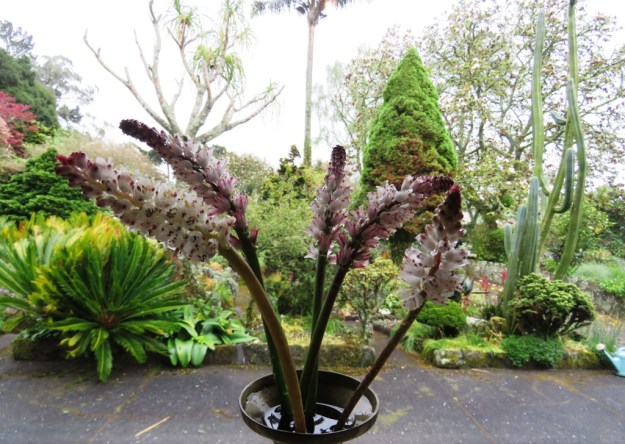


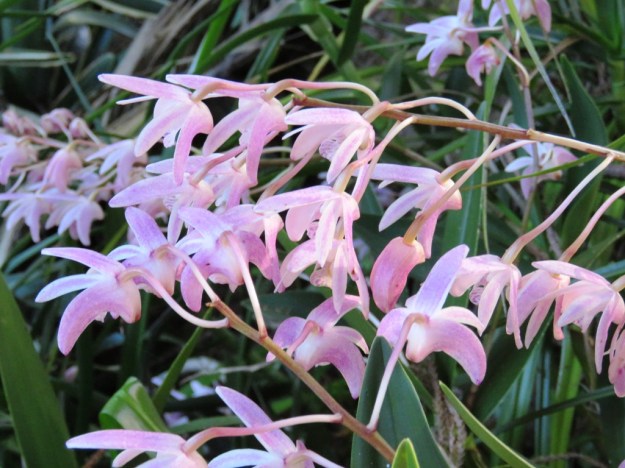

 I mentioned the
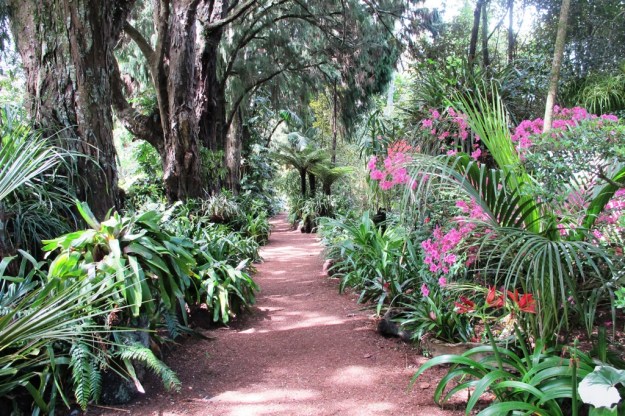

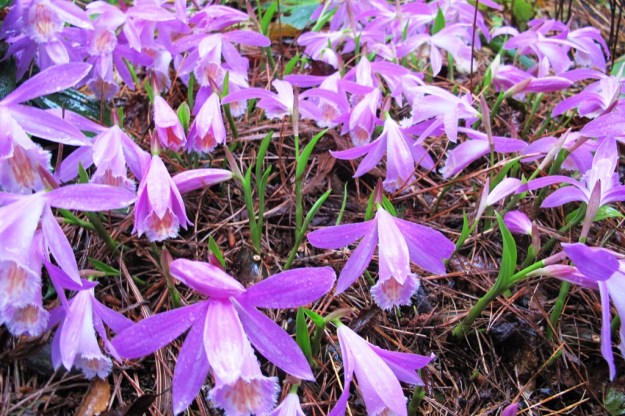
 The calanthes are ground orchids and we have big clumps now because these obliging plants can just be left to quietly increase in size. These are fully evergreen and somewhat frost tender but they are a delightful sight through spring and they combine very well with clivias, ferns and even hostas.
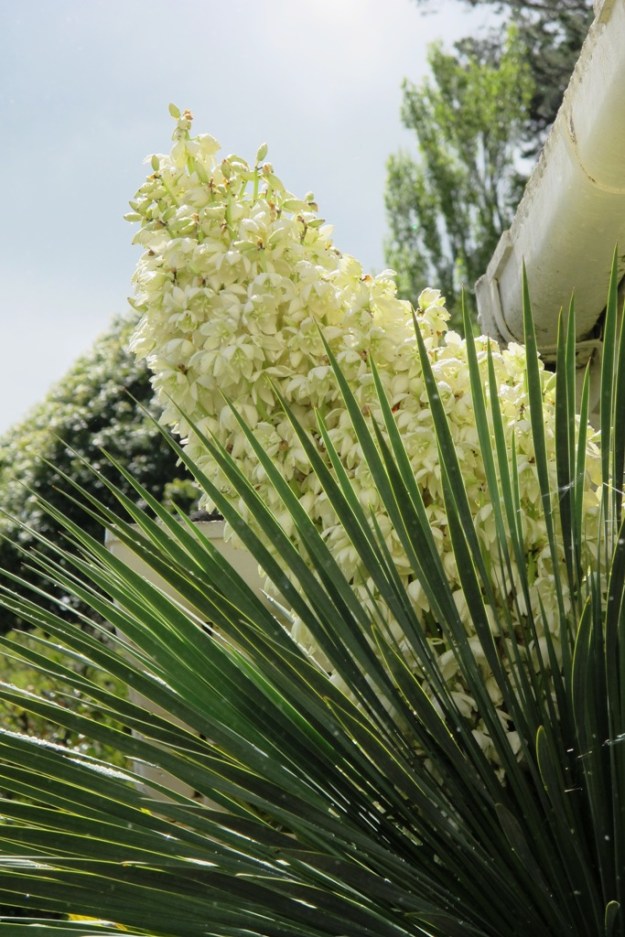
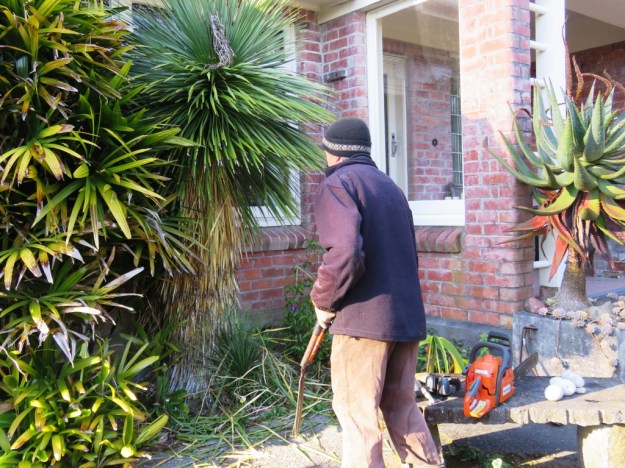 But other needs were always more urgent so the moving of the yucca had not taken place. Nor had the windows to what is our TV room been cleaned for many years. But yesterday the day came, forced by the arrival of the glaziers to install retro-fitted double glazing in our wooden window sashes. It was not an easy task. Mark had thought he could probably chainsaw the top off but the fibrous nature of the spent foliage merely jammed the chainsaw. At this point it is in two pieces. The top will be replanted on the sunny bank in the north garden where it will likely recover. The base, with a new rosette well-formed already, will be dug out and also relocated. It will, I tell you it will. I like the garden view out of the windows which is now visible again and while cleaning windows is not my favourite activity, I do like to be able to do it when necessary.
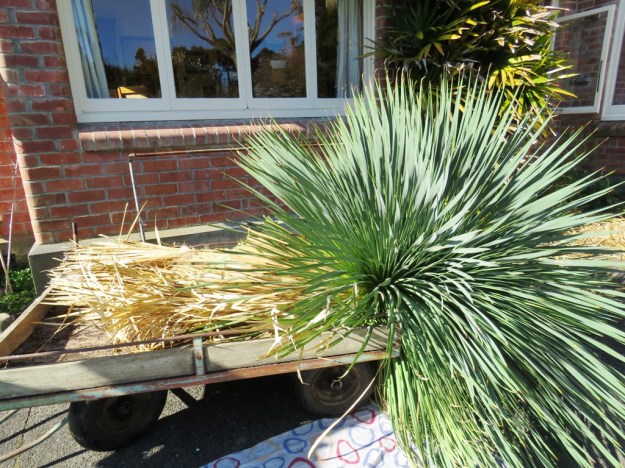 As far as we know, this is Yucca whipplei, also known as Hesperoyucca whipplei, chaparral yucca, Our Lord’s candle, Spanish bayonet, Quixote yucca or foothill yucca. So Wikipedia tells me. Apparently the most common name is Our Lord’s candle. It being native to southern America from California through to Mexico, it clearly felt right at home in the bone dry conditions of the house border beneath the eves. In the meantime, Our Lord’s candle is no long alight at our place.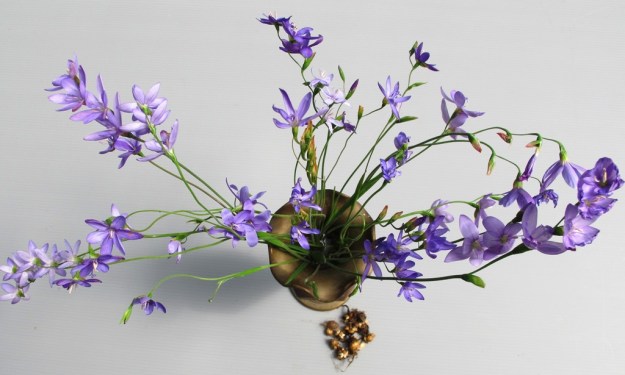
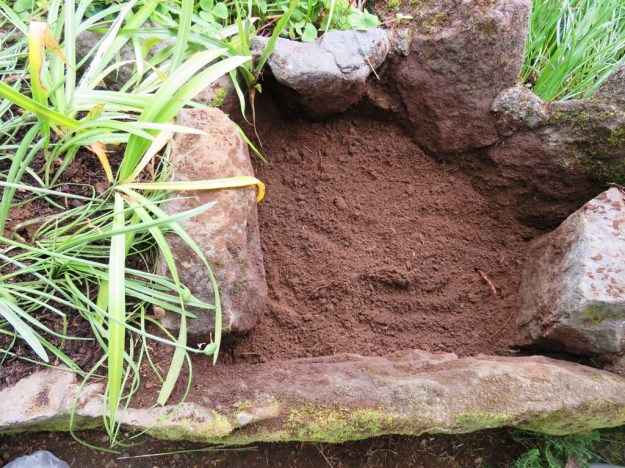
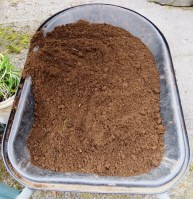 I have been forced to extreme remedial action in the rockery in the Battle of the Geissorhiza. Such a pretty weed and so dreadfully invasive. Each bulb is surrounded by many little baby bulbs that peel off as soon as you look at them, ready to grow into the future. In the worst affected pockets of rockery, I am lifting everything and washing the roots to make sure no dreaded geissorhiza bulbs are lurking in there hiding. Then I dig out all the soil and replace it with clean soil. I was surprised that one pocket generates almost a full barrow of soil. The contaminated soil is being dumped in the deepest, darkest shade where I hope nothing will germinate and if it does, as a last resort it can be sprayed. This somewhat extreme and labour intensive treatment should, I hope, get me closer to victory and the extermination of this pretty but hideously invasive bulb.
 Tikorangi The Jury Garden