
 Starting with a small brag photo: michelias used to be white, in the main. At least the hardier varieties are generally white. Sure the tropical M. champaca is orange and M. alba is creamy yellow, but they have not shown compatibility with the hardier varieties and don’t have enough virtues to warrant using them as breeder parents. I did a little round-up of Mark’s current seedlings that we have flowering here. It has taken him 20 years of work to get to this colour range and there is a long way to go yet. A good garden plant is much more than just an interesting bloom. There are a huge number of variables when it comes to selecting a new variety for commercial release. But even I was impressed by the range of colour, flower shape and flower size that he has achieved in this line up.

I see I optimistically posted in August on the early blooming lachenalias. I may at the time have thought there would be two or three posts charting the lachenalia season, but we are now entering the final stage so I thought I had better do a round up. From left to right we have arbuthnotiae, pallida, contaminata, orchioides var glaucina (2) and the attractive end one we have as rosea. I missed several varieties during the mid season, but one reason I missed them is that they are not fantastic performers in our conditions.
 Glaucina is our stand-out blue, and we once gathered as many different blues as we could. It is variable in colour and somewhat frost tender, but it does at least stay within the blue spectrum (some of the other alleged blues faded out to cream or very pastelle mauve) and it increases well for us.
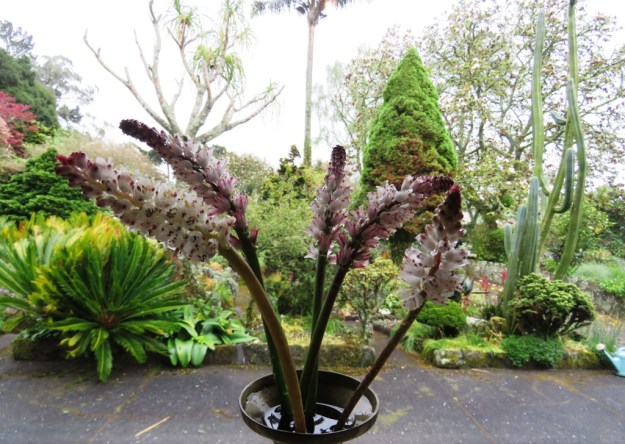
Lachenalia contaminata with the rockery behind
L. contaminata is one of the last in the season to bloom, very easy to naturalise, scented, feeds the bees (I have personally observed this) and generally under-rated.
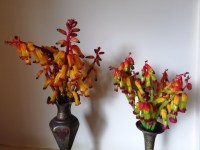
Earlier season L. aloides and aloides quadricolor
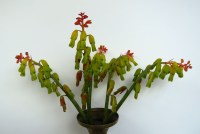
L. aloides tricolor

L. aloides var. vanzyliae
L. aloides is pretty interesting as a species. I mentioned aloides quadricolor and the common form in New Zealand which may be aloides bicolor in my earlier post. Aloides tricolor then comes in much later, predominantly green but with enough red and yellow to make it visible. When these three forms of the species are so easy and reliable for us, why oh why is the most striking L. aloides var. vanzyliae so very difficult? It is a mystery to me and it was a bit of a surprise I managed to catch the small patch (which does not get any larger) when it was in flower.

Quite how I achieved this stylish, albeit over exposed image, I am not sure.
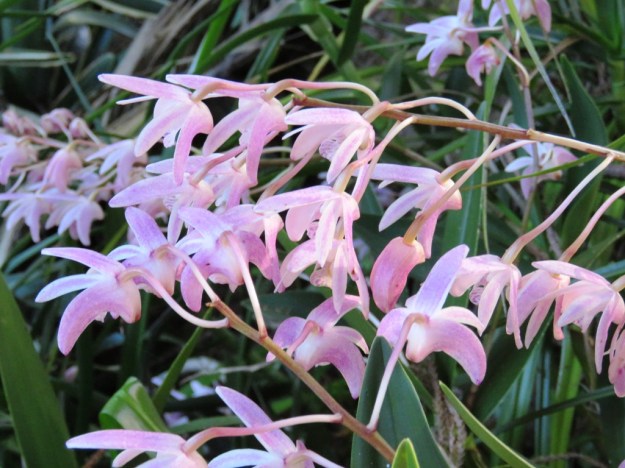
We are big fans of the Australian dendrobium orchids and they are at their peak right now in the woodland areas of our garden. I did a little round up of the different ones in the garden and was surprised to find the range was somewhat greater than I had thought. Somehow we do not think of Australia having such pretty and delicate wildflowers.

Tomorrow, if the rain continues, I shall return with… clivias. Big, bright and bold.
 I mentioned the

 The calanthes are ground orchids and we have big clumps now because these obliging plants can just be left to quietly increase in size. These are fully evergreen and somewhat frost tender but they are a delightful sight through spring and they combine very well with clivias, ferns and even hostas.
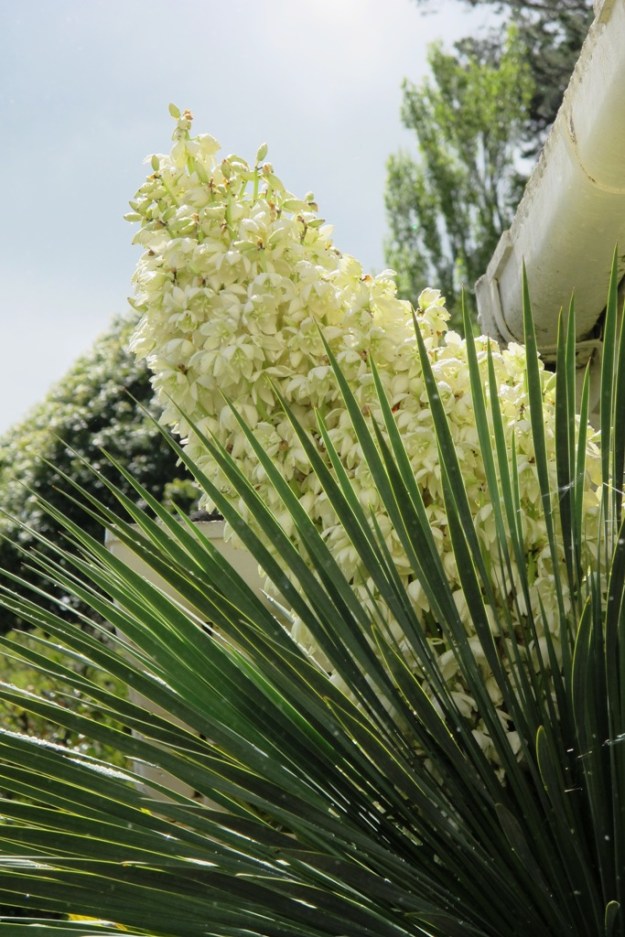
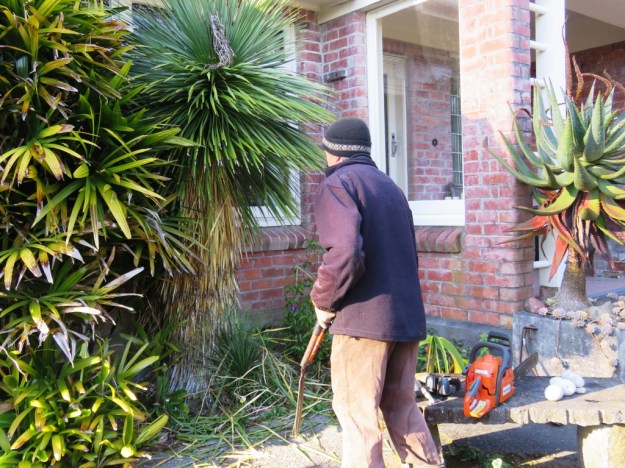 But other needs were always more urgent so the moving of the yucca had not taken place. Nor had the windows to what is our TV room been cleaned for many years. But yesterday the day came, forced by the arrival of the glaziers to install retro-fitted double glazing in our wooden window sashes. It was not an easy task. Mark had thought he could probably chainsaw the top off but the fibrous nature of the spent foliage merely jammed the chainsaw. At this point it is in two pieces. The top will be replanted on the sunny bank in the north garden where it will likely recover. The base, with a new rosette well-formed already, will be dug out and also relocated. It will, I tell you it will. I like the garden view out of the windows which is now visible again and while cleaning windows is not my favourite activity, I do like to be able to do it when necessary.
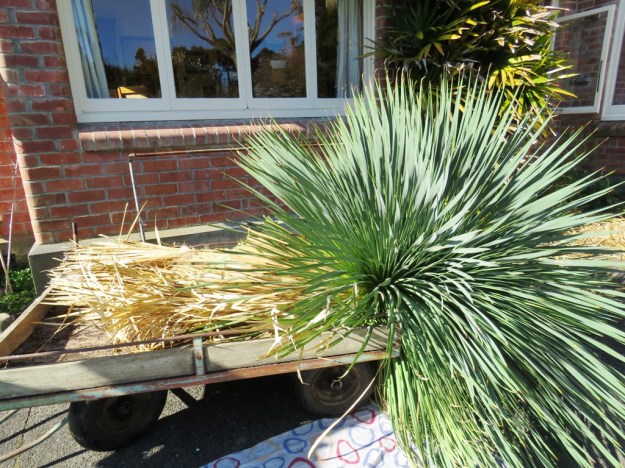 As far as we know, this is Yucca whipplei, also known as Hesperoyucca whipplei, chaparral yucca, Our Lord’s candle, Spanish bayonet, Quixote yucca or foothill yucca. So Wikipedia tells me. Apparently the most common name is Our Lord’s candle. It being native to southern America from California through to Mexico, it clearly felt right at home in the bone dry conditions of the house border beneath the eves. In the meantime, Our Lord’s candle is no long alight at our place.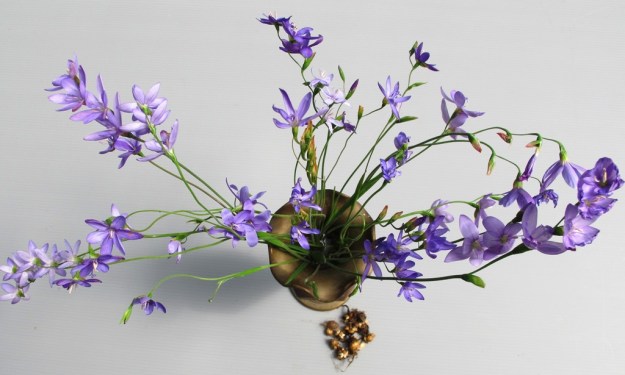
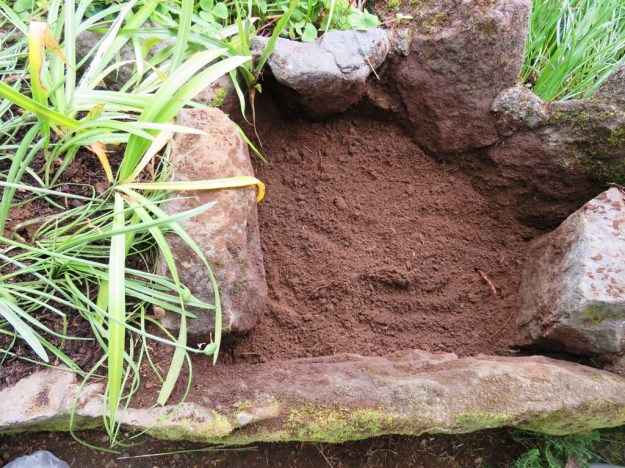
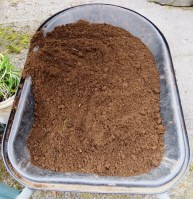 I have been forced to extreme remedial action in the rockery in the Battle of the Geissorhiza. Such a pretty weed and so dreadfully invasive. Each bulb is surrounded by many little baby bulbs that peel off as soon as you look at them, ready to grow into the future. In the worst affected pockets of rockery, I am lifting everything and washing the roots to make sure no dreaded geissorhiza bulbs are lurking in there hiding. Then I dig out all the soil and replace it with clean soil. I was surprised that one pocket generates almost a full barrow of soil. The contaminated soil is being dumped in the deepest, darkest shade where I hope nothing will germinate and if it does, as a last resort it can be sprayed. This somewhat extreme and labour intensive treatment should, I hope, get me closer to victory and the extermination of this pretty but hideously invasive bulb.
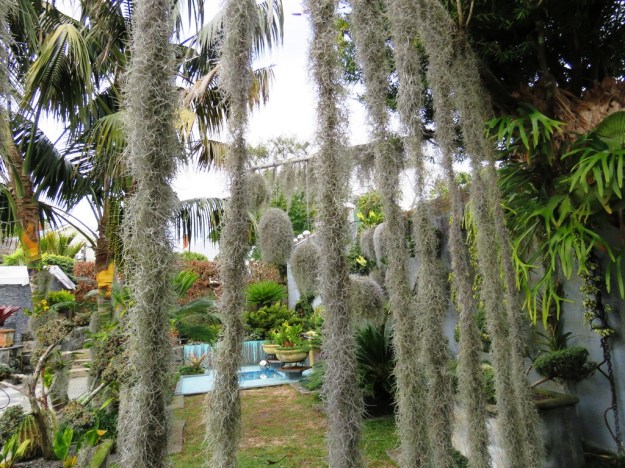 I visited a most interesting private garden in Auckland earlier this month. Industrial, urban chic, I would call it.




 Tikorangi The Jury Garden