
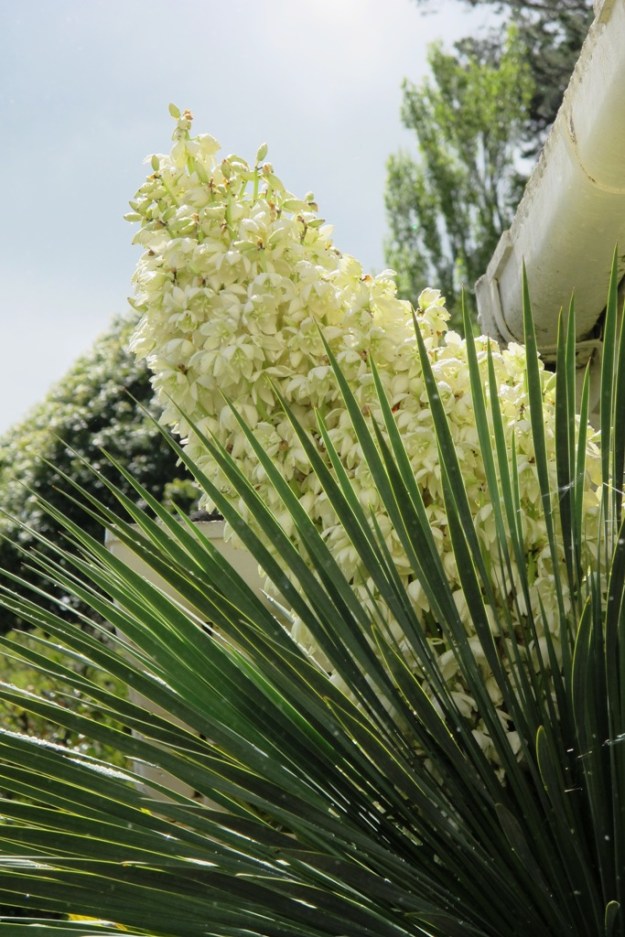
Yucca whipplei finally flowered after maybe 20 years
The state of our Yucca whipplei is such an ongoing saga here it even has its own folder in my photo files. I wrote about its impending move back in early 2013 when we had cut the concrete paving in preparation for its move. But it was still in situ this time last year when, after a period of getting on for 20 years, it actually flowered. We were thrilled. As the flower spike edged past the first story of the house, it was a well-documented blooming.
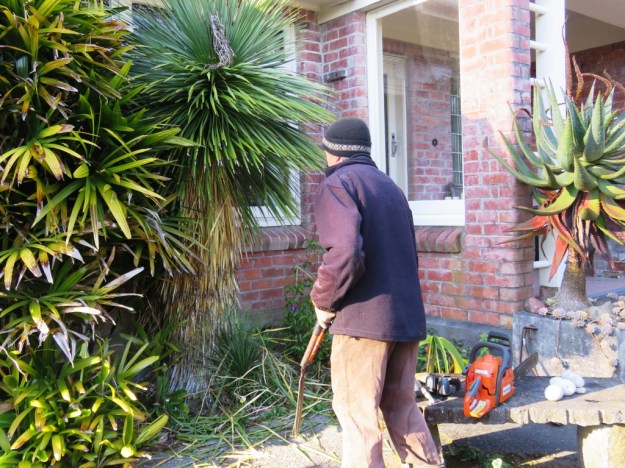 But other needs were always more urgent so the moving of the yucca had not taken place. Nor had the windows to what is our TV room been cleaned for many years. But yesterday the day came, forced by the arrival of the glaziers to install retro-fitted double glazing in our wooden window sashes. It was not an easy task. Mark had thought he could probably chainsaw the top off but the fibrous nature of the spent foliage merely jammed the chainsaw. At this point it is in two pieces. The top will be replanted on the sunny bank in the north garden where it will likely recover. The base, with a new rosette well-formed already, will be dug out and also relocated. It will, I tell you it will. I like the garden view out of the windows which is now visible again and while cleaning windows is not my favourite activity, I do like to be able to do it when necessary.
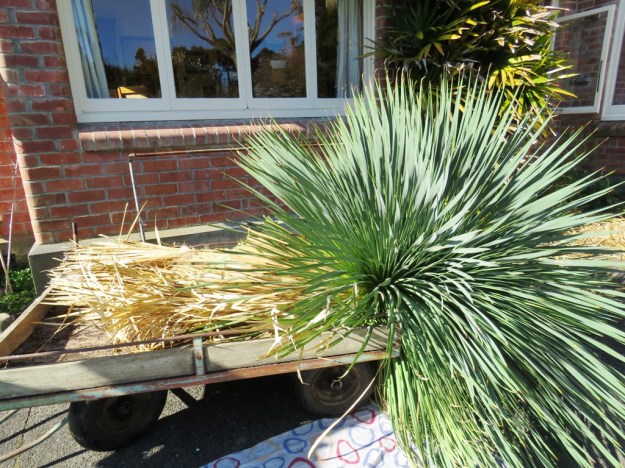 As far as we know, this is Yucca whipplei, also known as Hesperoyucca whipplei, chaparral yucca, Our Lord’s candle, Spanish bayonet, Quixote yucca or foothill yucca. So Wikipedia tells me. Apparently the most common name is Our Lord’s candle. It being native to southern America from California through to Mexico, it clearly felt right at home in the bone dry conditions of the house border beneath the eves. In the meantime, Our Lord’s candle is no long alight at our place.
Pretty it may be in bloom, but I have spent countless hours trying to eradicate this plant, as Felix Jury did before me
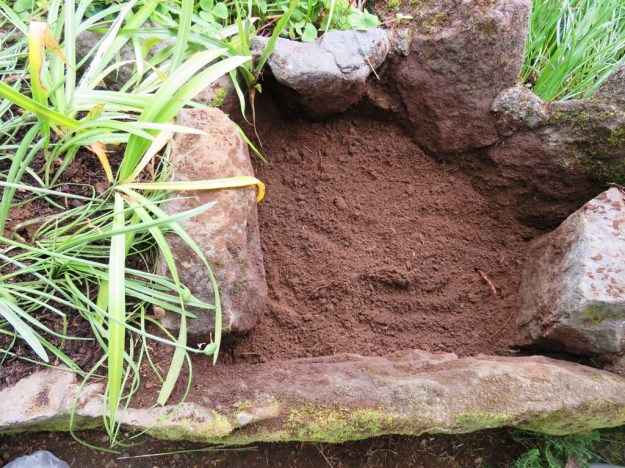
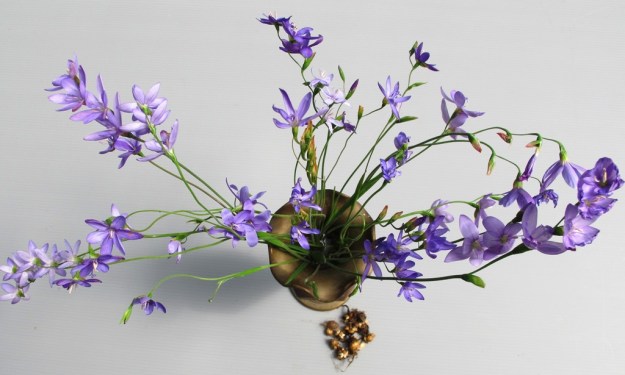
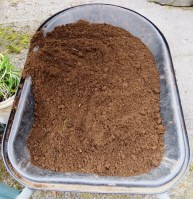 I have been forced to extreme remedial action in the rockery in the Battle of the Geissorhiza. Such a pretty weed and so dreadfully invasive. Each bulb is surrounded by many little baby bulbs that peel off as soon as you look at them, ready to grow into the future. In the worst affected pockets of rockery, I am lifting everything and washing the roots to make sure no dreaded geissorhiza bulbs are lurking in there hiding. Then I dig out all the soil and replace it with clean soil. I was surprised that one pocket generates almost a full barrow of soil. The contaminated soil is being dumped in the deepest, darkest shade where I hope nothing will germinate and if it does, as a last resort it can be sprayed. This somewhat extreme and labour intensive treatment should, I hope, get me closer to victory and the extermination of this pretty but hideously invasive bulb.
Shun Geissorhiza aspera. It belongs to the same group as highly invasive oxalis or allium-type of Pesky Weeds Masquerading as Pretty Plants. You have been warned.

Magnolia Serene
Magnolia Serene is opening. This always heralds the end of the deciduous magnolia season for us as it is the last of the major magnolias here to bloom. Alas, a magnolia season that was progressing magnificently was dealt a near death blow two weeks ago when we had a huge wind which lasted more than 24 hours. We are used to wind here – it is the west coast of the Windy Isles after all (New Zealand being marooned in expanses of vast ocean all round means that we are a windy country) but this was more than an ordinary wind. Reminiscent, in fact, of the worst winds we can remember which came as Cyclone Bola 27 years ago. Fortunately the damage was minor though the debris was great. And the later flowering magnolias were something of a casualty. Because Serene was still in bud, it came through unscathed but the rest of the plants in bloom had their season cut short.
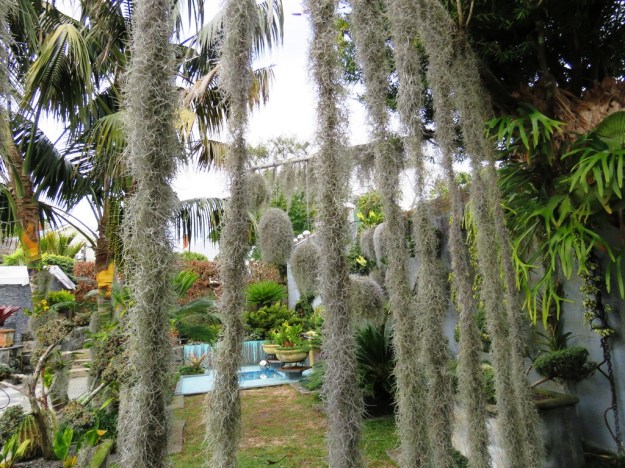 I visited a most interesting private garden in Auckland earlier this month. Industrial, urban chic, I would call it.




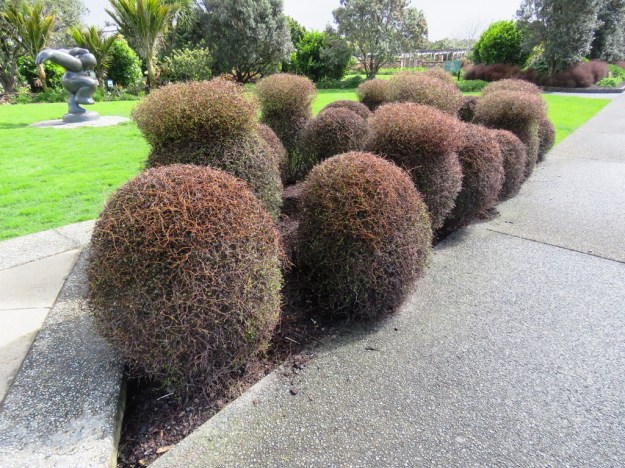
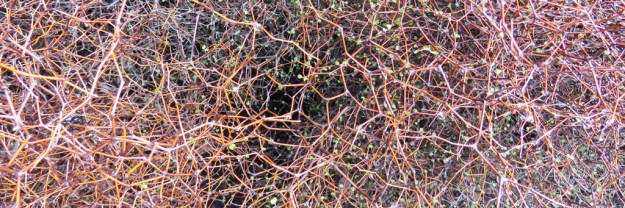
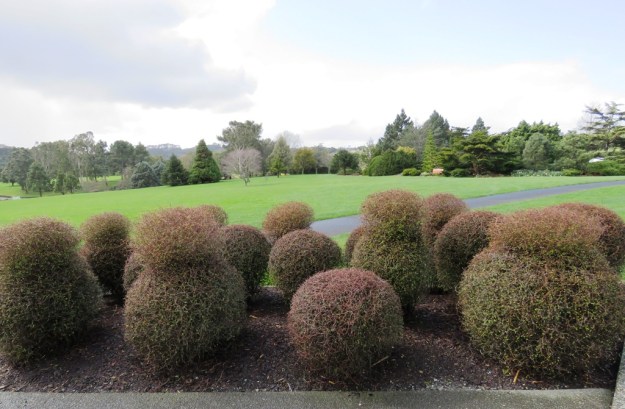
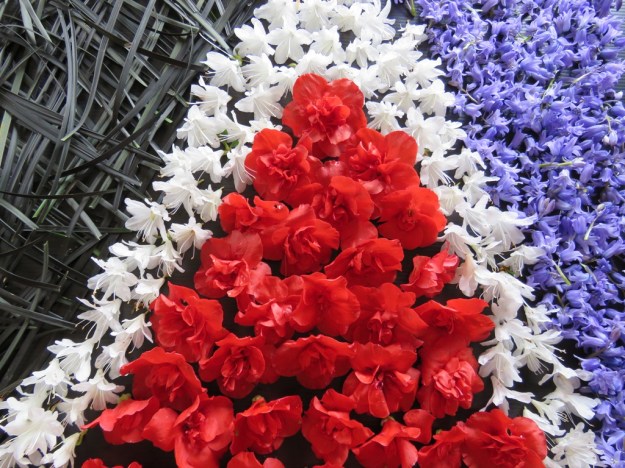
 It may be a surprise to you, as it was to me, to learn that “say it with flowers” did not orginate as Interflora’s slogan but was in fact a 1934 British musical film. Faced by the many memes associated with the Red Peak flag in New Zealand, I felt I could reinterpret it with flowers. First up was the one in the style of floral clocks, perhaps.





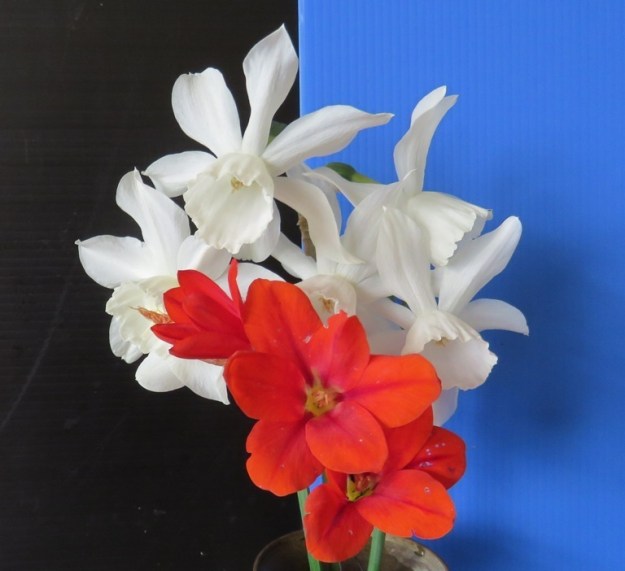
 When all is said and done, we’d have had a lot more fun with the wild card, Lazer Kiwi though I feel this may be better rendered in the style of a vegetable animal, such as our children used to create for the annual Show Day at primary school.
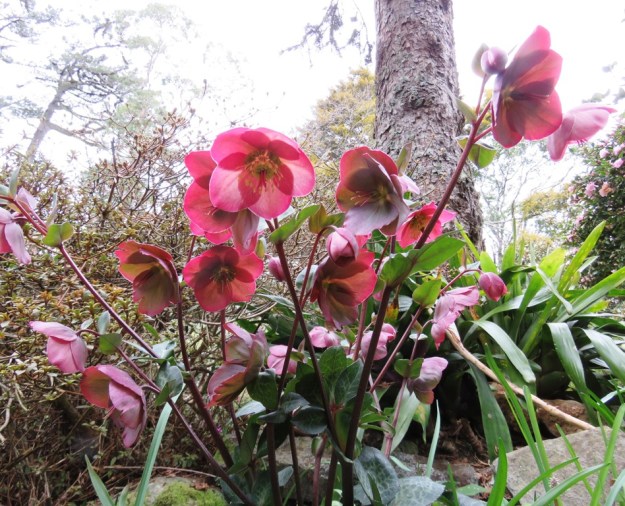

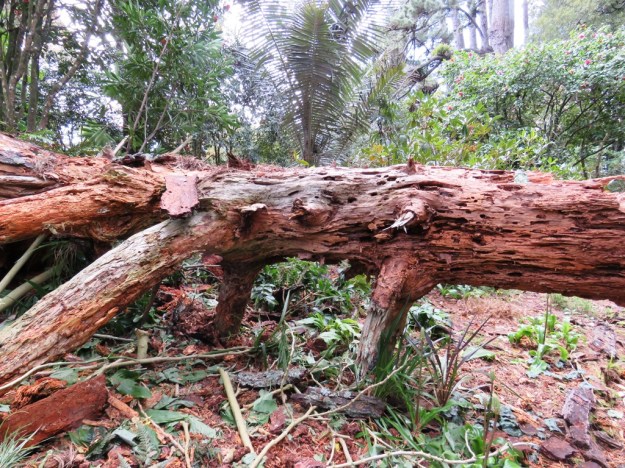 The latest natural garden feature arrived last week as the dead Pinus radiata we refer to as
  I am pretty sure that the next tree in the row is developing a bigger lean and will likely fall sooner rather than later, but Mark is unconvinced. I like to remind him that
  We went to the North Island daffodil show last Saturday. There is a larger album of photos posted on our
  Nothing to do with gardening, but I still have a strong mental image of an acquaintance many years ago, earnestly crocheting aqua coloured edges to white face cloths. “I think it is nice for guests to have special face cloths,” she said with a high degree of self-satisfaction. I looked around her home – a large and cavernous turn-of-last-century villa which had been cut in pieces and relocated but not restored. The walls were scrim, the facilities and decor still more or less original. It was truly grim. And I thought to myself, you poor woman. You think guests won’t notice the surrounds if they have new face cloths? It was all so evocative of Kurtz in Joseph Conrad’s ‘Heart of Darkness’, where the rituals of civilisation are all that keeps the chaotic universe at bay and without those, what is left is “the horror, the horror”. It had the makings of a short story, but instead I became a garden writer.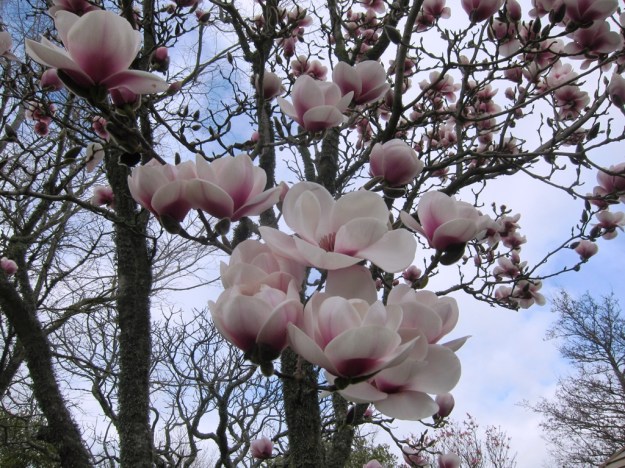
 Tikorangi The Jury Garden