
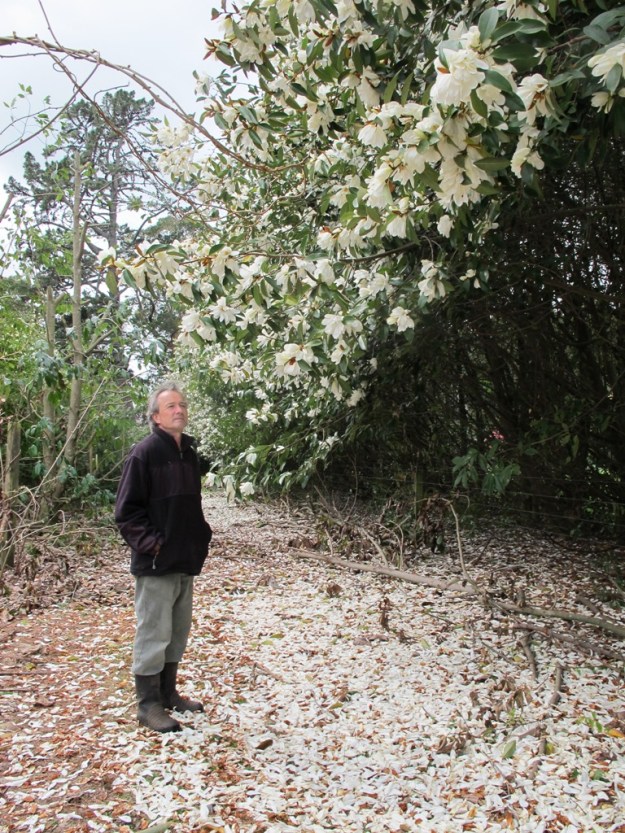
Mark Jury standing on a carpet of fallen scented petals, surveying an early shelter belts planted with michelia hybrids
All michelias are magnolias but not all magnolias are michelias. We have always known them as very close relatives to magnolias but they sat in a group of their own. Now there has been some international reassignment after DNA testing and they have become magnolias, which has led to some confusing name changes. In common usage, they are still often referred to michelias and we are a bit betwixt and between on names.
Until very recent times, there weren’t many different michelias in New Zealand. Doltsopa (the best known cultivar being named ‘Silver Cloud’) and figo (common name of port wine magnolia) have been here for a while. It was an early cross between these two by the late Oswald Blumhardt that gave us ‘Mixed Up Miss’ and ‘Bubbles’.
Interest started to grow when yunnanensis was brought in some twenty years ago. It has spawned a gazillion named selections because it sets seed readily, but just to confuse you, it is now correctly referred to as Magnolia laevifolia. There are a few other species which are not widely available, including maudiae, and some obscure ones that are of interest to collectors only. But our borders closed to new introductions so there are a number of recent discoveries in Asia that we don’t have here. Yes, new plants are still being discovered in this world of ours but we can only look at them from afar with our bio-security rules.
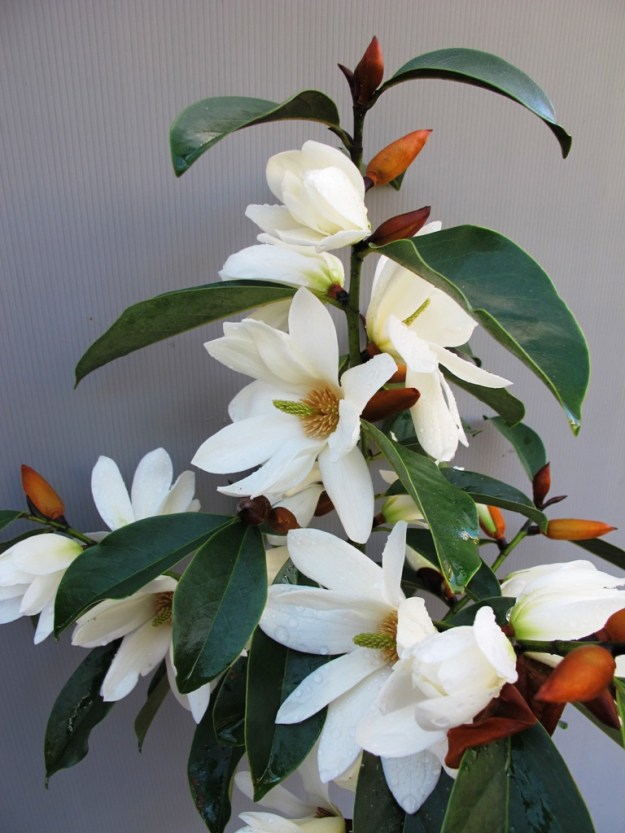
Fairy Magnolia White
Mark started hybridising them here back in the 1990s. He figured there was room to improve on them as garden plants. Figo’s flowers are a bit insignificant and the foliage tends to go yellow in full sun. ‘Silver Cloud’ has a wonderful fragrance but the flowers are very floppy and lack good form. It also grows too large for many town gardens and it can defoliate – dropping all its leaves – after flowering. Laevifola (yunnanensis) can defoliate too, in spring conditions which are wet and cold. These are evergreen plants so defoliation is not a great look. ‘Bubbles’ and ‘Mixed Up Miss’ look great as juvenile plants but are pretty ordinary when they get bigger and older. Mark could see possibilities.
September and October are exciting months for us as the michelias bloom. We live and breathe michelias and magnolias at this time of the year. There are six hundred new michelia seedlings ready to flower this spring alone, part of a long term breeding programme. Out of the thousands he has raised, only three have been named and released so far.
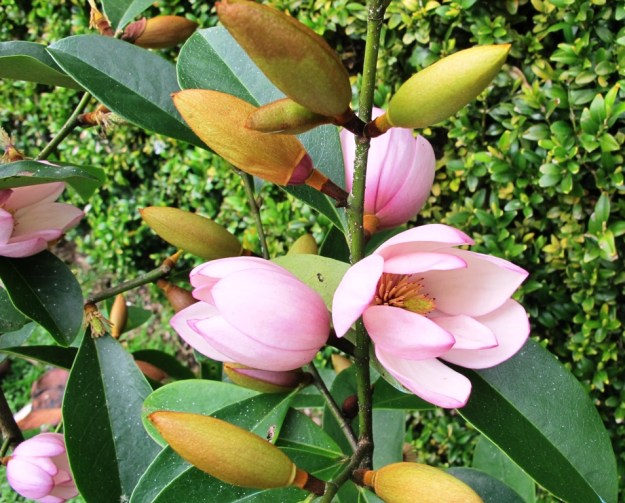
Fairy Magnolia Blush
There is a long way to go yet but some directions are emerging. Despite the vast majority of michelias being basically white, he has reached reds, purples and deep pinks and is working on deepening the pale yellows to get stronger colour. Along the way there are an awful lot of murky colour combinations that get the chop. There is a big range of flower form, foliage and growth habits. Perfume can be an issue when two of the most fragrant species spawn offspring with no scent at all. Bringing together all the different elements to get a new plant is an absorbing and time consuming occupation.
Along the way we have also learned that michelias are very tolerant of cutting and clipping and sprout again from bare wood. The row of lollipop Fairy Magnolia Blush at our entrance has been clipped and shaped over ten years now and we can keep it to the size we want by trimming just twice a year. They make excellent hedges and some of our roadside shelter belts are a feast of flower and fragrance at this time.

The sustainable wood lot
Regrowth
An unexpected bonus has been the sustainable woodlot. Because we heat our large house entirely with wood, we burn through a prodigious amount every winter. Mark had been thinking along the lines of establishing a sustainable woodlot for the future that we could harvest on a rotational basis. I even sourced a book on the very topic. But lo, he realised a few years ago that his reject michelia seedlings already filled that very niche, doing dual duty as winter feed for our very small herd of beefies that we keep to eat the paddock grass. I say very small herd – there are only four at the moment. Cut off close to the base, the plants soon shoot away again with long straight whips that could be used as poles or left to grow for firewood. Mark drags the branches into an adjacent paddock where the cattle enthusiastically eat the foliage. He then gathers the remaining trunks to cut up for next season’s firewood. It seems a good multi-purpose use of a plant breeding programme.
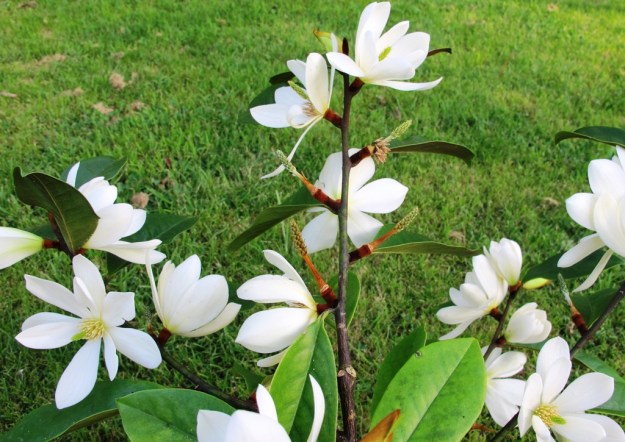
Fairy Magnolia Cream
Mark’s three michelia selections to date are sold under the Fairy Magnolia brand and are widely available in New Zealand garden centres and in some overseas countries. Blush is a soft pink, Cream is very fragrant and grows in a similar, compact manner to Blush. White is a larger grower and the first in the season to flower. Mark has always seen it as a garden-friendly alternative to “Silver Cloud” with good fragrance and beautiful flower form.
First published in the September issue of NZ Gardener and reprinted here with their permission.
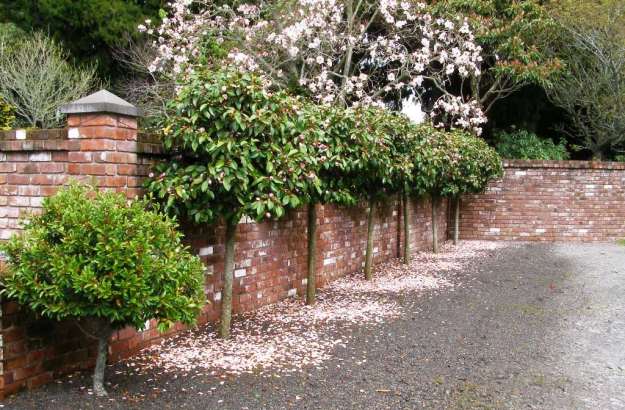
Lollipop Fairy Magnolia Blush at our entranceway. The smaller michelia to the left is an unnamed figo hybrid with masses of creamy yellow flowers.

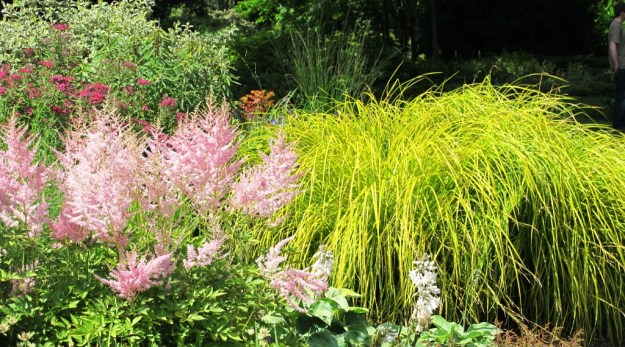
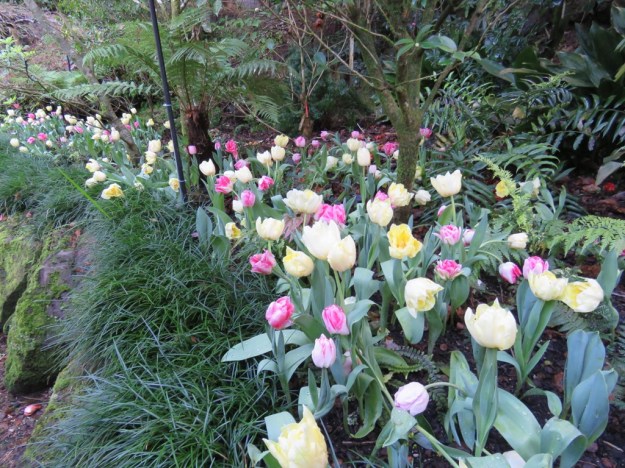
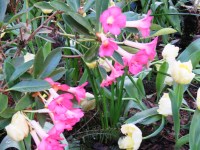
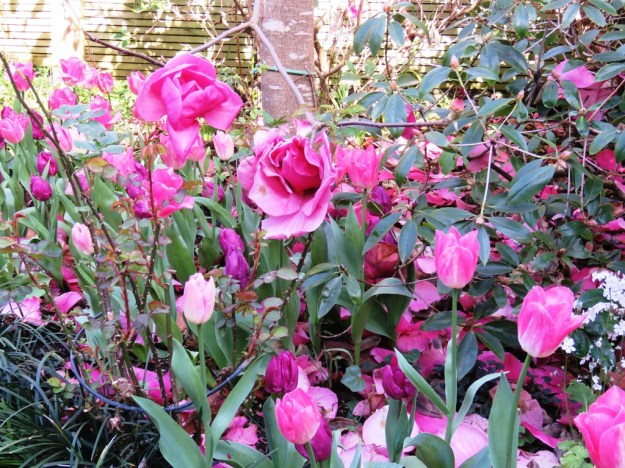
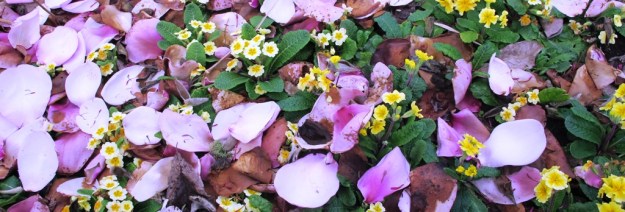

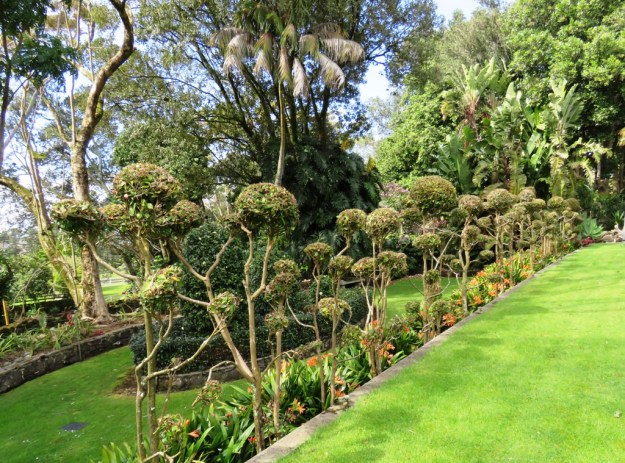
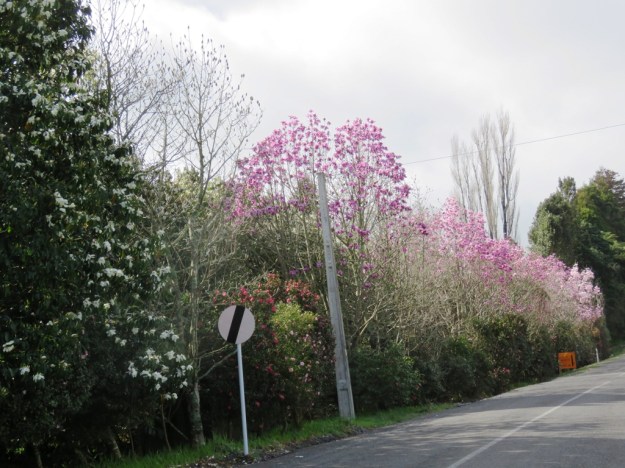

 Generally speaking, people talk to us about our boundaries full of flower and scent because they really like them. Indeed we often hear vehicles slowing down to get a better view at this time of year.

 Sunday was wet and gloomy so I picked hellebores to photograph indoors. And what a wonderful subject for photography they are. All I did was collect one representative bloom from a number of plants. This was more illustrative in intention than artistic endeavour.

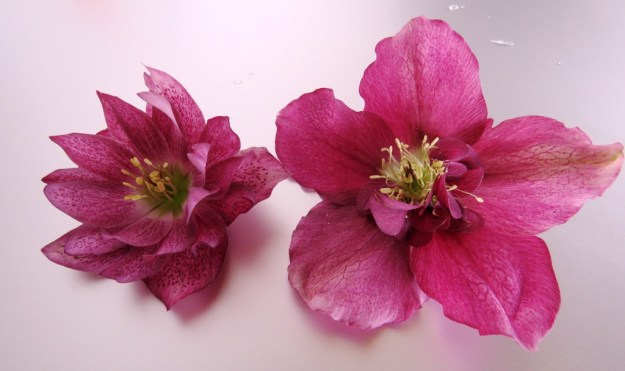 Mark has been raising hellebores in the nursery, in preparation for the upgrade. And he is interested in whether he can get better performing selections for our conditions. Generally, hellebores like a colder climate and the best ones we have seen are in areas with much more winter chill. The very dark flowered ones with bluish tones – referred to as slate – are not exactly booming here. Similarly, the doubles that we, and every other keen gardener at the time, rushed to purchase don’t seem to get much larger and showier than they were when we bought them over a decade ago. Mark’s seedlings may perform better though the wonderfully large pink with petaloids is probably blown up by nursery conditions. In the garden, the flowers may scale down.
 We have worked out that the desirable dark colours display far better as garden plants with the contrast of white flowers alongside. We will also banish all the murky ones to the compost heap. While clean pastel pink and green can be a charming combination, in hellebores these often lean to muted shades which are frankly of no merit. We also want plants that will fade gracefully and not to that dirty greenish brown which does not lift the soul.
 Tikorangi The Jury Garden