“The Holy Grail of horticulture”

Daphne Perfume Princess

Daphne Perfume Princess

As a people, we New Zealanders tend to be a little more reserved than our Australian neighbours across the Tasman. So I post this link to their prime time Channel 9 last night with a slight sense of unseemly boasting. But to have somebody of the stature of Don Burke declaring Mark’s Daphne Perfume Princess to be the Holy Grail of horticulture and the best new plant to be released in Australia in the last 50 years is high praise indeed.

We knew the story was going to air. We had been sent photos – Don donning a knight’s costume in a theatrical take on the search for the Holy Grail. Indeed, we had raised our eyebrows at Channel 9 wardrobe department’s selection of a knight’s costume owing to the fact that we think it was King Arthur and the Knights of the Round Table who were in search of the Holy Grail, not so much the Templar Knights of the Christian crusades…. But no matter, Don carried it off with panache.

Mark’s comment is that the ultimate challenge for a plant breeder is to take a really well known, common plant and to make it better. We hope he has achieved this with Daphne Perfume Princess. Others certainly think so.

Farewell to a friend

Ever curious, Charles headed cross country at A Place for Plants

Ever curious, Charles headed cross country at A Place for Plants

A year and a week ago we were touring summer gardens in England. We started in Suffolk again because that is where Charles and Gill Notcutt live. Today we heard that Charles has died.

On that last trip, Charles met us at Beth Chatto’s garden for lunch. While he was much more a tree man than a flower and garden man, I still recall his great pleasure at the delight and inspiration Mark and I felt in the dry garden there. He then said “follow me” and drove off in his Audi while we climbed into our very modest little rental car. What followed was an alarming pursuit through the back roads of Suffolk as we tried to keep Charles’ car in view because we had no idea where we were going. It was to Rupert and Sara Eley’s “A Place for Plants”. From there we went to Charles and Gill’s home where they hosted a dinner party in our honour.

This Suffolk pub, and I could find its name if I needed to, served the best ever hit chips with lunch

This Suffolk pub, and I could find its name if I needed to, served the best ever hot chips with lunch

The next day he took us to Blooms of Bressingham, we had lunch at a Suffolk pub which served the best hot chips Mark and I had ever eaten (nobody, we discovered, can do chips as well as some English pubs) and then went on to The Old Vicarage Garden in Norfolk. The next morning we said goodbye and headed north to Yorkshire.

These are such lovely memories to have and even at the time, we knew it may be the last time we would see Charles. Others will record his contribution to British horticulture through Notcutts’ nurseries and garden centres and various trade and professional bodies. It was how we first met him in the early nineties. He was also extremely active in contributing to his local community of Woodbridge, even serving as mayor in recent times.

It is Charles the man that we remember. He had an exceptional zest for life, such wide ranging interests – a modern Renaissance Man – underpinned by great kindness. We held him in the highest regard and felt privileged to have him as a friend in our lives.

RIP Charles. Our lives were made richer for having known you.
184

Plant Collector: Chamaedorea woodsoniana

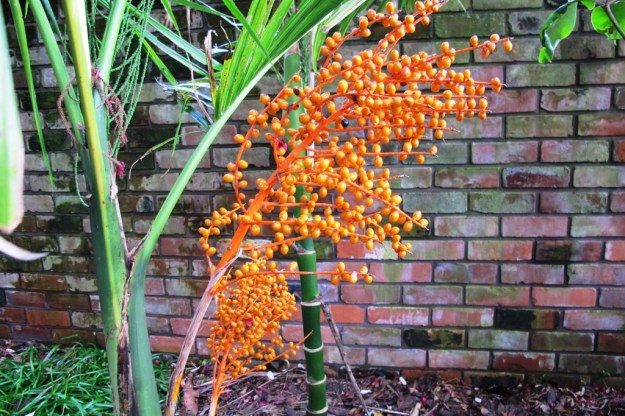
Attractive fruit but a worryingly large amount of it on the Chamaedorea woodsoniana

Attractive fruit but a worryingly large amount of it on the Chamaedorea woodsoniana

“Look at this,” said Mark putting the seed upon the table. “Off a small palm. It’s either the next invasive weed here or it has a future as a substitute in the palm oil industry.”

It took us a little while to track down the name. We knew it was a chamaedorea but there are quite a few different species so we had to go back to the original purchase to get the C. woodsoniana bit. Like most of the family, it hails from Mexico and Central America, growing in montane rainforest which is why we can grow it here. We can do the rain and the montane reference means it comes from areas with some altitude, making it a little bit hardier. However, given that its climate zone range is 10 to 11 (meaning that if the temperature plummets to around zero fahrenheit, it is not going to thrive – or even survive) and we have been moaning all week about the bitter chill of mid winter, we must be close to the limits of its tolerance. We have it planted on the margins of evergreen woodland so it will be protected from the worst of the cold. In its natural habitat, the palm encyclopaedia tells me it can reach 40 feet (about 12 metres) but we think that is extremely unlikely here. Ours is currently sitting around 2 metres and it is not growing like a rocket.

Mark tries to take the fruiting seeds off the bangalow palms here, to restrict their spread. He is now wondering if he is going to have to do it to this pretty chamaedorea too.

Chamaedorea woodsoniana growing in a protected position in our temperate climate

Chamaedorea woodsoniana growing in a protected position in our temperate climate

Garden Lore: “Touch the earth lightly”

“Touch the earth lightly, Use the earth gently
Nourish the life of the world in our care
Gift of great wonder, ours to surrender
Trust for the children tomorrow will bear.”

Verse 1 from the hymn “Touch the Earth Lightly” by Colin Gibson and Shirley Erena Murray (1991).
Photo0084 - Copy
Photo0072 - CopyReally it is the first line I like – “touch the earth lightly, use the earth gently” but I added the rest of the verse to give it context.

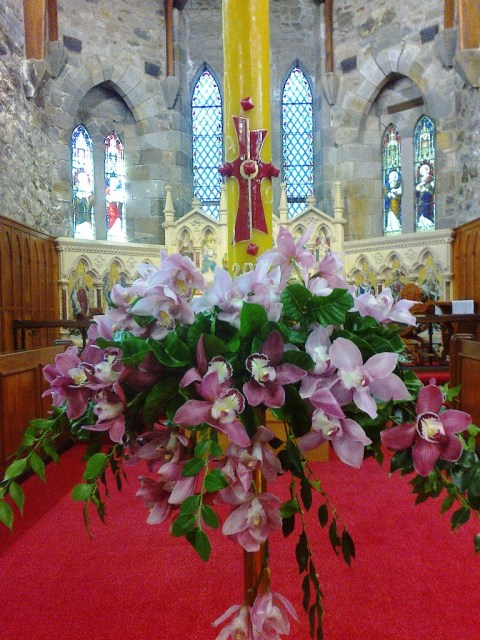
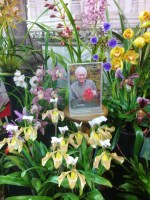
We went to a funeral this week which we do not often do, I admit. But in this case we both wanted to honour the late George Fuller. George was probably best known in this area as long standing curator of our main central city gardens, Pukekura Park, and as a defender of trees. In this role, he was more successful than we have been recently. His personal passion and his international reputation was in the field of orchids – hence the orchid display at his funeral.

To die at the age of 86, surrounded by a large, loving family and to leave behind a worthwhile legacy is to be celebrated. The selection of the hymn seemed particularly apt for such a gentle, humble man.

What a wonderful epitaph, or indeed a principle to live by – touch the earth lightly, use the earth gently.

Not quite lawn-free but leaning more to meadows

019 (3) - Copy
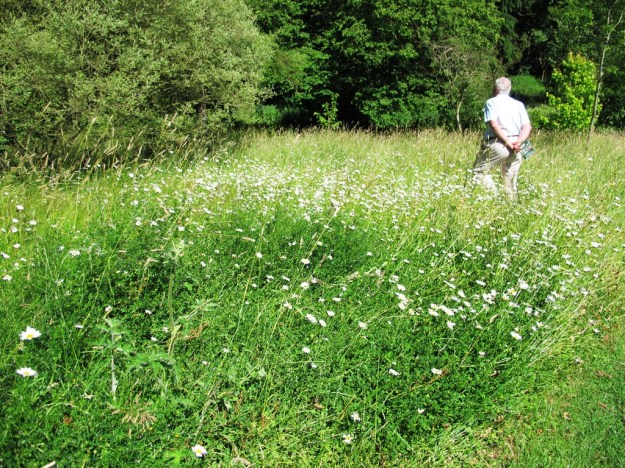
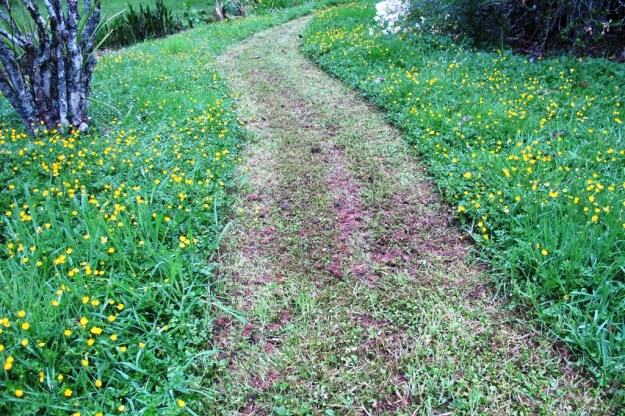
One of the advantages of having our garden closed to the public for a year or two, or maybe more, is the freedom to experiment. And experimenting we are with lawns – or mown green areas may be a more accurate description. We stopped mowing half our park at the end of last winter, choosing instead to keep to a mown track meandering through, so it is possible to walk without getting wet feet.

We have been talking about lawns and grass for years here. Lawns are arguably the most environmentally unfriendly gardening practice of all. Yet there is considerable value placed on the perfect lawn and some people take great pride in achieving this. Perfection is measured against the bowling green which has no connection whatever to the home garden, let alone to nature.

I have never forgotten taking Mark along when I was doing an interview for a commissioned garden story. The owners were very proud of their lush, green sward and claimed that garden visitors often said they wanted to take their shoes off and walk barefoot or roll on it. I saw Mark throw me a telling glance and later he expostulated: “You want to let your bare skin touch that?’ For we both knew that sort of lawn perfection is only achievable by regular spraying with a fair range of chemicals, as well as fertiliser application and the usual frequent mowing, scarifying and over sowing that is required to keep it in such an artificial state.

The perfect lawn is a triumph of man or woman over nature, a dominance achieved at considerable cost to the environment and no small financial cost. There are all sorts of concerns around the western world about run-off from domestic lawns and frankly, when your lawn clippings are too toxic to put into the compost without risking your tomatoes and other crops for the next six months, there is a problem. Some folk will even kill off the worms with a residual spray in the quest for lawn perfection.
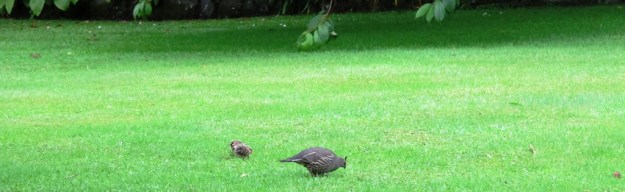
Mama Quail and two little feathered bumble bees of babies feeding on the lawn

Mama Quail and two little feathered bumble bees of babies feeding on the lawn

Mark is keen to have grass expanses with at least one flowering a year to feed the bees and other insect life. An added bonus has been unexpected. We made a decision a few years ago not to replace our cat, even though I adore fluffy felines. As a result, the Californian quail population has been steadily increasing and these lovely birds are a delight, foraging across the house lawns for seed. We might feel differently about a flowering lawn if we had small people in our lives running around bare footed, but in their absence, there is no need to worry about the bees.

We use a mulcher mower so the clippings are returned to the grass and this has eliminated any need to feed the lawn. Come early November, we let the grass grow long before cutting because then the dreaded Onehunga weed gets stretched and cut off before it can set its prickles. We do a certain amount of hand weeding to keep the flat weeds and undesirable grasses at bay in the house lawns. Beyond that, as long as it is fine or small leaved and cuts neatly, it is allowed to stay. Our lawns are more mixed colony environments than controlled grass species. We still mow regularly, but we are stretching out the intervals between mowing because we have become very aware of how dependent we now are on the motorised gardening aids and just how much fuel we have to buy to keep the mower, strimmer, chain saw and leaf blower running.

One of the delightful gardening books on my shelf is early Alan Titchmarsh, the Yorkshire gardener who is now a star TV presenter in the UK. Back in 1984, he wrote about The Lawn:
“Avant-gardeners do not have lawns; they have grass….The ‘bowling green’ lawn is a feature that belongs in front of council houses where it is surrounded by borders of lobelia, alyssum, French marigolds and salvias with standard fuchsias used as ‘dot plants’.

The avant-gardener’s grass is intermingled with daisies, plantains, buttercups… and plenty of moss (usually at least of 50% of the total coverage). This is a state of affairs to be encouraged. The grass is mown (avoiding a striped effect at all costs)…” (Avant-Gardening, a guide to one-upmanshop in the garden).
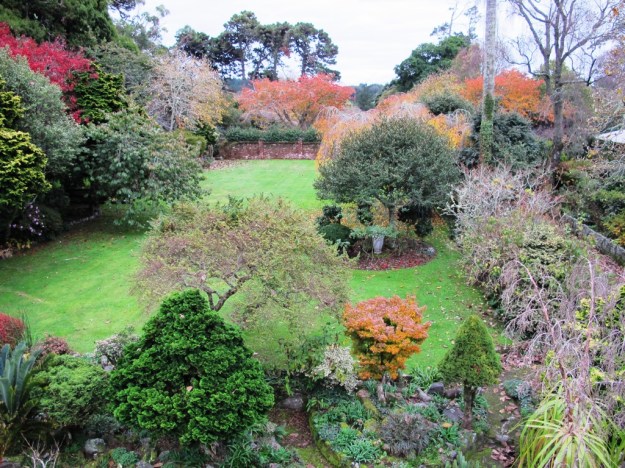
We have extensive areas of grass but have already decided that the front lawn should remain mown lawn rather than mixed meadow
We have extensive areas of grass but have already decided that the front lawn should remain mown lawn rather than mixed meadow

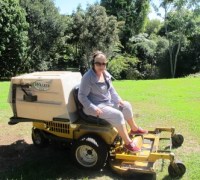
I admit we own the Rolls Royce of lawnmowers. It cost more than our car to buy

I admit we own the Rolls Royce of lawnmowers. It cost more than our car to buy

It does not appear that we have moved a long way since 1984 avant-garde thinking. If you are wondering what half our park looks like after six months without cutting the grass, I can report that the buttercup and self heal are thriving. To a critical eye it probably looks better in the shady areas than in the full sun but the mown strip is indeed like a path through a meadow and that is the effect we now want. We have worked out that we want the lawns immediately around the house more tightly maintained but, even in a large garden, we can achieve that without chemical intervention and top-up feeding. We see that as far more sustainable and environmentally friendly than the suburban value of an immaculate lawn.

First published in the June issue of the New Zealand Gardener and repinted here with their permission.