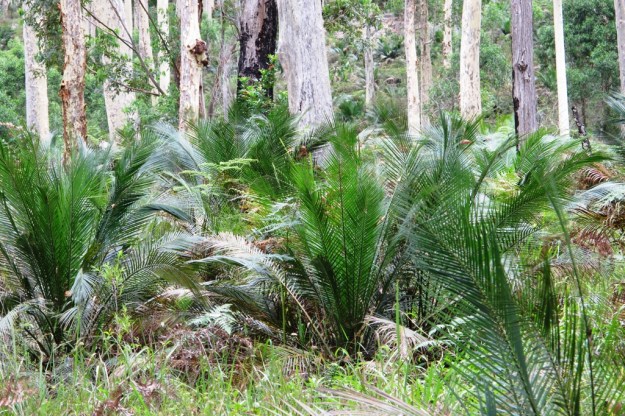
I admit not everybody will find a woodland understory of native cycads exciting but we were pretty taken with this natural phenomenon
We drove through a cycad forest. It was so exciting – in a low-key sort of way. Most of us have gardens which are the botanical equivalent of the United Nations. While some of us may know in theory where at least some of the plants originate, to see them in their natural habitat can be a thrill.
Our New Zealand bush is thick, dense and verdant. Overseas visitors are frequently amazed by our ferns, particularly our tree ferns which we take for granted. Our dicksonias (the common pongas) are particularly highly prized overseas. When we had the garden open, I used to like shocking overseas visitors by commenting that they just seed down here and we chainsaw out those that are in the wrong place. Familiarity can breed contempt.
The Australian bush is different. It is much more open in character but it had never occurred to us to consider that of course their native cycad, Macrozamia communis, must have its natural habitat somewhere. At least one place is in the eucalyptus woodland heading inland from Bateman’s Bay on the coast south of Sydney.
We know the cycads as expensive, designer plants much favoured by Auckland landscapers in recent decades. Most are very slow growing plants and they show little seasonal change so they fit well into the near-static designer garden mode favoured by some. They have always been expensive because you are paying for the years of growth to get them to a large enough size to have visual impact.
Botanically, they are even more interesting, having undergone little evolutionary change down the centuries. These are ancient plants, traced 200 million years which takes them back considerably earlier than the dinosaur era. Individual plants can be long lived too – anything up to 1000 years. While they are often grouped with palms and there is a certain passing resemblance in form to some ferns, there is only a remote botanical connection to either at best.
Many cycads are rare and endangered around the world but not Macrozamia communis. It is common enough in New Zealand gardens because it is a species that can adapt to our cooler temperatures. We have several in our garden where they thrive.
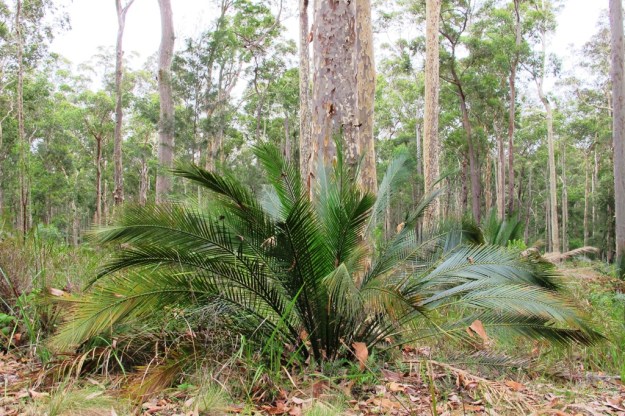
In the wild, eucalypts and Macrozamia communis near the coast south of Sydney. Notice the lovely mottled bark on the gum tree
But to see them in the wild was a different experience. They form the lower canopy beneath the spotted gum (what used to be known as Eucalytus maculata but has now been reclassified as Corymbia maculata) and there were hectares of them at various stages of maturity. They seed down and some had babies growing at their feet. One reason they have survived is that they are adapted to cope with bush fires sweeping through. Even if all the foliage is removed (either by fire or when cut off), the trunk and bulbous base are capable of pushing out fresh growth.
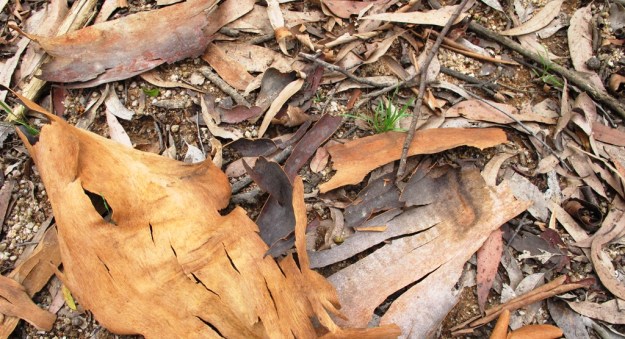
A carpet of bark, leaves and debris from the top layer of eucalypts creates conditions which discourage many other plants
Being squeamish New Zealanders, we found the Aussie bush challenging. Even on the coast where we were staying in Vincentia, quiet strolls along well-trod paths by the scenic beaches took on new fears after we found the first ticks taking up residence on both humans and the two little dogs that were with us. Mark’s one brief foray off piste (to look at a native orchid in flower) resulted in a leach latching onto his foot. He was unaware of it until, replete, it fell off him on the kitchen floor. We missed seeing – by a matter of a minute – the red belly snake which freaked out another party. Truly our native bush and forest is benign compared to the natural hazards in Australia. So we were not going to go far off the track to explore the macrozamia wonderland but viewed it from the rough vehicle access. Their woodland lacks competition from a wide range of different plants. The top canopy of eucalypts drops vast amounts of foliage and bark which sits around taking a very long time to decompose. That, allied to the extremely dry soil conditions which result from the gums getting down on available moisture, creates inhospitable conditions. The macrozamias can coexist in this environment but not a lot else can.
I have a treasured memory of seeing natural bluebell woods in Scotland. Mark got all excited finding Helleborus niger and hepaticas growing wild in their homelands in Northern Italy. The cycad woodland of south eastern Australia ranks up with these experiences.

The macrozamia is equally popular as a garden plant
First published in the Waikato Times and reprinted here with their permission.



 First published in the New Zealand Gardener and reprinted here with their permission.
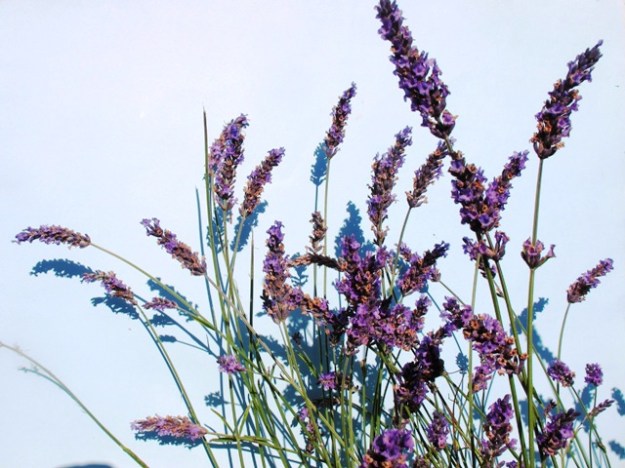 If it were of any use, every day the gardener would fall on his knees and pray somehow like this: “O Lord, grant that in some way it may rain every day, say from about midnight until three o’clock in the morning, but, you see, it must be gentle and warm so that it can soak in; grant that at the same time it would not rain on campion, alyssum, helianthemum, lavender, and the others which you in your infinite wisdom know are drought-loving plants – I will write their names on a bit of paper if you like – and grant that the sun my shine the whole day long, but not everywhere (not, for instance, on spiraea, or on gentian, plantain lily, and rhododendron), and not too much; that there may be plenty of dew and little wind, enough worms, no plant-lice and snails, no mildew, and that once a week thin liquid manure and guano may fall from heaven. Amen.”
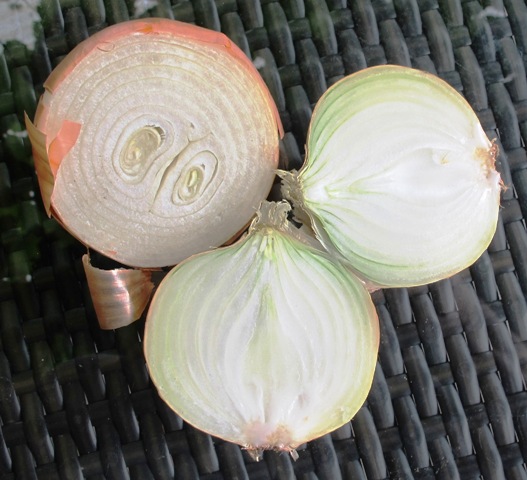 1) Twin scaling is a way of increasing the number of bulbs more quickly than by other usual methods. A single bulb can yield up to 30 or more baby bulbs (bulblets) over a period of a season. It only works with proper bulbs – not corms, tubers and rhizomes. Bulbs need a base plate and a layered construction to be twin scaled – eerily similar in form to the common onion shown here.
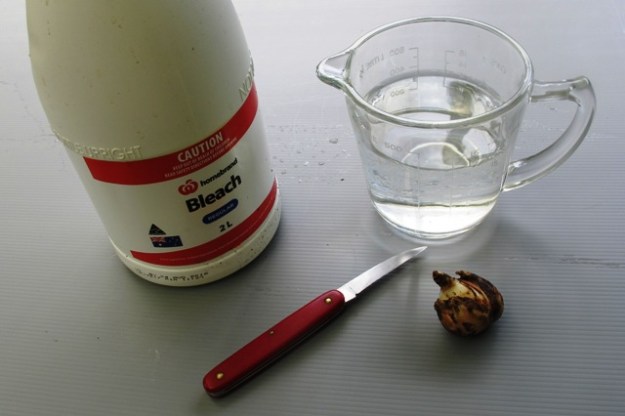 2) Twin scaling works well for bulbs such as narcissi (daffodils), crinums, galanthus (snowdrops), nerines, amaryllis, hippeastrums, lachenalias and some lilies. Wash the bulb and remove any outside coating and old roots. Make up a weak solution of household bleach – about 1:10 bleach to water – and dip the sharp knife and bulbs. Clean working conditions and hygiene are important to prevent disease and the transfer of any viruses.
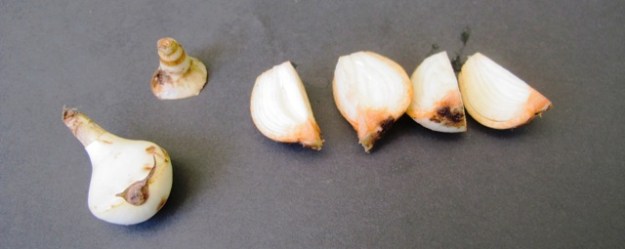 3) Remove any offsets already formed, making sure you keep some of the base plate with them. The base plate is where the roots grow from. Cut the top third off the bulb (both offset and top are visible to the left in the photo). Cut the main bulb into quarters or eighths, depending on the size of the bulb. Each piece must have some of the base plate remaining attached. The larger the bulb, the more sections you will get.
 4) Peel off two scales together, attached to some of the base plate. Keep your knife clean and sharp so you can cut through the base of each section more easily. It does not matter if you have three or more scales but if you do not have part of the base plate, the process will not work. A bulblet will form between the two scales on this base plate.
 5) Plant the scales in a pot or tray filled with seed raising mix. Press them down deeper than in the photograph until just the tip is visible. Water them in and keep the tray in a warm, reasonably dark position. The bulblets will form through the autumn and grow away in spring so it is best to twin scale when the bulb is freshly dormant. It is too late to twin scale autumn flowering bulbs because they are already starting to grow but you can do the spring flowering ones which includes narcissi such as this bulb.
 6) If you lack the confidence to take each section down to two scales, you can stop at step 3 where you have cut the bulb into quarters or eighths. As long as you look after them, most sections will grow away into healthy, independent bulbs. It is probably easiest to start with a large bulb while you gain confidence. Most bulbs propagated by twin scaling will take at least two years to reach flowering size, sometimes longer.
 Tikorangi The Jury Garden