Plant Collector: Kerria japonica “Pleniflora”

Kerria japonica 'Pleniflora'

Kerria japonica ‘Pleniflora’

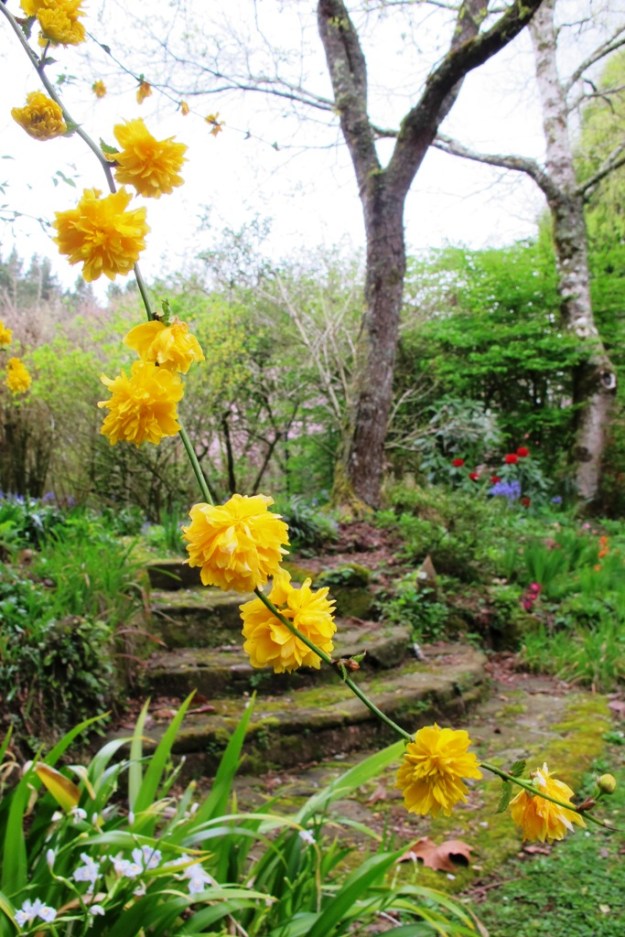
I hadn’t registered the kerria until we went to see the bluebells at Te Popo Gardens and there, lo and behold, it was impossible to ignore. The double form looked somewhat like a bright gold, thornless banksia rose. I wasn’t quite so keen on the single form which is a bit like a giant buttercup flower but others may like the simplicity. On a gloomy early spring morning, the kerria were like rays of gold.

This is a deciduous, clumping Chinese shrub which will spread by putting out suckers. It flowers just at the point when the leaves start to emerge. It is not a plant with strong form or shape, being more a thicket of arching canes. When not flowering, it is one of those anonymous plants that does nothing to attract attention to itself. It benefits from being pruned (thinned, really) once a year because the flowers come on the newest canes. Treat it like a raspberry, in other words.

The real boon is that kerrias are not fussy and they will grow and flower in shade – full shade, even. It is no surprise that the Japanese have always liked them. An arching spray of golden flowers is a wonderful statement of both simplicity and cheer.

First published in the Waikato Times and reprinted here with their permission.

Japanese simplicity

???????????????????????????????

“I have come to understand the unspeakable loveliness of a solitary spray of blossoms arranged as only a Japanese expert knows how to arrange it…and therefore I cannot think now of what we Occidentals call a ‘bouquet’ as anything but a vulgar murdering of flowers, an outrage upon the color-sense, a brutality, an abomination.”

Glimpses of Unfamilar Japan by Lafcadio Hearn (1894)

Peak bluebell!

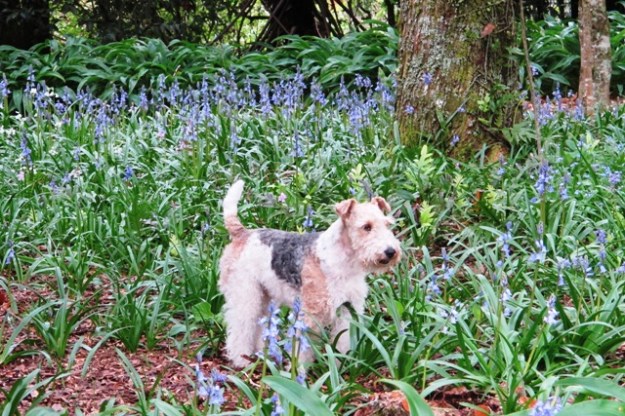
Flynn the dog did not show a great deal of respect for the Te Popo bluebells, alas

Flynn the dog did not show a great deal of respect for the Te Popo bluebells, alas

The first time I visited Scotland was at exactly the right time to see the bluebells bloom. This was in woodland near Gatehouse of Fleet in the south west. Like many others, I was enchanted by this natural phenomenon.

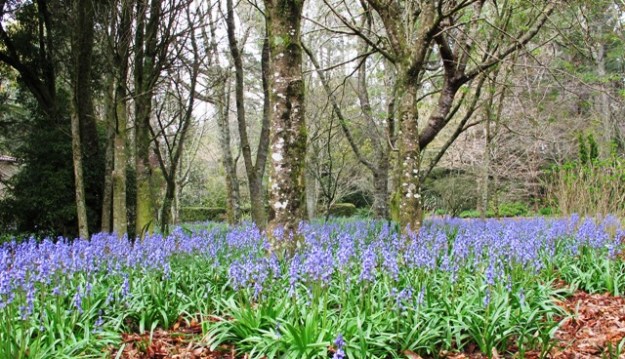
It is Peak Bluebell here this week. We headed down to see the blue glory at Te Popo Gardens in central Taranaki. While we grow bluebells in relatively large numbers ourselves, we have yet to attain the magnificent expanse they manage in their conditions.

At Te Popo, there are many deciduous trees which creates a woodland cycle. When the leaves fall, they are left to lie. The bare trees let in winter light. It is at the turning of the season when the fresh growth is just starting on the trees that the bluebells flower, creating great swathes of blue carpet beneath. As the trees take on their full summer leafy garb, light conditions will decrease below which suppresses competing weed and grass growth.

Bluebells beneath deciduous trees at Te Popo

Bluebells beneath deciduous trees at Te Popo

In our garden at Tikorangi, our tree cover is such a mix of evergreen and deciduous that our woodland areas tend to be a little dark for most bulbs. When it gets too dark, the bulbs don’t set flower buds and gradually die out. We have to go for the margins and find the balance between necessary light levels and the grass growth that comes as a result. We are less blue carpet and more drifting carpet runner, if you see what I mean.

Bluebells are strong growing bulbs, also given to seeding down, so are better suited to a more natural style of gardening rather than intensively maintained borders. Lorri Ellis at Te Popo uses them extensively with hellebores to good effect. We have both found that spreading them in areas which can then be more or less left to their own devices is most effective. It is the massed, natural look that works.
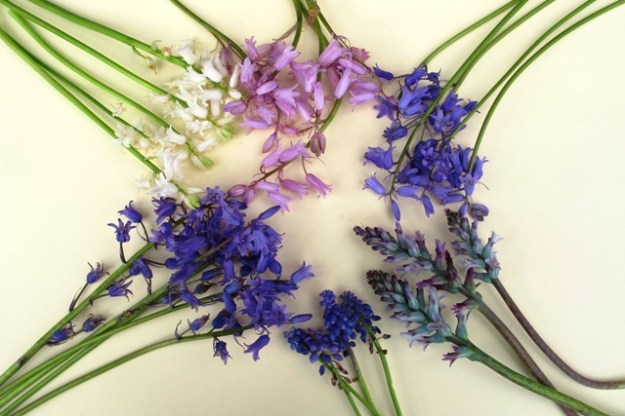
Bottom left, clockwise: Spanish bluebells in blue, white and pink, allegedly English bluebells, blue lachenalias and grape hyacinths – muscari – which some people mistakenly refer to as bluebells.

Bottom left, clockwise: Spanish bluebells in blue, white and pink, allegedly English bluebells, blue lachenalias and grape hyacinths – muscari – which some people mistakenly refer to as bluebells

There is ongoing angst in Britain over the incursions of the stronger growing Spanish bluebell, Hyacinthoides hispanica, dominating and hybridising with their native bluebell H. non scripta. We spent some time discussing the difference. Lorri has a large patch that she understands is the true English bluebell and she has kept it isolated from the rest which are probably mostly Spanish, or Spanglish as I call the hybrids between the two – technically H. x massartiana.

Bluebells and very fragrant jonquil species are both originally from Spain.

Bluebells and very fragrant jonquil species are both originally from Spain.

One way you can tell what you have, apparently, is by pollen colour. The English ones always have creamy pollen whereas the Spanish ones often have blue pollen. I had noticed the latter. After some random sampling and Mark’s memories of what he refers to as “Grandma’s bluebells” (technically his great grandmother, I think), we came to the conclusion that it is likely that most of what we have here are hybrids. We are none the wiser as to whether Grandma started with English or Spanish ones, but we think that the lilac pink and white ones that were brought in to add variety are all of Spanish origin.
Mostly Te Popo 014 - Copy
Te Popo Gardens are located near Stratford and will be open during the Powerco Taranaki Garden Spectacular from October 31 to November 9

First published in the Waikato Times and reprinted here with their permission.

Garden Lore – witches’ broom

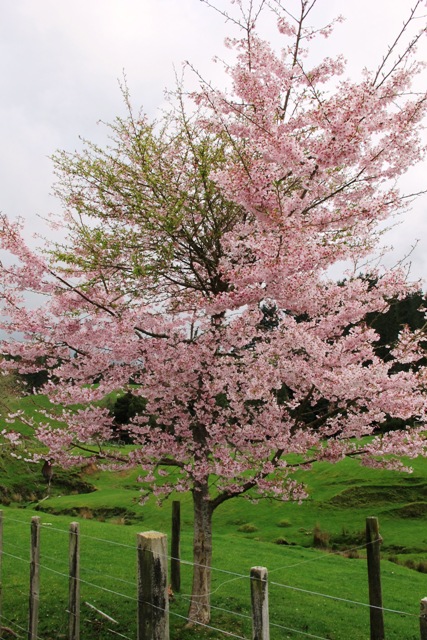
Indubitably witches' broom, not two trees

Indubitably witches’ broom, not two trees

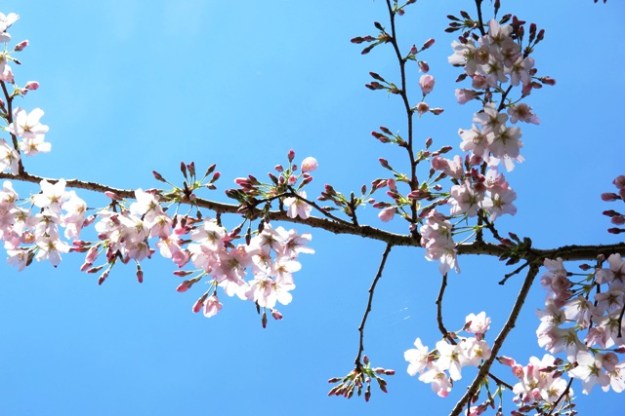
I came across this fine example of witches’ broom in a roadside tree planting of Prunus Awanui. That particular flowering cherry is known to be vulnerable to witches’ broom. It is the green section coming into dense leaf earlier than the rest of the tree and without flowers. Left to its own devices, over time the witches’ broom will take over the tree and you will no longer see much in the way of spring flowering. If you leave it for a few seasons, it also becomes harder to remove the affected sections without destroying the shape and structure of the tree.

Basically, witches’ broom is a mutation within the tree – possibly similar to an immune disorder in humans – which causes dense, twiggy growth in that section. It does not appear to heal itself and it does not grow out of it the following year. There are multiple causes but no general treatment beyond surgery – removal of all affected parts of the plant. Cherry trees are particularly prone to it, although you won’t find them in the campanulatas or Taiwanese cherries. Generally it is seen in the Japanese cherries and the hybrids. If you spot it now, mark it because it is harder to identify later in the summer when all the branches are in leaf. Spray on paint is handy for this, or a tie. Pruning cherry trees in high summer is recommended to reduce disease getting in.

On the bright side, witches’ broom mutations are what have given us many of the dwarf conifers so they are not all bad.

First published in the Waikato Times and reprinted here with their permission.
Pink bluebells

Pink Hyacinthoides almost certainly hispanica - I picked them because the light conditions were not good enough for the row  multiplying in the old vegtable garden to be photographed

Pink Hyacinthoides almost certainly hispanica – I picked them because the light conditions were not good enough for the row multiplying in the old vegtable garden to be photographed

“Besides all this and spotted by awful white rocks and holed limestone rocks like a great fungus, there was the pink bluebell glade. Miss Anna Rose often remarked to him upon the prolific beauty of the pink bluebells which some aunt of hers had planted here. And he always refrained from expressing his absolute preference for the blue bluebells. Only the very young prefer pink bluebells to blue. Equally, they prefer pink primroses to yellow.”

Molly Keane Treasure Hunt (1952)