
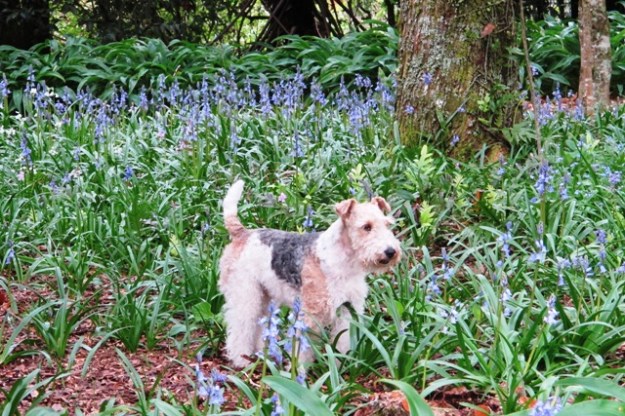
Flynn the dog did not show a great deal of respect for the Te Popo bluebells, alas
The first time I visited Scotland was at exactly the right time to see the bluebells bloom. This was in woodland near Gatehouse of Fleet in the south west. Like many others, I was enchanted by this natural phenomenon.
It is Peak Bluebell here this week. We headed down to see the blue glory at Te Popo Gardens in central Taranaki. While we grow bluebells in relatively large numbers ourselves, we have yet to attain the magnificent expanse they manage in their conditions.
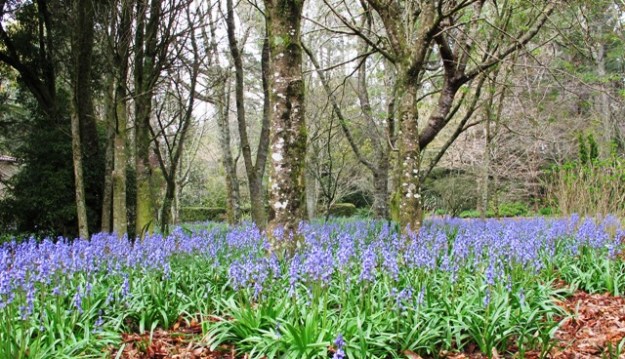
At Te Popo, there are many deciduous trees which creates a woodland cycle. When the leaves fall, they are left to lie. The bare trees let in winter light. It is at the turning of the season when the fresh growth is just starting on the trees that the bluebells flower, creating great swathes of blue carpet beneath. As the trees take on their full summer leafy garb, light conditions will decrease below which suppresses competing weed and grass growth.

Bluebells beneath deciduous trees at Te Popo
In our garden at Tikorangi, our tree cover is such a mix of evergreen and deciduous that our woodland areas tend to be a little dark for most bulbs. When it gets too dark, the bulbs don’t set flower buds and gradually die out. We have to go for the margins and find the balance between necessary light levels and the grass growth that comes as a result. We are less blue carpet and more drifting carpet runner, if you see what I mean.
Bluebells are strong growing bulbs, also given to seeding down, so are better suited to a more natural style of gardening rather than intensively maintained borders. Lorri Ellis at Te Popo uses them extensively with hellebores to good effect. We have both found that spreading them in areas which can then be more or less left to their own devices is most effective. It is the massed, natural look that works.
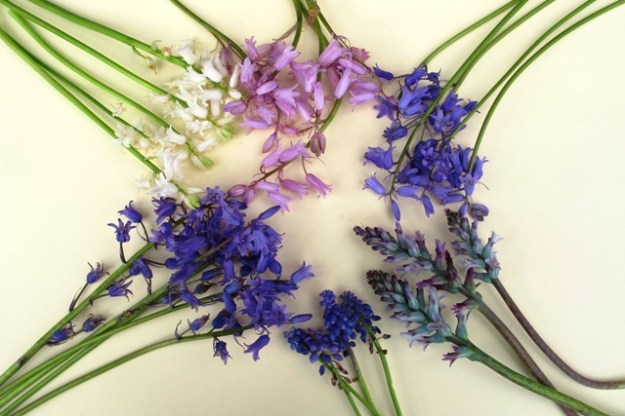
Bottom left, clockwise: Spanish bluebells in blue, white and pink, allegedly English bluebells, blue lachenalias and grape hyacinths – muscari – which some people mistakenly refer to as bluebells
There is ongoing angst in Britain over the incursions of the stronger growing Spanish bluebell, Hyacinthoides hispanica, dominating and hybridising with their native bluebell H. non scripta. We spent some time discussing the difference. Lorri has a large patch that she understands is the true English bluebell and she has kept it isolated from the rest which are probably mostly Spanish, or Spanglish as I call the hybrids between the two – technically H. x massartiana.

Bluebells and very fragrant jonquil species are both originally from Spain.
One way you can tell what you have, apparently, is by pollen colour. The English ones always have creamy pollen whereas the Spanish ones often have blue pollen. I had noticed the latter. After some random sampling and Mark’s memories of what he refers to as “Grandma’s bluebells” (technically his great grandmother, I think), we came to the conclusion that it is likely that most of what we have here are hybrids. We are none the wiser as to whether Grandma started with English or Spanish ones, but we think that the lilac pink and white ones that were brought in to add variety are all of Spanish origin.
Te Popo Gardens are located near Stratford and will be open during the Powerco Taranaki Garden Spectacular from October 31 to November 9
First published in the Waikato Times and reprinted here with their permission.

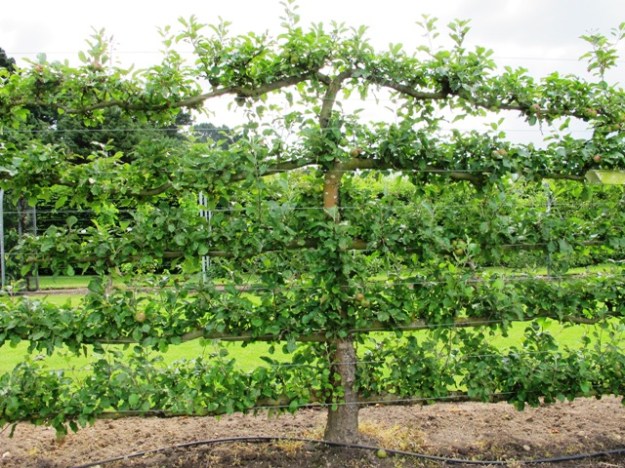 1. The freestanding horizontal espalier. You can see clearly the advantages of a two dimensional plant. Good air movement will reduce disease. It is easy to tend the plant and the fruit all receives equal sunlight. You can also see that the supports are heavy duty. This is not an exercise to be done with a few bamboo stakes and stockinette ties.
 2. The cube requires some heavy duty framing but is quite stylish, even if I was worried by the top branch that was trained back on itself. Using a frame which gently rusts as it ages will make it less visually intrusive than the tanalised pine we often favour in this country. It is the plant shape you want to emphasise, not the support structure. This design allows good air movement through the centre of the tree.
 3.The diamond row was visually the strongest in terms of pattern. I raised my eyebrows at the potential rubbing of bark where branches cross. Stem damage can let disease into the plant and a rule of thumb in all gardening is to avoid crossed branches. Presumably in an intensively maintained espalier, you are replacing the branches regularly with fresh growth so there is a bit of leeway if this is the look you want.
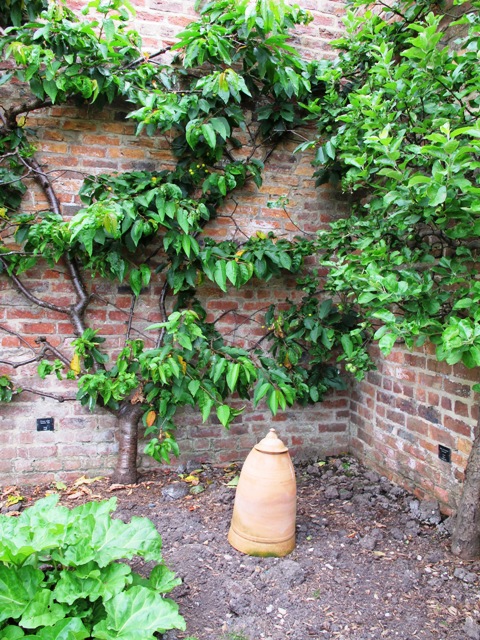 4. There is little doubt that your fan-shaped espalier will look better if you clad the fibrolite garage in old brick veneer and casually pose a stylish, vintage, terracotta forcing pot in front. The advantage of espaliering against a wall is the increase in heat for marginal crops. We don’t need to do it for apples and pears in this climate but I can see that it could work well for figs and some of the stone fruit.
 5. I have mentioned trendy stepovers before – the training of an espaliered fruit at knee level. This is a dry climate technique and where rains are light and misty. Our torrential downpours will cause rain splash and spread disease faster than you can blink. We need maximum air movement and to be above the splash line in our humid climate. That said, you can see disease in this example. I have yet to see one which remains at step-over height all growing season.
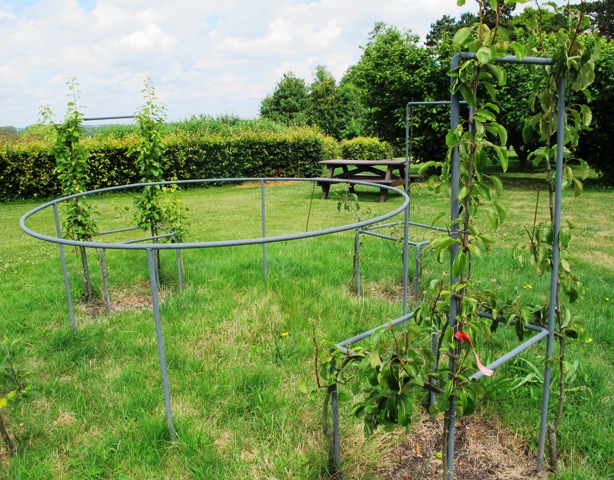 6. These table and chairs are obviously not yet established. I offer them as an idea without comment, secure in the knowledge that regular readers will know exactly what my personal opinion is likely to be. However, for those who like a little novelty in their garden, here be they. I even recorded some instructions for you.
 Tikorangi The Jury Garden