The 1-Minute Gardener by Fabian Capomolla and Mat Pember

9781743517000I am totes the wrong demographic for this book. Believe me. It is zip zap instant gratification for the iPhone generation where everything has to be easy-as and fun fun fun. I am sure Mat and Fab have their loyal following in Melbourne although I think that hailing them as “Australia’s No 1 gardening authors” might be a little over-hyped by the publishers. However there is a contagious delight in their exuberance, even when you are not their target audience and that is not to be derided.

The book is a collection of 70 step-by-step photo sequences showing assorted, and often somewhat random, gardening skills. You too can “pimp your soil” with a one minute tutorial, just as you can learn how to manufacture a stink bomb (an old sock filled with blood and bone) to deter possums from coming on your property. The technical information is patchy, as is the photography. The enthusiasm is relentless.

This is urban food gardening for hipsters. I have heard it described as “the $70 lettuce approach to gardening”. At the end of it, you will get a nice lettuce (definitely not an uncool Iceberg variety) which you can pick leaf by leaf, but it will have cost you $70 to grow it. Need some compost? Cut open a 25 litre bag and tip it on. Need to top-up a no-dig garden? Layer on a variety of materials you have purchased at the store – pre cut mulch, pelletised fertiliser, mushroom compost, all purpose compost, potting mix AND worm castings. Your vegetables can hardly fail to grow in that environment. Just add water. By the way, a little metal letterbox makes a perfect small-space shed for your garden tools.

There is no concern about sustainability. Shipping sugar cane mulch from Queensland to Victoria is not an issue. This is about the urban good life. If it gets people gardening, that is good. With experience, they will learn what works and maybe consider the environment.

Maybe, just maybe, with experience they will also discover that one of the joys of gardening is that it can take time to get good results. By very definition, it is not an activity that gives instant gratification. If it takes the help of Fab and Mat to reach that stage of awareness, then all is not in vain.

The 1-Minute Gardener by Fabian Capomolla and Mat Pember. (Pan Macmillan Australia; SBN: 978 1 74351 700 0).

First published in the Waikato Times and reprinted here with their permission.
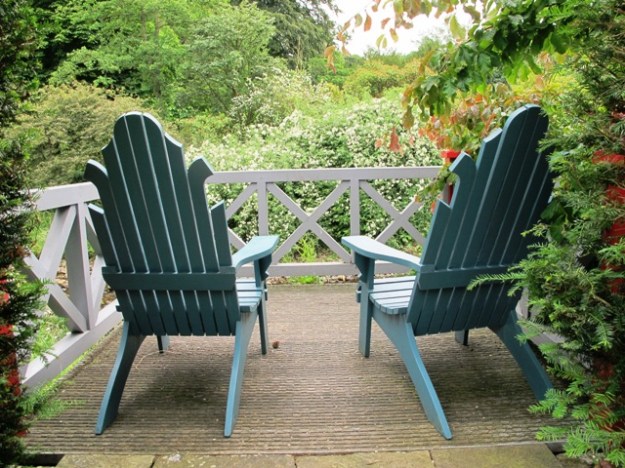
Sit down, why don’t you?

Adirondack chairs

It took my American editor to clarify once and for all that these are not Cape Cod chairs, as often claimed but Adirondack chairs. You have been told. These specimens are somewhat more stylish than many examples, achieved by the graceful curve of the back legs and some relatively simple shaping of the back slats. Small detail can make a significant difference. Sadly, it did not make these chairs any more comfortable. I tried one and can report that anybody under two metres in height would find it most uncomfortable and there is some doubt whether those over two metres would think any differently.

at Wisley

I am sure there is a technical term for this seating design which reminds me of the dosey-doe move in American square dancing. I photographed this at Wisley, the RHS garden, where Mark and I mimicked a couple we once heard elsewhere. “ ’ere love, wot canya see from your side?” “”Oh a luverly pitcher with them waterlilies. Wot abaht you?”. When I then saw a similar seating arrangement in a French bed and breakfast, I realised it must have a tradition. Curiously, this seating configuration can actually give some sense of intimacy to sitting with your one companion in a public setting.

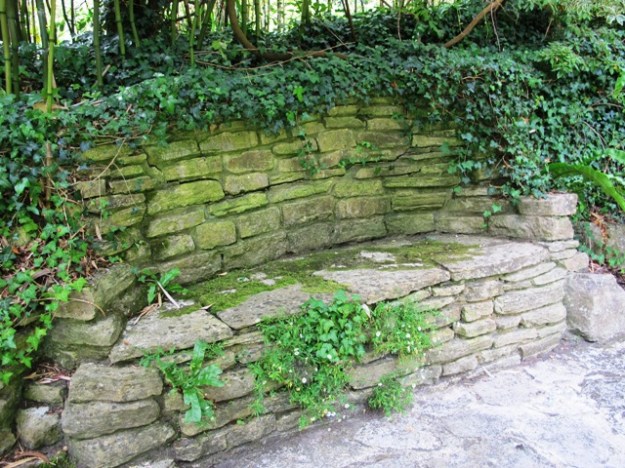
Stone, concrete or brick seating can be a problem

Stone, concrete or brick seating can be a problem, especially in a cool climate with high rainfall or when located in the shade. While the softening ivy, moss and seeding ground cover makes the seat meld visually with its surroundings, it also makes it damp to the derriere as well as being cold and unforgivingly hard. I speak from experience here with our own stone seating arrangements. Keep them in full sun and free of moss.

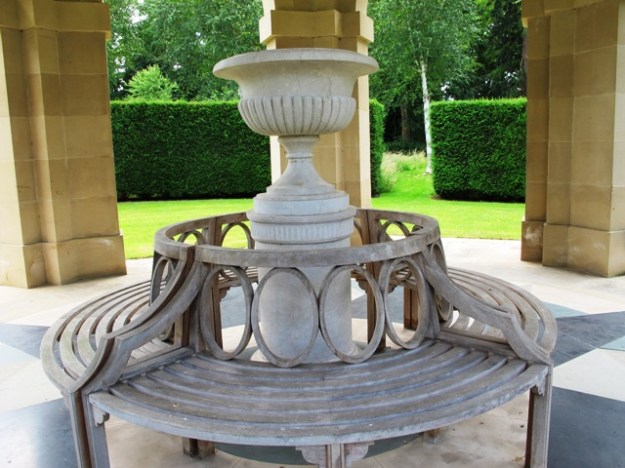
Seating in the round

Seating in the round – a particularly elegant example I saw in a private garden, but I still think this is more for appearance than congeniality. I once read an explanation that humans do not like to sit with their backs to strangers because of potential threat. Certainly this type of seating is more likely to be used for short term rest only and not in a companionable social setting. Sometimes these seats are built around existing trees but they seem to smack of the institutional garden more than the private, domestic living space.

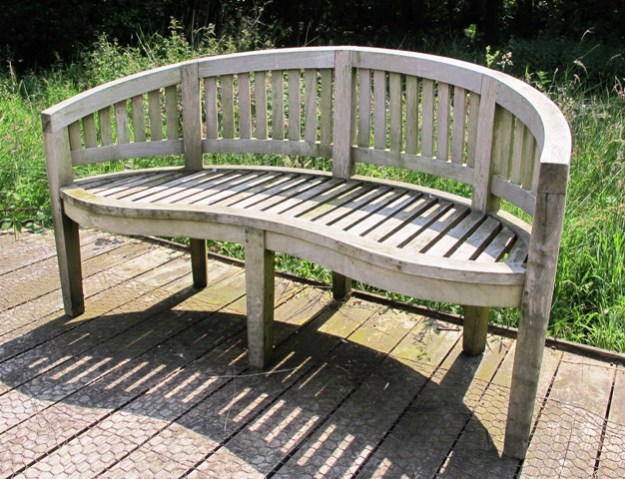
elegant styling

There are many variations to the simple bench from the most basic example that is sold cheaply in our hardware stores to somewhat more elegant styling such as this. It is the curve of both the seat and the back which make this example more aesthetically appealing – and no doubt correspondingly more expensive. Being English, this is probably constructed from oak. The cheap benches in New Zealand are often Indonesian hardwoods which are not overly durable if left outdoors through our winters.

coming up short on practicality

I offer this as an example of a seat which looks stylish while coming up short on practicality. It is very close to the ground which is fine until you hit about 50. The curved seat looks comfortable but consider how hemmed in your arms would feel in this solid set up. If you are going to have the arms and back at the same height, then make the back shorter, not the arms higher. The use of wide armrests on outdoor seating – also seen in the Adriondack chairs – is a handy device for accommodating the coffee cup or wine glass.

First published in the Waikato Times and reprinted here with their permission.

Garden Lore

Then in we went, to the garden glorious
Like to a place, of pleasure most salacious
With flora paynted and wrought curiously
In diverse knottes of marveylous greatnes.

Anonymous (reprinted in “Up the Garden Path” by Laura Stoddart.

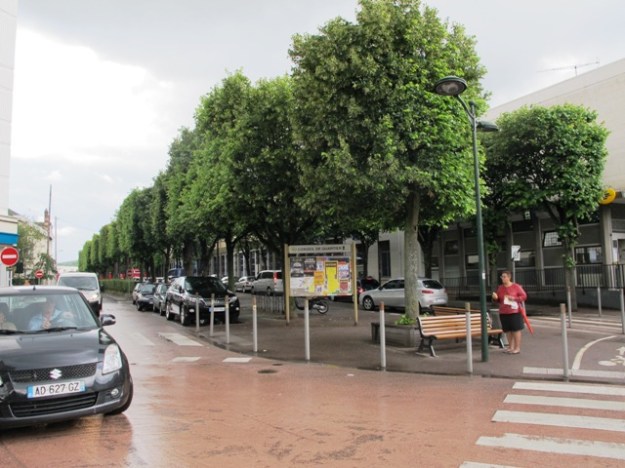
Clipped rather than pleached but certainly on stilts

Clipped rather than pleached but certainly on stilts

Pleaching

It is quite recent that pleaching has become synonymous with a hedge or row of trees on stilts. Technically, pleaching is the interweaving of adjacent plants on a relatively two dimensional plane. There is a school of thought that it dates back to animal proofing hedges by making them more dense but the sophisticated version came into European gardens as much as 400 years ago – the elegant, grand allees of trained, matched trees which give architectural structure.

Think of it as a dense espalier where the horizontal branches are trained and interwoven. However it is more likely these days that what is called a pleached avenue is simply limbed up trees which have been allowed to merge together on the upper storey and are then shaped as one – in other words a hedge with bare legs. I am pretty sure that is what is being done in this street scene I photographed in the little French town of Vernon. It appears that a hedge trimmer may be used to shape the canopies to something resembling cubes and over time, when the trees join together, it will create a flat plane. These are tilias or lime trees.

If you want a pleached avenue, the advice I have seen is never to go less than 2.5m spacings. You can’t magic these creations up quickly. The trees take time to grow and the effect relies on generous spacings which allow each plant trunk to shine in its own right. Otherwise, you are just planting a hedge.

First published in the Waikato Times and reprinted here with their permission.
Dig Deeper by Meredith Kirton

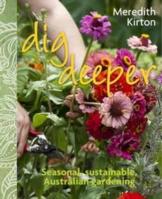
dig-deeperThe subtitle of this book is “ Seasonal, sustainable Australian gardening” and therein lies a problem which I do not think the distributors, Allen and Unwin, understand. While only three hours away by jet, Australian gardening might as well be a world away. It is different in so many ways that it is difficult to understand how a publisher might think that it is appropriate to claim this book as “the definitive gardening manual for the modern gardener” in New Zealand. It isn’t.

To be brutal, it is not likely to be a definitive manual for Australians either. We left this book sitting on the table for a week, browsing it in passing on frequent occasions and every time both of us came to the same conclusions – this is the most random collection of gardening information we have ever seen in a book. I think the reason why it seems random is that both author and editor lack sufficient technical expertise to make the decisions on sifting information. Mark couldn’t get over the referencing of obscure camellia species like C. amplexicaulis and C. assimilis. I was surprised to see the better part of a page promoting Cornus mas as a fruiting cherry substitute without a single mention of either taste or yield. Given it seems to like similar growing conditions, why wouldn’t you grow a good Black Dawson cherry instead? Then there are the sweeping statements, for example on growing mushrooms and fungi at home: “…more of the exotic Asian types, such as shiitake and oyster, coming on the market daily.” Daily? Oh really? If you want to know how to grow these, buy a mushroom kit and then all you need is a cool, dark place. That is the advice.

This is a big book and it must have taken a great deal of work by the author. There are many photos though most are small and of patchy quality. It is eclectic rather than definitive. Its recommended retail price in New Zealand is $75 so it is expensive. Despite the fact we have two gardening daughters living in Australia, I do not think I will be carting this book over to them. With only 10kg baggage allowance, there are other items I would rather be taking.

Dig Deeper by Meredith Kirton. (Murdoch Books; ISBN: not given).

First published in the Waikato Times and reprinted here with their permission.
Backyard Bees, A guide for the beginner beekeeper

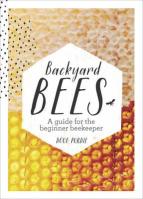
backyard-beesI just read that a report to our Parliament set the contribution of bees to the New Zealand economy at $5.1 billion dollars. It is a bit sad that we have to put a dollar value on something to give it gravitas because actually bees are essential to the pollination of a very large number of crops we grow and a vital part of eco-systems but they are struggling in our modern world. Increasing numbers of people are looking to keep a hive or two in their back yard in an attempt both to make a difference and to harvest honey at home.

I have spoken to a professional beekeeper who finds it quite distressing to be called in to help with badly managed home hives. This is not an activity for the well meaning but naive enthusiast who thinks one can do it with little knowledge or support. Much can go wrong, including the death of the bees.

Will this book help? Yes and no. It is an Australian book so conditions are not the same. Indeed on page 12, the author says: “Australians are very lucky. At the time of writing Australia is the only country in the world without varroa mite and colony collapse disorder.” Don’t expect any advice on dealing with these. Varroa mite is a major issue in New Zealand.

This is a book written by a genuine enthusiast with an engaging writing style. Chapters cover hive location, equipment, beekeeping in each season, general management and maintaining bee health so there is some good generic information which is transferable. It is just not a complete reference of all you need to know and should not be treated as such. Just to back up the lifestyle genre, the final chapter has recipes using honey and beeswax.

If you are serious about keeping beehives, you will need more local information and additional resources. If you are more of a dilettante, you may enjoy reading this book while deciding that you will delay any commitment to getting your own hive and plant flowers to feed other people’s foraging bees in the meantime.

Backyard Bees, A guide for the beginner beekeeper by Doug Purdie. (Murdoch Books; ISBN: 978 1743361719)

First published in the Waikato Times and reprinted here with their permission.