
Some narcissi are better than others when it comes to naturalising. We are having some success with the cyclamineus types.
Is there any plant more evocative of spring than daffodils? They have been cultivated for eons, though many gardeners don’t realise how varied they can be. There is a lot more to the daffodil than the King Alfred types and the modern hybrids, though these are what are most commonly found for sale in garden centres, King Alfred being the handsome, large, pure yellow, classic daffodil.
‘I shall decode them this week,’ I thought. Firstly, daffodils are just the common name for narcissi. And there I stopped. There is a wealth of information around about narcissi if you want the technical details. But when there isn’t even widespread agreement as to how many actual species there are – maybe up to 60 or maybe not anywhere near that – and when separate groups have been introduced instead to classify the family, it is not a tidy little family tree to summarise. This is a plant that has lent itself to extensive hybridising since the days when Narcissus fell in love with his own reflection.

Left to right: All dwarf varieties. N. bulbodium citrinus (the bright yellow form flowers later in the season), N. cyclamineus (or close to that species with its fine form and swept back skirt), ‘Twinkle’ showing its cyclamineus genes. Fourth along is ‘Twilight’ which we regard as an exceptional performer with a long flowering season, comparable to the world renowned ‘Tete a Tete’ to its right. Finally are the first two flowers to open on what we think is ‘Jetfire’.
In terms of narcissi as garden plants, basically the wider range of different types you can grow, the more you can extend the flowering season. We have been enjoying them since early July and the last to flower will be in mid October. All I did to get the line-up photos this week was to head out to the garden on Sunday. In a few weeks, I would be picking different varieties for such photographs. We do try and keep them in separate clumps around the place to separate them, but that is how we choose to plant. There is nothing against mixing and mingling.
The varieties that don’t set seed (in other words they are sterile) flower for much longer than their more fertile cousins. This is the secret behind both Tete a Tete and Twilight, as shown in the photo.
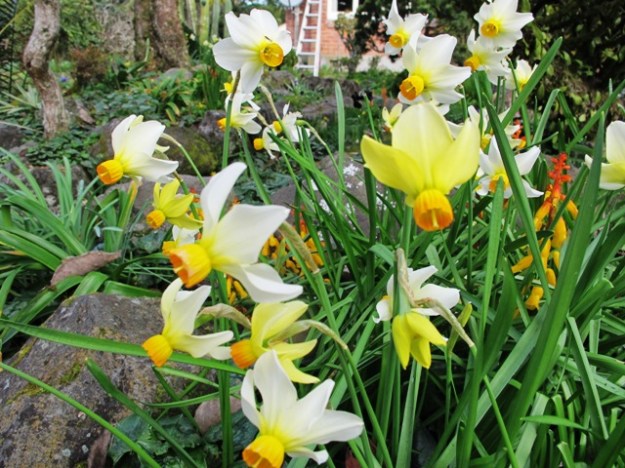
Narcissus ‘Beryl’ has yet to open her flowers this season but is another reliable performer amongst the dwarf narcissi.
Where bulbs have stopped flowering, there are several possible causes. The most likely is the dreaded bulb fly which I have written about before. The grubs eat the bulbs from the inside out. Don’t ever let your clumps get so crowded that they push each other out of the pot or ground. There is no point in making it even easier for the offending narcissi fly. Shallow pots are not best suited to narcissi. Laying mulch on top of the bulbs as you wait for the foliage to die down can also help. Other reasons for poor flowering may be too much shade, cutting off the foliage too early the previous season (leave it for at least 6 weeks after flowering), wet ground, too much nitrogen fertiliser or congested, overcrowded clumps that need to be lifted and divided. Some varieties are much better than others at naturalising and being left to their own devices in paddocks or long grass situations but sooner or later, most will respond well to some attention.
If you like the novelty types with pink or apricot colours, split coronas (that is the trumpet bit), full frilled flowers and the like, then you need to look to the modern hybrids. We were given a whole collection of these a few years ago. We weren’t sure what to do with them so we planted them in the veg garden where they flowered well. We looked at them for two seasons and then dug up the lot and gave them away. When it comes to bulbs, we prefer the simplicity of the smaller varieties closer to the originating species. Charm over showiness.
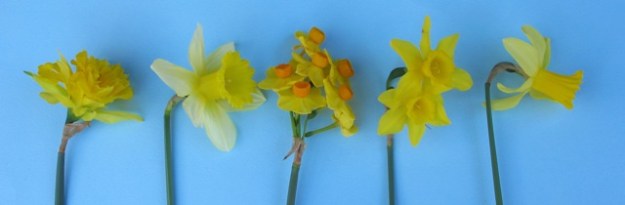
Left to right: An old, scented double variety often found in paddocks and around homesteads even today. The closest bloom I could find to a King Alfred type in our garden this week is this larger flowered cultivar with classic trumpet (corona) and skirt but in lemon. Third along is what is often called a jonquil with its delicious scent, but it is actually a N. tazetta hybrid which we think is ‘Soleil d’Or’. Next to it is one of my favourites, the fragrant N x ‘Odorus’ which is believed to be a natural jonquilla hybrid (crossed with psuedonarcissus). Finally on the right is ‘Peeping Tom’, rated a dwarf variety though somewhat larger in size than most dwarves. It is a remarkably reliable performer.
While we all know of Wordsworth’s host of golden daffodils, less well recorded is the fact that he was out walking with his sister, Dorothy when they came upon the sight. Her record of the event did not reach such legend status but has its own charm:
“When we were in the woods beyond Gowbarrow park we saw a few daffodils close to the water side, we fancied that the lake had floated the seed ashore & that the little colony had so sprung up – But as we went along there were more & yet more & at last under the boughs of the trees, we saw that there was a long belt of them along the shore, about the breadth of a country turnpike road. I never saw daffodils so beautiful they grew among the mossy stones about & about them, some rested their heads upon these stones as on a pillow for weariness & the rest tossed and reeled and danced & seemed as if they verily laughed with the wind that blew upon them over the Lake, they looked so gay ever dancing ever changing. This wind blew directly over the lake to them. There was here & there a little knot & a few stragglers a few yards higher up but they were so few as not to disturb the simplicity & unity & life of that one busy highway.”
—Dorothy Wordsworth, The Grasmere Journal Thursday, 15 April 1802
First published in the Waikato Times and reprinted here with their permission.

 I just read that a report to our Parliament set the contribution of bees to the New Zealand economy at $5.1 billion dollars. It is a bit sad that we have to put a dollar value on something to give it gravitas because actually bees are essential to the pollination of a very large number of crops we grow and a vital part of eco-systems but they are struggling in our modern world. Increasing numbers of people are looking to keep a hive or two in their back yard in an attempt both to make a difference and to harvest honey at home.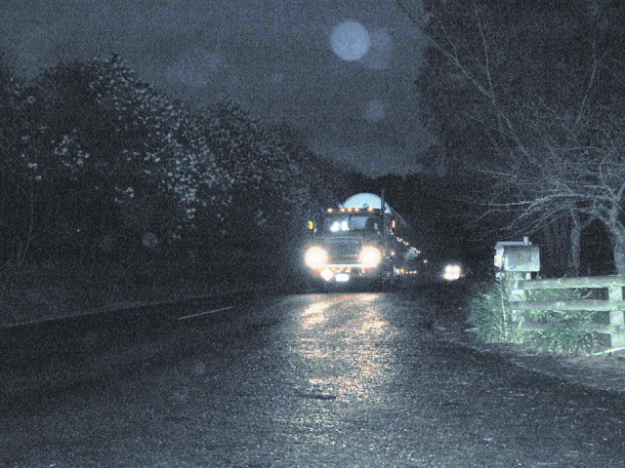



 We protested modern road design with such step sides that nobody can ever pull to the side let alone walk, cycle or ride a horse alongside. We see this as a major loss of rural amenity.
 We tabled a concern that this type of hostile road design is incompatible with these roads being part of a designated cycle route. There is nowhere for bikes to go when challenged by frequent heavy transport.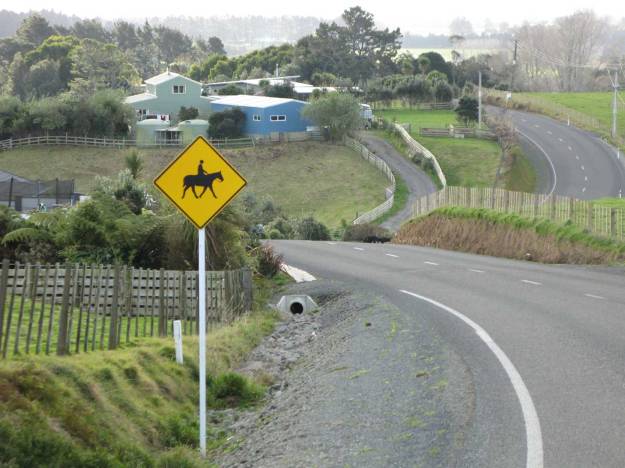
 We asked that Council make every sign count. We have so many signs and road cones now that few people take notice. Children crossing signs where locals know no children have lived for decades, horse signs (above) where no horses can be ridden any longer and ever more company signs.







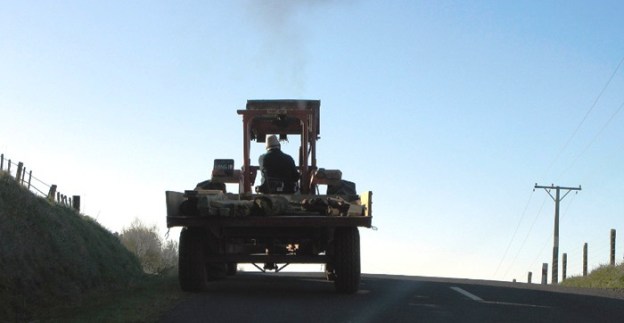
 Oh there have been some jokes. Shame the newspaper photographer didn’t stick around to snap these men with a petrochemical tanker and trailer unit bearing down on them at speed from behind, more than one person said. Where are their banjos and rifles, another quipped. Goodness, even Jed Clampett and the Beverley Hillbillies have been mentioned. But what on earth made these men think it was all right to attempt to discredit me, then get into their vehicles to drive down and pose outside Mark’s and my place, resembling a Wild West posse? I can only assume they meant to look intimidating and confrontational when all they had to do was to pick up the phone and ask a few questions.
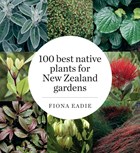 If this book looks a little familiar, it is because it is a new edition of one first published in 2001, updated in 2008 and again for 2014. It is a handy book, not comprehensive because it only covers 100, but many are varieties of native plants that you may want to know about. Credit to both author and book designer for having a flexible approach where the sections on each plant can vary in length rather than dumbing the content down to fit a formulaic lay-out of the style seen in recipe books.
 Tikorangi The Jury Garden