Floral Skypaper – the garden in August

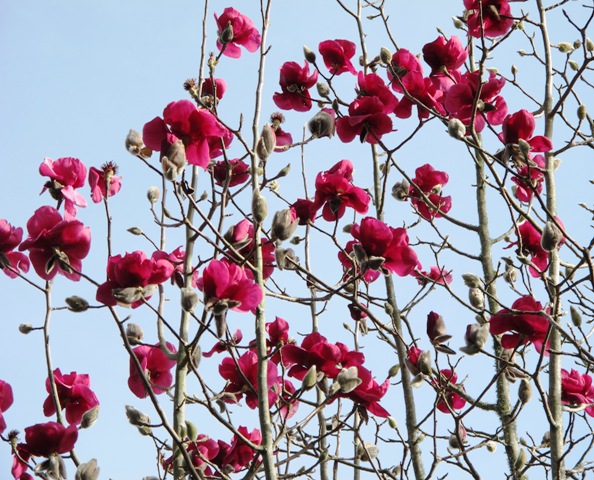
Magnolia Felix Jury

Magnolia Felix Jury

Not for us the refinement of declaring we garden for foliage and form. Give us floral extravaganza, we say, and August obliges. In the deciduous magnolias, it is the reds that dominate. By the end of the month and well into September, the softer pinks and whites come into their own but at the start, we have an unrivalled display of the stronger colours which just gets better every year as the trees get ever larger. Floral sky-paper, I call it when looking up from below. I say it is an unrivalled display because nowhere else in the world gets the same intensity of red in these magnolia, nor have they done the breeding on them that has been done in this country over the past 40 years. First Felix Jury, now Mark Jury and also Vance Hooper have pushed the boundaries with the reds. Mark was very pleased to find recently that Britain’s Royal Horticultural Society has given an Award of Garden Merit to the magnolia he bred and named for his father, ‘Felix Jury’. While we admit to being biased, it still takes our breath away each season.
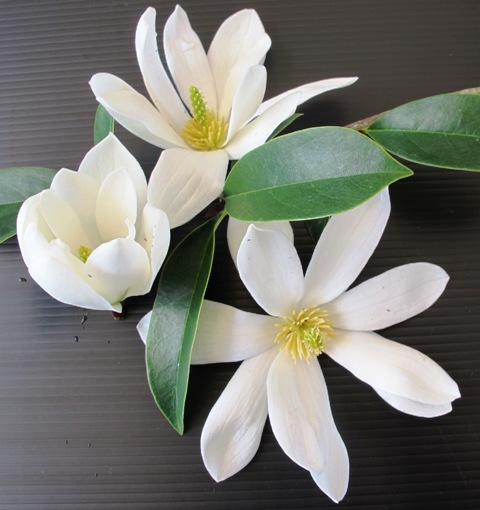
Mark's new 'Fairy Magnolia White'

Mark’s new ‘Fairy Magnolia White’

It is also michelia time – or as they have been reclassified botanically, magnolias. Do not confuse them with the evergreen grandiflora magnolias which are the summer flowering trees with big, glossy, leathery leaves. I admit we still call them michelias in conversation or we go with the “Fairy Magnolia” branding that has been placed on Mark’s new cultivars. Because michelias flower with their leaves, they are not as individually spectacular as the deciduous magnolias but they are a wonderful addition to the spring garden.

Mark has been breeding michelias for coming up to two decades now and we have many hundreds, maybe over 1000 of them, planted around our property. Out of all those, he has only named and released three so far. Fairy Magnolia White is the earliest of the season to open and has the loveliest star flower as well as being strongly fragrant. There is a purity in such white flowers, especially when contrasted with deep green foliage and wonderful velvet brown buds. One of the breeding advances has been to eliminate the tendency of some cultivars to drop their leaves and defoliate after flowering. Readers with Michelia doltsopa ‘Silver Clouds’ may recognise this trait.
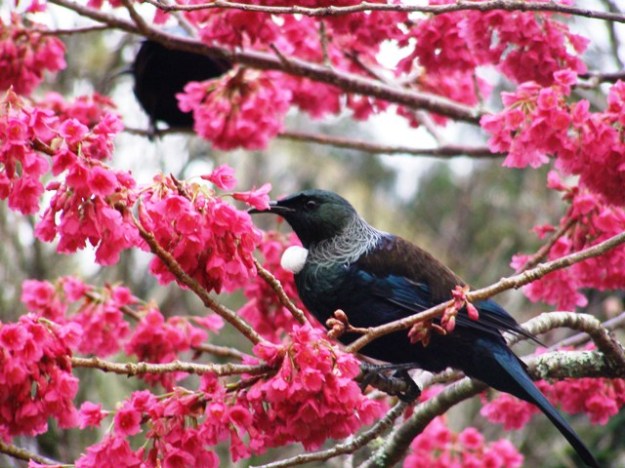
???????????????????????????????Nothing excites the tui more than the Prunus campanulata. These are somewhat controversial, especially in warm northern areas, because too many of them set seed freely, threatening to become noxious weeds. Both the tui and we would be grieved to see all campanulatas banned, though we are vigilant weeders on the germinating seed. We have a number of different trees that come into flower in sequence and we can have literally scores of fiercely territorial tui bickering and fighting in these trees as they try and claim their feeding space. There are times it can appear as if the trees are dancing with the tui.

Until a whole lot more work is done on selecting and marketing sterile forms of campanulatas (in other words, they don’t set viable seed so will never become weedy), if you live in Northland, Auckland, Waikato, Bay of Plenty, Marlborough or the West Coast, where regional councils are understandably touchy on this topic, look for Prunus Pink Clouds or Prunus Mimosa which are sterile options.
???????????????????????????????
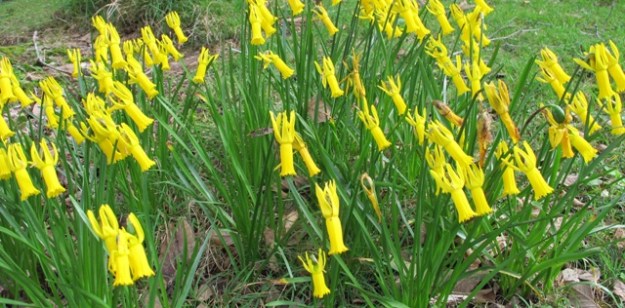
From the big to the small – narcissi season is in full swing here. The little pictures they create give wonderful detail in a big garden. We have such a problem with narcissi fly that we struggle with the later flowering hybrids which comprise most of what is sold through garden centres (commonly called daffodils). The dwarf forms tend to flower earlier so they are over and going dormant when the narcissi fly are on the wing later in spring. The little cyclamineus ones, with their swept back skirts, seem to have a look of perpetual surprise. We are delighted with how well they are naturalising on our grassy banks where conditions are harder than in cultivated garden areas.

???????????????????????????????
We looked enviously at Russell Fransham’s magnificent bananas in the June issue.
They are a pretty marginal crop this far south and as we live 5 km from the coast, we have to take extra care and cover them in winter. We do this with giant bamboo frames and old shade cloth. A bunch of 50 is a triumph for us so we were in awe of Russell’s 200. We won’t remove the covers from ours until later in spring, just to be on the safe side. I call these constructions here the Theatre of the Banana.

First published in the August issue of New Zealand Gardener and reprinted here with their permission.
The Meadow

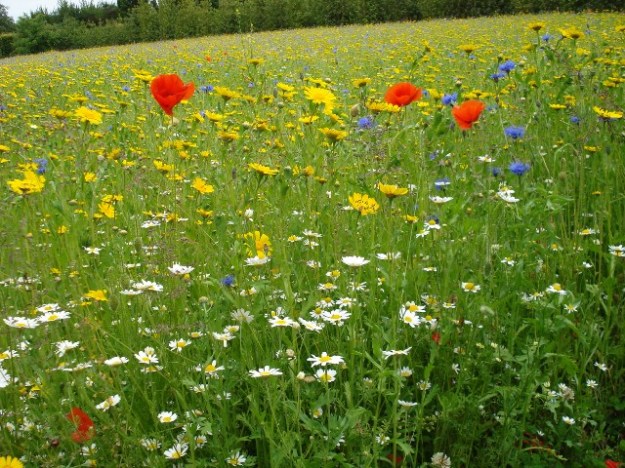
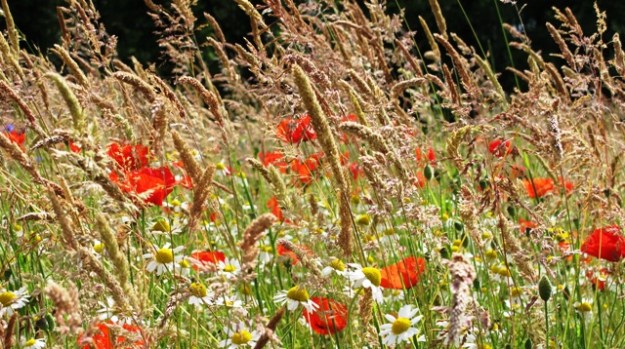
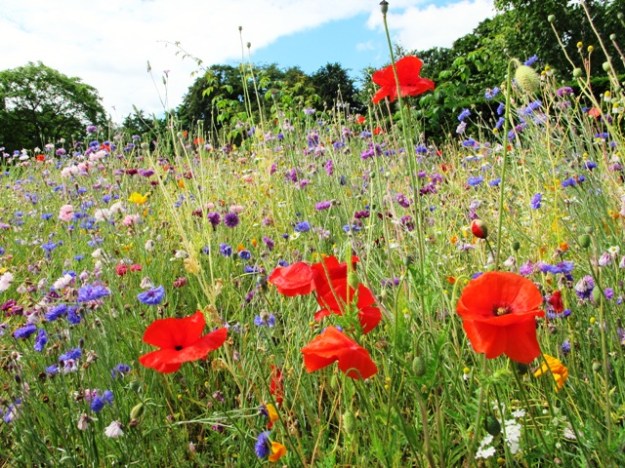
Still in its first season, this sown meadow features daisies, corn poppies and the naturally occurring Yorkshire fog

Still in its first season, this sown meadow features daisies, corn poppies and the naturally occurring Yorkshire fog

Meadow gardens sound so very romantic yet are not often seen in this country whereas they are de rigueur in Britain, to the extent that I make jokes that it is clearly the law to have one. But not all meadow gardens are the same by any manner of means.
???????????????????????????????wildflower-rain-affected
1) The field sown with wildflower mix is probably what is most commonly referred to as a meadow in this country. These of course are not our native wildflowers – far from it – but the reference is usually to the inclusion of varieties closest to the wild species and consequently smaller and simpler blooms than seen in garden hybrids. The problem in our climate is that favourable growing conditions can make for leggy plants that will be flattened by both heavy rain or wind. It was heavy rain that flattened this wildflower mix at Wisley.

Missouri Meadow June 2014

Missouri Meadow June 2014

As we saw it in June 2009

As we saw it in June 2009

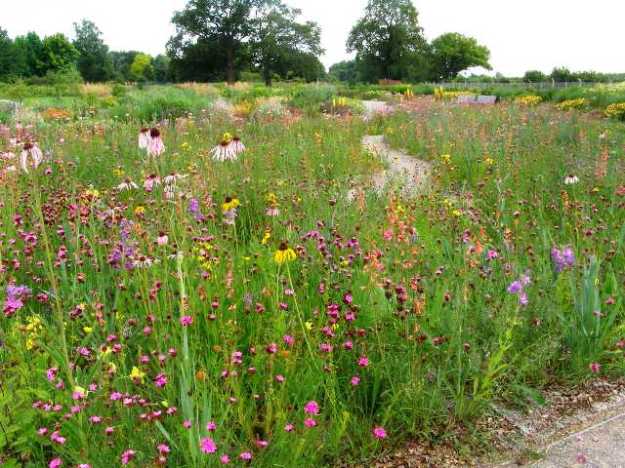
2) We were entranced in 2009 by the new Missouri meadow garden at Wisley, designed by Professor James Hitchmough from the University of Sheffield. This style is now often referred to as being of the Sheffield School of planting design with its focus on ecology and sustainability. Five years later, it has developed into a huge perennial bed and much of the original detail has gone. It is still most attractive and low maintenance but it has lost the meadow feel. I have not seen prairies but I doubt that it is a prairie reinterpretation either.

June 2014 at the Old Vicarage in Norfolk

June 2014 at the Old Vicarage in Norfolk

Same month, back in 2009

Same month, back in 2009

3) The wildflower meadow at the Old Vicarage Garden in Norfolk was delightful in its flowering simplicity in 2009. This is it at the same time of the year in 2014 although the flowering appeared to be delayed this year. The yellow corn marigold and grasses have swamped out most other plants. The owner told us he keeps trying to get the corn poppies re-established but without great success. Meadows evolve over time. To constantly spray off and resow in flowers, as sometimes recommended in New Zealand, does not give you a meadow. It gives you a garden of annuals.

Pensthorpe in the north of Norfolk

Pensthorpe in the north of Norfolk

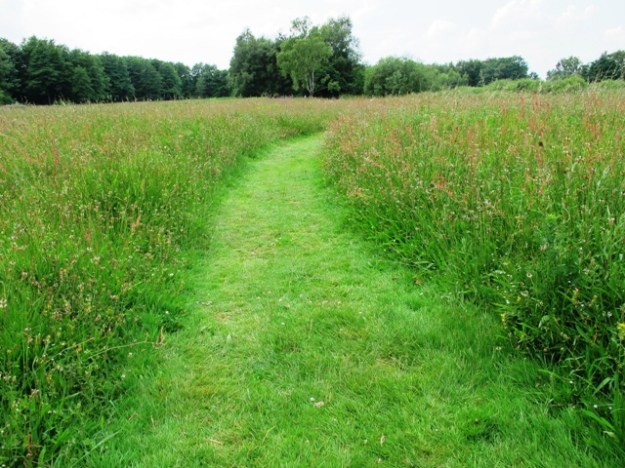
4) Maximum ecological brownie points are earned by those who have the patience to allow a natural meadow to develop with no over-sowing or management of plant content. What is present has arrived naturally and is allowed to stay. No sprays are used and no stock grazes the area. However, most meadows will be cut sometime in late August, left to lie for two weeks to allow seed to fall out and then the hay raked off, to prevent a build up of fertility.

Pettifers Garden near Stratford on Avon

Pettifers Garden near Stratford on Avon

5) Dry grass has charm. This is a bulb meadow being allowed to dry off naturally – quite possibly bluebells, daffodils and snowdrops in spring. Those are allium seed heads showing which are just passing over, heading into early summer. In our more fertile conditions with higher rainfall, we are more likely to get less attractive rank, wet, green growth heavily infested with what we call weeds. Maybe it is time to reconsider our classification and attitude to many such weeds.

yellow rattle (2)

6) Yellow rattle (Rhinanthus minor) is an integral part of English meadows. It is a parasitic plant that weakens grass growth and allows other plants to establish with reduced competition, increasing the diversity. Obviously we do not need this plant to escape into our farming pastures and I do not even know if it is in New Zealand. We have seen something similar growing wild on our road verge and will be having a closer look this summer. We think it may be a broomrape rather than a Rhinanthus.

First published in the Waikato Times and reprinted here with their permission.
Garden Lore

What is a weed? A plant whose virtues have not yet been discovered.

Ralph Waldo Emerson Fortune of the Republic (1878)

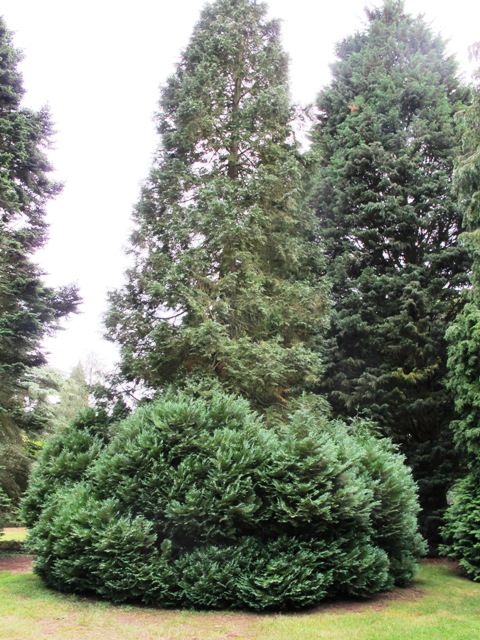
Chamaecyparis lawsoniana ‘Alumii’

Natural layering

This tree reminds me of that old song (and this will date me) “Look there Daddy, do you see, there’s a horse in striped pyjamas” except that it is a tree wearing stiff petticoats and a frilly skirt. No that’s not what it is at all, that’s a fine example of what people call layering. The tree is Chamaecyparis lawsoniana ‘Alumii’. Over time the weight of the lower branches must have dragged them to the ground where, left undisturbed, they have sprouted roots. While the original part of the tree looks a little thinner and paler with ageing, the skirt shows juvenile vigour. It is not common to see a tree layer so evenly all round.

The layers could have been cut off from the parent plant at an earlier stage, dug up and replanted elsewhere. Left to their own devices over time, the strongest growths will flourish at the expense of the weaker ones but there will be a thicket of Lawson Cypress.

First published in the Waikato Times and reprinted here with their permission

Grasses, anyone?

 These are New Zealand grasses, seen at their best in a North Devon garden, Wildside


These are New Zealand grasses, seen at their best in a North Devon garden, Wildside

Grasses. There is nothing new about using grasses in the ornamental garden. So why are they being hailed as one of the hallmarks of the New Perennials Movement? It is how they are used, not what is used and that derives from the whole prairie and meadow inspirations which underpin the new styles of freer planting.

It is not without its pitfalls, NABS even. That is the Not Another Bloody Stipa.

Stipa gigantea looks ethereal seen here with phlomis but it looks equally ethereal in everybody else's garden

Stipa gigantea looks ethereal seen here with phlomis but it looks equally ethereal in everybody else’s garden

Stipas are beautiful, feathery grasses. It is just that they seem to be in every single UK garden, particularly Stipa gigantea, also known as giant feather grass (it is large with ethereal golden spires of seed heads) and Stipa tenuissima which is soft with shimmering ripples in the lightest of breezes. The latter is often called Mexican feather grass and has now been reclassified as a nassella, not a stipa. It is a bit of a shame that it is already on the Weedbusters website in this country as a pest.

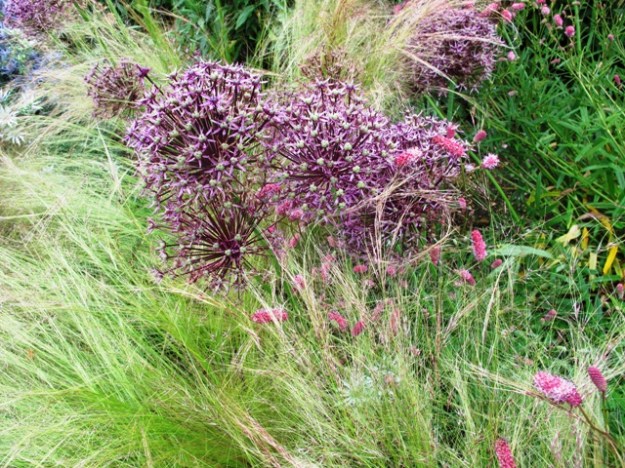
The shimmering Stipa tenuissima, seen here with alliums, but not a good choice for New Zealand where it has already been determined an invasive variety

The shimmering Stipa tenuissima, seen here with alliums, but not a good choice for New Zealand where it has already been determined an invasive variety

The good news is that grasses are easily substituted and there are many excellent options which are not dangerously invasive. Some are even native to this country. We saw one garden making extensive use of a New Zealand chionocloa. The English have a love affair with Argentine pampas grass. Both Cortaderia selloana and jubata are on our banned list but we have a ready substitute in our native toe toe.

We are guilty of being a bit sniffy about grasses generally in the past. We put this down to the over-use of our native varieties in particularly stodgy and unimaginative amenity plantings from the 1980s onwards. What we learned is that it is how they are used that makes all the difference. Let them get some size and they add the dimension of movement to a garden in all but dead calm conditions. They also provide a superb foil to other plants, particularly larger flowering bulbs, annuals or perennials.

Rivers of a grass at Scampston - a little too conceptual for our gardening taste

Rivers of a grass at Scampston – a little too conceptual for our gardening taste

Alas we did not think to start counting until quite late in our trip but I can tell you that the ratio of flowering perennials to grasses in the Oudolf river borders at Wisley was 3 to 1. However the Oudolf rivers of grass at Scampston were 0 to 1. That is to say there was only the one grass used and no perennials at all. We didn’t like it. It was contrived – part way between temporary show garden and motorway siding. A conceptual garden, perhaps? In contrast, the elegant grass garden at Bury Court was closer to a 1 to 8 ratio. The complexity of multiple different grasses and a scattering of flowering perennials gave much more visual interest and variation with movement.

Mostly we saw bold grasses of some size, integrated with other perennials in sunny conditions. Problems come when similar grasses are used in all herbaceous plantings. It can make them look very similar, as we realised after looking at a number of gardens. There is a school of thought that this is good because it unifies a garden but we have never subscribed to that belief. We will be choosing to keep the use of mixed grasses and perennials to one garden only, not repeated throughout. I also think the 3 to 1 ratio is quite low. We are more likely to go for maybe 5 flowering plants to each clump of a decorative grass. But then we prefer more detailed plantings.

Nowhere, dear reader, did we see tidy little grasses being used as tidy little edgings. I will be happy to see New Zealanders move on from the thinking that a row of tidy mondo grass, blue festuca or liriope will define a border nicely. I am afraid it will just make your garden look suburban and straitjacketed.

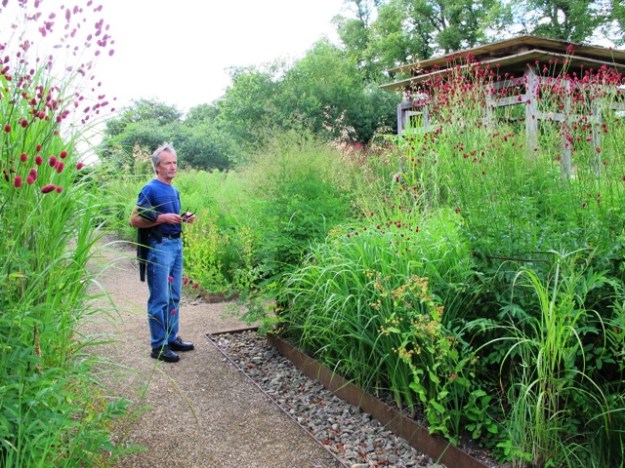
Mark, standing in the elegant grass garden at Bury Court

Mark, standing in the elegant grass garden at Bury Court

First published in the Waikato Times and reprinted here with their permission.

Plant Collector: Hellebore Anna’s Red

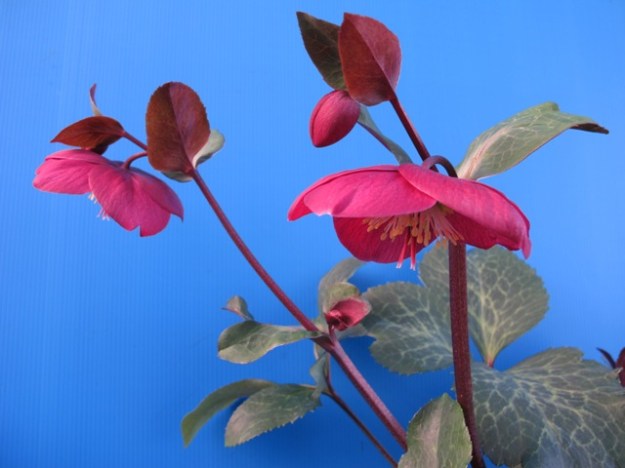
We are very impressed by Hellebore 'Anna's Red'

We are very impressed by Hellebore ‘Anna’s Red’

It takes a special plant in a garden centre to make us think immediately that we must have it there and then. This new hellebore is one.

There are three stand-out features. It holds its flowers well above the foliage and they are outward facing so displayed well. The foliage is beautifully marbled and interesting in itself. The flower colour is an attractive magenta-burgundy but without brown tones that often mute those colours.

I did a search to see if I could find the breeding but all the internet tells me is that it is one of the “Rodney Davey marbled group”, Davey being the breeder. Fair enough – it is the work of a dedicated hellebore specialist and if he does not wish to disclose the breeding, that is his right. Looking at it, our guess is that it probably has quite a bit of H. niger in it, in which case to get this strong colour into that species is a real triumph. It is the way the flower is displayed that makes us think of niger (some of you may grow “White Magic” with its upward-facing flowers). While there are similar burgundy colours in the H. orientalis group, none of them display their flowers as well and we have yet to see these combined with such attractive, marbled foliage.

The breeder lives in the south of England and the plant was named for prominent garden writer, Anna Pavord. Fortunately, due to the wonders of micropagation (tissue culture), the plant has been multiplied hugely and is available everywhere that I can see, in both this country and overseas. It is worth having and no, I was not given a plant to review. We truly did spot it in a garden centre and buy it.

First published in the Waikato Times and reprinted here with their permission.