Plant Collector: Hibiscus probably trionum

Hibiscus probably trionum

Hibiscus probably trionum

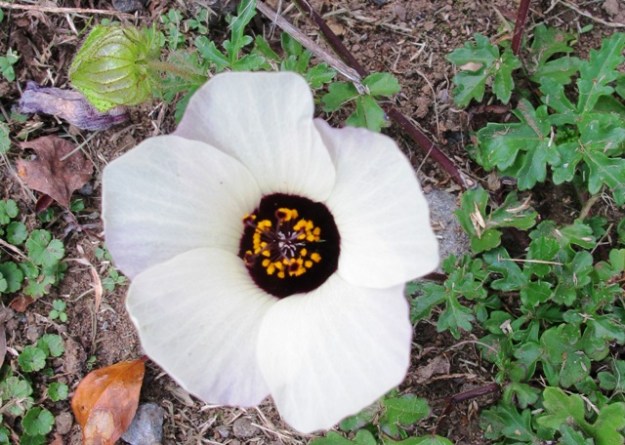
This plant took a little unravelling. It is a self sown seedling with large, short-lived flowers and serrated foliage which is lying almost flat to the ground. Mark thought it was a native but I think he is wrong. There is no shame in that. Most of the country thinks it is native and it is only recently that it has been separated from a very similar species, now called H. richardsonii, which is truly indigenous and indeed critically endangered in its natural habitat of northern east coast areas.

If I am right, this is actually H. trionum which originated in the Levant area of the Eastern Mediterranean, which more or less stretches from Cyprus to Palestine. It seems that the very dark eye to the flower is what makes it H. trionum rather than H. richardsonii. Well, that and chromosome counts. There are countless references on the internet to H. trionum being native in New Zealand as well as being widespread internationally. It has certainly naturalised here and by the time common usage catches up with the differences, it is likely that what we will have are hybrids between the two. It will fall to the botanists to try and keep a pure strain of the native H. richardsonii.

Both forms of hibiscus are usually short-lived perennials, often behaving as annuals, especially in frosty areas. They are in the mallow family (or malvaceae) and are showy, even if the individual flowers don’t last long. The common name is the unromantic bladder plant, though that is more correctly applied just to H. trionum. We do have one other native hibiscus and that is H. diversifolius.

First published in the Waikato Times and reprinted here with their permission.

Garden Lore

“I like trees because they seem more resigned to the way they have to live than other things do.”

Willa Cather (1876-1947)

002 - Copy

Autumn harvest and freezing tomatoes

The autumn harvest is being wheeled into house by the barrow load at the moment. They are melons in the photo – both water and rock varieties. The annual challenge for Mark is to get good crops of both through and to this end he takes some care and plants several different varieties of each. This year we have a bumper crop – too many to eat and give away so we have gone to juicing them for lunchtime smoothies. I did worry this week that the current fad of mixed fresh fruit and vegetable smoothies may in fact be the hipster take on Complan, that powdered product that used to be fed to fading elderly folk with no teeth. My anxiety is that we may be on the cusp of moving way past hipster age and approaching the elderly door.

But about the tomatoes. Experienced preservers will have their own tried and true techniques. For novices, faced by a surplus of tasty toms, I offer my method. In a fair division of labour, Mark grows them, harvests them, washes them, cuts out the tough stem end and any bad bits and lays them in a single layer in baking dishes. They are fan baked for a couple of hours around 130C. I then take over, strain off much of the clear liquid which is very flavourful and excellent for creamy winter soups. This I decant to plastic bottles and freeze. I then pull all the skins off the baked tomatoes. It takes a fraction of the time to do it after cooking rather than before. I then pack to meal-sized containers and freeze them. That is it. I add any extra flavourings at the time I cook with them, not at the time of freezing. I know tinned tomatoes are cheap to buy, but the only dollar cost in freezing our own is running the oven. The time required in preparation is minimal and, given the choice, we prefer to know where our food came from.

First published in the Waikato Times and reprinted here with their permission.

Autumn seed

Autumn can seem a slightly melancholy time of year, the opposite to the bright promise and floral extravagance of spring. It is that sense of ‘passing over’, of annuals dying and other plants retreating in preparation for winter. We tend to focus on the flowering capacity of most plants but some have a subtle, understated beauty on the other side with their seed heads. Not all, of course. Some simply look scruffy, brown and of no interest. But once you get your eye in, there is an astonishing range of different forms and some are well worth admiring in their own right. Where plants are not weedy, leaving the seed heads in place provides a valuable food source for birds.

Fennel - foeniculum vulgare

Fennel – foeniculum vulgare

“Don’t buy any more fennel seed,” he said as these plants crossed over from flowering to seeding. Fennel is one of my favoured cooking herbs. In fact these are the seed heads of Florence fennel or finocchio which never made it as far as the vegetable garden. The common fennel that flowers on many a roadside but never develops that edible bulbous base is the usual one that is harvested for herbal purposes.

Phlomis russeliana

Phlomis russeliana

We find Phlomis russeliana an undemanding, handy little perennial which flowers well even in conditions of high shade. Its flowers are soft yellow, arranged like a tiered cake stand and the stiff seed heads retain that interesting form. I had to pick these to photograph them and you can see the see the seed falling out. Usually the birds – and maybe the mice – will clean up this seed.

Clematis tangutica

Clematis tangutica

While these cute seed heads are from Clematis tangutica, it is a typical clematis seed form, although these are silkier and greener because it is a late season bloomer. That light ethereal form is usually a sign that the seeds are spread by wind, as indeed is thistledown from dandelions. The plant of course has evolved not to please humankind but to ensure its own survival.

Pachystegia rufa

Pachystegia rufa

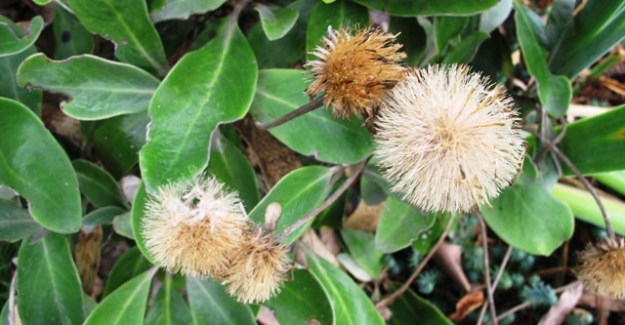
Pachystegia have fluff balls of seed, another wind dispersal candidate. This one is P. rufa, a different form of the Marlborough rock daisy to the highly prized, larger-leafed P. insignis. There is something very tactile about these soft pompoms.

Arisaema seed head, in this case A. tortuosum

Arisaema seed head, in this case A. tortuosum

Arisaemas are bulbs from the Asian subcontinent with hooded flowers somewhat reminiscent of a cobra. Many of the arisaemas, and indeed other aroids like arum lilies and zantedeschia, set attractive seed pods. The birds don’t touch these which is usually an indication that they are poisonous. Small children are not as discriminating as our feathered friends and it pays to check the safety of any plant which sets such attractive seed, as well as teaching your little ones not to put stray seeds and berries in their mouths.

Agapanthus - weed or wildflower?

Agapanthus – weed or wildflower?

Even the humble and often maligned agapanthus has an attractive seed head. These are heavy seed and don’t often fall far from the parent plant but, given the concern about weediness, dead heading seems a wise move, especially if you have them near waterways or reserves. Water is an efficient method of seed dispersal as can be witnessed by downstream and riverbank weeds.

First published in the Waikato Times and reprinted here with their permission.

Garden Lore

“It would be worthwhile having a cultivated garden if only to see what Autumn does to it.”

Alfred Austin, The Garden That I Love (1894).

047
001Garden lore – rat catching

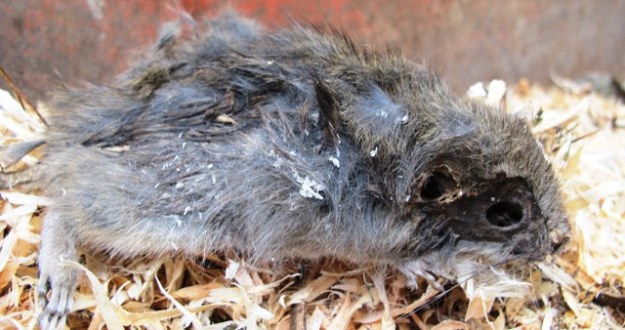
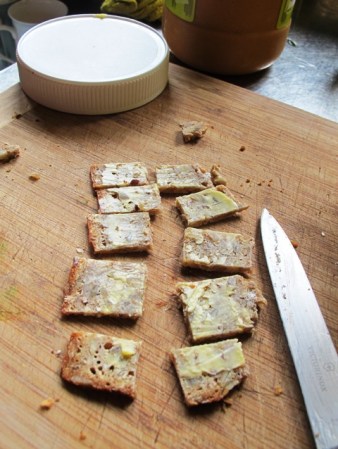
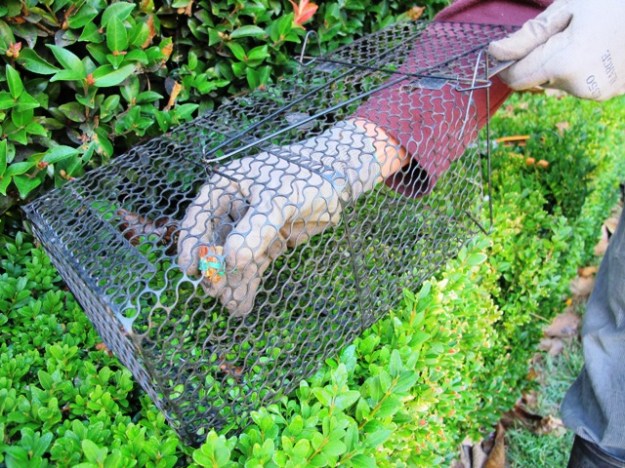
Sadly, rats are a fact of life and not an indication of squalor as I am sure many river-side residents will know. We get rats here because we have a macadamia nut orchard and processing plant immediately next door and we also have a flowing stream which can bring them in. The current tally this autumn is already 21 despatched. We have a strong preference for trapping, not poisoning these days and a trapping round is part of Mark’s daily routine. He uses small squares of stale bread spread with both butter and peanut butter as bait. The downside of trapping is that you do have to be willing to kill the rat. He used to leave this to the dogs but gave up when one escaped from them. Nowadays, he tips the trapped prey into a sack and whacks the sack on concrete. It is a quick end.
002
You can buy poison across the counter but follow instructions. A regional council pest control officer once told me he despaired at the number of people who thought they knew better than to secure the bait because the rat would take it back to its nest. He had pulled out a fridge in a shed and found maybe 200 baits behind, stockpiled by the rats (which were still alive) as a squirrel stockpiles acorns. The bait needs to be secured and out of the way of dogs. We had a dog once that ate rat bait. It was a traumatic wait to see if he would survive. He did. We have also seen one of our dogs and a cat from earlier days get quite ill after eating poisoned rats. The experience of having a dying, poisoned rat wedge itself in the chimney breast (they go in search of water), there to decompose over many weeks put us off poisoning once and for all. Hence the return to trapping.

And I managed to get that far without making a joke about the Pied Piper of Hamilton.

First published in the Waikato Times and reprinted here with their permission.

What price public accountability and garden reviews?

We put the closed sign up late last year

We put the closed sign up late last year

We have been part of the open garden scene in New Zealand for 25 years but at the end of last season we put the closed sign up. We don’t know what the future holds for us yet but we are certainly enjoying taking a year or two out. It is interesting taking a step back.

I have long advocated that it is possible to assess gardens and that not all gardens are equal. Like any other human endeavour, some gardeners are simply better at the task than others. Whether you like a garden is a matter of personal opinion. Whether it is a fine example of gardening is, to my mind, not a matter of opinion but able to be measured by certain criteria. I can think of some very good gardens that are not to my personal taste just as there are gardens that I really enjoy, even though they are not top notch. Mind you, I shy away from the very thought of ranking gardens in a single line hierarchy, as required by competitions. I am only willing to work in broad bands or categories.

I have also advocated strongly for accurate garden descriptions for open gardens. There is a certain folly in letting garden owners write their own descriptions. Some are far too modest and fail to capture the essence of their own place, shying away from anything that might be seen as boastful. Too many, alas, are not.

So it has been interesting this week to debate the issue of garden reviews. This came up on a British gardening website (www.thinkingardens.org.uk) where the editorial policy is of honesty, sometimes brutal honesty. A contributor posted a particularly critical review of the historic garden, Rousham.

Rousham House (photo credit Grahamec via Wikimedia Commons)

Rousham House (photo credit Grahamec via Wikimedia Commons)

I have never been to Rousham which is in Oxfordshire and it is not likely to feature high on our visiting list because we prefer different gardening styles. My English garden guidebook (written by an independent, not the garden owners) describes Rousham as “the most perfect surviving example of William Kent’s landscaping….an Arcadian experience.” It dates back to the early eighteenth century, one of the earliest and best preserved examples of English landscape gardens, drawing on influences from ancient classical times. In other words, it is mostly green and architectural. It is still in private ownership, apparently run with a relatively small budget. According to the reviewer, the owners are not doing a very good job of it.

Does charging an entry fee make a garden fully commercial and therefore fair game for disaffected garden visitors? Most New Zealand open gardens are in a similar position to Rousham (though few are of any historic note). It is a rare garden here that is part of a fully commercialised set-up with cafe, craft shop, plant sales and a full complement of service staff. In fact I can only think of two such privately-owned gardens. Every other private garden I know is a labour of love by individuals where the entry fee, if charged, adds up to a minor contribution to the costs.

Would it help lift open garden standards here if there was a *robust* and public review system? The advent of the internet has made this possible – would the Trip Advisor garden section become an integral part of planning? The neo-liberal, consumer approach says yes. A comment on the aforementioned website by one such on-line reviewer defending himself read: “Being a petty, rude and generally disrespectful smart-arse is the right of those that pay money for a thing.”

We were underwhelmed in every way by this overseas garden so I prefer not to identify it or write about it

We were underwhelmed in every way by this overseas garden so I prefer not to identify it or write about it

I may be a bit old fashioned in these matters, but I think it is a privilege to be able to get into private gardens irrespective of whether an entry fee is paid or not. If I really don’t like a garden after visiting, we analyse the reasons why in private discussion. Would I write a scathing review? No, that just seems discourteous. If I wrote about it, I would try and balance out the negatives with some positives. If there were no positives, I wouldn’t write about it.

On the day we put up the closed sign on our garden, we received our first ever letter of complaint. It was unpleasant, written by an angry woman who accused us of ripping her off. It hurt. Fortunately it is the only one but we have kept it as a reminder. Of course she had paid to come in so she had the right to vent her displeasure. Just as we have the right to decide that we don’t want people like that in our garden. It wouldn’t take too many experiences like that to make us decide never to open again.

So-called honest reviewing and feedback is a fraught path.

First published in the Waikato Times and reprinted here with their permission.