Garden Lore

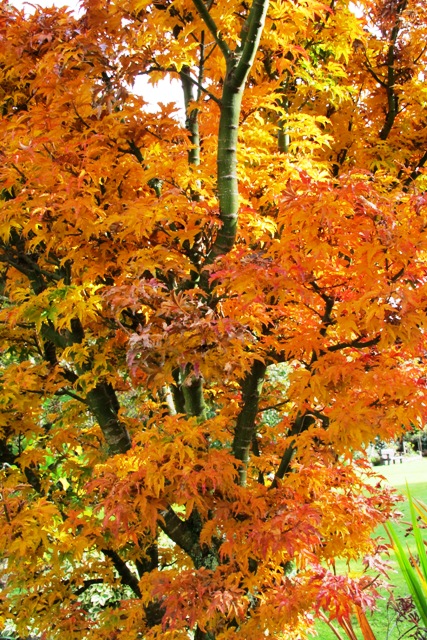
“It would be worthwhile having a cultivated garden if only to see what Autumn does to it.”

Alfred Austin, The Garden That I Love (1894).

047
001Garden lore – rat catching

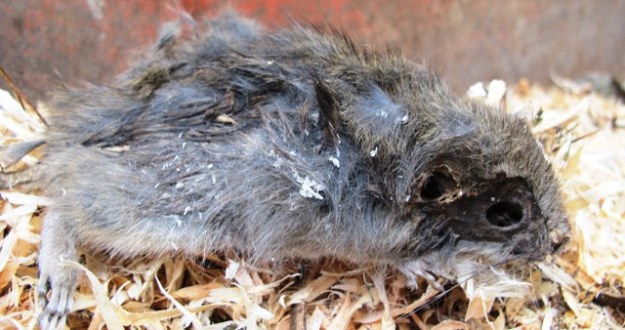
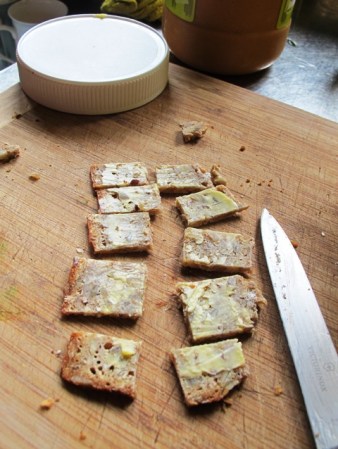
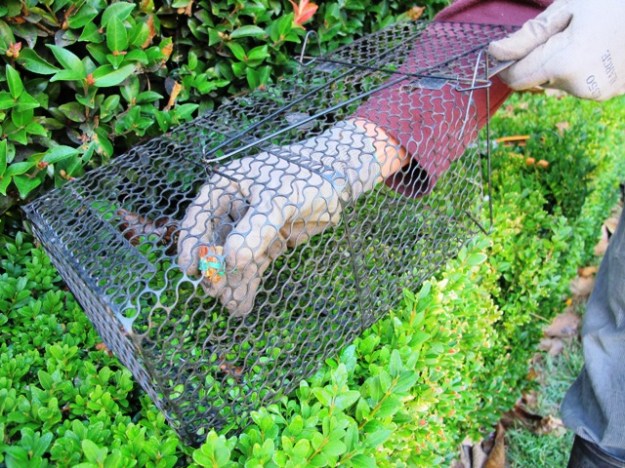
Sadly, rats are a fact of life and not an indication of squalor as I am sure many river-side residents will know. We get rats here because we have a macadamia nut orchard and processing plant immediately next door and we also have a flowing stream which can bring them in. The current tally this autumn is already 21 despatched. We have a strong preference for trapping, not poisoning these days and a trapping round is part of Mark’s daily routine. He uses small squares of stale bread spread with both butter and peanut butter as bait. The downside of trapping is that you do have to be willing to kill the rat. He used to leave this to the dogs but gave up when one escaped from them. Nowadays, he tips the trapped prey into a sack and whacks the sack on concrete. It is a quick end.
002
You can buy poison across the counter but follow instructions. A regional council pest control officer once told me he despaired at the number of people who thought they knew better than to secure the bait because the rat would take it back to its nest. He had pulled out a fridge in a shed and found maybe 200 baits behind, stockpiled by the rats (which were still alive) as a squirrel stockpiles acorns. The bait needs to be secured and out of the way of dogs. We had a dog once that ate rat bait. It was a traumatic wait to see if he would survive. He did. We have also seen one of our dogs and a cat from earlier days get quite ill after eating poisoned rats. The experience of having a dying, poisoned rat wedge itself in the chimney breast (they go in search of water), there to decompose over many weeks put us off poisoning once and for all. Hence the return to trapping.

And I managed to get that far without making a joke about the Pied Piper of Hamilton.

First published in the Waikato Times and reprinted here with their permission.

What price public accountability and garden reviews?

We put the closed sign up late last year

We put the closed sign up late last year

We have been part of the open garden scene in New Zealand for 25 years but at the end of last season we put the closed sign up. We don’t know what the future holds for us yet but we are certainly enjoying taking a year or two out. It is interesting taking a step back.

I have long advocated that it is possible to assess gardens and that not all gardens are equal. Like any other human endeavour, some gardeners are simply better at the task than others. Whether you like a garden is a matter of personal opinion. Whether it is a fine example of gardening is, to my mind, not a matter of opinion but able to be measured by certain criteria. I can think of some very good gardens that are not to my personal taste just as there are gardens that I really enjoy, even though they are not top notch. Mind you, I shy away from the very thought of ranking gardens in a single line hierarchy, as required by competitions. I am only willing to work in broad bands or categories.

I have also advocated strongly for accurate garden descriptions for open gardens. There is a certain folly in letting garden owners write their own descriptions. Some are far too modest and fail to capture the essence of their own place, shying away from anything that might be seen as boastful. Too many, alas, are not.

So it has been interesting this week to debate the issue of garden reviews. This came up on a British gardening website (www.thinkingardens.org.uk) where the editorial policy is of honesty, sometimes brutal honesty. A contributor posted a particularly critical review of the historic garden, Rousham.

Rousham House (photo credit Grahamec via Wikimedia Commons)

Rousham House (photo credit Grahamec via Wikimedia Commons)

I have never been to Rousham which is in Oxfordshire and it is not likely to feature high on our visiting list because we prefer different gardening styles. My English garden guidebook (written by an independent, not the garden owners) describes Rousham as “the most perfect surviving example of William Kent’s landscaping….an Arcadian experience.” It dates back to the early eighteenth century, one of the earliest and best preserved examples of English landscape gardens, drawing on influences from ancient classical times. In other words, it is mostly green and architectural. It is still in private ownership, apparently run with a relatively small budget. According to the reviewer, the owners are not doing a very good job of it.

Does charging an entry fee make a garden fully commercial and therefore fair game for disaffected garden visitors? Most New Zealand open gardens are in a similar position to Rousham (though few are of any historic note). It is a rare garden here that is part of a fully commercialised set-up with cafe, craft shop, plant sales and a full complement of service staff. In fact I can only think of two such privately-owned gardens. Every other private garden I know is a labour of love by individuals where the entry fee, if charged, adds up to a minor contribution to the costs.

Would it help lift open garden standards here if there was a *robust* and public review system? The advent of the internet has made this possible – would the Trip Advisor garden section become an integral part of planning? The neo-liberal, consumer approach says yes. A comment on the aforementioned website by one such on-line reviewer defending himself read: “Being a petty, rude and generally disrespectful smart-arse is the right of those that pay money for a thing.”

We were underwhelmed in every way by this overseas garden so I prefer not to identify it or write about it

We were underwhelmed in every way by this overseas garden so I prefer not to identify it or write about it

I may be a bit old fashioned in these matters, but I think it is a privilege to be able to get into private gardens irrespective of whether an entry fee is paid or not. If I really don’t like a garden after visiting, we analyse the reasons why in private discussion. Would I write a scathing review? No, that just seems discourteous. If I wrote about it, I would try and balance out the negatives with some positives. If there were no positives, I wouldn’t write about it.

On the day we put up the closed sign on our garden, we received our first ever letter of complaint. It was unpleasant, written by an angry woman who accused us of ripping her off. It hurt. Fortunately it is the only one but we have kept it as a reminder. Of course she had paid to come in so she had the right to vent her displeasure. Just as we have the right to decide that we don’t want people like that in our garden. It wouldn’t take too many experiences like that to make us decide never to open again.

So-called honest reviewing and feedback is a fraught path.

First published in the Waikato Times and reprinted here with their permission.

Plant Collector: Amaranthus caudatus

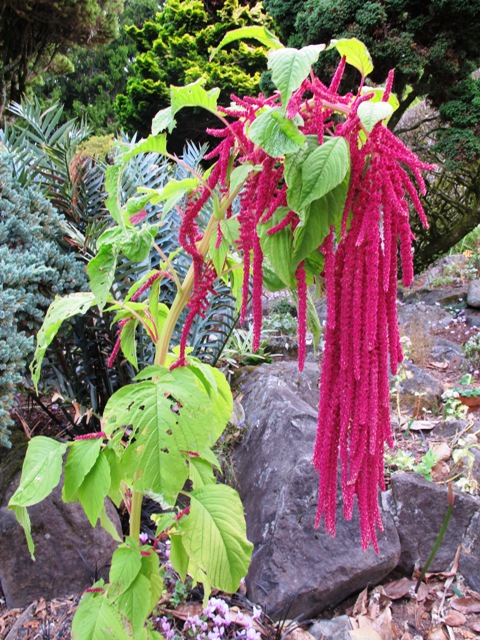
Amaranthus caudatus - Love Lies Bleeding

Amaranthus caudatus – Love Lies Bleeding

There is nothing fancy or special about this amaranthus which bears the unfortunate common name of Love Lies Bleeding. It is just an annual which has seeded down over many years in our rockery, but in early autumn we welcome its return. It grows at a remarkable speed. Throughout most of summer, the tiny seedlings are only a few centimetres tall, taking up next to no space at all. Look away for a couple of weeks and suddenly they have rocketed up to a metre or more and produced these eye-catching red tassels which will last right through autumn. The advantage in our garden situation is that the plants still take up very little ground space so the bulbs that are shooting away in the same pockets of the rockery are not crowded out.

There are many different amaranthus species – maybe 70 of them. Some species are eaten as fresh greens, some are predominantly grown as ornamentals while some provided grain in their native habitats of Mexico and South America. There is some resurgence of interest in amaranth grain, including from alternative lifestylers. It appears that A. cruentus is the main grain species but our A. caudatus also gives edible grain and so does the oddly named A. hypochondriacus. The problem we see in using our Love Lies Bleeding is that, while it sets prodigious amounts of seed, it does not all ripen at once, which would make harvesting difficult. However, should armageddon come, we do apparently have a potential source of grain in our front garden, as long as I leave one or two plants to seed down each year in the interim. In the meantime, they do a great job of feeding the birds.

First published in the Waikato Times and reprinted here with their permission.

Garden Lore

“Gardening is an unnatural pursuit. The gardener views nature as an abundantly filled grab bag from which he is free to select a number of items he would like to use in his garden, and then dispose of the rest in the trash. But he’s mistaken: once opened, the grab bag turns out to be Pandora’s box, which constantly releases demons that besiege the gardener and his garden.”

Henk Gerritsen, Essay on Gardening (2008)

001 (5)
Hedge trimming

Autumn is hedge clipping time for many people. The aim is to time it so the hedge makes a light flush of fresh growth which has time to harden before any frosts arrive. If you are in a colder frost-prone area, do not delay because if the growth is still fresh and tender, it can get burned and look unsightly all winter.

If you want the formality of sharp lines, it pays to use a string line. Over time and repeated clippings, levels and lines can start to wobble and undulate and it can take years to try and get them straight and true again – a decade, in fact, for our elderly totara hedge which had previously developed a fair curve. On low hedges, a measuring stick may suffice.

The aim with established hedges is to keep them at the same height and thickness. Trimming encourages dense, leafy growth which is easier to clip. It is only when a hedge has been allowed to get away to a larger size that it becomes necessary to cut back so hard that you can see bare wood. This is best left until winter, not done in autumn. Before you do it, makes sure that your hedge plants will sprout again from bare wood. Most conifers won’t. Buxus, camellias and totaras will.

If you still have buxus hedges, keeping them on the looser side can help reduce the impact of buxus blight. Repeated clipping can render buxus hedges very dense and solid over time, particularly little B. suffruticosa. Dare I say it, thinning your hedge can help air movement which makes it harder for the fungal spores to take hold. If you have a leaf blower, blasting out the build-up of dead leaves and debris in your buxus will also help.

First published in the Waikato Times and reprinted here with their permission.

Garden Lore

“Our trees rise in cones, globes and pyramids. We see the marks of scissors upon every plant and bush….I would rather look upon a tree in all its luxuriancy and diffusion of boughs and branches, then when it is thus cut and trimmed into a mathematical figure; and cannot but fancy that an orchard in flower looks infinitely more delightful, than all the little labyrinths of the most finished parterre.”

Joseph Addison (1672 – 1719)

058Autumn planting

Autumn is about more than colouring foliage. Despite an indifferent summer, we are gently morphing into autumn. When the autumn rains arrive – which they will and probably sooner rather than later – it is a signal that optimal planting time is here, particularly for woody trees and shrubs which includes hedges. Planting in autumn gives time for root systems to start developing before growth slows down or stops in winter, positioning the plants to take full advantage of spring growth. It means most plants will be well established before the potential stress of drought next summer. The more traditional spring planting dates back to the days when garden centres did not get delivery of new season stock until late winter. Nowadays, most nursery stock is container grown and available all year round but old gardening habits die hard. The more drought-prone you are, the more important it is that you plant before winter, not after it.

While you are waiting for the autumn rains, you can be planting out winter vegetables. The reference to “winter veg” does not mean you plant them in winter. They need to be planted in autumn because they make most of their growth before winter and can then be held in the ground through the lower temperatures to be harvested fresh as required. White butterflies are still very active, so if you are planting winter brassicas (and that includes rocket and many of the Chinese greens as well as the usual cabbage, cauli and broc), you may need to erect some sort of cover to stop them becoming caterpillar fodder in the early stages.

First published in the Waikato Times and reprinted here with their permission.