Annuals are plants that are done and dusted in the same year. Biennials flower in their second year, set seed and die. Perennials simply last more than two years. It is some herbaceous perennials that give us most colour in the late summer garden, at a time when many gardens can be looking a little jaded, dull and green.
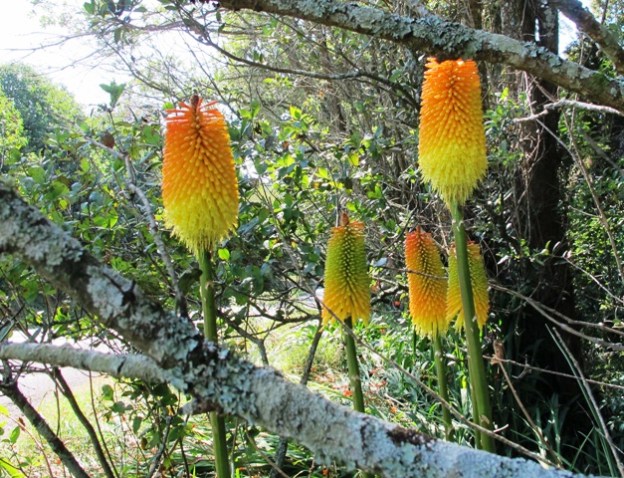
Kniphofia – worth a second look
Kniphofia might have had a better lot in the life of NZ gardens if we called them by some of their other common names. Knofflers sound so much more whimsical, torch lilies more exotic but alas we usually refer to them as the less attractive red hot pokers and treat them as low grade roadside plants. Not all kniphofia are the same – there are tall ones, short ones, yellows, bicolours, deciduous, evergreen and finer foliaged options. Don’t overlook them for late summer colour.
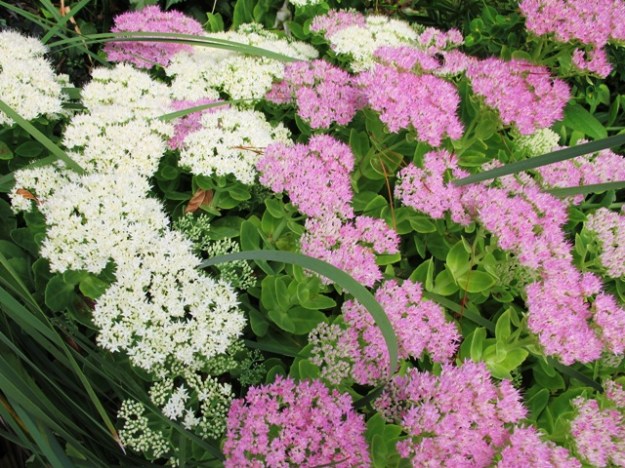
Sedums – good bee and butterfly food
Sedums are not the world’s most exciting plant, in my humble opinion, but they put on a great late summer display and feed the bees. You can delay the flowering by snipping off the early growths – called the Chelsea chop. It forces the plant to set new growing and flowering stems which tend to be a little more compact, avoiding that tendency to fall apart. I see sedums have technically been reclassified now as hylotelephium but my chances of remembering that are not great. The white one shown here is S. (or H.) spectabile ‘Stardust’ while the pink one ‘Meteor’. These die back to ground level in late autumn and benefit from digging and dividing every few years.
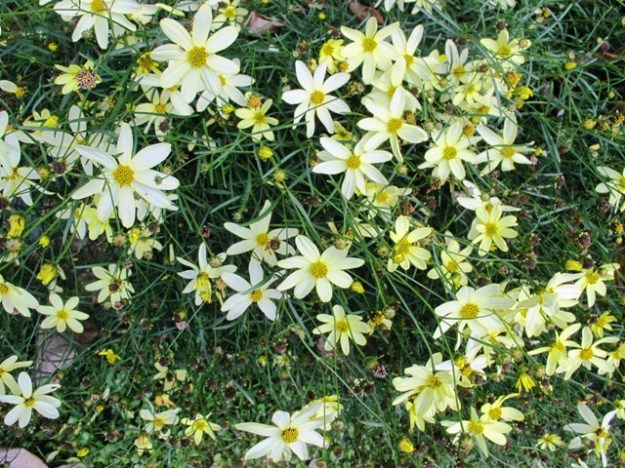
Coreopsis ‘Moonbeam’ flowers for a long time through summer without needing deadheading
There is a delightful simplicity to daisy flowers and Coreopsis ‘Moonbeam’ is no exception. From a flat mat of tiny leaves hugging ground level, it then grows to form a loose mound covered in the prettiest of soft yellow flowers over many weeks at this time. It is perfect for full sun, especially where you want a plant at the front to gently festoon over the edge. There are a host of different coreopsis, originating from North American wild flowers. Some are more perennial than others which are often treated as annuals. ‘Moonbeam’ is fully perennial and easy to increase by division.
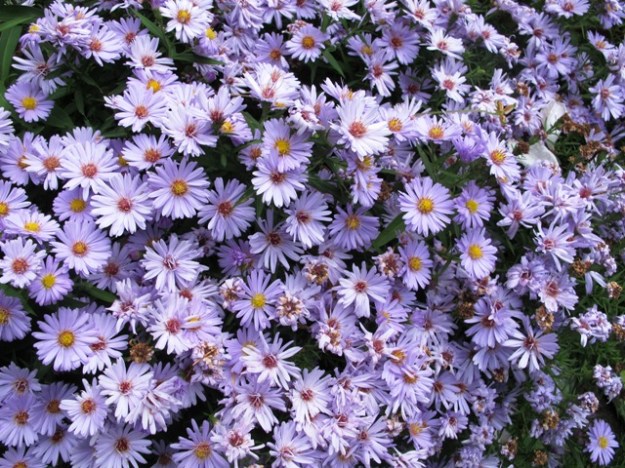
This aster is a lovely colour but it needs lifting and dividing every year or two
I have a love affair with blue and lilac flowers so this aster never fails to please me. Despite its hugely cumbersome name of Aster novi-belgii ‘Professor Anton Kippenberg’, it too has its roots in the North American wild flowers. If you trace both the coreopsis and the aster back, they are in same family of asteraceae. It is easy to grow, so vigorous in fact that I find it best if it is lifted and divided every two years. It responds with renewed enthusiasm and gives even more flowers than when left congested. In winter, it dies down to a flat mat of foliage.
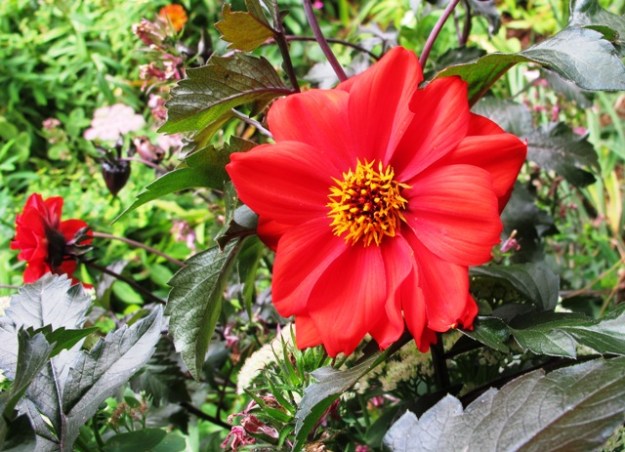
Dahlia ‘Bishop of Llandaff’
Dahlias. I wrote about raising dahlias from seed last week and there is little doubt that our late summer gardens would be poorer for their absence. This is an oldie but a goodie – the Bish, or Dahlia ‘Bishop of Llandaff’ with pure red flowers and attractive dark foliage. NZ plant breeder Keith Hammett has done a lot of work with dahlias and we are lucky in this country to have a wide range of new varieties to choose from as well.
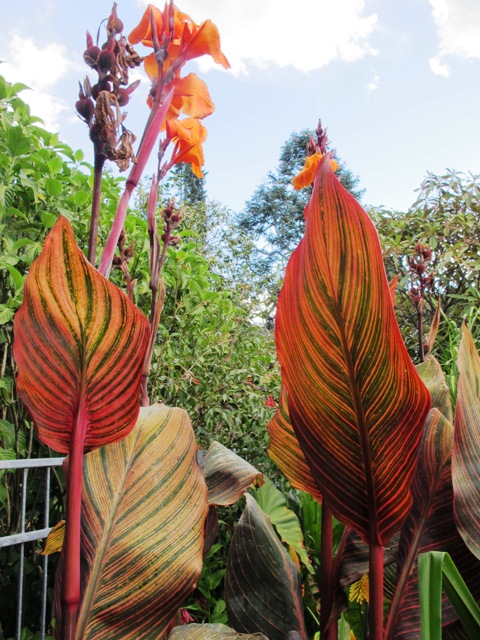
Showy not subtle, the cannas
I admit cannas, often referred to as canna lilies, are not my favourite plant. I find their flowers a bit scruffy and the showy foliage a bit over the top but there is no doubt they make a splendid display where something big and bold is desired. Should famine strike, you can apparently eat the rhizome or harvest the young growth. In winter, it all dies away to absolutely nothing visible, to return again the following summer.
First published in the Waikato Times and reprinted here with their permission.
-39.042098
174.300314


 Not quinces, as most people think, but chaenomeles or japonica apples. At this time of the year, the hanging golden orbs are a most attractive feature. I like to bring a bowl indoors because they are scented, in an aromatic apple-y sort of way and they last for many weeks. The plant itself is a deciduous, scrubby shrub, maybe 2 metres tall and, after many years, 4 metres wide. It has burglar deterrent possibilities with its ferocious spines but is not a thing of natural beauty beyond its attractive fruit in autumn and its lovely single, deep pink japonica flowers in spring. It will have been a named form that was purchased but the name is lost in the mists of time. It appears to be a hybrid – a cross between 2 of the 3 different species, selected for both flower colour and fruit and is most likely to be in the Chaenomeles x superba group. We have other forms that flower well but don’t fruit in the same manner.
 There is nothing unusual about the dietes flowering at the moment, but don’t let the fact that it is much favoured by amenity landscapers put you off. The reason it is seen so often in shopping centre garden plots is because it is tough and easy care.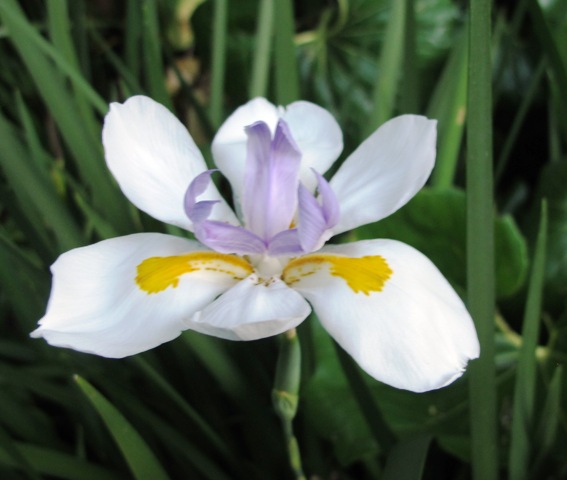
 Tikorangi The Jury Garden