
Yellow variegated conifers are redolent of the 1960s and 70s but we have retained those that add a statement to the garden landscape
New Zealand gardeners are not, in the main, huge fans of variegated foliage. There are exceptions – hostas being one – but as a general rule, we tend to avoid bi-coloured variations. This often surprises overseas gardeners, particularly British ones who are far more enamoured of such things.
I am sure it is related to the differing quality of light in this country. New Zealand is remarkable for its clear, bright light. In recent times, that light has been even less filtered due to the hole in the ozone layer. Those prized white, cream, yellow or pale variegations burn badly in the sunlight. If the sun doesn’t get them, then the winds often do and burned brown edges take the charm away.
It is different in countries with softer, more diffused light. Often such conditions go with lower sunshine hours and in a climate which is generally greyer, yellow plants and variegations can add a bright touch in the garden and landscape which is valued.
Variegations are usually sports – mutations, genetic aberrations, if you like. Sometimes it is the result of a virus. Most plants grow with one solid colour on the foliage. All sorts of plants can throw up a branch or stem with a variegation but most of these will be unstable and revert back to the original single block colour. Where a variegation can be isolated and increased by propagation, the resulting plants often the lack the vigour of the original plant.
Hideous variegated plants I have seen include a nasty variegated oleander in Spain. The mottled and margined leaf added nothing to what is a lovely flowering street tree in the right climate, in my opinion at least. There was a ghastly variegated spirea (a yellow and green leaf with murky pink flower) that we saw being sold widely in the UK. In this country, the top selling rhododendron for a number of years in the 80s was a mutant named President Roosevelt. Some of you may still have it in your gardens so stop reading now if you are going to take offence. It was the first plant I cut out when we bought the property across the road from where we now live. I do not think the yellow mid-rib to the leaf added anything but when you add a red and white variegated flower to green and gold foliage, it was all too much for me. But distinctive, so it sold.
We have retained the odd variegated yellow conifer here but only because they are handsome, established trees which make a contribution to the landscape. I can’t think that we would choose to plant them from scratch.
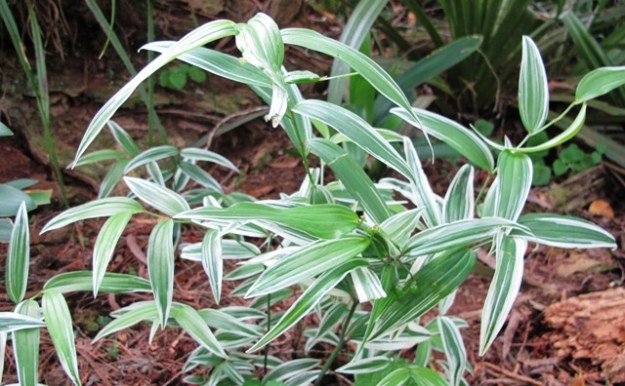
The variegated disporum lit up a dark area but proved altogether too invasive
That said, in darker areas of the garden, the odd bit of variegated foliage can light up an area. It was for this reason that Mark planted the ground cover that I think is Disporum sessile variegatum. It’s pretty green and white foliage gave a lift in the shade. I have spent the better part of this week weeding it out because, unlike other disporums we grow (‘diaspora’, I keep calling them), this one was scarily invasive. It spread alarmingly, rampantly and through everything. We have retained only one small patch in a confined area. The rest is now in the compost heap. Plant this one at your peril. This variegated form is an exception to the rule in that, for us, it is much strong growing than the others we grow.

Farfugium tussilagineum argenteum looks good in shaded areas
Other variegated shade plants we use – but in moderation – is a white edged form of Soloman Seal, a yellow striped renga renga lily (arthropodium), a handsome variegated crinum, farfugiums (which most readers will still know as ligularias) and, of course, hostas. But not all together. The secret to using plants with variegated foliage is to set them off with plenty of block-coloured foliage.
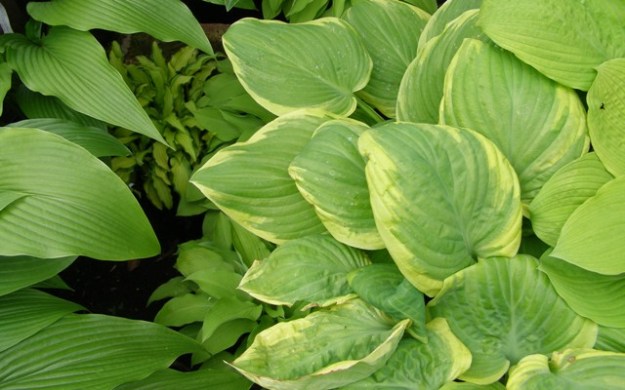
Offset variegated hostas with other plain coloured varieties for best effect
Nowhere is this more apparent than with hostas. Too often, people will only buy the fancy, variegated ones and I have never seen a good planting of a variegated hosta beside other variegated hostas, all different. But take the same hosta and put it beside some plain coloured foliages and it can add zing and star in its own right.
Most variegated plants lean to the “Look at me! Look at me!” sort of statement. If you are going to grow variegated plants, make sure that you use them so that they are the feature they want to be and don’t sit them alongside a medley of other plants also demanding to be the star. That becomes a jumble.
First published in the Waikato Times and reprinted here with their permission.
-39.042098
174.300314

 Maples. They are acers, botanically speaking and there are plenty of them. They are often seen in gardens too, though the majority are probably what is commonly referred to as the Japanese maple – A. palmatum usually dissectum. There are multitudes of selected forms of this around, many of them carrying Japanese names. One of the reasons I have not written much about Japanese maples is because we don’t have names on many of the ones in our garden here and I have not gone to the trouble of working out which varieties they are. This failure is irrelevant when it comes to their role in the garden but it matters rather more when I write about them.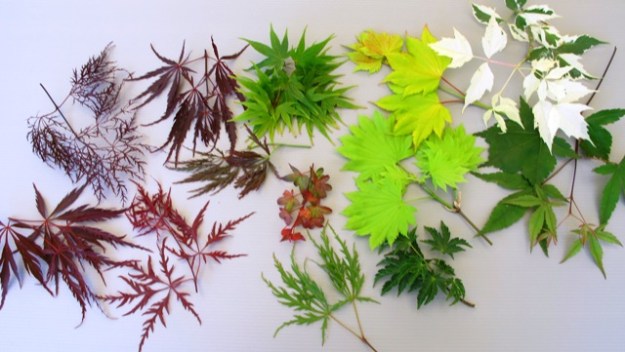
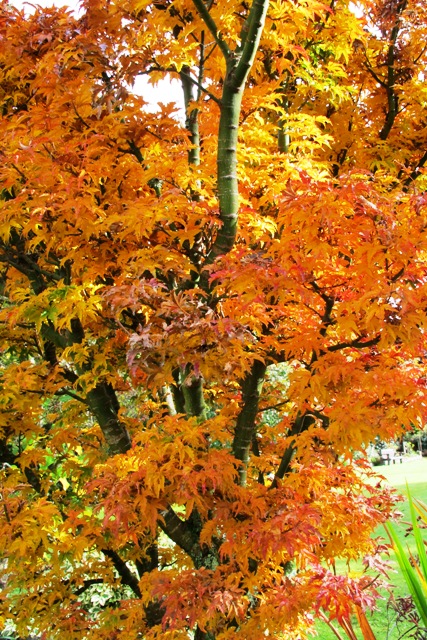
 Besides feature trees which add to the skyline, we find the smaller growing maples combine well in a variety of situations. I really like the little weeping one we have planted with roses growing through it. It is a very pretty combination, especially with perennials also in flower. Pretty too are the ones in a semi- shaded bed with clematis scrambling around them and seasonal bulbs at their base. We have more upright forms in the rockery where we can keep their bases clear and they give good year-round form.
 But one of the unsung delights of the smaller growing maples is that as they grow older, they can be gently encouraged into natural bonsai forms which give shape and interest in winter when they are fully naked. We do a bit of thinning and shaping but not much is required to make a feature of a maple with a good skeleton.
 Tikorangi The Jury Garden