Begone edging plants!

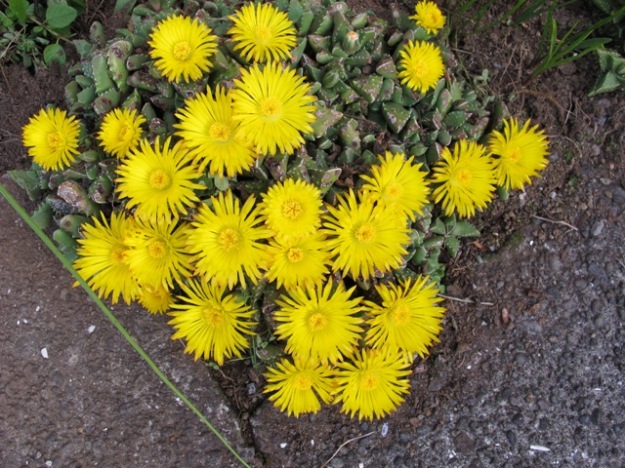
Shocked to realise I had planted the Tiger’s Jaw (Faucaria tigrinia) in a row...

Shocked to realise I had planted the Tiger’s Jaw (Faucaria tigrinia) in a row…

Ahem. I risk annoying many readers this morning. I know this because odds on, many follow trend and do not think gardens are complete without tidy rows of edging plants. Noooo, I say.

There is a difference between hedges and edgers. Hedges are living walls, usually green, giving structure to a garden. Edgers are edging plants. The baby Buxus suffruticosa is commonly an edging plant. Edgers are designed to make a garden look tidy.

There is a school of thought that if you have tidy rows of edging plants, the garden will always look neat. I beg to differ. If you have a messy garden, you have a messy garden. If you have a messy garden with a tidy row of edging plants, said edging does not make the rest of your garden look neat. It will look precisely what it is.

When you have a garden bed already defined by sharp edging – whether a path, pavers, or a mowing strip – you don’t actually need edging plants to add further definition. That is unless you like gardening in stripes.

I looked at a photo in another publication last week. There was a border beside a driveway. The drive was paved and then edged in a concrete nib wall. But that double definition was apparently insufficient for the owner. The line was further defined by an unbroken row of variegated Agapanthus Tinkerbelle, with another row of matched low shrubs behind, punctuated by dot plants at regular intervals, used as vertical accents.

If you asked ten year olds to design a garden, what would most of them come up with? A bed in long stripes, I would guess. A row of one colour, backed by another row of a different colour and broken up by regular placement of upright lollipops or pillars. Just as the adult owner of the aforementioned garden did. Tidy. Tidy and suburban. It is so ubiquitous these days that it has become the norm.

Mondo grass – black or green, liriope, blue carex, fescue, dwarf agapanthus, dietes, lavender, rosemary, renga renga lilies, even hostas in shady conditions – what is with this need to plant them all in edging rows, I ask. It is all a bit too reminiscent of traffic island planting, in my opinion.
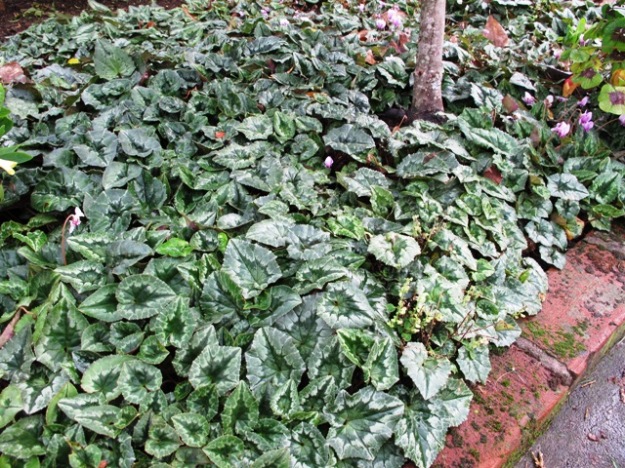
Would an edging of mondo grass really improve this bed of cyclamen which is already defined by brick edging and mowing strip?

Would an edging of mondo grass really improve this bed of cyclamen which is already defined by brick edging and mowing strip?

Yes, defining lines and shapes in the garden by ribbon planting the same plant is a tool, but only one tool and not a compulsory one at that. I had hoped that the advent of buxus blight with the unfortunate result of a whole lot of dying edging plants might encourage a rethink on their role by many gardeners. Alas that does not appear to be the situation, judging by the frequent searches I see for alternatives to buxus. Many people are simply looking for a suitable plant to use instead rather than reviewing the role of the little garden hedge.

Formal gardens are planted in stripes and blocks, everything measured so that the spaces are even. It is all about control and maintenance. That is the style. Informal or naturalistic gardens are at the other end of the scale. There is nothing so contrived or tightly managed as a row or an edging stripe. This style is more about emulating Nature, recreating but improving on what occurs naturally. Most of us choose to garden somewhere in the middle between those two ends of the spectrum. As such, we are in good company. That mix is the hallmark of some great gardeners like Vita Sackville West and Gertrude Jekyll.

I just can’t imagine that Vita or Gertrude would have forseen the translation into edgings of mondo grass or bedding begonias. They didn’t ever straitjacket every garden bed and every garden border in behind tidy edges of border plants. Woodland and cottage gardens were spared. Herbaceous borders were allowed to festoon outwards over the wide mowing strips, softening the hard lines. One of the lovely distinctive styles of many English gardens is their use of wide gravel paths (usually a honey coloured gravel rather than sombre grey) with voluptuous plantings allowed to overflow to the path and often gently seeding down.

I admit that I gave myself a shock when I headed out to photograph the Tiger’s Jaw (Faucaria tigrinia) plants which were opening their faces to the sun. It wasn’t until I lined up the photo that I realised I had planted them in a row at the front of that particular garden border. There was a good reason. They are very low growing and will rot out if larger plants flop over them. But a row! I shocked myself. It may just be the only edging row you will find our garden outside of the vegetable patch (excluding proper hedges) but we are in a minority among New Zealand gardens. Pretty much every one I go into these days is defined by the use of edging plants.

Consider grouping the plants, darlings, rather than planting them in single file. You may even like the different effect.

First published in the Waikato Times and reprinted here with their permission.
Garden lore

“A honeybee would have to fly around 100,000 kilometres and visit over a million flowers to find the nectar to make two kilos of honey. As it happens, they can only manage about 800 kilometres before they exhaust themselves and die.”

Niall Edworthy, The Curious Gardener’s Almanac (2006).

Green crops
It is your very last call for sowing green crops if they are to be of any value this winter. Green crops are a time honoured method of conditioning soils. They are a particularly useful tool on heavy soils. These can compact badly when left bare through a sodden winter and then turn to concrete when they dry out again. The roots penetrate the soil and keep it open, making it easier to work when it is time to dig again.

Green crops also slow the leaching effect of winter rains. They take up nutrients which would otherwise be washed away and release these nutrients in the spring when dug in to the soil. Think of them like a nutrient bank.

Recommended practice is to dig in green crops two to three weeks before you start replanting in spring – which means about the beginning of October. If you are not using all your vegetable garden in winter, green crops also look a great deal tidier than a forest of weeds and seedlings. Logic says that forest of weeds will also act as a green crop but you only get the full benefit if you dig the entire plant in later and you don’t want to be digging weeds with seed heads already formed into your ground.

Lupins and mustard are other winter options. Lupin is good for adding nitrogen. Mustard is reputed to kill undesirable nematodes by a form of natural sterilisation. Oats are the quickest growing option and will germinate the fastest. At this late stage, they are probably the best choice.

First published in the Waikato Times and reprinted here with their permission.

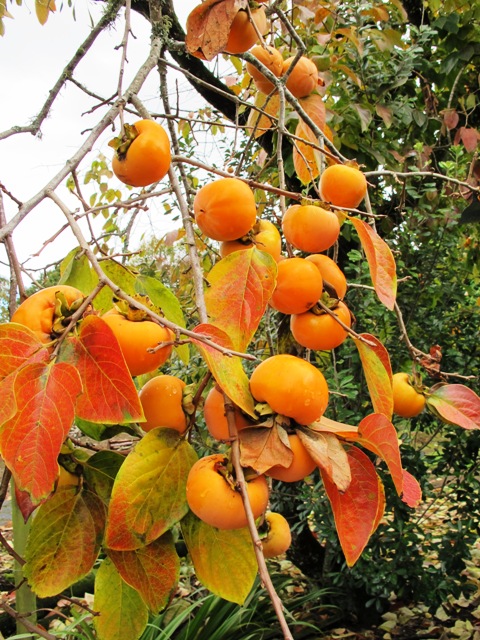
Plant Collector : Persimmons (Diospyros kaki, probably “Hachiya”)

The persimmon - worth growing as an ornamental even if the fruit is not to one's taste

The persimmon – worth growing as an ornamental even if the fruit is not to one’s taste

As autumn draws into winter, our old persimmon tree looks mighty spectacular, even if we aren’t huge fans of the fruit. The large leaves turn golden before falling and the fruit hang on like big orange-gold orbs for a long time. The tree itself is smallish at about 4 metres and never receives any care or attention.

The diospyros family is a large one, best known for giving us both persimmons and the heavy dark timber often called ebony wood. D. kaki is native to China but now grown in many other areas of the world. The commercial cultivars often originate from Japan although Israel has also adopted it as the Sharon fruit.

Being an old tree, ours is an astringent variety. A high tannin content means that any fruit less than very ripe indeed will pucker the mouth. The best parts are the gelatinous segments in the centre. The surrounding flesh can be a bit cloying but no doubt would make an excellent sherbet or sorbet. Nowadays most people plant the modern, non astringent varieties which can be eaten before reaching the soft stage of ripeness. “Fuyu” is the most common non astringent variety here and there is now a small commercial orchard industry. You can buy the fruit in the supermarkets and eat them while still crisp, somewhat like an apple.

Persimmon fruit must be a taste I have yet to acquire despite its international popularity. No matter. The tree fully justifies its place as an ornamental at this time of the year.

First published in the Waikato Times and reprinted here with their permission.

Our world of azaleas here

Our sky carpet of Kurume azaleas in September

Our sky carpet of Kurume azaleas in September

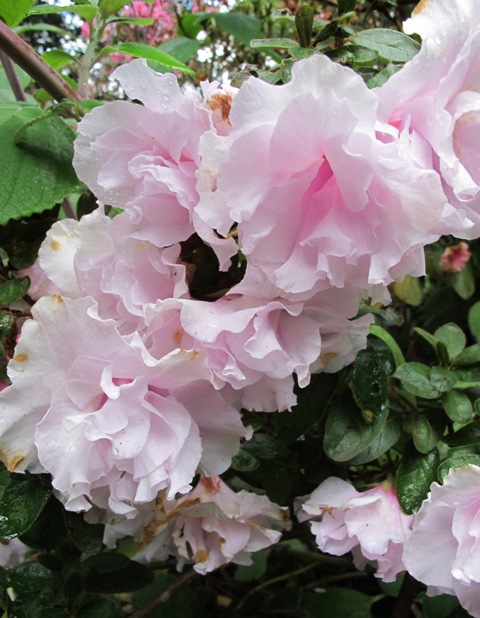
I have never tracked the flowering season of our evergreen azaleas. Generally we would say they are spring flowering and the peak is in September. But this year, I have become aware of them coming into flower already and I have been snapping a few photos for several weeks. When I looked around, plenty have blooms out.

I googled and found references to them having a flowering season of a week or two in spring. Not here, is all I can say. For us, they are unsung heroes in the background of our garden. We have lots of evergreen azaleas and they are rarely foreground stars. But they are such an obliging plant because they grow in semi shade to shaded areas (of which we have plenty), they never get too large, they are wonderfully unfussy, don’t need deadheading and they gently flower on… and on… and on.

The evergreen azaleas are gently flowering already and will continue through til spring

The evergreen azaleas are gently flowering already and will continue through til spring

You can make them stars. You can turn them into bright, colourful clipped mounds of bloom if that is what you want in your garden. You can tastefully plant the same cultivar (to keep uniformity) as an edger alongside a driveway or path. You can colour tone for variation and mass plant out a gentle incline. Or you can ignore fashion and plant a mismatched collection as a vibrant statement of mushroom shaped mounds out in the open. With any of those options, you will probably get peak flowering for a couple of weeks and have relatively anonymous, small leafed green shrubs for the other 50 weeks of the year.

We have plenty of star plants in our garden, so we lean more to using the evergreen azaleas as understated support plants throughout. They are so obliging by nature. Even if you cut them back very hard, most will just come again. You can raise your own plants from seed if you are a patient gardener. They are widely available for sale and generally you decide what you want by leaf and flower size – some are much smaller in both than others – and by colour rather than searching out particular named cultivars.
???????????????????????????????Colours are from white through the whole gamut of pinks to pure reds. The closest to blue is lilac and the closest to orange is more coral in tone. Nor are there pure yellows. Just white with a green or yellow toned throat.

We have plantings of the fine leafed Kurume azaleas from Japan which are now over 60 years old. At about 45 years of age, Mark decided they needed some attention and rather than cutting them back hard to rejuvenate them, he set upon a course of limbing them up. It is a constant task but we take out all the lower growth and have them as an undulating carpet of blooms just above head height.

A garden visitor from Kurume came a few years ago. He spoke no English and we speak no Japanese but he managed to convey the information to us that our Kurumes were simply astounding for their age. But, and there is always a but, we should be taking better care of them. I have spent a prodigious amount of time grooming out dead twiggy bits and an excess of lichen ever since. Some gardeners choose to use copper sprays or lime sulphur to combat lichen build up on older plants.

All azaleas are rhododendrons but not all rhododendrons are azaleas. In other words, azaleas are a separate section of the rhododendron family. They then divide further into the deciduous azaleas (botanically Pentanthera) and the evergreen azaleas (at least mostly evergreen, the Tsutsuji or Tsustusti azaleas originating from Japan).

Vibrant colour in late October from deciduous azaleas

Vibrant colour in late October from deciduous azaleas

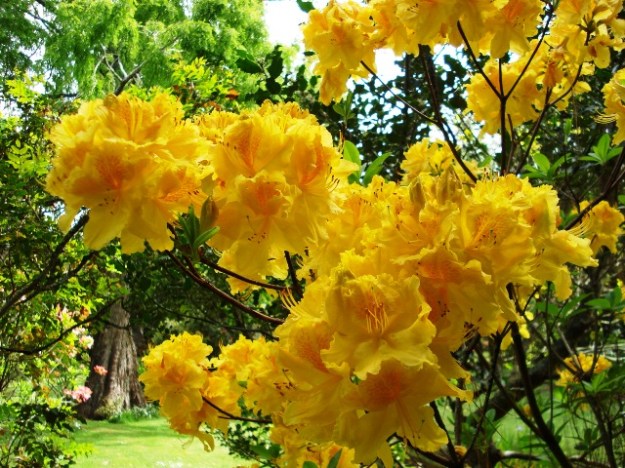
Deciduous azaleas are a different branch of the family altogether and many look more like rhododendrons with their full trusses. They are often referred to as Azalea mollis or Ilam azaleas in this country. Some bring the most wonderfully vibrant colour into the spring garden, bordering on vulgar if not placed well. You don’t get the same bright oranges in any rhododendron that I know of and the intense yellows, tangerines and reds make a big statement. For those of more refined sensibility, there are also pastels and whites. Many are strongly scented.

Deciduous azaleas are more tolerant of heavy, wet soils – even occasional flooding – and of full sun than their rhododendron cousins. Surround them with lots of green is my advice, and let them have their time to star in all their glory.

The problem with deciduous azaleas is that when they are not in flower in mid spring, they tend to be pretty anonymous plants. And in humid climates, they are inclined to get mildewed foliage by the end of summer so are not plants of great beauty in small gardens.

Nor are they always easy to source. Garden centres really only have a three week selling time on them when they are in flower because few will impulse buy outside that show time. So buy plants when you see them on offer, is my advice, rather than waiting until the precise moment you are ready to plant them.

Our garden might look a bit sad and empty without the strong showing from the azaleas.

First published in the Waikato Times and reprinted here with their permission.
Garden lore

“… the truly formal garden is all about showing off your ability to groom and control. The more attention you pay to detail and maintenance, the better your garden will look, so don’t go there if you take a casual approach to chores. Consider rethinking the way you mow. The perfectionist will always mow lawns in straight lines parallel to the main axis.”

Xanthe White , NZ Gardener (May 2013).

???????????????????????????????

Pine bark
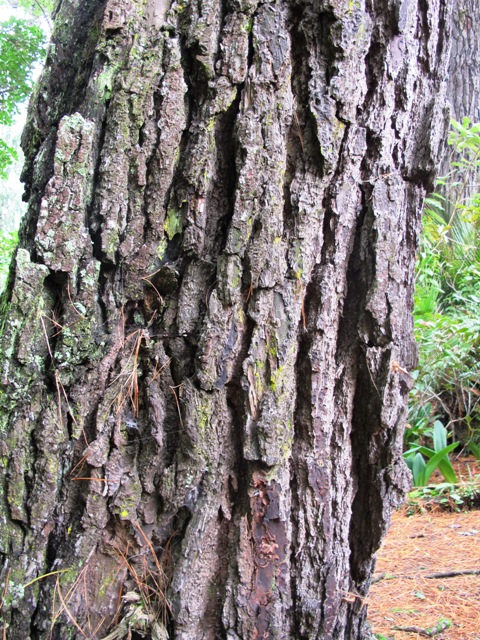
Pine trees produce a prodigious amount of loose bark and given the number of pine trees we grow in this country, pine bark has become a garden staple. Ground up and composted, it is now the major source of potting mix. As a renewable resource, it has done a great deal to save the peat and sphagnum bogs formerly raided for this purpose. Chipped to various grades, it is widely used as garden mulch. But, you need to understand that the reason pine bark is so useful is because it is remarkably inert and stable. It takes years to rot down so it does next to nothing to condition the soil even though it is an organic product. When a whole branch or trunk is chipped or mulched, it will break down quickly and add carbon content, but not straight bark.

So stable is pine bark that we use large flakes from our trees as an informal garden edging, stacked as you might stack thin pieces of old concrete. It lasts for years. If you are buying bark mulch, the mixes of bark and pine fibre will look more natural (and the fibre will break down faster, adding some nutrient to the soils). The chunkier bark nuggets look a little… clunky but will last for ages. The finer screened bark mulches will look smart in that urban landscaped look but can wash away in heavy rains. I have not seen the horror of died bark mulches that are favoured in Australia. Don’t go there. Your garden will not look better for being mulched in red, tan, blue or green pine bark.

First published in the Waikato Times and reprinted here with their permission.