Garden lore

“The area of a handsom Garden may take up thirty or forty Acres, not more.”
Philip Miller, The Gardener’s Dictionary (1724).

???????????????????????????????Breaking the rules on dividing bulbs

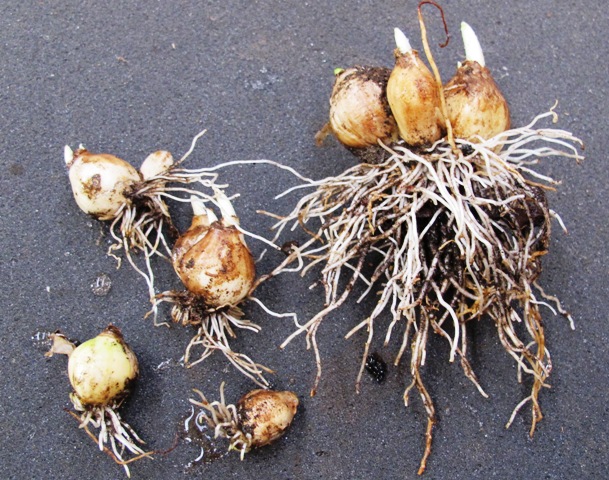
Traditional wisdom is that bulbs are divided when they are dormant. The problem is that when they are dormant, it is easy to forget where they are in the garden. Inspired by the fact that English gardening practice is to divide and replant snowdrops when they are in full growth (usually just after flowering), I have been breaking the rules about dividing other bulbs in recent years. Now when it comes to the likes of daffodils, lachenalias, crocus, nerines – in fact most bulbs – I split them up and replant at pretty much any time of the year. Gently does it, is the rule. You need to tease apart the clump of bulbs so that each one retains as many roots as possible. If they don’t tease apart, then replant them and do it when they are dormant and less vulnerable. It does not seem a good idea to replant any growing bulbs into heavily compacted ground so I dig over the ground well and add compost before gently spacing each growing bulb in place and covering with soil. Don’t let them dry out after replanting. That is it. Flowering is generally determined by the previous season, so dividing when in growth does not usually disrupt their display. If they are going to protest and sulk, it will be next year that they skip blooming.

First published in the Waikato Times and reprinted here with their permission.

A prickly tale – plants doubling as burglar deterrents

It would have saved a lot of effort had one of us looked up Yucca whipplei before we planted it 20 years ago

It would have saved a lot of effort had one of us looked up Yucca whipplei before we planted it 20 years ago

“I hate prickly plants”. I have said that often and indeed have consigned various prickly specimens to the incinerator. But when I thought about it, I realised we have a fair swag of spiny and spiky plants that we wouldn’t be without.

Many of the bromeliads have spiny points down their leaves and I often have somewhat shredded arms from delving in their midst to pull out dead foliage and to remove spent pups. The broms can make a mess from wrist to elbow but these lacerations heal very quickly, unlike roses.

Roses harbour so many fungal and bacterial diseases that their thorns can cause wounds which often become infected at an alarming speed. A nurse once told me she spent some time “specialing” a patient with acute cellulitis as a result of a rose injury – a thorn in her elbow – and some older gardeners have told me they have pulled out their roses rather than risk health issues from the inevitable scratches and splinters. I get tempted, every time one rips me as I pass but what is a garden without roses?

What amused me was when I looked around our house and realised that we have several large, very spiky plants around windows. Burglar deterrents! Not that we planted them for that reason. Nor indeed have we ever been burgled. Maybe our plants are doing their job? Generally, such plants have ended up in those locations because they are desert plants which need hot, dry conditions and the house borders are one of the few places to offer these.
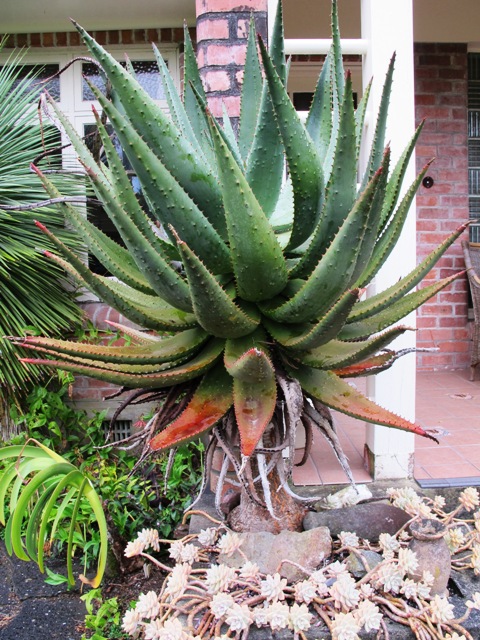
Aloe ferox - now a distinct hazard at the base of our fire escape

Aloe ferox – now a distinct hazard at the base of our fire escape

I doubt the wisdom of the rather large Aloe ferox with evil spikes at the base of our fire escape. Our only justification is that to get on to our fire escape, one needs the agility of an 11 year old and these days we would more than likely be found calling piteously for help from an upper storey window. The corollary is that at least burglars or intruders are unlikely to gain access up it.

Our biggest problem is the large yucca outside one window. We think it is Yucca whipplei. It was only a small, sculptural plant with attractive grey foliage when we planted it, maybe 30 cm high and 20 cm wide. That must be getting on for 20 years ago. At the point at which we decided we should be moving it, Mark thought it might be putting up a flower spike so wanted to leave it for another season. We are still expecting a spectacular flower spike at some point. Several years have passed and it still has not flowered. It is now well over two metres tall and a metre wide and that particular set of windows has not been cleaned in recent years. Nor can they be opened any longer. I gave the ultimatum last year that I wanted it moved.

Not for us, the quick and dirty solution of cutting it off and then digging out the roots. Oh no. This is a fine specimen and not particularly common, so it is waiting to be relocated. We have a sunny, north-facing bank where we have some of these larger desert style plants growing. It will take two men the better part of half a day. The problem is getting the two men on to the task at the same time. One man in my gardening life is more obliging than the other. That may be because he is paid, whereas I am married to the other one.

Last year, in preparation for the move, the concrete was cut. Oh yes, we have to remodel our paving to get this plant out. At the time of the concrete cutting exercise, our Lloyd commented to me that he was not going to be the one moving it because every leaf has a spiky tip. We are not talking seriously spiky like some yuccas of the major-risk-to-eyes or dangerously-hazardous-to-children variety. We had one of those and removed it from the rockery. This one is just a bit pointy on the tips, enough to cause discomfort rather than serious damage. “Easy,” said Mark. “We will just wrap the top in a blanket and tie the leaves upwards.”

Some yuccas can just be cut as lengths of stem and they will reshoot. This is how the very popular (and non-spiky) Yucca elephantipes used to brought in to this country and possibly still is. We are not willing to run the risk with this one which does not have much of a stem. We are trying to avoid butchering it. 20 years of growth deserves some respect.
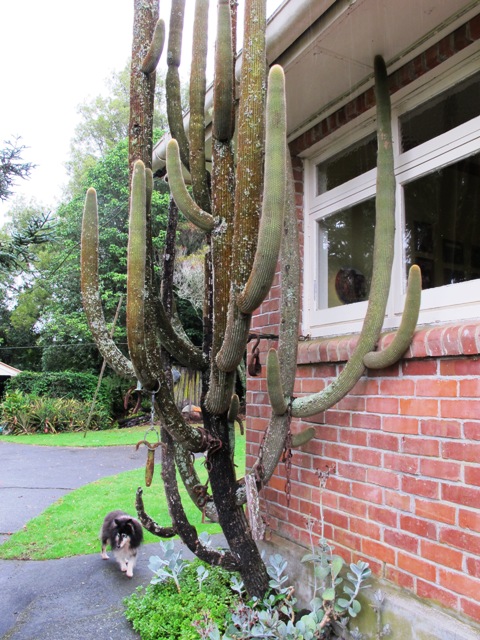
Vertical cacti now guarding the laundry window (and the inimitable Zephyr once again getting himself into a photograph)

Vertical cacti now guarding the laundry window (and the inimitable Zephyr once again getting himself into a photograph)

If you like the idea of using plants to give some protection against intruders, it may be wise to keep to more vertical plants. Some of the desert cacti such as we have outside our laundry window are good – this one has been gently co-existing with the house for maybe 60 years.

I have a gardening friend, an older woman living alone, who told me that she has trained a very prickly rose along her narrow, secluded boundary where she feels most vulnerable. I prefer something a little less rampant than a climbing rose but there is no doubt, we could have saved ourselves a major task had one of us looked up Yucca whipplei before we planted it.

First published in the Waikato Times and reprinted here with their permission.

If you are wondering how to set about moving large plants (similar to the Yucca whipplei mentioned above), there are step by step instructions in our Outdoor Classroom – Moving Large Plants.

Plant Collector: Koelreuteria paniculata

Koelreuteria paniculata - it may be a long wait for flowers in our climate

Koelreuteria paniculata – it may be a long wait for flowers in our climate

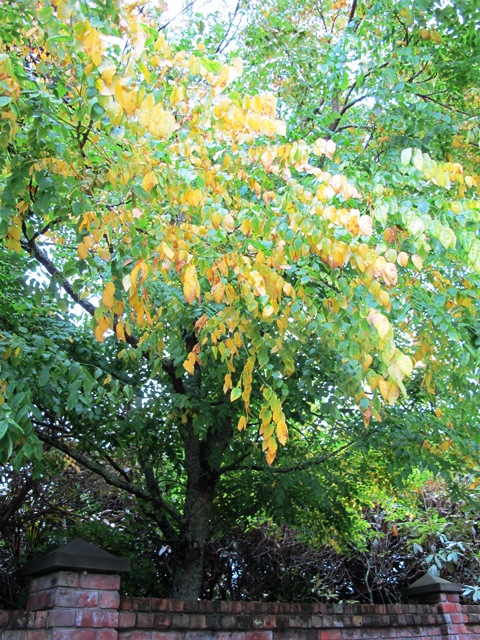
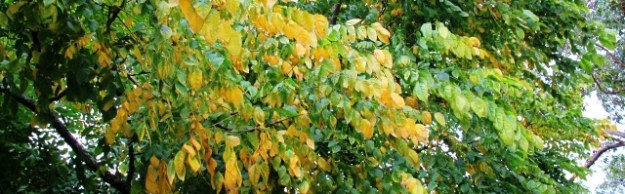
There is nothing rare about the koelreuteria which goes by the charming name of the “Golden Rain Tree” or, apparently, “Pride of India” despite the fact it comes from China. The golden epithet does not refer to the lovely golden leaves which colour-up even in our temperate coastal conditions, but to the summer flowers. Alas we have not seen these on our tree, despite it being about five metres tall and well over a decade in age. It appears that we may not ever get many flowers because this is a tree adapted to an inland or continental climate. It likes a cold, dry winter and hot, dry summer – neither of which it gets at our place. However, it is pretty enough with its fresh spring foliage and its golden autumn colours for us to keep it in the garden.

When the flowers pass over, it develops showy pinky-brown seed pods – referred to in the literature as “inflated and bladder-like”, which sounds less appealing than they look.

There is another koelreuteria species, K. bipinnata, which is sometimes referred to as the Chinese flame tree. It is not as common as K. paniculata and is more spreading, growing wider than it is tall. Its flowers, foliage and seedpods are similar although it usually flowers later in the season, heading into autumn. It is probably just as well it is not so common here because it appears to have invasive habits in certain climates and would probably prove equally problematic in areas of this country.

???????????????????????????????

First published in the Waikato Times and reprinted here with their permission.

Garden lore

“My garden, that skirted the avenue of the Manse, was of precisely the right extent. An hour or two of morning labour was all that it required. But I used to visit and revisit it a dozen times a day, and stand in deep contemplation over my vegetable progeny with a love that nobody could share or conceive of, who had never taken part in the process of creation.”

Nathaniel Hawthorne, Mosses from an Old Manse (1846).

002 - CopyAutumn planting

Autumn is the best planting time. That is not garden industry hype to encourage sales. It is simple fact, though often ignored by gardeners who only get inspired in spring and therefore drive peak sales at that time of the year. When you autumn-plant trees and shrubs, which includes all hedges, roses and fruit trees, they have time to establish their root systems during late autumn and winter before all their energy goes in to spring growth and flowering. This makes them much better placed to withstand the stress of subsequent summer heat and possible drought.

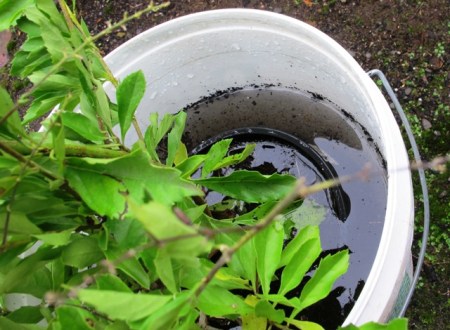
We are still very dry for this time of the year but there is much less evaporation happening as temperatures have cooled. Make sure you soak the root balls of the plants thoroughly before planting. This is best done by plunging the entire plant, pot or bag and all, into a bucket or tub of water and leave it there until the bubbles stop rising. This can take at least 20 minutes. If your soils are still bone dry, place the plant in the hole and then fill it up with water before you back fill the soil. With the light rains we are getting, this is probably enough to keep the plant moist without additional watering, until wetter times return.

First published in the Waikato Times and reprinted here with their permission.

A Case of the Emperor’s New Clothes?

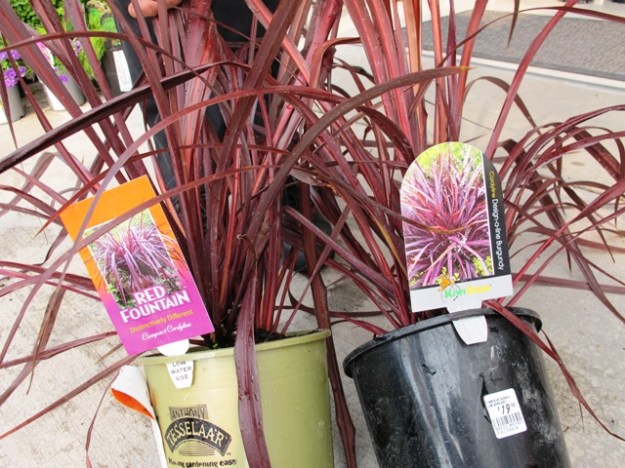
Cordyline Red Fountain (ours) and Cordyline Design-A-Line Burgundy - identical DNA

Cordyline Red Fountain (ours) and Cordyline Design-A-Line Burgundy – identical DNA


The saga of Cordyline Red Fountain continues.

Gobsmacked we were by the decision of the NZ Plant Variety Rights’ Office to grant equal legal protection to Cordyline Roma 06 (also known as Cordyline Burgundy). It seemed that they were determined to find differences where none existed and as far as we were concerned, Cordyline Roma 06 was a generic copy with no unique, distinguishing characteristics. We could not understand why our repeated requests for a blind trial to see if the two were distinguishable were ignored.

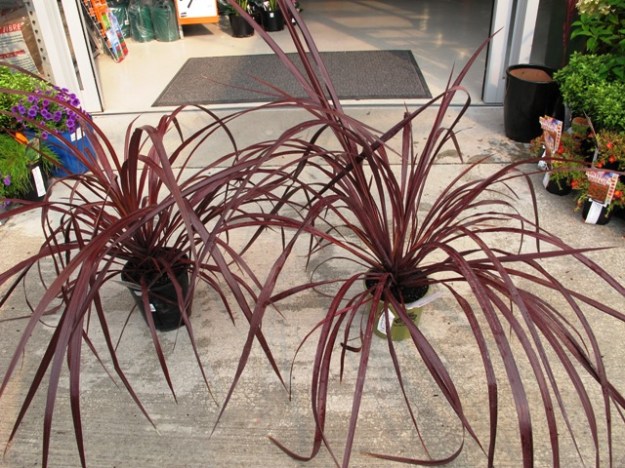
Well, ain’t DNA just a wonderful thing? We were wrong in describing Cordyline Roma 06 as a generic copy. Not a copy at all. It has absolutely perfectly matched DNA to Cordyline Red Fountain. Identical DNA.

We had plants DNA tested in a specialist DNA laboratory in Australia. The comparator variety, Cordyline Pinot Noir showed in excess of 5000 markers of difference. Cordyline Red Fountain and Cordyline Roma 06 showed… none. None at all.

This surely disproves the claim made repeatedly by Malcolm Woolmore that he went back and repeated the original cross. We were always sure that was not true, because of aspects of that original cross known only to us. He did not have access to the original breeder plants we had here, so he would have used different parent plants and the DNA would have shown that.

So what now? In the light of this independent, scientific evidence, will the NZ Plant Variety Rights’ Office review the original application and data submitted and reject the original proposal? This is what we thought should have happened from the very beginning. DNA evidence is now deemed sufficient to send somebody to jail for life in murder trials. We are not suggesting that this would be an appropriate action in this case, but we are waiting to see what will happen next.

New Zealand is a member of the International Union for the Protection of New Varieties in Plants (UPOV) so this situation will not sit in isolation but is already receiving international scrutiny.

Cordyline Red Fountain and Cordyline Burgundy - side by side garden centre plants, apparently with identical DNA

Cordyline Red Fountain and Cordyline Burgundy – side by side garden centre plants, apparently with identical DNA