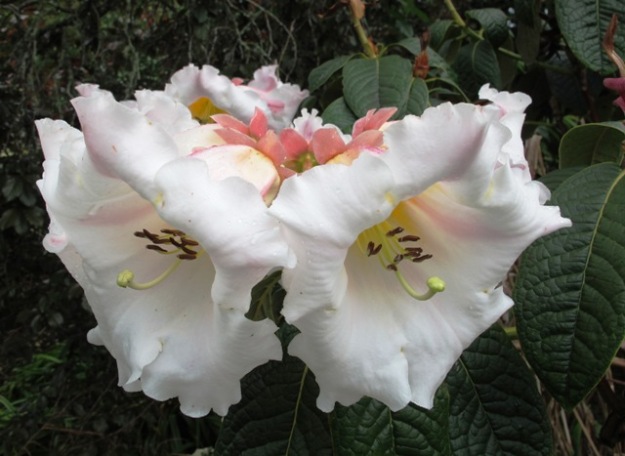
The Rolls Royce of rhododendrons – sino nuttallii
Allow me to introduce you to maddenii rhododendrons. We are pretty keen on them here, although you may not share our enthusiasm if you think all rhododendrons should have the tight ball truss of blooms which is usually regarded as typical of the family. Maddenias don’t hold their flowers in that style.
But the family does include the spectacular nuttalliis with their huge trumpets. I rate these as the most stunning rhododendrons of all with their flowers which look as if they have been cast out of wax and their wonderful, big leaves which are heavily veined – described as bullate foliage. There is nothing quite like them but they are not generally available on the market. They don’t produce much cutting material and they are not easy to propagate but many will set seed so, if you are really keen, you could try raising seed. Some of the hybrids can be found from time to time – Mi Amor and Floral Sun in particular.
There are two huge pluses for the maddeniis. Most are scented, some strongly so. R. polyandrum can waft out for a metre or two which is an indication of a strong scent. Many will pass the 30cm sniff test which is good. And if you are willing to risk the pollen on the nose, most have a sweet scent when you bury your face in the flower.
The second big bonus is that the maddeniis show much better resistance to thrips than most other rhododendrons. Thrips are nasty sucking insects that hide away beneath the leaves, sucking out the chlorophyll. This turns the leaves silver and once that has happened, they can never be turned green again though the new season’s growth will be green, at least until the thrips get hold. Over time, serious infestations can weaken a plant past the point of return. Very cold winters will kill the bugs off, but we don’t get cold enough here so there is not a whole lot one can do beyond spraying with insecticide or neem oil, or trying a cloth collar soaked in systemic insecticide wrapped around the main trunk. Or you can choose varieties which are more resistant.
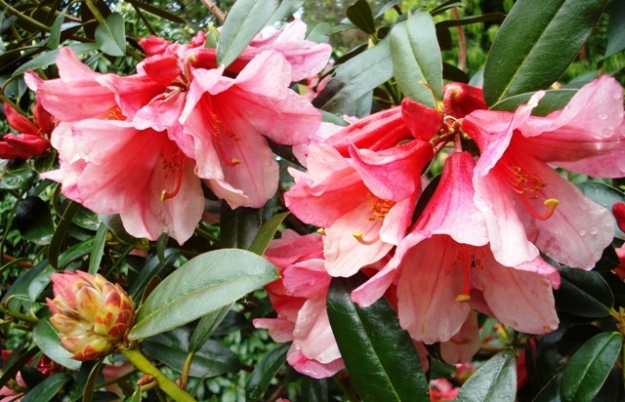
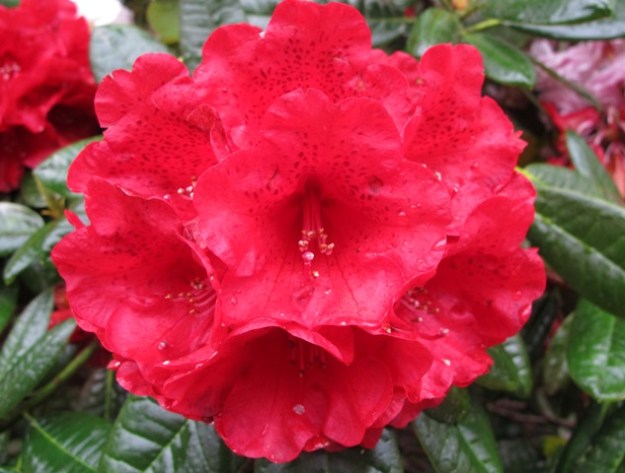
Bernice, as red as the maddeniis get
There is a preponderance of whites and pastels in the maddeniis and where there are coloured ones, they lean to the subtler, softer shades. In other words, there are no pure reds, purples, blues or oranges. We don’t mind because we can get the stronger colours in azaleas and other types of rhododendrons. Some of the hybrids flower so heavily that it can be like viewing a wall of bloom with barely any foliage visible at all.
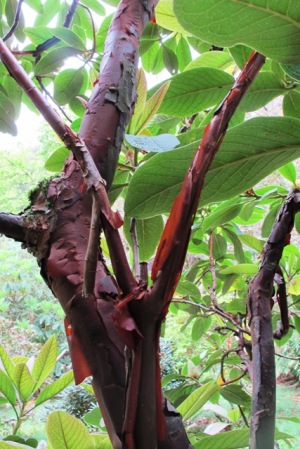
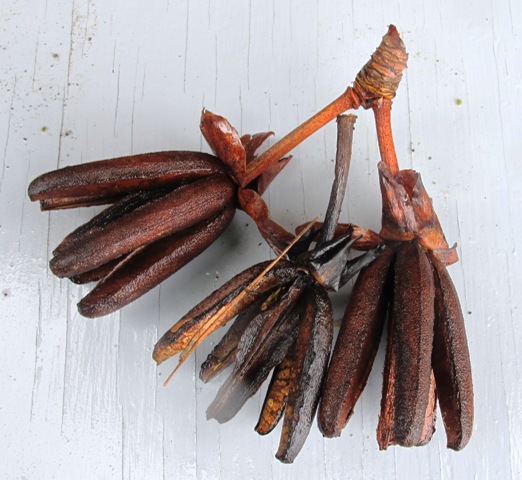
Wonderful peeling bark and bullate foliage
I should perhaps mention also that most of Maddenia types don’t make tidy compact little buns of bushes either. They are inclined to be more open in their growth – though by no means are all of them giants. Some can only be described as leggy, but all is forgiven when they flower. Besides, another attractive feature of these rhododendrons is the lovely peeling cinnamon bark many have. If they were bushy, dense plants, you would never see it.
Google tells me that this group were first introduced to the West in 1849 by famous plant collector Joseph Hooker – he who also visited New Zealand. For reasons which are not entirely clear, he named them after Lieutenant Colonel E Madden of the Bengal Civil Service. How random is that? Given that these rhododendrons are found in northern India, Burma, southern China and the milder areas of Tibet, maybe Lt.-Col. Madden was particularly helpful to Hooker’s expeditions.
Internationally the maddeniis are rated as subtropical and somewhat tender so they are the envy of gardeners from cold climates. Our climate in New Zealand is so temperate that you are able to grow most of the maddeniis in all but the coldest, inland conditions. They form the backbone of the rhododendron collection in our garden and, being later flowering than many others, are coming into bloom right now.
There is no simple way to determine which rhododendrons fall into the maddenii group. That is what books and Google are for. But ones you may find, or know of, include Fragrantissima, Elsie Frye, Princess Alice, Bernice, Moon Orchid, the aforementioned Mi Amor and the plant confusingly known simply as Rhododendron maddenii.
The problem is sourcing these rhododendrons. In fact the problem is sourcing any interesting rhododendrons at all in these days when specialist nurseries have fallen like flies. The best option for Waikato readers may be Rhodohill or Tikitere Nurseries in Rotorua. Failing that, try Trade Me where there is a South Island grower, RhodoDirect, producing and selling by mail order. I have seen them listing the lovely Floral Sun and there are other maddeniis in their range.
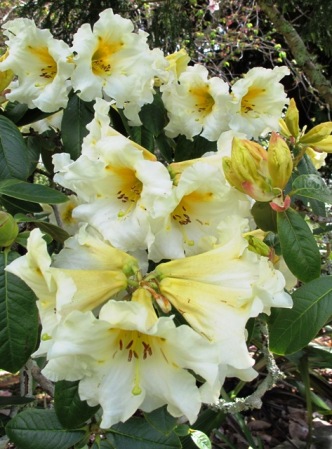
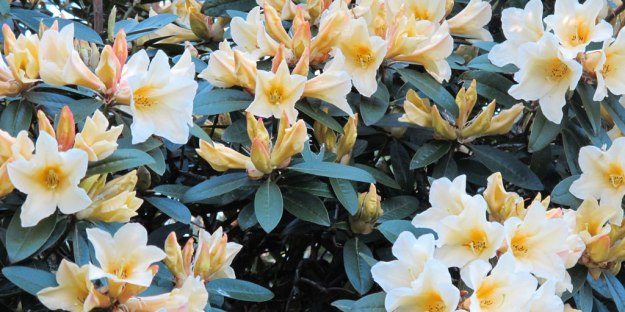
Our very own Floral Sun
First published in the Waikato Times and reprinted here with their permission.
-39.042098
174.300314


 Tikorangi The Jury Garden