More bad Penguin

Stop Press
Penguin NZ have issued an immediate recall of all copies of this book.

Slight sense of deja vu here - side by side

Slight sense of deja vu here - side by side

There was a bit of a problem with the first version of the Tui NZ FRUIT Garden by Sally Cameron, published by Penguin NZ. In fact it was clearly quite a large problem, given that Penguin ordered an immediate recall within a few days of its release. It’s usually called plagiarism – rather too much cut and paste from copyrighted sources without acknowledgment. It was the third such embarrassing incident in quick succession for this publisher, the highest profile being Witi Ihimaera’s work, The Trowenna Sea. No matter. Publishers closed ranks and I was on a National Radio panel where other professionals explained that it was all the author’s fault and none of this could possibly be blamed on the maligned publisher.

To my astonishment, Penguin NZ, with the backing of their sponsor Tui Garden, ploughed ahead using the same author to rewrite the book and a year later they issued a second edition which was substantially different. No better, mind, but different and minus the sections which appeared to have been plagiarised.

Would you not think that both Penguin NZ and Tui Garden would have put the first book by the same author in the same series – The Tui NZ VEGETABLE Garden – under the microscope at the same time? I reviewed it when it came out in 2009 and I was far too kind. In my defence, all I can say is that it seemed markedly better than the other book which I was reviewing alongside it. When faced with the FRUIT book a year later, I questioned whether the earlier VEG book might suffer from similar problems related to cutting and pasting other people’s work. I even cited the garlic entry and gave its source as a copyright website belonging to somebody else.

Given the obvious inexperience of the author, did nobody involved think it warranted a closer look? We are talking the same book series, same author (Sally Cameron), same sponsor (Tui), same publisher (Alison Brook for Penguin), same editor (Catherine O’Loughlin). When the author is already under scrutiny, in the dock so to speak, it is difficult to believe that others involved can dump all the blame on her a second time.

It was only ever going to be a matter of time before somebody noticed. And two weeks ago, somebody identified a primary source for the Tui NZ VEGETABLE Garden and posted the following comment on my website:
“Not only has Dr D G Hessayon ripped off Sally Cameron’s Tui NZ Vegetable Garden, chapter and verse, but, he also had the temerity to do it four years prior to Sally being published.
Is it OK to lift entire chapters of books if you include a reference to that book at the end? Hope so, ‘cos I’m just finishing my book “Great Expectations” with a small reference at the back to Mr C Dickens.”

Dr Hessayon's book may look a little old fashioned but is packed full of information and is a best seller - for British gardners

Dr Hessayon's book may look a little old fashioned but is packed full of information and is a best seller - for British gardners

My informant was working from a more recent copy of a source publication, “The New Vegetable and Herb Expert”. English horticulturist and bestselling author, Dr Hessayon actually published his book a good ten years before Sally Cameron produced hers. It took me mere minutes to track down a copy on Trade Me. I think I paid $12 for it plus P&P and it arrived in the mail this week.

Well. Oopsy. How many examples are sufficient?

1) On turnips: Hessayon: Round is not the only shape for these Early turnips – there are also flat and cylindrical ones. There is not much variation in the globular Maincrop types sown in summer, but you can choose the yellow-fleshed Golden Ball. (page 105)
Cameron: Round is not the only shape for these early turnips – there are also flat and cylindrical ones – but there is not much variation in the globular maincrop types sown in summer. (page 174 and one can do a side by side match for much of pages 174 and 175).

2) On Brussels sprouts: Hessayon: Birds are a problem – protect the seedlings from sparrows and the mature crop from pigeons. Hoe regularly and water the young plants in dry weather. The mature crop rarely needs watering if the soil has been properly prepared…. (pages 34-5)
Cameron: Birds are a problem. Protect the seedlings from sparrows and pigeons that will eat the mature crops. (Which type of pigeons, Sally?) If scarecrows don’t work, hang cutlery from a clothes hanger. (That suggestion does appear to be a Cameron original). … Hoe around the plants regularly and water the young plants in dry weather. The mature crop rarely needs watering if the soil has been properly prepared….( page 70 -71)

Even the instructions for picking are eerily identical.
Hessayon: Begin picking when the sprouts (‘buttons’) at the base of the stem have reached the size of a walnut and are still tightly closed. Snap them off with a sharp downward tug or cut them off with a sharp knife.
Cameron: Begin picking the sprouts at the base of the stem when they have reached the size of a walnut and are still closed. Snap them off with a sharp downward tug or cut them off with a sharp knife.

Similar problems exist with broccoli, celeriac, Jerusalem artichoke, the aforementioned garlic and more and I cannot claim to have done anything near a complete analysis. Given that the problems appear to be of a similar magnitude to the first version of the FRUIT book which was recalled, will we be looking at a recall of the VEG book? Maybe Tui Garden might consider whether it is a good look being affiliated to a book which claims to give good advice to New Zealand gardeners when a fair swag of it seems to have come from a book for British gardeners.

Lightning, it appears, can strike twice in the same place. It just beggars belief that editor, publisher and sponsor all appear to have failed to factor that in to their considerations.

First published in the Waikato Times and reproduced here with their permission.
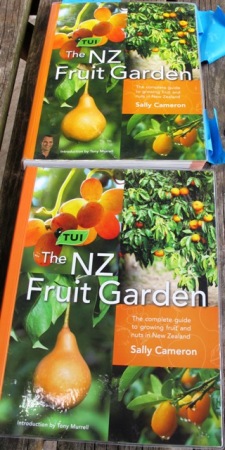
Version 1 at the top, version 2 at the bottom. Just Tony Murrell's photo has disappeared from the cover though the content was substantially rewritten

Version 1 at the top, version 2 at the bottom. Just Tony Murrell's photo has disappeared from the cover though the content was substantially rewritten

The ongoing saga (and it is developing into a saga):

1) The review of the second edition of the fruit book: The Sequel – a second coming for the Tui NZ Fruit Garden

2) Does credibility and reputation count for nothing these days, or does Penguin just think we have short memories? (written upon hearing that Penguin and Tui were using the same author to rewrite the fruit book)

3) The story that started it all and that is currently the second most read article on my website, still receiving hits every day: The Tui NZ Fruit Garden – dear oh dear

4) The lead story on the Taranaki Daily News which broke the first plagiarism story. Since then I have parted company from the Daily News and moved to the Waikato Times.

5) The original review of the Tui NZ Vegetable Garden, which was far too kind and is now embarrassing to me as a reviewer. But I leave it in place because it is a good reminder – and I am considerably more thorough at reviewing garden books in NZ than many others. The Tui book did look better than the other one I was reviewing at the same time – but it, at least, was actually written by the author, based on her experience (however limited it was). Separating the genuine enthusiasts from candyfloss fashion gardening

6) The Tui NZ Flower Garden I merely add this one to complete the set. I declined to review the companion volume on kid’s gardening but I did review the flower book (same series but different author). I would not for one minute suggest that this volume suffers from plagiarism, not at all. It could only be original, for reasons which may be obvious if you read the review.
Tikorangi notes, Friday 24 February, 2012

Summer and Mark's vegetable garden is taking on its meadow garden alter ego as he grows food for the butterflies

Summer and Mark's vegetable garden is taking on its meadow garden alter ego as he grows food for the butterflies

Latest posts:

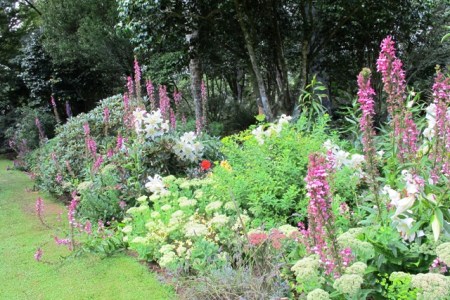
1) For us, the flowers of summer are lilies but you need to grow a range of different species to get them performing through the season.

2) Lepidozamia peroffskyana in Plant Collector this week – including how a Russian benefactor came to have an Australian plant named after him.

3) Grow your own garlic and keep vampires at bay. This piece also suggests that the conventional wisdom of planting on the shortest day and harvesting on the longest day may not always be the best advice.

4) Quite possibly the last in the short lived garden diary series done for the Weekend Gardener (unless a miracle happens and the magazine rises like a phoenix from the ashes of liquidation.

Tikorangi notes: Friday 24 February, 2012:

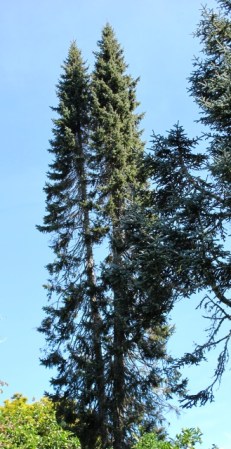
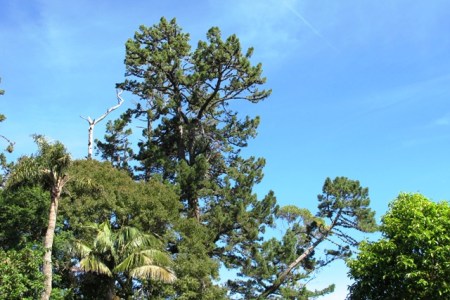
Summer came for three days this week. It was warm enough to entice me into the swimming pool where I looked up at the trees silhouetted against our blue, blue skies and reached for the camera as soon as I got out. I never tire of trees and skyscapes. The elderly pines make a pretty amazing sight even if the one leaning to the right is indeed leaning as much as it appears in the photograph below. One day it may lean beyond the point of balance.
Sadly there is no doubt that a full-on summer is simply not going to happen this year. Yesterday had the unmistakeable hint of autumn. Mark is bringing in grapes every day and muttering about how we had better eat the grapes before the melon harvest starts. Eighty something rock melons, he tells me there are ripening away out in his melon patch. He will have counted them. In the meantime we will not admit defeat and we will eat our way through the grapes. The only crop to rival them here is the green beans, which lack the romance.

The cyclamen are opening which promises an extended delight. The lilies are on their last legs – another torrential rain will spell the end of the auratums but within a few weeks, the autumn bulbs will be starting. That at least is some consolation for a truly disappointing summer.

Our old man pines, Pinus radiata, are large trees after 130 years

Our old man pines, Pinus radiata, are large trees after 130 years

Summer is for lilies

Auratum lilies in the summer border

Auratum lilies in the summer border

Flowers mark the seasons for gardeners. To us, autumn means nerines. Winter is for camellias, late winter brings snowdrops, bluebells and magnolias. Spring means rhododendrons and cherry trees. And summer? Lilies are the flowers of summer.

Not roses. They look wonderful in late spring but by the time summer arrives, the roses are past their best. They tend to be happier in drier climates with low humidity, often with the advantage of cold winters to kill greeblies and fungi. To keep them looking good in warm, moist climates with high humidity requires a rigorous spray programme and good management. It can be done but we don’t do it.

But the lilies need no such fuss and they reward us with masses of blooms throughout the summer season, though to have a succession of them, you need to grow a range of different types. Fortunately there are plenty to choose from. There are well over 100 different species and that does not include the hybrids. Nor will I sidetrack onto plants that are referred to as lilies by name but are not lilies by nature – zantedeschia or arum lily, gloriosa or climbing lily, let alone daylilies and waterlilies.

We start with what we call the Christmas lily which is Lilium regale. It is a fragrant trumpet lily from China which is flushed deep red on the backs of the petals and is usually in flower for me to pick for the Christmas table. If you are thinking of a pure white Christmas lily (much favoured by florists), you are probably referring to Lilium longiflorum which hails from Japan. The renowned madonna lily, with its pure white trumpets, is yet another species (candidum) from southern Europe but it is distressingly prone to virus.

The Aurelian lilies are an earlier flowering favourite

The Aurelian lilies are an earlier flowering favourite

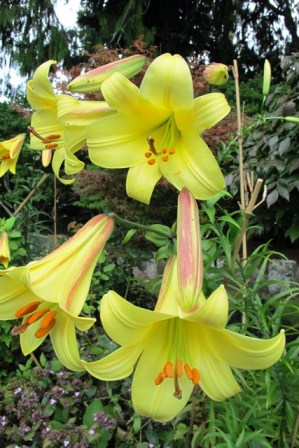
Dovetailing with the Christmas lily, we have some lovely, sweetly scented trumpet lilies of the Aurelian type. These are a personal favourite. I love the soft honey apricot and lemon colours of the ones we have here and they are easy to grow in a garden border. Like most lilies, they pick well.

The tiger lilies lack scent but are easy to grow

The tiger lilies lack scent but are easy to grow

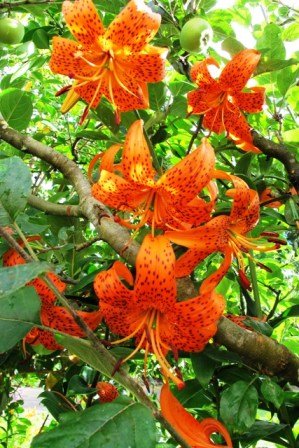
The tiger lilies are pretty common and dead easy to grow but they lack scent, which can be a bit of a disappointment. If you can overlook that deficiency and you garden with orange tones, these lilies are perfect in mixed plantings. They rarely need staking and after flowering, the foliage dies down pretty quickly. The petals are described as reflex – in other words they curve backwards, not unlike a crown. There are a number of other lilies with this flower form (referred to as Turk’s cap lilies because they resemble a Turkish headpiece), but the tiger lily is in fact Lilium lancifolium, sometimes referred to as Lilium tigrinum. We don’t find the proper Turk’s caps (being L. martagon) anywhere near as easy to grow. If you know someone with tiger lilies, they produce masses of tiny bulbs (called bulbils) on the lower stem and these will reach flowering size in a couple of years.

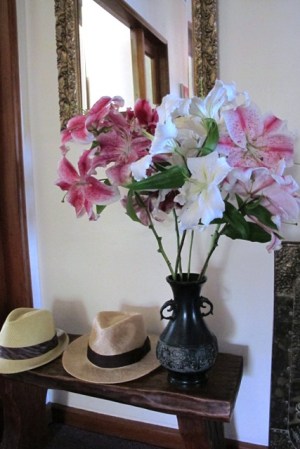
All these lilies are but the prelude to the extended display we get from the astounding auratums. I wrote about these in Plant Collector over a month ago, the wonderful golden rayed lilies of Japan. They are still in full flight here and a major feature of the summer garden. They are big. They are beautiful. They are very fragrant. One might consider they are a bit over the top – but never vulgar. If planted by a path, they will need staking to stop every passerby being touched with golden pollen. Similarly, when a clump gets too congested, they will be inclined to fall over, unless staked. In garden borders or beds of tidy, compact little plants, the auratums will look out of place. But in big borders with big plants, they are superb. For us, they are the number one flower of summer.

The final flurry for the season comes from the late summer Lilium formasanum, which geographically inclined readers will understand means that these are indigenous to Taiwan. This is another scented trumpet type, predominantly white often flushed rosy pink on the petal backs, generally unfussy and commonly seen in gardens. Formasanum will seed down readily (too readily, some say, but we have never found it a problem) and grow even in semi shade and open woodland areas of the garden. It will flower in just its second year from seed. It makes a particularly good garden subject because its foliage is light and fine so it is not too intrusive in the dying down stages and it does not usually need staking.

I pick lilies to bring indoors. I love the way just one stem can scent an entire room for many days on end. Lilies produce the leaves and the flowering stem all on the same spike. It is important to remember when picking that you must leave sufficient stem and foliage for the bulb to continue photosynthesizing. This is how it builds up enough strength for it to flower again next year.

Lily pollen can stain badly. I am guessing florists carefully brush the pollen from each stamen, being careful not to allow any to fall and mark the petals. I nip off the pollen coated tips, leaving the central stamen. It seems a shame but I know from experience that I do not want to be trying to get pollen stains off carpet and upholstery. You have to keep doing it as buds open in the vase but it is a small price to pay for one of the very best cut flowers I can think of. (See comment below – rethinking these actions now.)

First published by the Waikato Times and reprinted here with their permission.

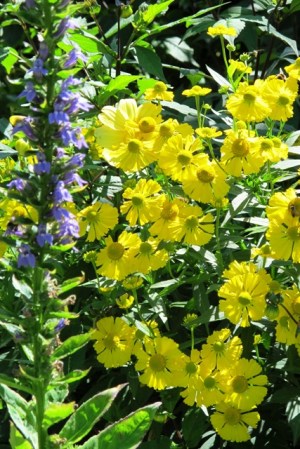
Auratum lilies with lobelias

Auratum lilies with lobelias

Plant Collector: Lepidozamia peroffskyana

Lepidozamia peroffskyana - an Australian cycad

Lepidozamia peroffskyana - an Australian cycad

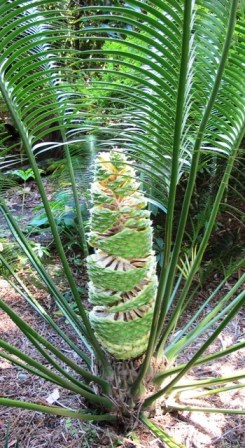
Difficult name, I know, but this plant does not appear to have a common name. It is a cycad and one native to Australia at that. Some mistake it for a palm because it grows a trunk and sprouts it leaves in a palm-like habit, fountaining from the top as it matures. Those leaves can be up to 3 metres long, which is extremely large when you think about it. But it is a cycad which is an entirely different plant family to palms. This particular plant is a seedling from a mature specimen we have and I photographed it because of its spectacular cone which has split open in a wonderful spiral. This split is to release its pollen, rather than to create a perfect pattern.

Lepidozamia peroffskyana cone

Lepidozamia peroffskyana cone

Normally we remove cones to stop the plant putting its energies into trying to set seed. It is suspected that forming the cone robs the plant of too many essential micro nutrients which can lead to yellow banding disfiguring mature leaves. It looks like sunburn. Our mature plant suffered badly in the past from this yellowing but it is still a little early for us to be able to state with confidence that de-coning it solves the problem, though it is looking hopeful.

This is an east coast rainforest plant from northern New South Wales through to Gympie in Queensland (I have been to Gympie though I cannot say I recall seeing lepidozamia there). In our conditions, it will tolerate light frosts and cooler temperatures overall. The natural rainforest habitat gives an indication that it likes fertile soils rich in humus, growing in company and in ground that never dries out. I had to go searching to find out for whom this plant was named – Count Peroffsky, a Russian nobleman and benefactor of the St Petersburgh Botanic Garden where this plant was first cultivated beyond its natural habitat. First in gets dibs on the naming rights even now.

First published in the Waikato Times and reproduced here with their permission.

Grow it yourself: garlic

Freshly harvested garlic is a very different proposition to the stuff that has been hanging about for ten months and has lost most of its potency. We are not, perhaps, served well by the traditional wisdom of planting on the shortest day and harvesting on the longest day. We prefer Kay Baxter’s advice and moved to autumn planting in order to get it in growth before it has to deal with the cold, sodden soils of a wet winter. You can even successionally sow from May to August to extend the harvest season. Fresh picked green garlic is delicious.

Garlic needs to be grown in full sun, in heavily worked, fertile soils. It is a greedy feeder and good drainage is critical. If you are organised, you can prepare the beds now and sow a quick green crop. Dig that green crop in two weeks before planting the garlic. This, allied to late autumn warmth, will give them a real kick start into growth.

Always plant only the biggest and the strongest cloves from the garlic bulb and never but never plant the cheap, imported Chinese stuff (wrong hemisphere so out of season, may be carrying virus which threatens the local strains of garlic and will have been chemically treated). If you follow Kay Baxter’s advice and plant at 10cm diagonal spacings, you can get 100 plants to the square metre. We prefer a wider spacing of up to 15cm in parallel rows. Cover the cloves with a couple of centimetres of soil. Keeping the area free of weeds stops competition but also keeps the soil well cultivated, thus helping with drainage in the wet months. Some gardeners liquid feed regularly. We don’t, but we mulch with compost which is effectively a form of slow release. It is important that the crop never dries out or it will stop growing so be particularly vigilant from November onwards. Garlic can be harvested as soon as the tips start to turn brown.

First published in the Waikato Times and reproduced here with their permission.